


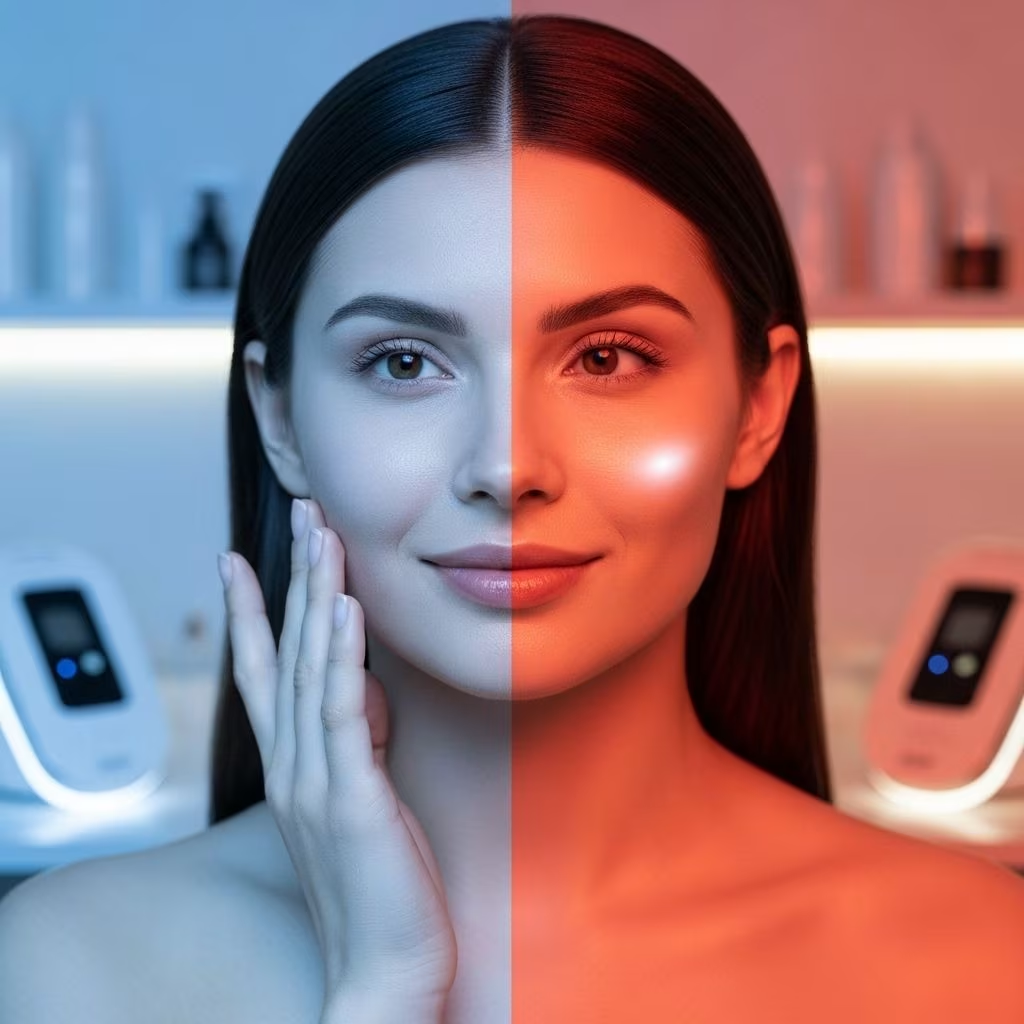
LED Light Therapy for Acne: Blue and Red Light Effectiveness
Acne vulgaris ranks among the most common skin disorders, causing physical discomfort and significant psychosocial impact. The search for effective, well-tolerated therapies has driven robust interest in non-drug interventions such as LED light therapy. Specifically, blue and red light treatments have shown promising results, backed by clinical research and growing adoption of at-home devices. This article explores their mechanisms of action, efficacy, safety, and practical considerations for users and clinicians.
What is LED Light Therapy?
LED (Light-Emitting Diode) therapy is a non-invasive skin treatment that uses specific wavelengths of visible light to elicit biological responses in the skin. Unlike laser therapy, which uses concentrated beams, LED therapy disperses light that penetrates superficial and mid-layer skin tissues without causing heat or damage. The process is painless, does not require downtime, and is increasingly available as in-clinic procedures or at-home devices.
- Blue Light wavelengths (~415–450 nm) specifically target acne-causing bacteria.
- Red Light wavelengths (~620–700 nm) penetrate deeper, modulating inflammation and supporting tissue repair.
How Blue and Red Light Work Against Acne
The efficacy of LED light therapy for acne relies on its unique mechanisms:
Blue Light Therapy Mechanism
- Directly targets Cutibacterium acnes (formerly P. acnes), the bacterium responsible for acne lesions.
- Blue light interacts with porphyrins produced by the bacteria, creating reactive oxygen species that destroy the microbes without harming surrounding tissue.
- May reduce sebaceous gland activity, decreasing excess oil production.
Red Light Therapy Mechanism
- Penetrates deeper into the skin, reaching dermal structures.
- Reduces inflammation by stimulating anti-inflammatory cytokines and enhancing local blood circulation.
- Promotes healing, tissue regeneration, and may accelerate resolution of active lesions.
Some treatment protocols combine both blue and red light to harness antibacterial and anti-inflammatory effects for a synergistic result.
Clinical Evidence: Effectiveness of Blue and Red Light
Numerous studies, systematic reviews, and meta-analyses demonstrate that blue and red LED therapies yield measurable improvement in mild-to-moderate acne:
- Red and/or blue light devices significantly reduced both inflammatory (papules, pustules, nodules) and non-inflammatory (comedones) acne lesions compared to controls.
- Major reviews show 92% of patients achieve partial remission of acne lesions using visible light therapy; blue light emerges as the most widely studied modality.
- Among blue light recipients, 95% report partial clearance; reductions range from 0–99% in lesion count, with almost half seeing ≥50% reduction within 4 weeks.
- Blue light regimens applied daily or even twice weekly show significant improvements, particularly when used consistently as directed.
- Red light is especially valued for reducing inflammation, improving healing, and decreasing the risk of post-inflammatory marks.
Clinical Outcomes at a Glance
| Parameter | Blue Light | Red Light |
|---|---|---|
| Main Action | Bacterial clearance (C. acnes), oil production reduction | Anti-inflammatory, tissue repair, healing support |
| Responders (Partial Clearance) | 95% | ~89% (often combined with blue) |
| Median Onset of Effect | 4 weeks (range 1–6 weeks) | 4–8 weeks |
| Reduction in Lesion Count | 43% by week 4 versus baseline | Varies (mainly reduction in inflammatory lesions) |
| Common Side Effects | Skin irritation, mild erythema, pigmentation (dose-dependent, darker skin) | Transient dryness/irritation, rare pigmentation |
Safety and Side Effects
Safety studies and clinical use indicate that LED light therapy is a well-tolerated, low-risk intervention when used appropriately.
- Most users experience mild dryness, transient irritation, or slight erythema (redness), which resolves without intervention.
- No UV light is used, minimizing risk for DNA damage or carcinogenesis.
- Blue light can cause dose-dependent pigmentation in darker skin types, urging cautious, incremental exposure.
- Red light is generally associated with fewer adverse effects due to its longer wavelengths and gentle penetration.
- Side effects from at-home devices are rare and usually minor; safety in children and adults 12–50 years has been well documented.
At-Home Devices vs. In-Clinic Treatments
Advances in LED technology have led to a proliferation of consumer devices, including masks, wands, and panels designed for personal use.
- At-home devices often offer lower intensities compared to professional equipment, but studies reveal they are still effective for mild-to-moderate acne.
- Systematic reviews confirm that at-home blue and red LED treatments significantly decrease the number of acne lesions, with benefits comparable to clinic-based protocols for select population groups.
- Professional treatments may deliver faster results, higher power, and more targeted application for severe cases.
- Self-treatment offers flexibility, convenience, and cost savings, with clear usage guidelines for optimal results.
Blue vs. Red Light: Comparison Table
| Characteristic | Blue Light | Red Light |
|---|---|---|
| Wavelength | ~415–450 nm | ~620–700 nm |
| Depth of Penetration | Superficial epidermis | Dermis (mid to deep) |
| Target Effect | Bacterial destruction, oil regulation | Inflammation reduction, healing |
| Ideal For | Comedonal, inflammatory acne | Inflamed, persistent lesions, skin repair |
| Side Effects | Transient irritation, pigmentation (rare) | Mild dryness, minimal irritation |
| FDA Status | Approved for acne treatment | Approved for skin healing and inflammation |
Considerations Before Starting LED Therapy
- Severity of Acne: LED therapy is most beneficial for mild-to-moderate cases. Severe acne may require medical intervention.
- Type of Lesion: Comedonal and inflammatory lesions respond best. Nodulocystic acne may need adjunctive therapy.
- Skin Type: Blue light can increase pigmentation risk in darker skin tones. Patch testing and gradual exposure are advised.
- Compliance: Consistent daily or near-daily treatments are required for several weeks.
- Expectations: The majority will see improvement within 4–8 weeks; dramatic changes are less likely than with prescription therapies for severe cases.
- Medical History: Individuals with photosensitive conditions should consult a dermatologist before starting any light therapy.
Frequently Asked Questions (FAQs)
Q: How quickly will LED light therapy show results?
Most users observe improvement in skin clarity and reduction in lesion count between 4 to 8 weeks of consistent use. Some cases respond as early as 1–2 weeks.
Q: Can I use LED light therapy with topical or oral medication?
Yes. LED therapy can be safely combined with topical agents (benzoyl peroxide, retinoids) or oral medications, unless contraindicated by your provider. It may serve as a useful adjunct for stubborn or recurrent cases.
Q: Are there risks of burns or permanent skin damage?
No. LED devices do not use heat or UV light, so risks of burns or lasting harm are extremely rare when used as directed.
Q: Are at-home LED acne masks as effective as in-clinic treatments?
For mild-to-moderate acne, at-home devices offer similar benefits to clinic-based protocols, provided treatment consistency and device quality are maintained. Severe acne may respond better to professional supervision.
Q: Will LED light therapy prevent acne scars?
While LED light therapy particularly red light can lower inflammation, accelerate healing, and potentially reduce the risk of scarring, it is not a guaranteed preventative for established scars.
References
- Mass General Brigham, JAMA Dermatology: Safety and effectiveness of at-home LED devices.
- Clinical self-applied blue LED study, PMC.
- Systematic review on visible light therapy for acne, PMC.
- Harvard Health: Mechanisms of blue light in acne.
- UCLA Health: Red light therapy benefits.
In summary, blue and red LED light therapies offer a science-backed, safe, and increasingly accessible option for the treatment of mild-to-moderate acne. Their complementary mechanisms—bacterial clearance and anti-inflammatory action—provide rapid improvement and minimal side effects when used appropriately.
References
- https://www.massgeneralbrigham.org/en/about/newsroom/press-releases/researchers-find-at-home-led-devices-safe-effective-acne-treatment-skincare
- https://pmc.ncbi.nlm.nih.gov/articles/PMC2923954/
- https://pmc.ncbi.nlm.nih.gov/articles/PMC11585190/
- https://my.clevelandclinic.org/health/treatments/22146-led-light-therapy
- https://www.aad.org/public/diseases/acne-and-rosacea/lasers-and-lights-how-well-do-they-treat-acne
- https://www.health.harvard.edu/diseases-and-conditions/led-lights-are-they-a-cure-for-your-skin-woes
- https://www.webmd.com/skin-problems-and-treatments/acne/phototherapy-for-acne
- https://jamanetwork.com/journals/jamadermatology/fullarticle/2830694
- https://www.uclahealth.org/news/article/5-health-benefits-red-light-therapy


