


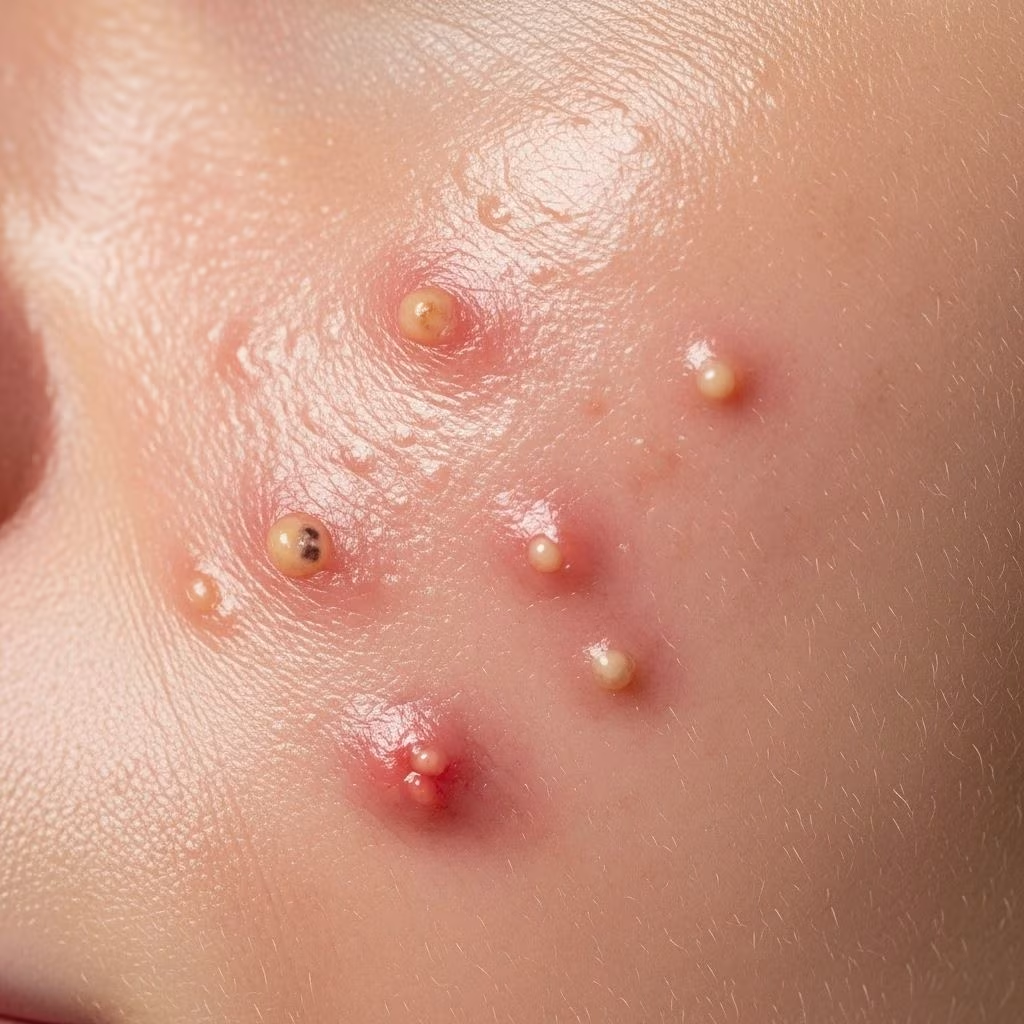
Understanding Acne Vulgaris
Acne vulgaris is the most common skin condition worldwide, affecting approximately 70% of the population at some point in their lives. This chronic inflammatory disorder primarily targets the pilosebaceous unit, which consists of the hair follicle and its associated sebaceous gland. The condition is characterized by the formation of comedones, papules, pustules, nodules, and cysts, predominantly appearing on areas with abundant sebaceous glands such as the face, chest, back, and shoulders.
The term acne vulgaris encompasses what is commonly referred to as regular acne, distinguishing it from other forms of acne such as acne rosacea or drug-induced acne. While often considered a benign condition that resolves with age, acne vulgaris can cause significant psychological distress, social anxiety, and permanent scarring if left untreated or inadequately managed.
The condition predominantly affects adolescents during puberty due to hormonal changes, but it can persist into adulthood or even begin in adult years. Understanding the complex pathophysiology behind acne vulgaris is crucial for effective diagnosis and treatment planning.
Pathophysiology and Causes
Acne vulgaris develops through the complex interplay of four major pathophysiological factors that work synergistically to create the characteristic lesions:
Primary Pathogenic Factors
Excess Sebum Production: Sebaceous glands produce sebum, a natural oil that helps protect and moisturize the skin. However, under the influence of androgens (male hormones present in both males and females), these glands become hyperactive, producing excessive amounts of sebum. This overproduction creates an ideal environment for bacterial growth and follicular obstruction.
Follicular Hyperkeratinization: The lining of hair follicles undergoes abnormal keratinization, leading to the formation of a plug composed of keratinocytes and sebum. This process, known as hyperkeratinization, blocks the normal flow of sebum to the skin surface, creating the foundation for comedone formation.
Bacterial Colonization: Cutibacterium acnes (formerly known as Propionibacterium acnes), an anaerobic bacterium normally present in small numbers in hair follicles, proliferates rapidly in the sebum-rich, oxygen-poor environment created by follicular obstruction. This bacterial overgrowth contributes to inflammation and the breakdown of sebum into irritating free fatty acids.
Inflammatory Response: The presence of C. acnes and its metabolic byproducts triggers an inflammatory cascade involving neutrophils, lymphocytes, and other immune cells. This inflammatory response leads to the characteristic redness, swelling, and pain associated with inflammatory acne lesions.
Contributing Factors
Several additional factors can influence the development and severity of acne vulgaris, including genetic predisposition, hormonal fluctuations (particularly during puberty, menstruation, and pregnancy), certain medications, dietary factors, and environmental influences such as humidity and occlusive cosmetics.
Clinical Manifestations and Symptoms
Acne vulgaris presents with a diverse range of lesions that can be broadly categorized into non-inflammatory and inflammatory types. The clinical presentation varies significantly between individuals and can change over time within the same patient.
Non-Inflammatory Lesions
Closed Comedones (Whiteheads): These appear as small, flesh-colored or whitish, dome-shaped papules measuring 1-3 mm in diameter. They lack a visible central pore and represent follicles that are completely obstructed at the skin surface. The comedone contents are not readily visible, giving them their characteristic white or flesh-colored appearance.
Open Comedones (Blackheads): These manifest as flat or slightly raised lesions with a characteristic dark center measuring 1-3 mm in diameter. The dark appearance results from oxidized melanin, not dirt or poor hygiene as commonly misconceived. The follicular opening is dilated, allowing the comedone contents to be exposed to air and undergo oxidation.
Inflammatory Lesions
Papules: These are small, red, raised lesions that are typically tender to touch. They develop when the follicular wall ruptures, allowing comedone contents to leak into the surrounding dermis and trigger an inflammatory response. Papules are solid lesions without visible pus.
Pustules: These elevated lesions contain visible pus and typically have a yellow or white center surrounded by an area of erythema. They represent a more advanced inflammatory response with significant neutrophil infiltration and bacterial involvement.
Nodules: These are large, deep, solid lesions that extend into the deeper layers of the skin. They are often painful and can measure several centimeters in diameter. Nodules may involve multiple adjacent follicles and have a higher propensity for scarring.
Cysts: These represent the most severe form of inflammatory acne, appearing as large, fluctuant, pus-filled lesions. True cysts are actually pseudocysts, as they lack an epithelial lining. They are deeply seated, extremely painful, and almost invariably result in scarring.
Distribution Patterns
Acne vulgaris most commonly affects areas with high sebaceous gland density. The face is the most frequently involved site, particularly the forehead, nose, chin, and cheeks. The chest, upper back, and shoulders are also commonly affected, especially in males. The neck and upper arms may be involved in severe cases.
Diagnosis and Assessment
The diagnosis of acne vulgaris is primarily clinical, based on the characteristic appearance and distribution of lesions. A comprehensive diagnostic evaluation should include detailed history taking and thorough physical examination.
Medical History
A thorough medical history should explore the onset, duration, and progression of symptoms. Important factors to assess include family history of acne, menstrual cycle relationships in females, use of medications or cosmetics, previous treatments and their effectiveness, and any associated symptoms such as hirsutism or irregular menstruation that might suggest underlying hormonal disorders.
Physical Examination
The physical examination should assess the type, distribution, and severity of lesions. Particular attention should be paid to evidence of scarring, post-inflammatory hyperpigmentation, and signs of secondary bacterial infection. The examination should also look for signs of underlying conditions such as polycystic ovary syndrome in females with severe or treatment-resistant acne.
Differential Diagnosis
While acne vulgaris has a characteristic appearance, several conditions can mimic acne and should be considered in the differential diagnosis. These include rosacea, folliculitis, keratosis pilaris, hidradenitis suppurativa, and drug-induced acne. Careful attention to the age of onset, distribution pattern, and lesion morphology helps distinguish these conditions.
Classification and Severity Grading
Proper classification of acne severity is essential for treatment planning and monitoring response to therapy. Several grading systems exist, with the most commonly used being descriptive classifications that categorize acne as mild, moderate, or severe based on lesion count and type.
| Severity Grade | Characteristics | Lesion Count | Treatment Approach |
|---|---|---|---|
| Mild | Primarily comedones with few inflammatory lesions | Less than 20 comedones, less than 15 inflammatory lesions | Topical therapy |
| Moderate | Mixed comedones and inflammatory lesions | 20-100 comedones, 15-50 inflammatory lesions | Combination topical therapy, consider oral antibiotics |
| Severe | Extensive inflammatory lesions, nodules, scarring | More than 100 comedones, more than 50 inflammatory lesions | Systemic therapy including oral antibiotics or isotretinoin |
Additional considerations in severity assessment include the presence of scarring, post-inflammatory hyperpigmentation, and the psychological impact on the patient. Some patients with objectively mild acne may require more aggressive treatment due to significant psychological distress.
Treatment and Management
The management of acne vulgaris requires a comprehensive, individualized approach based on disease severity, patient characteristics, and treatment goals. Modern acne therapy focuses on targeting the multiple pathogenic factors involved in acne development.
Topical Treatments
Retinoids: Topical retinoids are considered first-line therapy for most forms of acne. They work by normalizing follicular keratinization, reducing comedone formation, and providing anti-inflammatory effects. Common agents include tretinoin, adapalene, and tazarotene. These medications may cause initial irritation, requiring gradual introduction and proper patient education.
Benzoyl Peroxide: This antimicrobial agent is highly effective against C. acnes and helps prevent antibiotic resistance when used in combination therapy. It also has mild comedolytic and anti-inflammatory properties. Benzoyl peroxide is available in various concentrations and formulations and can cause bleaching of fabrics.
Topical Antibiotics: Clindamycin and erythromycin are the most commonly used topical antibiotics for acne. They should always be used in combination with benzoyl peroxide to prevent bacterial resistance. Monotherapy with topical antibiotics is not recommended due to resistance concerns.
Combination Products: Fixed-dose combination products containing retinoids with benzoyl peroxide or antibiotics can improve compliance and efficacy while reducing the risk of resistance development.
Systemic Treatments
Oral Antibiotics: Systemic antibiotics are indicated for moderate to severe inflammatory acne. Tetracycline-class antibiotics (doxycycline, minocycline) are preferred due to their anti-inflammatory properties and good tissue penetration. Treatment duration should be limited to 3-4 months to minimize resistance development, and antibiotics should always be combined with topical retinoids and benzoyl peroxide.
Hormonal Therapy: For females with acne related to hormonal fluctuations, oral contraceptives containing estrogen and specific progestins can be beneficial. Anti-androgen medications such as spironolactone may be considered for women with hormonal acne patterns.
Isotretinoin: This systemic retinoid is reserved for severe, scarring, or treatment-resistant acne. Isotretinoin addresses all major pathogenic factors in acne development and can provide long-term remission. However, it requires careful monitoring due to potential serious side effects and teratogenic risk.
Procedural Treatments
Various procedural interventions can complement medical therapy, including comedone extraction, intralesional corticosteroid injections for nodules and cysts, chemical peels, and light-based therapies. These procedures should be performed by qualified professionals and are typically used as adjunctive treatments.
Treatment Principles
Effective acne management requires patience, as most treatments take 6-12 weeks to show significant improvement. Combination therapy targeting multiple pathogenic factors is generally more effective than monotherapy. Treatment should be tailored to individual patient needs, considering factors such as skin type, previous treatment responses, and lifestyle factors.
Prevention and Lifestyle Modifications
While acne vulgaris has a strong genetic component and cannot always be prevented, certain lifestyle modifications and skincare practices can help minimize breakouts and support treatment effectiveness.
Skincare Routine
A gentle, consistent skincare routine forms the foundation of acne management. Patients should use mild, non-comedogenic cleansers twice daily and avoid over-cleansing or harsh scrubbing, which can worsen inflammation. Moisturizing is important, especially when using drying topical treatments, and products should be oil-free and non-comedogenic.
Dietary Considerations
While the relationship between diet and acne remains controversial, some evidence suggests that high-glycemic foods and dairy products may exacerbate acne in certain individuals. A balanced diet rich in antioxidants and omega-3 fatty acids may support overall skin health.
Lifestyle Factors
Stress management is important, as stress can worsen acne through hormonal pathways. Regular exercise can improve overall health but requires proper post-workout cleansing to prevent pore clogging from sweat and bacteria. Adequate sleep and avoiding touching or picking at lesions are also beneficial practices.
Prognosis and Complications
The prognosis for acne vulgaris is generally favorable, with most cases responding well to appropriate treatment. However, without proper management, acne can lead to several complications that may have long-lasting effects.
Scarring
Acne scarring is the most significant long-term complication, occurring in approximately 95% of patients with severe acne. Scars can be atrophic (depressed) or hypertrophic (raised) and may require specialized treatments such as laser therapy, chemical peels, or dermal fillers for improvement.
Post-Inflammatory Hyperpigmentation
This temporary discoloration is particularly common in individuals with darker skin types and can persist for months after the inflammatory lesion has resolved. Prevention through early treatment of inflammatory lesions is key, and various topical agents can help accelerate resolution.
Psychological Impact
Acne can have profound psychological effects, including decreased self-esteem, social withdrawal, anxiety, and depression. Healthcare providers should assess and address these psychological aspects as part of comprehensive acne management.
Frequently Asked Questions
Q: How long does it take for acne treatments to work?
A: Most acne treatments require 6-12 weeks to show significant improvement. Some patients may notice initial changes within 2-4 weeks, but patience is essential as the skin needs time to respond to treatment and complete its natural renewal cycle.
Q: Can adults get acne vulgaris?
A: Yes, adult acne is increasingly common, affecting up to 26% of women and 12% of men in their 40s. Adult acne may be related to hormonal changes, stress, or other factors and often requires different treatment approaches than teenage acne.
Q: Is it safe to use multiple acne products together?
A: Combination therapy is often more effective than single treatments, but products should be introduced gradually to minimize irritation. Always consult with a healthcare provider or dermatologist before combining treatments, especially prescription medications.
Q: Does diet really affect acne?
A: Research suggests that high-glycemic foods and dairy products may worsen acne in some individuals. However, dietary factors alone rarely cause acne, and eliminating foods should not replace proper medical treatment.
Q: When should I see a dermatologist for acne?
A: Consider seeing a dermatologist if over-the-counter treatments haven’t helped after 6-8 weeks, if you have severe or cystic acne, if scarring is developing, or if acne is causing significant emotional distress.
Q: Can acne be cured permanently?
A: While there’s no permanent cure for acne, it can be effectively managed and controlled with appropriate treatment. Some patients achieve long-term remission, especially after isotretinoin therapy, but maintenance treatment is often necessary.
References
- https://pmc.ncbi.nlm.nih.gov/articles/PMC8510514/
- https://www.merckmanuals.com/professional/dermatologic-disorders/acne-and-related-disorders/acne-vulgaris
- https://slmdskincare.com/blogs/learn/what-is-acne-vulgaris
- https://www.aafp.org/pubs/afp/issues/2019/1015/p475.html
- https://www.visualdx.com/blog/acne-vulgaris-a-guide-to-diagnosis-treatment-and-management/
- https://www.aad.org/member/clinical-quality/guidelines/acne
- https://www.pcds.org.uk/clinical-guidance/acne-vulgaris
- https://www.drcolinhong.com/learn/a-comprehensive-guide-to-acne-vulgaris/


