


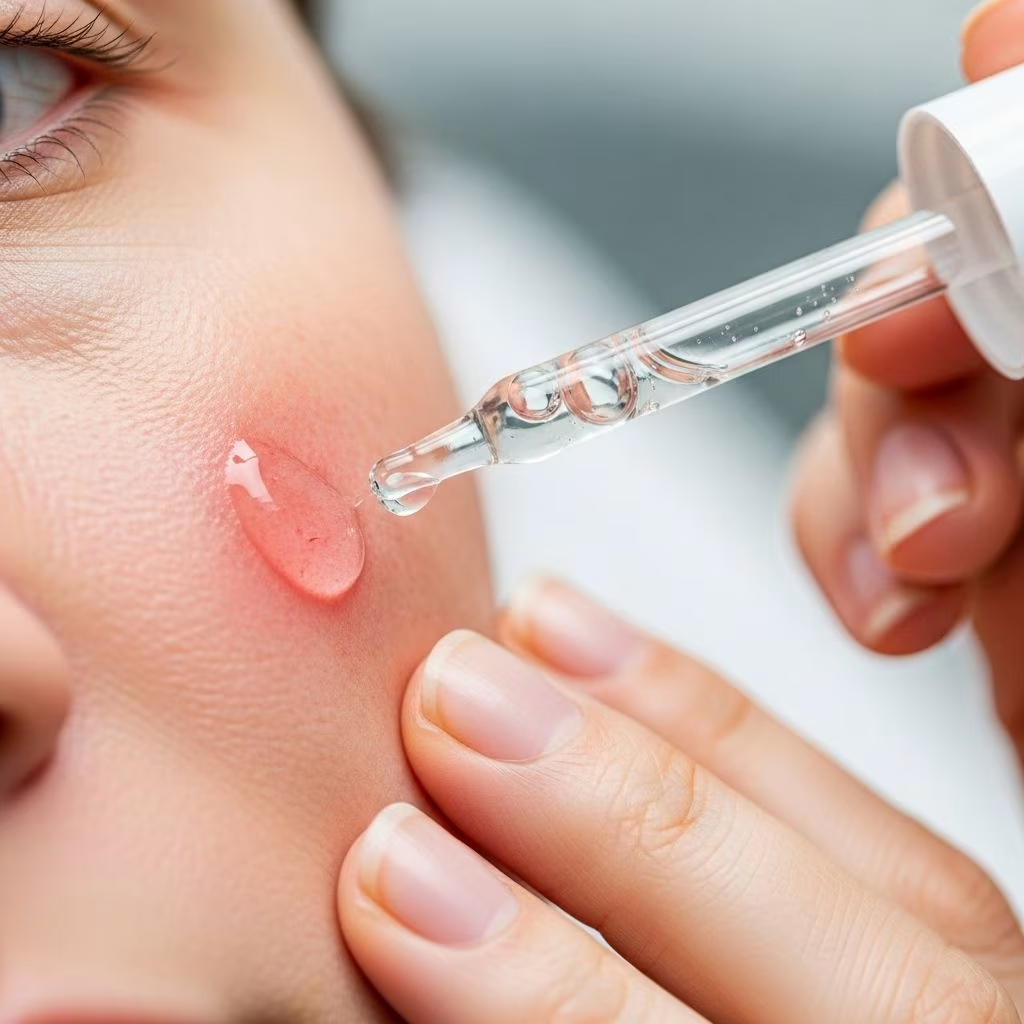
Spot Treatments for Rosacea: Evidence-Based Strategies & Solutions
Rosacea is a chronic inflammatory disorder principally affecting the facial skin, characterized by episodes of flushing, persistent redness, papules, pustules, and in some subtypes, phymatous or ocular involvement. Spot treatments specifically target discrete lesions, including papules, pustules, and areas of pronounced erythema, playing a crucial role in comprehensive rosacea management. This guide delivers a detailed, research-driven overview of the latest and most effective spot treatments for rosacea, encompassing topical agents, oral medications, procedures, lifestyle adaptations, and frequently asked questions relevant to both patients and practitioners.
Rosacea Overview: Types & Clinical Features
Understanding rosacea’s different forms is essential for choosing spot treatments with maximum efficacy.
- Erythematotelangiectatic Rosacea: Characterized by chronic redness and visible blood vessels (telangiectasias).
- Papulopustular Rosacea: Features persistent central facial redness alongside papules and pustules often mistaken for acne.
- Phymatous Rosacea: Marked by skin thickening (especially of the nose).
- Ocular Rosacea: Affects the eyes, causing dryness, irritation, and conjunctival inflammation.
Spot treatments are especially relevant to the papulopustular and erythematous subtypes, where localized inflammation and redness predominate.
Topical Spot Treatments: Mechanisms & Best Use
Topical agents remain the first-line therapy for localized rosacea lesions. These are applied directly to the affected areas for targeted effect and minimal systemic side effects.
Core Spot Treatment Topicals
- Azelaic Acid (Skinoren, Finacea):
Mechanism: Anti-inflammatory, comedolytic, and anti-microbial
Application: Used as a gel or cream, applied thinly over affected spots morning and evening.
Effectiveness: Shown to significantly reduce papules, pustules, and redness. In studies, 62% of users showed notable improvement compared to 44% of placebo.
Side Effects: Possible mild irritation, burning, or dryness. - Ivermectin (Soolantra):
Mechanism: Anti-inflammatory, targets Demodex mites linked to rosacea.
Application: Pea-sized amount to each facial zone, once daily for 1–4 months.
Effectiveness: 68% of users had improved symptoms, outperforming placebo.
Side Effects: Minor irritation, avoid contact with eyes/mucous membranes. - Metronidazole:
Mechanism: Antibiotic and anti-inflammatory.
Application: Cream, gel, or lotion applied once/twice daily.
Effectiveness: Well-studied, highly favored in rosacea, especially papulopustular variant.
Side Effects: Possible dryness, sensitivity to sunlight. Sunscreen is recommended. - Minocycline (Topical Foam/Gel):
Mechanism: Antibiotic and anti-inflammatory.
Application: Used in newer foam/gel preparations for papulopustular lesions.
Effectiveness: High efficacy in clinical trials. Successful in moderate to severe cases, with superior lesion reduction compared to vehicle placebo.
Side Effects: Mild transient irritation. - Oxymetazoline & Brimonidine:
Mechanism: Vasoconstriction, reducing persistent erythema.
Application: Gel, applied to red spots for rapid color reduction.
Effectiveness: Temporary improvement in facial redness, with effects lasting hours.
Side Effects: Possible rebound redness. - Retinoids (select variants):
Mechanism: Vitamin A derivatives; anti-inflammatory and comedolytic.
Application: Used cautiously due to risk of irritation. Shown benefit in maintenance regimens.
Effectiveness: Can help control lesions and improve skin tone. Must be monitored due to potential for exacerbation.
| Topical Agent | Main Action | Best For | Side Effects |
|---|---|---|---|
| Azelaic Acid | Anti-inflammatory, comedolytic | Papules, pustules, mild redness | Irritation, dryness |
| Ivermectin | Antiparasitic, anti-inflammatory | Papules, pustules, nodules | Itching, burning |
| Metronidazole | Antibiotic, anti-inflammatory | Papules, pustules | Photosensitivity, dryness |
| Minocycline gel | Antibiotic, anti-inflammatory | Moderate-severe lesions | Mild irritation |
| Brimonidine, Oxymetazoline | Vasoconstriction | Erythema | Rebound redness |
Tips for Optimal Use
- Apply treatments thinly to clean, dry skin, targeting only affected spots.
- Introduce new topicals gradually to mitigate skin irritation.
- Use gentle, fragrance-free facial cleansers to support topical therapy.
Oral Medications for Resistant Rosacea Spots
Some patients require oral medication for persistent or severe spot involvement, especially papules, pustules, or nodular lesions unresponsive to topical agents.
- Doxycycline (low dose):
Application: Taken once daily for several weeks.
Mechanism: Antibiotic with anti-inflammatory effects.
Indications: Moderate to severe papulopustular rosacea, or inadequate response to topicals.
Side Effects: Gastrointestinal upset (nausea, diarrhea), photosensitivity (sunscreen mandatory), rare allergic reactions. - Isotretinoin:
Application: Powerful oral retinoid, used for short periods in selected cases.
Mechanism: Reduces sebaceous gland activity and inflammation.
Indications: Severe, refractory papulopustular or phymatous rosacea.
Side Effects: Dryness, teratogenicity, lipid/liver abnormalities. Careful monitoring required; not for all patients.
Benefits and Risks Table
| Oral Medication | Main Action | Key Benefits | Notable Risks |
|---|---|---|---|
| Doxycycline | Antibiotic, anti-inflammatory | Reduces inflammatory spots | GI upset, photosensitivity |
| Isotretinoin | Retinoid | Clears severe lesions | Potential serious side effects |
Procedural and Injection-Based Spot Treatments
For stubborn single spots, marked redness, or scarring, procedural options may be recommended. These interventions can be particularly useful for immediate improvement or in cases unresponsive to medications.
- Laser and Light Therapy:
Types: Pulsed dye laser, intense pulsed light (IPL), Nd:YAG.
Indications: Persistent redness, broken blood vessels, and scarring.
Effectiveness: Rapid spot reduction and color fading, improved skin texture.
Risks: Temporary redness, swelling, cost. - Injection Therapies:
Botulinum Toxin: Intradermal injections can reduce erythema and improve elasticity, with possible synergy when combined with laser therapy.
IL-17 Inhibitors: For severe, treatment-resistant papulopustular lesions; very high cost, limited data, higher risk of infection.
Comparison Table: Procedural Spot Treatments
| Procedure | Indication | Typical Response | Limitations |
|---|---|---|---|
| Pulsed Dye Laser/IPL | Redness, blood vessels, scars | Rapid clearance of spots | Cost, requires repeat sessions |
| Botulinum Toxin Injection | Resistant erythema, swelling | Improved elasticity, reduced flushing | Expense, repeated treatments |
| IL-17 Inhibitors | Refractory papulopustular spots | Reduction in lesions | High risk, limited evidence |
Other Spot Treatment Approaches
- Skincare Adjustments: Milder cleansers, fragrance-free and non-comedogenic makeup can help soothe and conceal red spots.
- Sun Protection: Broad spectrum, mineral-based sunscreens reduce trigger-induced spot formation.
- Dietary Factors: Avoiding trigger foods, such as spicy dishes, hot drinks, caffeine, and alcohol, may reduce spot severity.
- Combination Therapy: Dermatologists often employ multimodal strategies, alternating or combining topical, oral, and procedural treatments for optimal spot control.
Skin Care Tips for Rosacea Spot Management
- Apply all spot treatments with clean hands to minimize infection risk.
- Wait at least 10–15 minutes after cleansing before applying topical medications, minimizing irritation.
- Always test a new product on a small area to check for adverse reactions before broader use.
- Regularly moisturize with non-irritating, hypoallergenic creams.
- Minimize abrasive exfoliation and avoid products with alcohol, menthol, or fragrances.
- Consult with a dermatologist before starting new topical or oral medications.
Frequently Asked Questions (FAQs)
Q: Can spot treatments cure rosacea?
A: No, rosacea is a chronic condition. Spot treatments help control symptoms, reduce visible lesions, and minimize flareups but do not cure the disease.
Q: How fast do topical spot treatments work?
A: Many topical therapies show improvement within 3–4 weeks, with optimal results after 8–12 weeks of consistent use.
Q: Are spot treatments safe to use every day?
A: Most targeted topical agents (azelaic acid, ivermectin, metronidazole) are safe for daily use as prescribed; however, always follow your dermatologist’s directions and report side effects.
Q: Should I use over-the-counter acne creams for rosacea spots?
A: No. Many acne medications (e.g., benzoyl peroxide, high-strength retinoids) can exacerbate rosacea and increase irritation. Use only dermatologist-recommended treatments for rosacea spots.
Q: What if my spot treatment causes burning or irritation?
A: Discontinue and consult your physician. Mild irritation is expected with some agents, but persistent or worsening symptoms require medical advice.
Q: When are oral or procedural treatments necessary?
A: Severe, persistent, or treatment-resistant rosacea spots may require oral antibiotics, isotretinoin, or procedures such as laser therapy or botulinum toxin injections.
Patient Resources & Further Reading
- American Academy of Dermatology: Comprehensive guides on rosacea subtypes and treatments.
- National Rosacea Society: Updates on FDA-approved therapies and current research.
- Мayo Clinic: Practical advice on managing symptoms and avoiding triggers.
- ClinicalTrials.gov: Up-to-date clinical studies on new therapies for rosacea.
Summary
Effective management of discrete rosacea spots requires the strategic use of topical agents, oral medications for resistant cases, and, when indicated, procedural interventions. Selection should be tailored to each patient’s clinical presentation, with professional guidance essential for long-term success and minimization of side effects. A holistic approach—including gentle skincare, trigger avoidance, and ongoing communication with dermatology professionals—maximizes the benefits of spot treatments for rosacea.
References
- https://pmc.ncbi.nlm.nih.gov/articles/PMC7858727/
- https://www.ncbi.nlm.nih.gov/books/NBK279475/
- https://www.usdermatologypartners.com/blog/4-types-of-rosacea/
- https://www.mayoclinic.org/diseases-conditions/rosacea/diagnosis-treatment/drc-20353820
- https://my.clevelandclinic.org/health/diseases/12174-rosacea
- https://healthcare.utah.edu/cosmetic/spots-rosacea
- https://www.aad.org/public/diseases/rosacea/treatment/diagnosis-treat
- https://www.rosacea.org/patients/management-options/fda-approved-rosacea-treatments
- https://med.stanford.edu/stanfordmedicine25/the25/acne.html


