


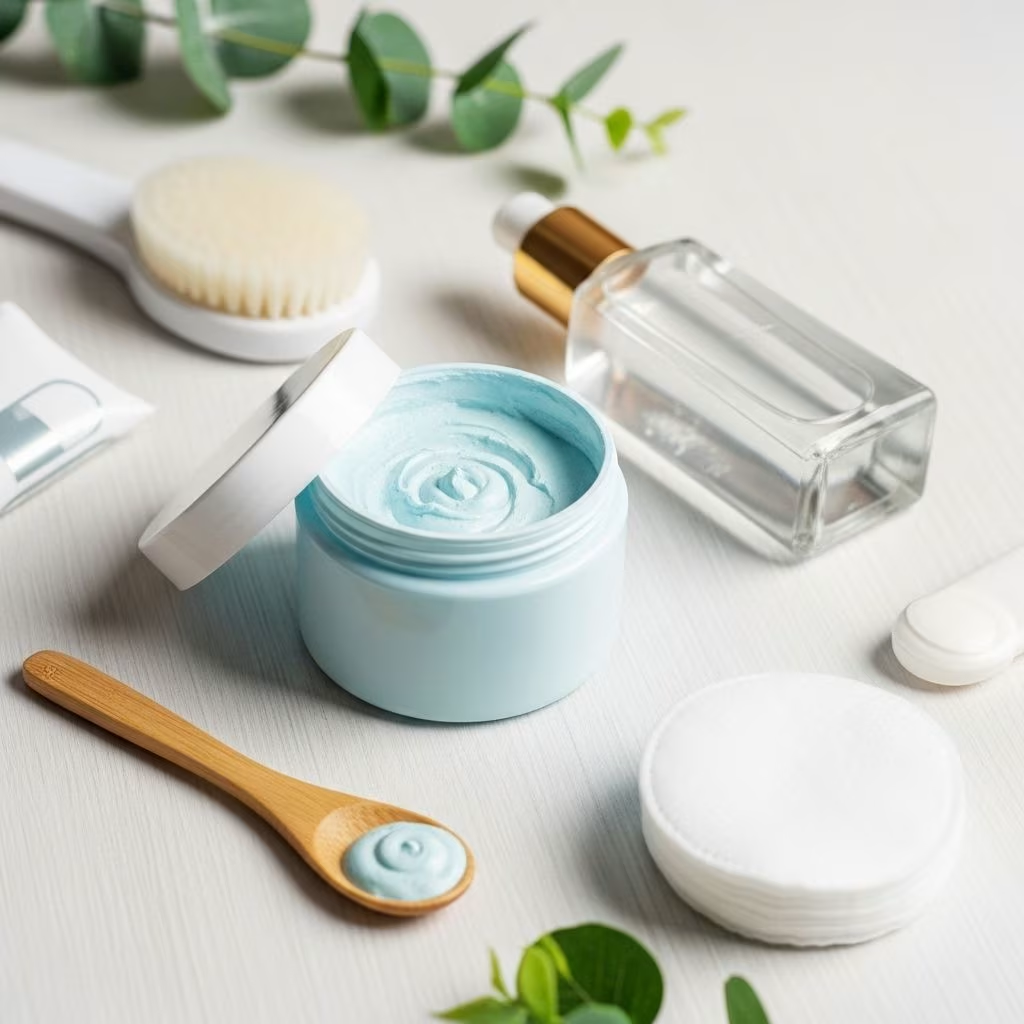
Unlock your skin’s radiant potential by mastering the professional order of skincare. This expert guide delves into the indispensable role of toner after clay mask, explaining not just the ‘how,’ but crucially the ‘why’ behind every step. Whether you’re a skincare novice or a seasoned enthusiast, learn the science, benefits, and precise method to elevate your routine for balanced, glowing, and healthy skin.
Understanding the Role of Toner in Skincare
Toner is a liquid skincare product, traditionally designed to rebalance the skin’s pH, refine pores, and enhance absorption of subsequent products. Today’s toners come in a variety of formulations—hydrating, soothing, exfoliating, and clarifying—making them suitable for every skin concern and type.
- Balances skin’s pH: Restores the natural acidic mantle (pH ~4.7) disrupted by cleansing or masking, which is vital for barrier function and moisture retention.
- Removes residues: Eliminates any lingering cleanser, mask debris, or hard water minerals left after washing or masking.
- Prepares skin for actives: Primes the skin, increasing the penetration and efficacy of serums and moisturizers.
- Addresses specific concerns: Depending on type, may calm redness, hydrate, lightly exfoliate, or clarify pores.
Types of Toners
- Hydrating Toners: Boost moisture levels, ideal for dry or sensitive skin.
- Astringent Toners: Contain ingredients like witch hazel; help minimize oil and tighten pores (use with caution on sensitive skin).
- Exfoliating Toners: Include mild acids (AHAs, BHAs); promote gentle skin renewal.
- Soothing Toners: Formulated with ingredients like aloe, chamomile, or calendula to relieve irritation after treatments.
Why Use a Clay Mask?
Clay masks are a staple in deep-cleansing and treatment routines. They are especially prized for:
- Detoxifying: Drawing out dirt, oil, and toxins from pores.
- Absorbing excess sebum: Particularly beneficial for oily, acne-prone, or congested skin.
- Refining texture: Smoothing and clarifying the surface for a visibly refreshed look.
- Boosting active ingredient delivery: Many formulas are boosted with actives like sulfur, kaolin, or charcoal for specific concerns.
While powerful, clay masks are often rinsed off and can disrupt the skin’s moisture and acid balance, underlining the need for immediate post-mask care.
Should You Use Toner Before or After a Clay Mask?
The position of toner in your routine depends on the mask type. For rinse-off masks like clay masks, experts consistently recommend applying toner after masking:
- After rinse-off masks (clay, peel-off): Use toner post-masking to remove residues and rebalance pH.
- Before leave-on or sheet masks: Apply toner before; you want the full effect of the mask to absorb without removal by subsequent steps.
For the focus of this guide—clay masks—apply toner *after* masking for optimal results.
Why Toner Is Essential After Clay Mask
Immediately after a clay mask, your skin is freshly cleansed but also potentially stripped, unbalanced, or holding mask residues. Here’s why toner is irreplaceable at this stage:
- Residue removal: Clay masks can leave fine particles or actives on the skin; toner assists in thorough removal without irritation.
- pH restoration: Masks (and cleansing water) can raise skin’s pH; toner promptly returns it to its healthy, mildly acidic state.
- Soothe and hydrate: Modern toners often deliver gentle hydration and calming actives, counteracting tightness or redness.
- Preps for next steps: Toner enhances the skin’s receptivity to serum and moisturizer, helping actives penetrate more deeply.
According to professionals, skipping post-mask toner risks leaving skin dry, sensitive, or less protected, and may reduce the efficacy of your completed routine.
Step-by-Step Expert Skincare Routine Flow
Follow this expert routine flow every time you use a clay mask for flawless, healthy skin:
- Cleanse: Begin with a gentle, thorough facial cleanse. Remove dirt, SPF, and makeup (double cleanse if needed for stubborn residue).
- Apply Clay Mask: Spread an even layer of your chosen clay mask, avoiding eyes and lips. Let it sit as directed, typically 10–15 minutes.
- Rinse Off Thoroughly: Use lukewarm water, a gentle cloth, or clean hands to remove all traces of the mask. Pat dry with a clean towel.
- Toner Application:
- Pour or spritz toner onto a cotton pad or your clean palms.
- Gently sweep or press over entire face and neck, focusing on areas previously masked.
- Optional: Light massage with fingertips helps boost absorption and skin circulation.
- Serum: Apply targeted treatment serums (e.g., hyaluronic acid, vitamin C, niacinamide) while toner layer is still slightly damp for maximum efficacy.
- Moisturizer: Lock in hydration with your preferred cream, gel, or lotion.
- SPF (AM routines only): If daytime, finish with broad-spectrum sunscreen for lasting skin health.
Routine Table: Post-Clay Mask Flow
| Step | Purpose | Tips |
|---|---|---|
| Cleanser | Removes dirt, oil, and debris | Use gentle, non-stripping formula |
| Clay Mask | Purifies, detoxifies, refines skin | Follow mask timing instructions; don’t let clay dry too hard |
| Toner | Balances pH, removes residue, soothes | Press in with hands for hydration boost |
| Serum | Treats specific concerns (hydration, brightening) | Apply while skin is still moist from toner |
| Moisturizer | Locks in hydration, replenishes | Choose light or rich formula as suited |
| SPF (AM only) | Protects from UV damage | Always use broad-spectrum SPF 30+ |
Choosing the Right Toner After Masking
Not all toners are created equal. After a clay mask, prioritize toners that:
- Are alcohol-free: Avoid further drying out or irritating the skin post-mask.
- Contain soothing ingredients: Look for aloe, chamomile, calendula, or silver ear mushroom to calm and rehydrate.
- Have hydrating humectants: Glycol, glycerin, hyaluronic acid draw and lock in moisture.
- Suit your skin type: For sensitive skin, select non-fragranced, barrier-supporting formulas. For oilier skin, light hydrating or balancing toners work best.
Steer clear of strong exfoliating toners (with acids like glycolic, salicylic in high concentration) immediately after clay masking unless specifically directed by a professional, as your skin will be more sensitive.
Common Mistakes & Best Practices
- Skipping toner after clay mask: This leaves skin susceptible to dryness, irritation, and diminished effect of follow-up products.
- Using harsh/alcohol toners: These strip moisture and can aggravate skin post-mask, counteracting your efforts.
- Layering strong actives directly after clay mask: Allow skin to normalize before applying potent acids or retinoids.
- Applying toner with dirty hands or pads: Always use clean utensils to prevent introducing bacteria to freshly treated skin.
- Not moisturizing after toner: Toner prepares but does not replace your moisturizer; always follow with hydration.
Expert Tips for Maximized Results
- Double tone if needed: Oily, acne-prone, or congested skin can benefit from two light applications for thorough residue removal.
- Tone both morning and night: Regular use supports lasting smoothness, refined pores, and balanced texture.
- Massage toner in: Enhance product absorption and microcirculation by lightly massaging into skin post-mask.
- Patch test new toners: If trying a new formula, test for sensitivity before full application, especially after potent masks.
- Customize for season and need: Opt for richer, hydrating toners in winter; lighter, clarifying ones in humid summer months.
Frequently Asked Questions (FAQs)
Q: Why does my skin feel tight after a clay mask?
A: Clay masks absorb oil and impurities but can also strip essential moisture and disrupt pH, leading to tightness. Toner helps immediately restore balance, comfort, and hydration.
Q: Can I skip toner and jump to moisturizer after masking?
A: Experts strongly advise against skipping toner, as it is key to removing residual mask particles, normalizing your skin’s acid mantle, and prepping the skin for subsequent hydration and treatment steps.
Q: How soon after rinsing off a clay mask should I use toner?
A: Apply toner as soon as skin is clean and gently patted dry for maximum effectiveness in restoring pH and comfort.
Q: Which ingredients should I avoid in my post-mask toner?
A: Steer clear of high concentrations of alcohol, strong acids, fragrances, and astringents that may over-dry or irritate just-masked skin.
Q: Can I use the same toner morning and night after clay masks?
A: Yes. Morning and evening toning supports optimal skin barrier restoration and primes the skin for different follow-up products.
Q: How often should I use a clay mask and toner in my routine?
A: Most skin types benefit from clay masking 1–2 times a week, always following with toner. Toning can be performed twice daily for consistent results unless sensitivity develops.
Final Thoughts
Integrating toner after a clay mask is a simple yet transformative step in every expert skincare regimen. It ensures complete removal of residues, swift pH restoration, and seamless absorption of all subsequent treatments. Following the expert flow outlined above, tailored to your skin’s needs, will help you achieve visible clarity, smoothness, and a healthy, balanced glow after every mask session.
References
- https://www.net-a-porter.com/en-us/porter/article-967d58ca00ecc4fe/beauty/skin/toner
- https://bioelements.com/blogs/blog/toner-after-mask
- https://www.revivalabs.com/understanding-how-toner-can-transform-your-skin-the-benefits-of-using-a-toner-in-your-skincare-routine/
- https://amalabeauty.com/blogs/resources/do-you-use-toner-before-or-after-a-face-mask-getting-it-right
- https://www.charlottetilbury.com/us/secrets/what-is-toner
- https://beebythesea.com/blog/2024/08/15/do-we-need-to-wash-face-after-clay-mask/
- https://clayandglow.com/blogs/news/3-benefits-of-using-a-toner


