


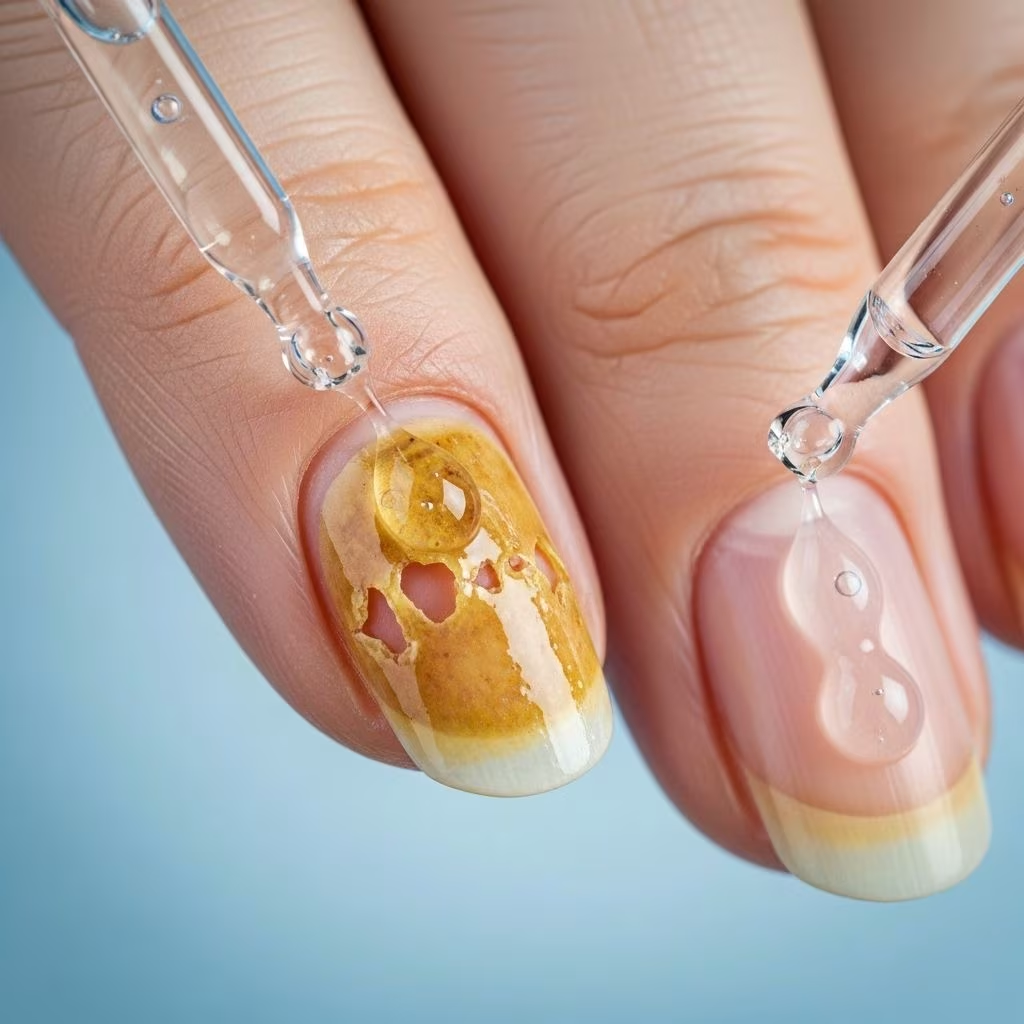
Overview of Nail Psoriasis
Nail psoriasis is a common manifestation of psoriasis, affecting up to 50% of patients with skin psoriasis and up to 80% of those with psoriatic arthritis. It can involve the nail bed, nail matrix, or both, and presents various clinical signs such as:
- Pitting
- Onycholysis (separation of nail from the bed)
- Subungual hyperkeratosis
- Oil-drop discoloration
- Crumbly nails
- Splinter hemorrhages
These changes can impair manual function, cause pain, and affect the psychosocial quality of life. Effective treatment must address slow nail growth and the difficulty of drug penetration through the nail plate, requiring long-term solutions tailored for localized disease.
Role of Vitamin D Analogues in Psoriasis
Vitamin D analogues are synthetic derivatives designed to mimic the benefits and actions of natural vitamin D in the skin. Their use in psoriasis dates back to the 1990s and they have become established as safe, effective, and non-steroidal topical therapies for mild to moderate psoriasis, including nail psoriasis. These agents work by:
- Regulating skin cell proliferation and differentiation
- Modulating inflammatory cytokine production
- Reducing keratinocyte hyperproliferation
The most studied vitamin D analogues in this context are calcipotriol, tacalcitol, and calcitriol.
Mechanism of Action of Vitamin D Analogues
Vitamin D analogues bind to the vitamin D receptor (VDR) on keratinocytes, the predominant cell type in the epidermis. This receptor-mediated activity:
- Slows rapid cell turnover associated with psoriasis lesions
- Flattens thickened plaques and nail scale
- Normalizes cell maturation
- Suppresses pro-inflammatory cytokine production
By correcting abnormal skin and nail growth, vitamin D analogues help restore nail structure and appearance over time.
Topical Use in Nail Psoriasis
Topical vitamin D analogues are available as creams, ointments, and solutions. These formulations target affected nails directly, maximizing local drug action while reducing systemic exposure. Application involves massaging the agent into the cuticle and nail matrix twice daily, sometimes under occlusion, depending on clinical guidance.
- Most improvement occurs in new nail growth; existing nail changes may persist until the nail grows out
- Duration of therapy is typically several months to achieve visible benefits
- Fingernails may respond better than toenails due to slower toenail growth
Key Vitamin D Analogues: Calcipotriol, Tacalcitol, Calcitriol
Calcipotriol
Calcipotriol is the most widely studied vitamin D analogue in nail psoriasis. It is available as ointment, cream, or solution. Mechanistically, calcipotriol:
- Slows nail bed and matrix cell hyperproliferation
- Reduces inflammation and restores healthy nail growth
Clinical trials have demonstrated significant improvement—particularly in nail bed symptoms such as subungual hyperkeratosis, onycholysis, and discoloration—when used twice daily for up to 5 months.
Tacalcitol
Tacalcitol, a chemical vitamin D analogue, is less widely used but still effective. Applied nightly under occlusion (cotton gloves), it has shown substantial reduction in Nail Psoriasis Severity Index (NAPSI) scores, with improvements exceeding 75% after six months in open studies.
- Particularly beneficial for both nail bed and matrix symptoms
- Most side effects are mild and decrease over time
Calcitriol
Calcitriol is the naturally active form of vitamin D3, available as ointment. The clinical evidence for calcitriol is limited but shows similar safety and efficacy profiles.
- Demonstrated non-irritant properties in comparison studies
- May be suitable for sensitive patients and children over age 2
Clinical Efficacy in Nail Psoriasis
Efficacy of vitamin D analogues is typically assessed using the Nail Psoriasis Severity Index (NAPSI). Key findings from clinical trials and open studies include:
- Calcipotriol: Monotherapy achieved up to 72% improvement in mild cases at 12 weeks; significant reduction of subungual hyperkeratosis, onycholysis, and pain.
- Tacalcitol: Reduction in NAPSI by 75% at 6 months; most pronounced benefits in nail matrix involvement.
- Calcitriol: 38% reduction in nail thickness versus 35% for topical corticosteroids in one study; generally well tolerated.
Combination therapy with topical corticosteroids, such as betamethasone, can enhance efficacy and reduce irritation compared to monotherapy.
Application Technique and Patient Guidance
- Massage the cream or ointment into the nail cuticle and matrix for at least five minutes, twice daily
- If onycholysis is present (separated nail), drip solution underneath and massage gently
- Occlusive dressing (gloves, bandages) may improve drug absorption overnight
- Therapy should continue for 6–12 months for noticeable improvement, given slow nail growth rates
- Adherence and patience are vital—nail restoration is gradual and existing damage resolves only as nails grow out
Patients often experience fingertip tenderness improvement and pain relief in the distal phalanx as inflammation subsides.
Safety, Tolerability, and Limitations
Topical vitamin D analogues are remarkably safe, even for long-term use and intermittent therapy across the lifespan:
- Suitable for adults, children over 2, and special populations (e.g., HIV patients)
- Do not exhibit tachyphylaxis (loss of effectiveness with continuous use)
- Low incidence of adverse reactions; minor skin irritation occurs in a small minority, usually early in therapy
- Calcitriol generally causes no irritation; calcipotriol can be moderately irritating at higher concentrations
Side effects include mild burning, stinging, or erythema, but these are typically transient. Discontinuation due to skin irritation is rare.
- Not effective for every patient, and toenail changes can be particularly resistant
- Persistent, thick dystrophic nails may require adjunctive therapies
Use in Combination Therapies
Vitamin D analogues are frequently combined with other topical agents or systemic therapies to improve outcomes:
- Calcipotriol with topical corticosteroids (e.g., betamethasone) enhances efficacy and reduces skin irritation.
- Tacalcitol with clobetasol nail lacquer yields major improvement of both nail bed and matrix symptoms.
- Topical vitamin D in combination with oral cyclosporine improves nail hyperkeratosis and pitting beyond cyclosporine alone.
Careful monitoring and adjustment of therapy are advised based on patient response and tolerability.
Comparative Table of Vitamin D Analogues for Nail Psoriasis
| Name | Formulation | Application | Efficacy | Common Side Effects | Notes |
|---|---|---|---|---|---|
| Calcipotriol | Ointment, Cream, Solution | Twice daily, massaged into cuticle/matrix | Up to 72% NAPSI improvement | Mild irritation (moderate with higher concentrations) | Most studied; effective for nail bed symptoms |
| Tacalcitol | Ointment | Nightly under occlusion | Up to 75% NAPSI reduction | Mild irritation (early stage) | Pronounced effect on nail matrix |
| Calcitriol | Ointment | Twice daily | 38% reduction in nail thickness | Minimal irritation | Safe for children; less common |
Frequently Asked Questions
Q: How long does it take for topical vitamin D analogues to work on nail psoriasis?
Improvement is gradual and corresponds with new nail growth. Visible changes may take 6 to 12 months for fingernails and longer for toenails, given their slow growth rates.
Q: Can vitamin D analogues treat severe nail psoriasis?
They are most effective for mild to moderate nail psoriasis and as adjuncts in combination therapy for more severe cases. Severe or resistant cases may require systemic treatment methods.
Q: Are there risks associated with long-term use?
Topical vitamin D analogues are considered safe for long-term and intermittent use, showing little risk of tachyphylaxis. Minor irritation may occur initially but typically resolves. Regular follow-up with a dermatologist is recommended.
Q: What should I do if I experience irritation?
If mild irritation occurs, reduce application frequency or consult your clinician. Severe or persistent symptoms warrant discontinuation and seeking medical advice.
Q: Is patient adherence important?
Absolutely; consistent application and patience are crucial, as nails grow slowly and improvement takes many months. Skipping doses or stopping early significantly undermines treatment effectiveness.
Key Points
- Topical vitamin D analogues offer a safe, effective first-line option for nail psoriasis treatment.
- Calcipotriol, tacalcitol, and calcitriol can be tailored based on nail involvement, sensitivity, and patient preference.
- Combination therapy yields additive benefits, particularly when nail bed and matrix are both affected.
- Patience and adherence to therapy are essential due to slow nail growth and gradual clinical improvement.
- Dermatologist guidance optimizes individualized care and addresses persistent or severe cases using adjunctive therapies.
References
- https://pmc.ncbi.nlm.nih.gov/articles/PMC4833799/
- https://www.papaa.org/resources/psoriatic-disease-unlocked/nail-psoriasis/
- https://www.webmd.com/skin-problems-and-treatments/psoriasis/psoriasis-vitamin-d-analogues
- https://pmc.ncbi.nlm.nih.gov/articles/PMC3219168/
- https://www.psoriasis.org/non-steroidal/
- https://www.aad.org/public/diseases/psoriasis/treatment/medications/synthetic-d
- https://www.aafp.org/pubs/afp/issues/2022/0500/p558.html


