


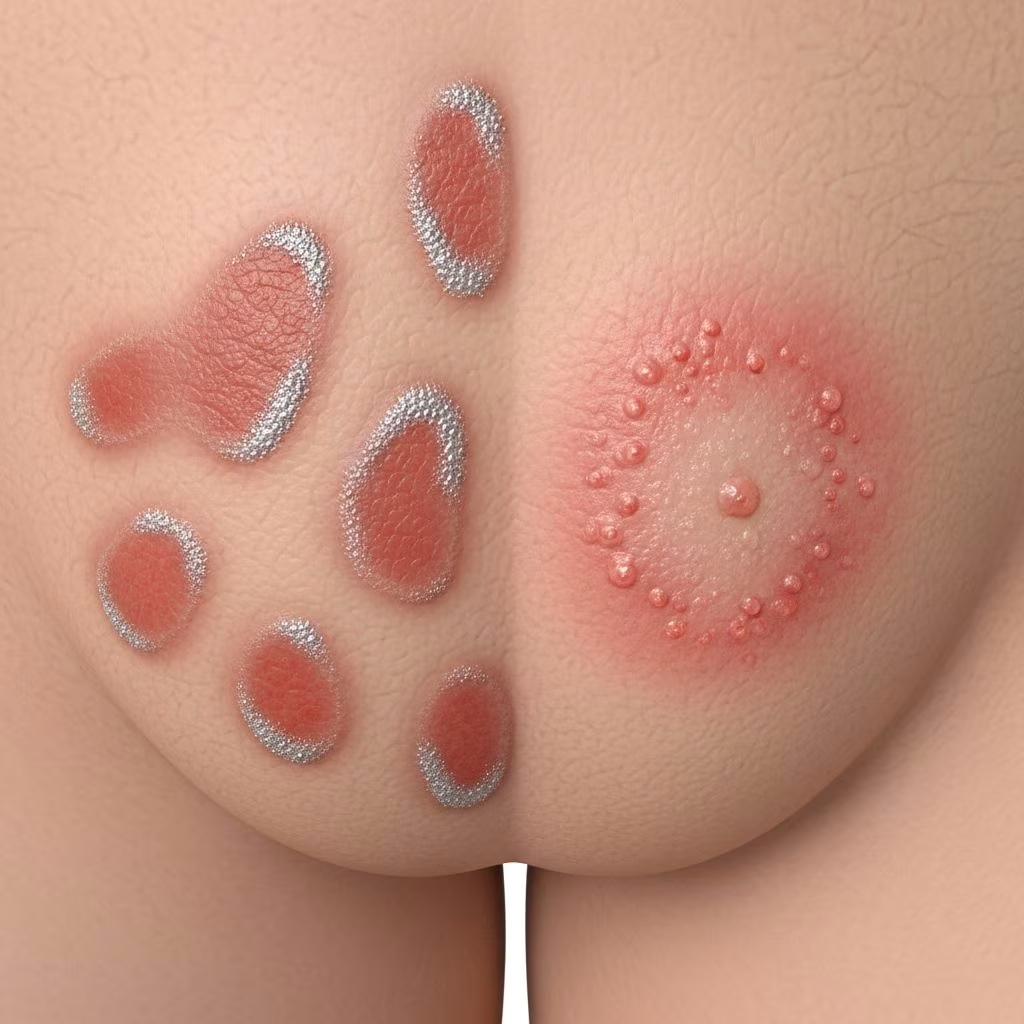
Psoriasis and fungal infections frequently affect the groin area, resulting in similar-appearing rashes with redness, scaling, and discomfort. Accurate differentiation between these two is critical for correct treatment, faster relief, and to avoid unnecessary complications. This guide provides an in-depth comparison of both conditions, their causes, symptoms, diagnostic strategies, and evidence-based approaches to management.
Overview: Why is Differentiation Important?
The groin is a complex anatomical site: it is prone to moisture, friction, and warmth—features that can foster both autoimmune and infectious skin disorders. Mistaking one for the other can lead to ineffective treatment, prolonged discomfort, and sometimes worsening of the original condition. For example, antifungal creams do not improve psoriasis, and topical corticosteroids may worsen a fungal infection.
Understanding Psoriasis and Fungal Infections
What is Psoriasis?
Psoriasis is a chronic autoimmune disease. The immune system erroneously attacks healthy skin, causing rapid skin cell turnover. This results in characteristic thick, scaly plaques. In the groin, the most commonly seen type is inverse psoriasis, though classic plaque psoriasis can be present as well.
Psoriasis is not infectious and cannot be spread by physical contact.
- Plaque psoriasis is the commonest type, but inverse psoriasis is most typical in skin folds.
- Psoriasis is influenced by genetic and environmental factors.
- Often, people with psoriasis elsewhere on the body may also have genital or groin involvement.
What is a Fungal Infection?
Fungal infections in the groin—most notably jock itch (tinea cruris)—are caused by dermatophyte fungi or, less commonly, yeast. They thrive in moist, warm environments such as the groin, inner thighs, and gluteal crease.
Fungal infections are contagious and can be spread by direct skin-to-skin contact, shared clothes, or towels.
- Jock itch (tinea cruris): Ringworm in the groin area, creating the classic ring-shaped red rash.
- Other fungal infections: Candida yeast and, rarely, other molds can affect the groin.
Signs and Symptoms in the Groin Area
| Feature | Psoriasis (Groin) | Fungal Infection (Jock Itch) |
|---|---|---|
| Main Type | Inverse psoriasis; sometimes plaque psoriasis | Tinea cruris (jock itch); occasionally candidiasis |
| Onset | Gradual, tends to be chronic and recurrent | Can be more acute; occasionally chronic |
| Appearance | Smooth, inflamed, shiny, well-defined; less scaling in folds | Red, ring-shaped, scaly/raised edge, usually clear center |
| Common Location in Groin | Creases, folds, genitals, perianal, inner upper thighs; usually symmetrically distributed | Groin folds spreading outward, inner thighs and buttock creases; often spares scrotum/penis |
| Itchiness | Common, often with burning or soreness | Very itchy, may feel burning, pain |
| Borders | Sharp, sometimes less obvious; red with possible maceration | Well-demarcated, often elevated, scaly border; expanding ring |
| Other symptoms | Possible fissures, pain, moisture; less scaling in moist groin skin | Scaling, flaking, occasional blisters, oozing, crusting |
| Associated findings | May involve other folds or typical psoriasis sites (elbows, knees, scalp) | Possible athlete’s foot, fungal nail infection; no psoriasis elsewhere |
| Contagious? | No | Yes |
Visual Differences and Diagnostic Clues
- Psoriasis in groin: Smooth, well-defined red or purple plaques, often shiny or moist but less scaly due to friction. Sometimes, subtle silvery edges may be observed on adjacent skin.
- Jock itch (tinea cruris): Presents as a red, itchy margin that may form a ring or arc with slightly raised, scaly, or blistered edges. The center may look relatively normal or brown and the rash tends to spread outwards.
- Psoriasis rarely forms rings; ringed, expanding lesions are far more typical of fungal infection.
- Inverse psoriasis can resemble a shiny patch with clear outlines, often with soreness rather than prominent scaling seen elsewhere on the body.
Both conditions can also be mistaken for dermatitis, erythrasma, bacterial infections, or less commonly, rare diseases like Hailey-Hailey disease. Therefore, clinical examination and sometimes further tests are needed.
Risk Factors and Causes
Psoriasis: What Increases the Risk?
- Family history of psoriasis
- Autoimmune disorders
- Stress or infections triggering flares
- Obesity (increases skin folds)
- Skin trauma or irritation (Koebner phenomenon)
- Certain medications
Fungal Infection: What Increases the Risk?
- Warm, humid environments
- Excessive sweating (athletes, overweight persons)
- Tight clothing trapping moisture
- Sharing towels, clothing, or physical contact
- Diabetes or weakened immune system
Establishing a Correct Diagnosis
While an experienced clinician can often distinguish these conditions by history and examination, certain cases may require additional investigation:
- Clinical Examination: Pattern, borders, color, scaling, and accompanying signs elsewhere on the body.
- Skin Scrapings: Microscopy with potassium hydroxide (KOH) preparation can confirm a fungal infection.
- Fungal Culture: Useful for persistent or atypical infections.
- Skin Biopsy: Very rarely done but may be helpful in diagnostic uncertainty, particularly to distinguish from unusual dermatoses.
- Wood’s Lamp: May help identify certain fungal or bacterial infections (e.g., erythrasma).
Accurate diagnosis dictates the right therapy and prevents exacerbation, especially since topical steroids can worsen untreated fungal infections by suppressing local immune response.
Treatment Options
Psoriasis Management
- Topical corticosteroids: Lower-potency for sensitive groin areas to reduce inflammation and redness.
- Calcineurin inhibitors: Tacrolimus or pimecrolimus creams as alternatives for long-term control in delicate skin folds.
- Moisturizers: Aid barrier repair and relieve soreness.
- Systemic medications: For severe, recalcitrant, or widespread disease (oral immunosuppressants or biologics).
- Phototherapy: In selected cases, under specialist supervision.
- Trigger avoidance: Managing stress, reducing friction (loose, breathable clothing), and keeping the area clean and dry.
Fungal Infection Management
- Antifungal creams: Terbinafine, clotrimazole, or miconazole applied directly to the rash and up to 1–2 cm beyond its border for at least 2 weeks after symptom resolution.
- Oral antifungals: Fluconazole, itraconazole, or terbinafine for extensive, recurrent, or treatment-resistant cases.
- Hygiene: Keeping the area clean, dry, and using separate towels and clothing to prevent spread.
- Avoiding corticosteroids unless directed by a clinician and only for short durations, as they may suppress inflammation but worsen the infection when used alone.
- Addressing underlying risk factors: Managing obesity, sweating, controlling diabetes, etc.
Prevention Tips
- Maintain good hygiene: Daily washing and thorough drying of skin folds.
- Wear breathable, loose underwear and clothing to minimize friction and moisture retention.
- Avoid sharing personal items (towels, underwear) to reduce fungal transmission risk.
- Treat any fungal infection fully before resuming high-heat, high-sweat activities.
- Moisturize dry and irritable skin gently if prone to psoriasis.
- Weight management and glucose control for those at risk.
Frequently Asked Questions
Q: How can I tell the difference between inverse psoriasis and jock itch in my groin?
A: Inverse psoriasis presents as smooth, red or dark patches in skin folds (including the groin) and lacks the classic ring shape and flaky, raised edge of jock itch. Jock itch is often scaly with a raised border and is extremely itchy. Diagnosis by a healthcare provider, sometimes backed by a skin scraping or fungal culture, offers clarity.
Q: Can both conditions coexist?
A: Yes, although uncommon, it is possible for someone to have both inverse psoriasis and a fungal infection, particularly if immune compromised or with severe skin barrier breakdown. In these situations, both conditions need to be addressed specifically.
Q: Are these groin rashes contagious?
A: Psoriasis is not contagious, as it is an immune-mediated disease. Jock itch and other fungal infections are contagious, easily spreading by skin contact or through contaminated objects.
Q: What if my rash does not go away after treatment?
A: Persistent groin rash should prompt re-evaluation and possibly referral to a dermatologist for confirmation or further investigation, as both conditions can mimic each other and other diseases.
Q: Can topical steroids be used for groin rashes?
A: Topical steroids may relieve inflammation in psoriasis but can worsen fungal infections if used alone and without antifungals. Always use steroids for groin rashes only under a healthcare provider’s supervision and after proper diagnosis.
Key Takeaways
- Psoriasis and fungal (jock itch) infections frequently affect the groin, but their causes, management, and infectiousness differ.
- Psoriasis is autoimmune (not infectious), more likely smooth and shiny in groin folds, and potentially present elsewhere on the body.
- Fungal infections are contagious, classically ring-shaped with scaly borders and itchiness, often found in men and athletes.
- Misdiagnosis is common; laboratory testing or specialist assessment may be necessary in unclear cases.
- Accurate identification is crucial for effective therapy and to prevent complications or relapses.
This article serves as informational guidance and is not a substitute for professional medical advice. Always consult a dermatologist or healthcare provider for personal skin concerns in the groin or genital area.
References
- https://www.healthline.com/health/psoriasis/psoriasis-vs-fungal-infection
- https://www.mypsoriasisteam.com/resources/psoriasis-vs-fungal-infections-photos-and-differences-in-symptoms
- https://www.skincarenetwork.co.uk/dermatology/men/jock-itch-and-genital/
- https://www.webmd.com/skin-problems-and-treatments/psoriasis/genital-psoriasis-jock-itch
- https://www.healthcentral.com/condition/psoriasis/inverse-psoriasis-vs-jock-itch
- https://www.medicalnewstoday.com/articles/323158
- https://www.californiaskininstitute.com/psoriasis-or-something-else-heres-how-to-tell/
- https://www.psoriasis.org/inverse-psoriasis/
- https://www.healthline.com/health/psoriasis/inverse-psoriasis-or-jock-itch


