


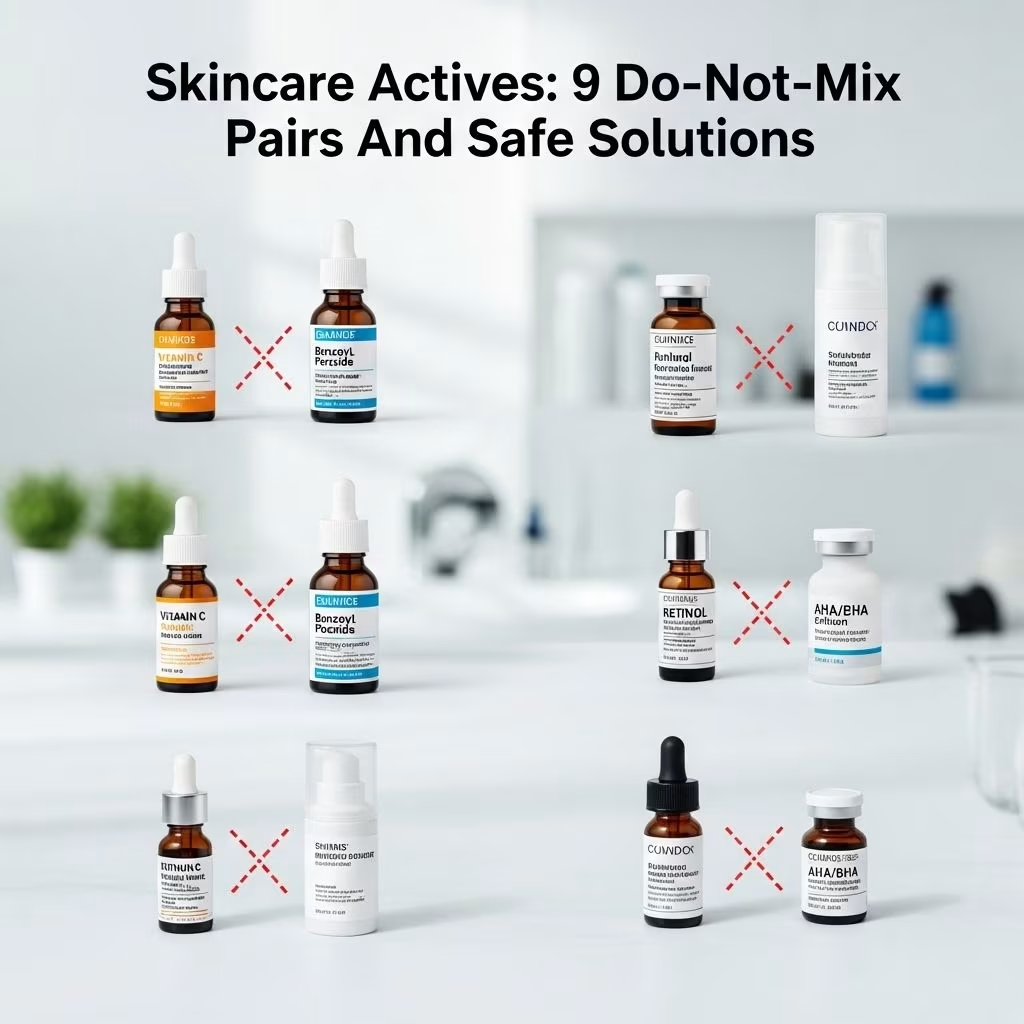
Mastering your skincare routine requires understanding which active ingredients can give you glowing, healthy skin—and which combinations can backfire, causing irritation or less effective results. Many popular actives have exceptional benefits on their own, but mixing incompatible ingredients can lead to redness, peeling, and a compromised skin barrier. This guide presents an in-depth look at the science behind do-not-mix lists, the logic behind common warnings, and step-by-step solutions for building a skin-safe regimen.
Introduction to Skincare Actives
Skincare actives are potent ingredients in products that target specific concerns like acne, hyperpigmentation, wrinkles, or uneven skin tone. These include acids (AHAs/BHAs), retinoids, vitamin C, benzoyl peroxide, and niacinamide, among others. While single ingredients can transform your skin, mixing the wrong actives may counteract their benefits or irritate your skin, which is why ingredient knowledge is key.
Why Some Skincare Actives Should Not Be Mixed
Certain active ingredients can conflict chemically or cause compounded irritation. Problems that may occur when combining incompatible actives include:
- Increased irritation like redness, peeling, or burning sensations
- Skin barrier compromise due to over-exfoliation or compounded drying effects
- Reduced effectiveness if one ingredient neutralizes or deactivates another
Common Mechanisms of Conflict
- pH Mismatch: Some actives require specific pH ranges to optimize absorption; others interfere by changing the skin’s environment.
- Overlapping Effects: Multiple exfoliants or drying agents used together can overstress your skin.
- Chemical Instability: Some antioxidants and exfoliants lose effectiveness if combined or exposed to light/air at the wrong time.
The Essential Do Not Mix List
| Do Not Mix | Reason | Recommended Solution |
|---|---|---|
| Retinol + AHAs/BHAs (e.g., Glycolic, Lactic, Salicylic Acid) | Both increase skin turnover and exfoliate, leading to irritation, redness, and peeling if used together. | Use on alternate nights; always use sunscreen in the morning. |
| Retinol + Vitamin C | Both work best at different pH levels. Used together, they can destabilize each other and irritate the skin. | Apply Vitamin C in the morning and Retinol at night. |
| Vitamin C + AHAs/BHAs | Both are acidic; layering can be harsh and decrease Vitamin C efficacy, risking irritation. | Separate into different routines (e.g., Vitamin C in morning, acids at night). |
| Retinol + Benzoyl Peroxide | Benzoyl peroxide can deactivate retinol, reducing its effectiveness and increasing irritation risk. | Alternate use (e.g., Benzoyl Peroxide in the morning, Retinol at night). |
| Vitamin C + Niacinamide* | Traditionally thought to be incompatible due to chemical interaction, newer research shows they can be used together, but sensitive skin may still react. | Try layering with gentle formulas, patch test, or use at different times if irritation occurs. |
| Glycolic Acid + Salicylic Acid | Double exfoliation increases risk of irritation and barrier damage. | Alternate or use a product containing both at a safe, formulated ratio. |
| Water-Based + Oil-Based Products | Oil can block water-based products from penetrating, reducing their effectiveness. | Apply water-based products first, then oils last. |
| Benzoyl Peroxide + AHAs/BHAs | Combining drying and exfoliating actions can inflame sensitive skin. | Use only one at a time or consult a dermatologist. |
| Benzoyl Peroxide + Tretinoin (Prescription Retinoid) | Benzoyl peroxide can deactivate tretinoin, rendering it ineffective. | Separate by routine or time of day when medically necessary. |
*See the “Conflicts Solved” section for more nuance on Vitamin C and Niacinamide.
Conflicts Solved: Safe Strategies and Solutions
Some ingredient pairs are not as dangerous as myths make them seem, while others do require strict scheduling. Here are strategies for solving common ingredient conflicts, maximizing efficacy, and minimizing risk.
Alternate Use (Time-Based Rotation)
- AM/PM Splitting: Example: Vitamin C in the morning protects skin from free radicals, retinol at night repairs skin for optimal renewal.
- Alternate Days: Use acids one night and retinol another to prevent overstimulation.
Layering Order Matters
- Apply water-based serums first, oils last. This ensures active ingredients like hyaluronic acid or vitamin C can absorb before heavier oils lock in moisture.
- Moisturizer and SPF buffer actives: Sandwiching potential irritants between soothing moisturizer or topping off with sunscreen reduces irritation risk and helps preserve ingredient efficacy.
Formulation and pH Considerations
- Some brands offer pre-made blends at safe concentrations (for example, AHA/BHA combos). Only use dual-acid products that are formulated together to avoid DIY mixing mistakes.
- pH balancing helps actives work and minimizes irritation: Allow products to absorb fully (wait a minute or two) before applying the next.
Ingredient Pairing Myths Debunked
- Vitamin C + Niacinamide: Old research suggested combining both reduced efficacy, but modern studies show most skin types tolerate this pair and may see brighter, even-toned skin when used together. Patch test if you are sensitive.
- Niacinamide + Retinol: This combination is well-tolerated for many and may even support reduced irritation.
Ingredient Combinations That Work Well
- Hyaluronic Acid + (Almost Any Active): Hyaluronic acid hydrates and soothes, making it an ideal companion to retinol, acids, and benzoyl peroxide.
- Retinol + Niacinamide: Niacinamide can help buffer skin against some irritation from retinoids.
- Vitamin C + Vitamin E + Ferulic Acid: This power-antioxidant trio is often pre-formulated for improved stability and performance for brightening/protecting skin.
- Benzoyl Peroxide + Moisturizer: Moisturizer helps curb the dryness and irritation from benzoyl peroxide and some acne treatments.
An Example of an Effective, Conflict-Free Skincare Routine
- Morning:
- Gentle cleanser
- Vitamin C serum
- Moisturizer
- Broad-spectrum sunscreen
- Evening (Alternate Days):
- Days 1, 3, 5: Gentle cleanser → Retinol → Moisturizer
- Days 2, 4, 6: Gentle cleanser → AHA or BHA → Moisturizer
Tips for Layering and Rotating Skincare Actives
- Patch test every new product before adding it to your routine.
- Introduce one new active at a time and observe your skin’s response for at least a week.
- Start with lower concentrations of actives and increase gradually.
- Use moisturizer and sunscreen daily to protect and repair the skin barrier.
- For oily or acne-prone skin, avoid oil-heavy creams after water-based actives.
Frequently Asked Questions (FAQ)
Q: Why is it bad to mix retinol with acids?
A: Both retinol and AHAs/BHAs promote skin exfoliation—using them together can result in excessive irritation, peeling, and even worsen acne or pigmentation problems.
Q: Can I ever use vitamin C and acids together?
A: Yes, but not layered in the same session. Use vitamin C in your morning routine and acids at night to avoid irritation and maximize benefits.
Q: Is it dangerous to mix niacinamide and vitamin C?
A: Most recent research shows it is safe for the majority of users, and many products are formulated with both. However, sensitive skin types should patch test and monitor for irritation.
Q: What is the best way to introduce multiple actives?
A: Start slow, adding one new ingredient at a time every 1–2 weeks, ideally at lower concentrations. Always patch test, and increase only if your skin is not reacting negatively.
Q: What should I do if I accidentally mix incompatible actives?
A: Remove potential irritants, use a gentle cleanser, moisturizer, and sunscreen. Pause actives for a few days until your skin calms. If severe irritation occurs, consult a dermatologist.
Conclusion
Effective skincare is as much about ingredient synergy as it is about strength. Understanding do-not-mix lists for actives and following science-backed routines allows you to target concerns like acne, aging, and dullness—without risking unnecessary irritation. Blend knowledge with high-quality products, attentive patch testing, and patience for the healthiest, most radiant skin possible.
References
- https://skincarejunkie.com/blogs/news/5-active-skincare-ingredient-interactions-you-need-to-know-about
- https://www.beautybay.com/edited/skincare-ingredients-you-should-never-mix/
- https://kimgalloesthetics.com/blog/skincare-mixology-guide
- https://www.usdermatologypartners.com/blog/ingredients-to-pair-with-retinol/
- https://www.youtube.com/watch?v=NRfabOWa2sA
- https://www.nm.org/healthbeat/healthy-tips/how-active-ingredients-act-on-skin


