


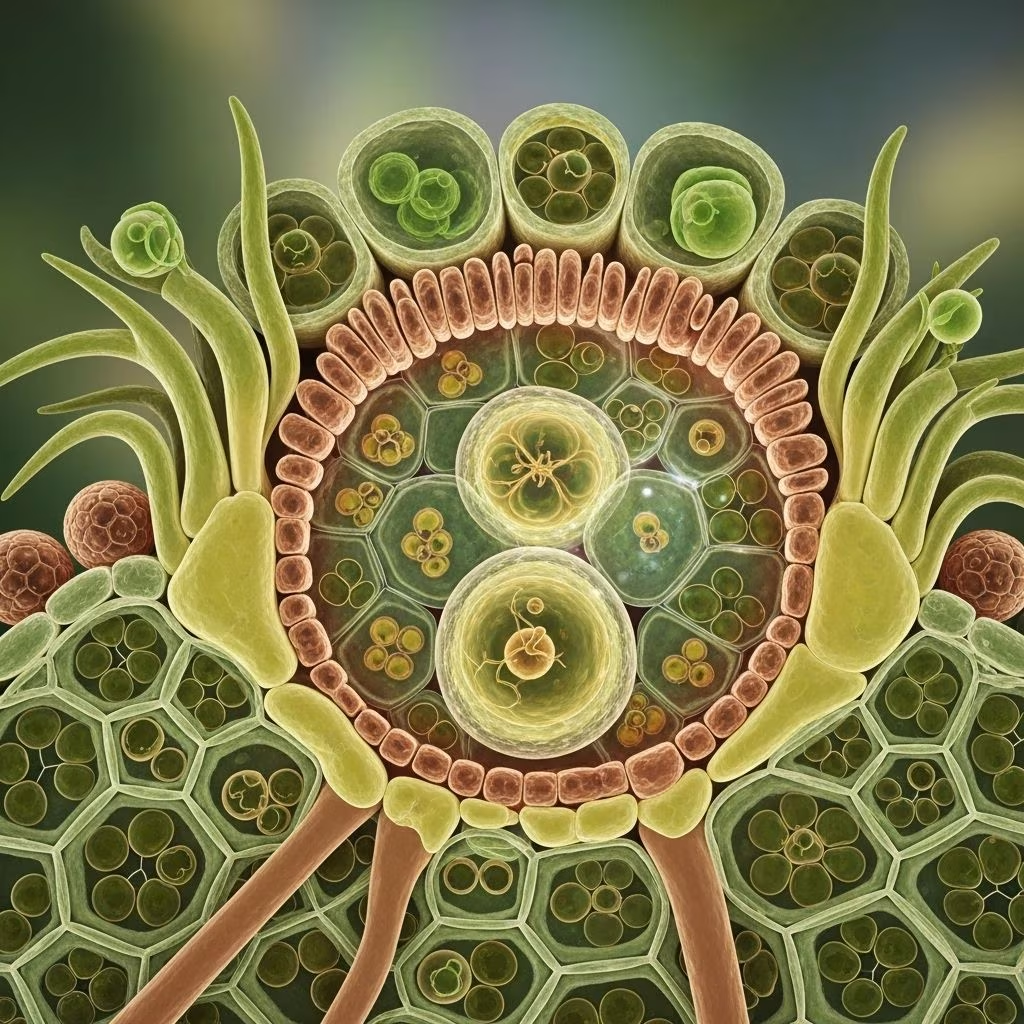
In a world where beauty trends rapidly evolve and consumers prioritize both efficacy and sustainability, plant stem cell technology in skin care and cosmetic formulations stands out for its innovative potential. Harnessing the regenerative abilities of plants, these ingredients promise anti-aging, protection, and revitalization—while also reducing the industry’s reliance on animal- or human-derived materials. But how effective are plant stem cells really when delivered in active formulations? This comprehensive guide explores the science behind plant stem cells, their practical application in skincare, and what current evidence says about their real-world efficacy.
Introduction to Plant Stem Cells
Plant stem cells are undifferentiated cells found in the meristematic tissues of plants, possessing the unique capability to regenerate organs, repair tissue, and respond dynamically to environmental changes. In cosmetic science, plant stem cells refer not to live cells, but mostly extracts or lysates derived from these potent cellular resources, concentrated for maximum benefit in topical formulations.
Historical uses of botanicals for beauty and healing are well-documented, but isolating stem cells represents a modern leap: one that aims to deliver the regenerative magic of entire plants within a single skincare product.
What Makes Plant Stem Cells Unique?
- Toti- and pluripotency: Ability to give rise to specialized cell types and replenish damaged tissues.
- Resilience: Plants produce a range of secondary metabolites (antioxidants, phenolics, phytohormones) to survive harsh stresses—passed on in their stem cells.
- Environmental Sustainability: Sourcing through cell culture avoids overharvesting endangered wild species.
Biological Properties and Mechanisms
The potential of plant stem cells in skin care arises from several well-established biological functions:
- Antioxidant Defense: Rich in polyphenols, carotenoids, and flavonoids, plant stem cell extracts help neutralize free radicals and protect skin from oxidative stress, a primary driver of aging.
- Collagen & Elastin Support: Extracts can stimulate fibroblast activity, enhancing production of collagen and elastin for firmer, more elastic skin.
- Repair & Regeneration: Bioactive compounds support cellular turnover, wound healing, and restoration of the skin barrier.
- Anti-Inflammatory Activity: Certain plant stem cell derivatives reduce redness and inflammation by modulating pro-inflammatory signals.
- Photoprotection: Some extracts, such as those from grapes and edelweiss, offer protection against UV-induced damage.
It is important to highlight that most formulations utilize stem cell extracts rather than live cells. While living cells could, in theory, directly participate in tissue regeneration, topical formulations predominantly deliver antioxidants and signaling molecules that modulate skin biology indirectly.
Extraction and Cultivation Techniques
To ensure consistency, sustainability, and potency, the industry uses advanced biotechnological techniques to culture and harvest plant stem cells for cosmetic use.
Major Extraction Methods
- Callus Culture: Small tissue samples are cultured on nutrient media to generate undifferentiated cell masses (callus), which can be harvested repeatedly for extract production.
- Suspension Culture: Cells are cultivated in liquid media, allowing for scalable, sterile, and optimized growth.
- Lysate & Extract Preparation: Cells are broken down and bioactive compounds are extracted and stabilized for cosmetic use.
- Encapsulation: Actives are often encapsulated in liposomes or microemulsions to enhance skin absorption and protect the compounds from oxidation.
Why Botanical Cell Culture?
- Standardization: Produces reliable, reproducible extracts regardless of climate, geography, or season.
- Ethical Sourcing: Avoids overexploitation of wild plants and minimizes ecological impact.
- Safety: Reduces contamination risk from pests, pollutants, and pathogens.
Incorporation in Active Formulations
Plant stem cell extracts are tailored for use in a wide range of skin and hair care products. Their incorporation involves sophisticated formulation strategies:
- Serums and Ampoules: Concentrated delivery, often with advanced carriers for maximum bioavailability.
- Creams and Lotions: Blended with moisturizing and emollient bases to improve texture and usability.
- Masks and Essences: Used for intensive treatments targeting specific concerns (firmness, wrinkles, radiance).
- Haircare: Stem cell derivatives from peppermint, grape, or argan are purported to encourage follicle vitality and reduce scalp inflammation.
Key Delivery Systems
- Encapsulation technologies such as liposomes, niosomes, and microemulsions.
- pH stabilization and antioxidant protection for maximal active preservation.
- Skin penetration enhancers (e.g., peptides, fatty acids) for improved bioavailability of actives.
Current Applications & Market Trends
The global market for plant stem cell cosmetics has expanded rapidly, reflecting consumer interest in clean beauty, sustainability, and scientific innovation. Multiple well-known brands now offer specialized lines harnessing the power of botanically-derived stem cell extracts.
| Plant Source | Primary Actives | Main Claimed Benefits | Popular Applications |
|---|---|---|---|
| Swiss apple (Malus domestica) | Phytonutrients, flavonoids, antioxidants | Anti-aging, photoprotection, repair | Serums, day creams |
| Edelweiss (Leontopodium alpinum) | Leontopodic acids A & B, antioxidants | Strong free-radical scavenging, anti-collagenase, skin barrier support | Anti-aging creams, sun protection |
| Grapes (Vitis vinifera) | Anthocyanins, resveratrol | Photoprotection, anti-inflammatory, brightening | Masks, serums, brightening creams |
| Indian Gooseberry (Phyllanthus emblica) | Vitamin C, tannins | Skin lightening, antioxidant, anti-aging | Serums, brightening formulas |
| Peppermint (Mentha piperita) | Menthol, polyphenols | Hair care, invigorating scalp treatments | Shampoos, scalp serums |
| Ginger (Zingiber officinale) | Gingerols, antioxidants | Anti-inflammatory, anti-aging | Face creams, anti-redness serums |
The market includes esteemed brands such as L’Oreal, Estee Lauder, Chanel, MyChelle Dermaceuticals, Juice Beauty, and others, each offering proprietary versions of plant stem cell technologies or complexes.
Evidence of Efficacy
How effective are plant stem cell formulations? Clinical research on plant stem cell extracts has yielded promising—though still developing—results in multiple domains:
- Professional skincare products do not contain live stem cells, but rather concentrated extracts rich in antioxidants and signaling molecules. These extracts have demonstrated measurable anti-aging, moisturizing, and protective benefits in controlled studies.
- Swiss apple stem cell extract has been shown to increase the longevity of skin cells and delay onset of visible aging in laboratory tests.
- Edelweiss stem cell extract has demonstrated strong antioxidant and anti-collagenase activity, helping protect the skin matrix and limit damage from UV exposure.
- The efficacy of many plant stem cell-based products relies on their high levels of polyphenols, vitamins, and peptide complexes that nourish the skin and support its natural resilience.
Limitations: For stem cells to remain ‘active’ in serums or creams, they would need to be alive—a claim not substantiated in current products. The main proven benefits come from antioxidants, plant hormones, and secondary metabolites, not from direct incorporation of viable stem cells. More long-term, peer-reviewed studies are needed for quantifying anti-aging effects and comparing plant stem cell efficacy against gold-standard dermatological actives.
Advantages & Challenges of Plant Stem Cell Formulations
Advantages
- Natural, Vegan, and Eco-Friendly: Appeals to consumers seeking ‘green’ formulations and ethical sourcing.
- Broad Spectrum of Activity: Antioxidant, regenerative, and protective effects in one extract.
- Customizable Production: In vitro culture allows the creation of extracts with tailored levels of active compounds for specific cosmetic needs.
- Safety: Lower risk of irritation or allergy compared to some synthetic or human-derived actives.
Challenges
- Preservation of Actives: Maintaining stability of bioactive compounds during extraction, storage, and within complex formulations.
- Efficacy Verification: Lack of standardized, robust clinical data directly comparing plant stem cell extracts with conventional anti-aging actives.
- Quality Control: Variability in sourcing, culture methods, and extraction can impact final product efficacy and reproducibility.
- Marketing Hype: Misuse of terms like ‘live stem cells’ creates unrealistic expectations, as most products contain only extracts or lysates, not viable cells.
Future Outlook: Innovation at the Intersection of Science and Sustainability
The integration of plant stem cell technology represents a convergence of biotechnology, natural product chemistry, and sustainable manufacturing. Some anticipated future trends include:
- More robust, peer-reviewed studies to validate efficacy and optimal use concentrations for different skin types.
- Development of new delivery systems, such as nano-encapsulation, for targeted release and improved skin penetration of bioactives.
- Greater personalization, with formulations tailored to individual genetics and skin conditions.
- Expansion to other sectors, such as wound care and regenerative medicine, leveraging stem cell technologies for tissue repair and anti-inflammatory effects.
Frequently Asked Questions (FAQs)
Q: Are plant stem cells alive in skincare creams and serums?
A: No. The vast majority of products use plant stem cell extracts or lysates, not live cells. The benefits come from the bioactive compounds, not direct cellular activity.
Q: What makes plant stem cell extracts unique compared to regular plant extracts?
A: Stem cell extracts contain higher concentrations of potent metabolites (antioxidants, growth factors, phytohormones) and can be tailored in vitro for optimized activity.
Q: Which skin concerns benefit most from plant stem cell formulations?
A: These extracts are primarily used for anti-aging (wrinkles, loss of firmness), photoprotection, hydration, and rejuvenation. Certain botanicals may also target pigmentation and redness.
Q: Are there risks or side effects from using plant stem cell cosmetics?
A: Properly formulated products are generally very safe, with low risk of irritation or allergy. As with all new ingredients, patch-testing is recommended for sensitive individuals.
Q: How do these products impact sustainability?
A: By relying on plant cell culture rather than whole-plant harvesting, these technologies reduce the environmental impact of cosmetic production and avoid overexploitation of wild flora.
In summary: Plant stem cell technology in active formulations has transformed the cosmetic and skincare industry with its blend of scientific innovation, natural efficacy, and environmental responsibility. Although these products do not contain live stem cells, their carefully extracted metabolites offer tangible benefits for skin health, aging, and resilience—heralding a new era of smart, green beauty.
References
- https://www.acorn.me/post/plant-stem-cells-in-skincare
- https://blog.covalo.com/personal-care/unlocking-skins-lifepan-the-power-of-plant-based-stem-cells
- https://pmc.ncbi.nlm.nih.gov/articles/PMC7275108/
- https://www.katesomerville.com/blogs/news/the-benefits-of-plant-stem-cell-skin-care
- https://www.gloskinbeauty.com/collections/phyto-active
- https://www.dermstore.com/c/ingredient/plant-stem-cells/
- https://www.thestemcompany.com
- https://lemieuxskincare.com/blogs/content/mother-nature-sister-science-the-power-of-plant-derived-stem-cells
- https://carst.com/stem-cell-technology-conscious-skin-care/


