


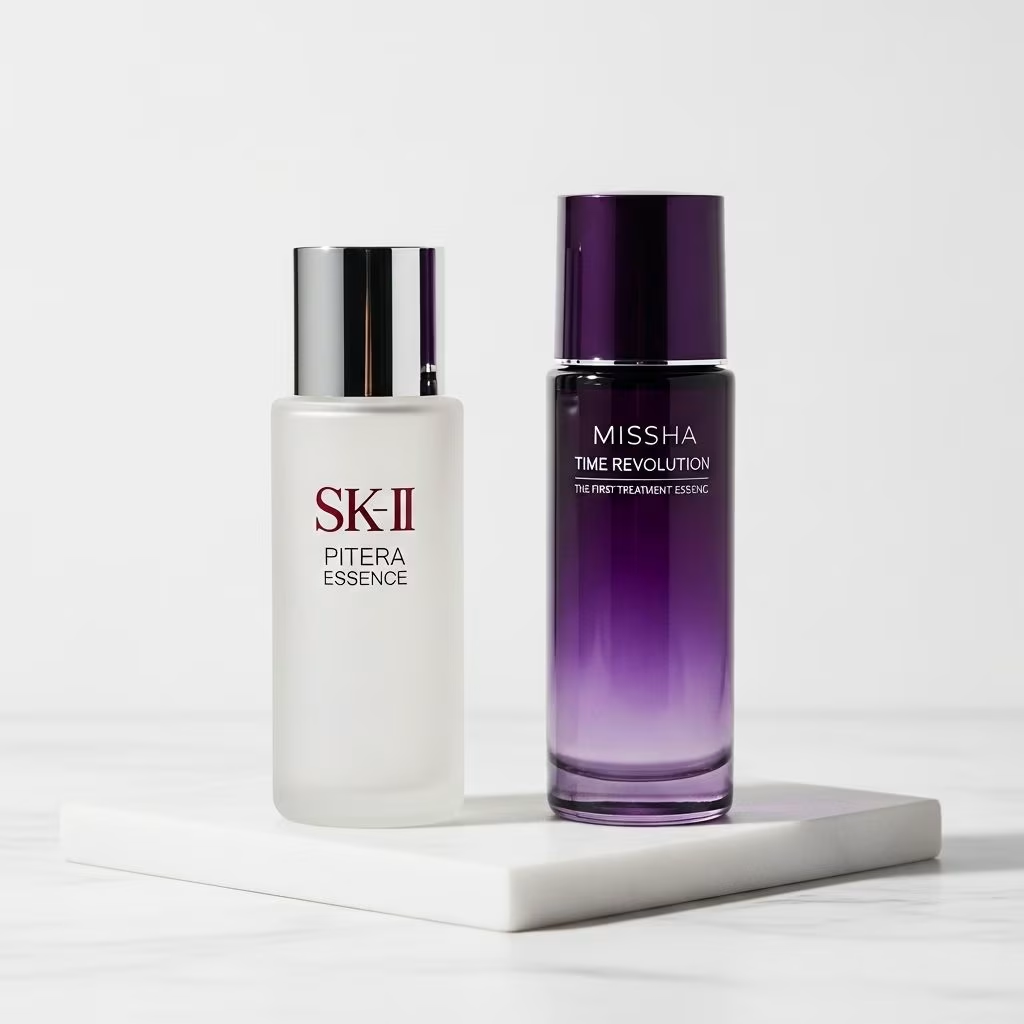
The search for youthful, radiant skin often leads skincare enthusiasts to the realm of essences—a cornerstone of advanced skincare regimes. Two titans dominate this niche: SK-II Facial Treatment Essence (Pitera Essence) and Missha Time Revolution The First Essence. These products inspire passionate debate, with claims of transformative results, Holy Grail status, and “dupe” comparisons flooding beauty communities. This comprehensive article dissects how SK-II and Missha compare in terms of ingredients, performance, user suitability, results, packaging, scent, and value.
Overview & Brand Stories
SK-II is a legendary Japanese skincare brand, recognized globally for its premium, science-based offerings. Its acclaimed Facial Treatment Essence—often nicknamed the “Miracle Water”—has inspired decades of devotion since its invention in 1980. The brand’s narrative centers on the discovery of PITERA™, a unique yeast-derived ferment, after observing elderly brewers’ youthful hands at a sake brewery.
Missha, a forerunner of K-beauty innovation, responded to the popularity of essences with its Time Revolution The First Essence. Positioned as an affordable competitor (and commonly suggested “dupe”), Missha’s product leverages advanced ferment technology inspired by similar principles.
Ingredients Breakdown
Key Actives & Core Differences
- SK-II Facial Treatment Essence: Features a remarkably simple formula, anchored by over 90% PITERA™—scientifically identified as Galactomyces Ferment Filtrate. Minimal supporting additives put this unique ferment at center stage.
- Missha Time Revolution The First Essence: Utilizes Yeast Ferment Extract (Saccharomyces Ferment Filtrate) and Bifida Ferment Lysate, plus a supporting blend of hydrating and soothing agents like Sodium Hyaluronate and Niacinamide.
Yeast Ferments Explained
- PITERA™ (SK-II): Originally called Saccharomycopsis Ferment Filtrate, now labeled Galactomyces Ferment Filtrate. Studied for improving skin barrier function, hydration, antioxidant activity, and brightening (potential for reducing dark spots and fine lines). However, research remains limited and mostly proprietary.
- Saccharomyces & Bifida Ferments (Missha): Bifida Ferment Lysate, also found in some luxury Western essences, helps soothe inflammation, reduce redness, and enhance skin’s resilience against stress. Yeast-derived extracts are rich in minerals and lactic acid; combined with humectants, these support hydration, gentle exfoliation, and a healthy microbiome.
Additional Notable Ingredients in Missha
- Sodium Hyaluronate: Superior moisture-binding agent (humectant).
- Niacinamide: Supports brightening, helps with tone, and reinforces barrier function.
- Pentylene Glycol, Polyquaternium-51: Further support hydration and smoothness.
Ingredient Simplicity vs. Synergy
SK-II’s value proposition lies in the purity and concentration of PITERA™, while Missha builds a broader multi-functional formula with more supporting actives to amplify hydration and soothe sensitivity.
Texture, Fragrance, and Application
Texture
- Both essences are watery, thin, and fast-absorbing. If you’re new to Asian essences, expect a clear liquid that disappears quickly into the skin.
- Some users notice SK-II feels slightly silkier; however, in practical use they are remarkably similar.
Fragrance
- SK-II: Has a signature “fermented rice” scent, which can come off as earthy, slightly sour, or unusual to first-time users. The aroma dissipates quickly.
- Missha: Delivers a milder, subtler fermented scent—generally preferred by those sensitive to fragrance.
Application Method
- Both products are applied after cleansing, as you would a toner—either patted in with hands or with a soaked cotton pad across the face and neck.
- Multiple layers (the “7 skin method”) can enhance hydration.
Performance & Results
Brightening, Hydration, & Barrier Support
- SK-II is widely renowned for delivering a brighter, clearer, “refined” skin tone—often described as “crystal clear skin” within three weeks of use. Users report improved radiance, fade of dark spots over time, and softer, smoother skin.
- Missha is frequently praised for superior hydration, reduced sensitivity, and skin resilience. Many see reduced redness and bounce-back from harsh actives. Brightening is milder and may take 5–6 weeks for visible results.
Exfoliation, Anti-aging, and Microbiome Effects
- SK-II’s PITERA™ may provide light exfoliation and antioxidant benefits, but the lack of additional humectants makes it potentially less hydrating for some.
- Missha’s Bifida lysate and supporting humectants cater to barrier repair, especially for sensitive, dry, or compromised skin.
Ultimately, SK-II’s essence seems to excel for radiance and tone refinement, while Missha’s excels at hydration and strengthening skin’s resilience.
Suitability for Various Skin Types
| Skin Type | SK-II Pitera | Missha Time Revolution |
| Oily/Combination | Light, non-greasy; may enhance brightness | Hydration with light feel; strengthens barrier |
| Dry/Sensitive | May be too light; lacks additional humectants | Ideal—extra hydrators, soothing ferments |
| Aging/Mature | Visible radiance, improved tone | Gentle, supports barrier, less brightening |
| Acne-prone | Non-comedogenic, but patch test for yeast sensitivity | Contains niacinamide; generally safe for acne but check for individual sensitivities |
Price, Availability, and Value
- SK-II Facial Treatment Essence (150 ml): Approx. $150–$179 depending on region and retailer.
- Missha Time Revolution The First Essence (150 ml): Approx. $45–$53 for the same quantity—often a third or less of SK-II’s price.
- Missha represents a substantial value, especially for budget or high-volume users.
- Both products are globally available, but SK-II is usually restricted to luxury/department stores and authorized online retailers, while Missha is widely sold through K-beauty merchants and direct channels.
Packaging & Presentation
- SK-II: Heavy frosted glass, silver cap, minimalist and ultra-luxe—feels like a splurge and carries “iconic” status on vanities.
- Missha: Modern glass bottle, often with trendy typography and branding—less “serious” but stylish and functional.
- Both offer substantial, recyclable glass bottles, though SK-II’s is noticeably weightier and more premium.
Comparison Table: SK-II Pitera vs Missha Time Revolution
| Feature | SK-II Facial Treatment Essence | Missha Time Revolution The First Essence |
| Main Ferment | PITERA™ (Galactomyces) | Saccharomyces & Bifida Ferment Lysate |
| Formula Focus | Purer, single-focused (90% PITERA™) | Multi-active (hydrators, niacinamide) |
| Scent | Distinct fermented rice, earthy | Mild, subtle ferment scent |
| Texture | Very watery, slightly silky | Watery, light, very quick to absorb |
| Hydration | Minimal, more about radiance | Pronounced, locks in moisture |
| Finish | Weightless, invisible | Light, refreshed feel |
| Best For | Radiance, dullness, uneven tone | Sensitivity, dryness, barrier repair |
| 155ml Price | $150–$179 | $45–$53 |
| Packaging | Luxury frosted glass, silver cap | Modern glass, functional cap |
Frequently Asked Questions
Q: Is Missha Time Revolution a true dupe for SK-II Facial Treatment Essence?
While Missha was formulated as a more affordable competitor, it is not an identical ingredient match. It mimics the concept—fermented yeast extract and barrier support—but uses different active ferments and adds hydrating supplements absent in the SK-II formula.
Q: Which essence delivers faster results?
SK-II generally produces clearer, brighter skin within 3 weeks for most users, thanks to its PITERA™ focus. Missha may require 5–6 weeks to show visible improvements in texture and tone, but hydrates immediately.
Q: Which is better for sensitive or dry skin?
Missha’s formula, with Bifida Ferment Lysate and Sodium Hyaluronate, is gentler and more hydrating. It reduces irritation and strengthens the barrier—ideal for sensitivity.
Q: Are there differences in long-term anti-aging effects?
Research on PITERA™ ants anti-aging claims is limited, though SK-II users often praise the gradual brightening. Missha’s anti-aging comes from skin barrier support and combined actives, not just ferment content.
Q: Can I use both essences together?
Some enthusiasts layer them in a multi-step routine, but this is only recommended if your skin tolerates yeasts well, as overloading on ferments can sometimes cause sensitization.
Conclusion: Which Should You Choose?
SK-II Facial Treatment Essence shines for those willing to invest in maximum radiance, refined tone, and iconic luxury—especially for dull, uneven, or mature skin types seeking visible brightness. Its single-minded, nearly pure PITERA™ approach delivers potent, if sometimes understated, clarity but less direct hydration.
Missha Time Revolution The First Essence is a standout for budget-conscious users, those needing superior hydration, or anyone with easily irritated or dry skin. Its multi-benefit formula, including celebrated Bifida lysate and various humectants, makes it more forgiving, approachable, and suitable for sensitive routines—and it delivers visible bounce and resilience, even if the “glow” is subtly slower to show.
Both essences are icons for good reason. The best choice comes down to your primary goal: if you crave fast radiance and iconic luxury, SK-II delivers. If your focus is comfort, hydration, and value, Missha emerges as a leading alternative in the ongoing quest for luminous, healthy skin.
References
- https://www.beautifulwithbrains.com/sk-ii-missha-essence-dupe/
- https://skinandtonics.com/sk-ii-facial-treatment-essence-vs-missha-first-treatment-essence/
- https://www.geekyposh.com/missha-time-revolution-first-essence-5x-review/
- https://www.verygoodlight.com/2017/10/04/hold-up-are-missha-and-sk-ii-basically-sisters-from-different-misters/
- https://skinsort.com/compare/sk-ii-facial-treatment-essence-pitera-essence-vs-missha-time-revolution-the-first-essence-5x
- https://glamtouch.co.uk/blogs/edits/missha-first-treatment-essence-vs-sk-ii-facial-treatment-essence
- https://www.youtube.com/watch?v=uR2x0LHiCvo
- https://www.youtube.com/watch?v=5TPL638Vvxk
- http://zoehon.blogspot.com/2016/09/review-essences-sk-ii-facial-treatment.html


