


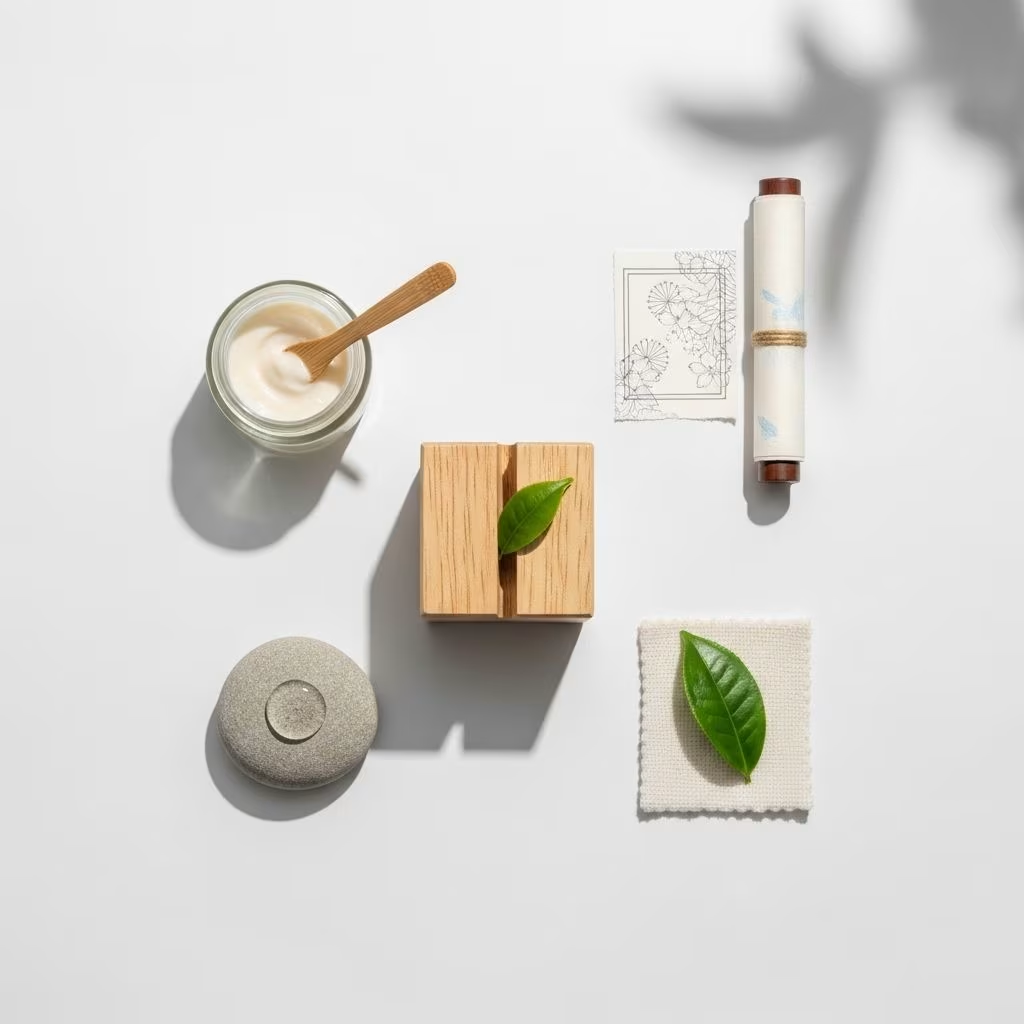
Japanese beauty (J-Beauty) stands at the intersection of timeless tradition and modern sustainability. Renowned for its minimalist rituals, natural ingredients, and respect for nature, J-Beauty has evolved to become a global leader not only in skincare innovation but also in environmental stewardship. As the demand for ethically made and eco-friendly cosmetics surges worldwide, Japanese brands are pioneering practices that promise both radiant skin and a healthier planet.
Cultural Philosophy: Nature, Minimalism, and Respect
At the heart of J-Beauty lies a profound respect for nature and the principle of minimalism. Japanese aesthetics have long celebrated harmony between humans and the environment, with philosophies like “wabi-sabi” (embracing imperfection and simplicity) and “mottainai” (an ethic of not wasting). These cultural foundations are seamlessly integrated into contemporary beauty practices, fostering a mindset where skincare should nourish both humanity and the earth.
The Western concept of sustainability often revolves around environmental protection, but in Japan it is deeply rooted in daily life and spirituality. This respect for limited resources inspires a beauty philosophy focusing on making the most of every ingredient, creating products that fulfill multiple purposes, and reducing unnecessary consumption.
Key Pillars of J-Beauty Sustainability
Minimalist Formulation: Less Is More
J-Beauty is defined by its commitment to minimalist formulation. Products are designed to be simple, efficient, and multi-functional, using the fewest number of high-quality ingredients necessary to deliver results. This reduces waste in both production and disposal, and avoids overburdening the skin or the environment with unnecessary chemicals.
- Usage of essential, skin-beneficial ingredients over complex, multi-chemical formulas.
- Encouragement of multi-use products (e.g., combined blush and tint), reducing the need for excess packaging or multiple purchases.
- Avoidance of synthetic additives wherever possible, leading to safer, biodegradable formulas.
Eco-Friendly and Reduced Packaging
Packaging is a critical area where J-Beauty brands are making substantial environmental strides. Reducing the overall ecological footprint means focusing on the lifecycle of the product, from packaging design to disposal. Examples include:
- Use of recyclable, biodegradable, or compostable packaging materials.
- Designs that avoid excessive ornamentation or double-packaging, in favor of minimalist, functional containers.
- Introduction of refillable pouches and containers, dramatically curtailing the volume of single-use plastics.
- Brands like Mutenka Sekken offering soap bars with minimal or container-free packaging.
Natural and Ethically Sourced Ingredients
Japanese beauty brands emphasize ingredients sourced ethically and sustainably from local environments, using renewable natural resources such as rice bran, green tea, seaweed, camellia oil, sake lees, and more. Focus areas include:
- Supporting regenerative and organic farming practices, protecting both human health and local ecosystems.
- Innovative upcycling of industry byproducts, as seen in the use of soy sauce lees for the extraction of ceramides (vital skin barrier components).
- Avoiding endangered plant or animal sources; prioritizing abundant, fast‐renewing botanicals.
- Replacing potentially harmful synthetic chemicals with plant-based alternatives that are gentler to both skin and soil.
Circular Systems and Low-Impact Production
In line with the principles of “zero waste” and circular economy, several J-Beauty companies operate systems that minimize environmental impact at every stage of production.
- Circular resource loops: For example, using soy sauce production byproducts to create skincare ingredients, with residues repurposed again as agricultural fertilizer.
- Low-impact manufacturing techniques: Implementing traditional Japanese fermentation technologies, which utilize natural processes and dramatically reduce CO2 emissions compared to conventional chemical-based processes.
- Continuous innovation in sustainable ingredient extraction and waste minimization.
Cruelty-Free Practices
Animal welfare is a growing concern for consumers worldwide. Many J-Beauty brands have adopted cruelty-free testing methodologies, and prioritize vegan or plant-based product lines. Key aspects include:
- Strict avoidance of animal testing, in line with international guidelines.
- Certification through recognized third-party organizations, ensuring transparency and trust.
Sustainability Initiatives by Leading J-Beauty Brands
J-Beauty sustainability is championed by both longstanding icons and emerging disruptors. Below are representative examples demonstrating the breadth and creativity of sustainable efforts in Japanese beauty.
| Brand | Key Sustainable Practice | Notable Product/Initiative |
|---|---|---|
| Mystiqare | Minimalist formulations, recyclable packaging, refillable pouches, ethical ingredient sourcing, cruelty-free | Cleansers, refillable skincare products |
| Mutenka Sekken | Container-free or low-packaging soap bars, plant extract-based formulas, no synthetic surfactants | Handmade bar soaps (Lavender, Hinoki, Sake) |
| Seiso | Upcycling soy sauce lees for ceramides, recyclable materials, circular system for agricultural support | Skin-identical ceramide skincare |
| BCL Company | Recycling containers, focus on local production and consumption, innovative sheet masks with natural ingredients | Saborino Sheet Mask, supplement business expansion |
| uka | Comprehensive eco-practices across their beauty care line, focus on sustainability for all needs | Comprehensive eco-friendly product lineup |
| J-Beauty Natural | Sustainable ingredient selection, regenerative agriculture, eco-friendly packaging, minimized carbon footprint | Natural skincare products |
Consumer Awareness and Impact
The sustainable evolution of J-Beauty is not driven solely by brands—it rides a wave of consumer consciousness. Japanese consumers, and increasingly those overseas, are choosing products aligned with their values. Demand is high for:
- Transparency in ingredient sourcing and production processes.
- Availability of refill systems and low-waste product designs.
- Multi-purpose and long-lasting items, in line with minimalist lifestyles.
- Accessible education on sustainable beauty practices through brand platforms and social media.
Japan’s cultural philosophy makes consumers naturally receptive to green practices. For example, the idea of buying only what is needed, using every drop of a product, and valuing longevity over novelty, all reinforce sustainability at the purchase and post-purchase stages.
Challenges and The Future of J-Beauty Sustainability
Despite remarkable progress, J-Beauty’s journey toward full sustainability is ongoing. Ongoing challenges include:
- Balancing advanced performance expectations with the constraints of natural/organic ingredient production.
- Scaling refill and recycling systems to global distribution networks, especially outside Japan.
- Ensuring global supply chains uphold Japanese standards for labor, environmental protection, and ingredient traceability.
- Meeting the rising demand from Gen-Z consumers for innovation and authenticity, without sacrificing eco-integrity.
The future looks promising as industry bodies such as the Japan Cosmetic Industry Association (JCIA) set rigorous standards, and new collaborations inside and outside Japan push for systemic change. Practices such as local production for local consumption, holistic product development (including supplements and beauty appliances), and integration of wellness and inner beauty indicate that J-Beauty is poised not only to set trends, but to foster global environmental leadership in beauty.
Frequently Asked Questions (FAQs)
Q: Why are natural ingredients considered more sustainable in J-Beauty?
A: Natural ingredients are generally biodegradable, sourced renewably, and have a lower environmental impact during cultivation and extraction. J-Beauty emphasizes locally sourced botanicals, minimizing the carbon footprint and supporting regional biodiversity.
Q: How do refillable products help the environment?
A: Refillable systems cut down single-use plastic waste and overall packaging needs. By buying refills, consumers reduce landfill contributions and the energy used for making new containers.
Q: What standards do J-Beauty brands follow for cruelty-free certification?
A: Many Japanese brands adhere to international guidelines for cruelty-free practices and pursue third-party certification, ensuring products are not tested on animals throughout any stage of development.
Q: Can luxury and sustainability co-exist in J-Beauty?
A: Yes; Japanese luxury brands often lead in sustainable packaging and rare ingredient traceability. The concepts of harmony, aesthetics, and environmental care are deeply connected in luxury J-Beauty offerings.
Q: How can consumers verify if a J-Beauty product is truly sustainable?
A: Look for clear labeling regarding ingredient origin, packaging materials, cruelty-free certifications, and refill or recycling programs. Trustworthy brands provide transparency and third-party validation online and on-pack.
Conclusion
J-Beauty’s unique evolution from deep-rooted philosophies of respect for nature to world-leading sustainable practices makes it a beacon in the global beauty industry. By embracing minimalism, eco-friendly innovation, ethical ingredient sourcing, and circular production, J-Beauty lays the groundwork for a more conscious and beautiful future. Both industry and consumers are integral in this journey, ensuring that every ritual honors not only the skin, but also the earth. With ongoing innovation and heightened global awareness, J-Beauty is poised to shape the next era of sustainable beauty.
References
- https://mystiqare.com/blogs/articles/best-japanese-cosmetics-efficient-and-sustainable-cosmetic-routine-for-your-daily-look
- https://thejbeautycollection.com/blogs/news/how-j-beauty-brands-are-helping-the-planet-in-2024
- https://seisojbeauty.com/blogs/ceramide/how-our-ceramides-support-the-planet
- https://www.theworldfolio.com/interviews/BCL-Companys-JBeauty-Innovation-is-Growing-Globally/6817/
- https://cosmehunt.com/blogs/news/minimalism-and-sustainability-with-japanese-beauty
- https://www.jcia.org/en/approach/sustainability/
- https://j-beautynatural.com/en-us/pages/our-philosophy
- https://sites.usc.edu/globalstudies/2024/03/29/nature-inspired-principles-of-beauty-in-japanese-culture/
- https://zenbird.media/discover-japans-sustainable-beauty-brand-uka-for-all-your-needs/
- https://www.theworldfolio.com/interviews/pioneering-jbeauty-brand-excels-with-unique-innovations/6359/


