


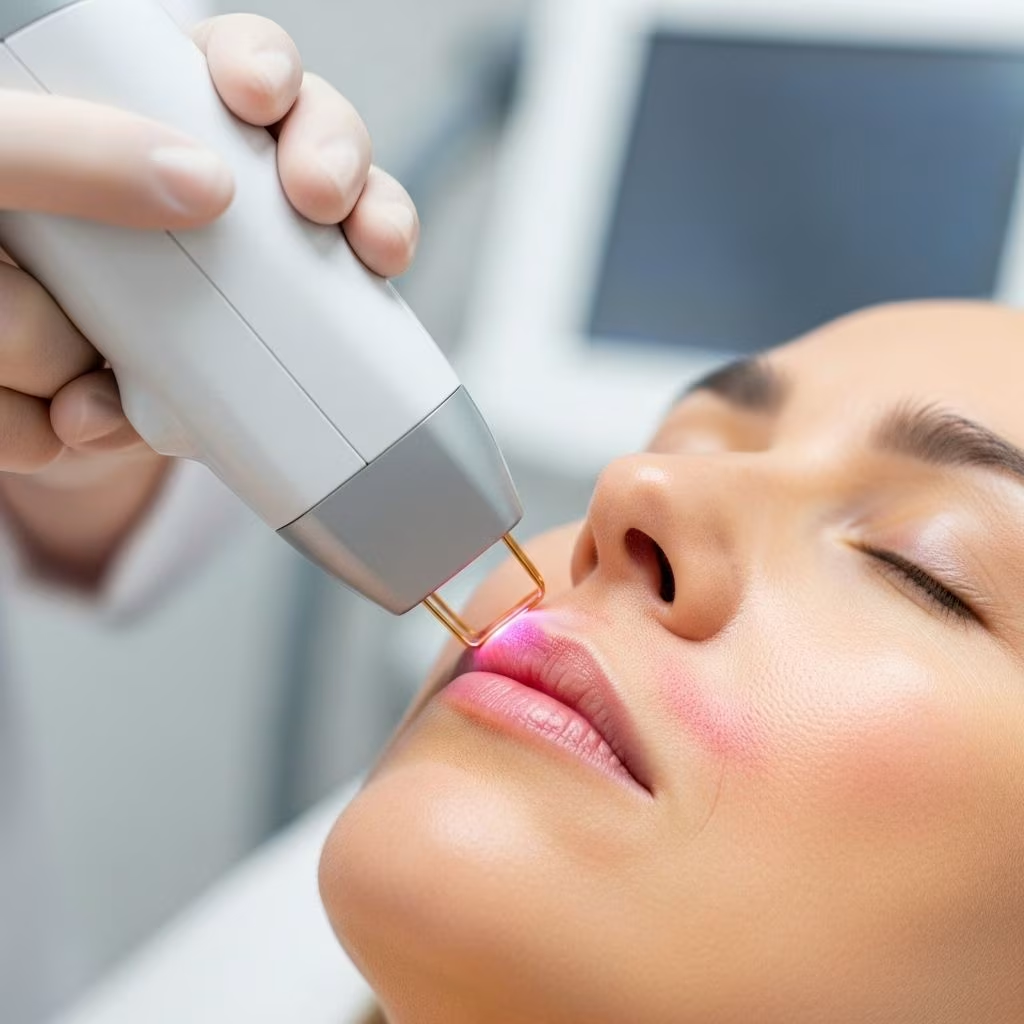
Perioral wrinkles and lines, often called “smoker’s lines” or “lipstick lines,” are a frequent cosmetic concern that develop around the mouth due to aging, repetitive facial movements, sun exposure, and lifestyle factors. Modern advances in laser technology offer safe and effective options for resurfacing this delicate region, minimizing wrinkles, and restoring youthful contours. This article provides a comprehensive overview of laser treatments for perioral wrinkles, including evidence-based techniques, expected results, safety considerations, and answers to common patient questions.
Key Causes of Perioral Wrinkles
Perioral lines develop due to a combination of intrinsic aging, repetitive muscular activity (e.g., pursing lips), photodamage, genetics, hormonal changes, and lifestyle factors such as smoking. Over time:
- Collagen and elastin fibers degrade, leading to reduced skin elasticity.
- Repeated lip movements create creasing and deepen vertical lines.
- Solar exposure accelerates breakdown of skin structure, exacerbating lines.
- Loss of overall facial volume and subcutaneous fat accentuates “barcode” wrinkles.
This area is challenging to treat due to its high mobility and thinner skin, necessitating precision in resurfacing techniques.
Overview of Laser Technologies Used
Laser resurfacing utilizes focused beams of light energy to remove damaged skin layers, stimulate collagen production, and improve texture. Several technologies are available, each with unique advantages:
- Erbium:YAG lasers: Target water in tissue for precise ablation with minimal thermal damage.
- Carbon Dioxide (CO2) lasers: Ablative lasers yielding deeper tissue remodeling but increased risk of downtime and side effects.
- Fractional lasers: Create micro-columns of injury, preserving surrounding tissue for faster healing.
- Adjunctive therapies (e.g., microneedling, radiofrequency) and non-laser modalities (e.g., dermabrasion, peels) may complement or serve as alternatives.
Appropriate laser selection depends on the wrinkle severity, skin type, patient preferences, and physician expertise.
How Laser Resurfacing Works
Laser resurfacing removes superficial layers of skin (epidermis) and heats the underlying dermis. This triggers a wound healing response, stimulating collagen production and tissue remodeling. The outcome is:
- Smoother surface texture
- Reduction in visible wrinkles and lines
- Tightening of the perioral region
- Improved pigmentation and tone
Fractional techniques create “columns” of microablation surrounded by intact skin, allowing for faster healing with fewer risks than older, fully ablative methods.
Erbium:YAG Laser Resurfacing
The Erbium:YAG (2940 nm) laser is highly absorbed by water, allowing precise ablation of the epidermis and superficial dermis with less heat diffusion to surrounding tissue. Key features:
- Efficient removal of fine lines and moderate perioral wrinkles
- Lower risk of prolonged redness, hyperpigmentation, or scarring compared to CO2
- Useful in both full-field (entire area) and fractional (microzone) modes
Evidence: Clinical studies report average improvement of 60–66% in perioral rhytides (wrinkles), with significant reduction in wrinkle grading scores 12 months after treatment. Patients rarely experience hypopigmentation or serious healing issues. Efficacy is comparable whether used alone or combined with other rejuvenation procedures.
| Parameter | Typical Value |
|---|---|
| Wavelength | 2940 nm |
| Best for | Superficial to moderate lines |
| Healing time | 5–10 days (variable) |
| Risks | Redness, swelling (usually transient), rare pigment changes |
Optimal outcomes require skilled application, often using a technique that fully ablates each vertical line individually for maximum accuracy.
Carbon Dioxide (CO2) Laser Resurfacing
The ablative CO2 laser (10,600 nm) penetrates deeper than Erbium:YAG, effectively resurfacing even pronounced wrinkles. Main characteristics:
- Greater wrinkle reduction due to deeper dermal stimulation
- Higher risk of downtime, post-inflammatory hyperpigmentation (especially in darker skin types), and prolonged redness
- Fractional CO2 lasers offer a balance: improved results with lower side effect risk by treating only a fraction of the skin at each session
Research insights: Recent trials show fractional CO2 treatment reduces static wrinkles with efficacy rates up to 68%, and using low-energy, high-density settings minimizes pigmentary complications. Application of topical hydroquinone pre- and post-procedure further reduces risk of hyperpigmentation in susceptible individuals.
CO2 lasers are often selected for severe or deep perioral lines, and patients must be prepared for longer recovery times.
Other Types of Lasers and Combination Therapies
Beyond Erbium:YAG and CO2 lasers, emerging fractional and non-ablative lasers are being studied for their safety and effectiveness in perioral rejuvenation.
- Fractional non-ablative lasers (e.g., 1550 nm) induce milder injury but require more sessions; offer short downtime and low risk of complications, suitable for early/no downtime candidates
- Combination approaches: Blending laser with microneedling, radiofrequency, dermal fillers, or chemical peels can enhance results, individualizing treatment to patient needs.
- Other ablative energies (e.g., long-pulsed erbium or hybrid lasers) continue to be investigated for improved efficacy and safety profiles.
The choice often depends on a careful mix of the patient’s skin type, severity of lines, tolerance for downtime, and desired results.
Clinical Effectiveness and Patient Outcomes
Multiple robust studies document the efficacy of laser resurfacing in reducing perioral wrinkles and improving overall skin texture:
- Improvement rates of 60–70% in wrinkle severity with Erbium:YAG and fractional CO2 lasers are well-established.
- Improvement tends to be less pronounced in older patients or those with more severe degrees of photoaging, but even modest changes can be quite significant for self-confidence.
- Smokers and those with frequent sun exposure may experience reduced satisfaction and slower healing.
Comparison: While dermabrasion and deep chemical peels also yield wrinkle reduction, lasers offer more predictable, controlled ablation depth and are generally regarded as safer and more versatile for the perioral region.
Safety, Side Effects, and Recovery
Laser resurfacing for perioral wrinkles is generally safe when performed by trained professionals, but risks and recovery requirements vary by device and technique:
- Redness and swelling are expected for several days to two weeks, depending on the depth and type of laser used.
- Temporary pigmentation changes (hyper- or hypopigmentation) are possible, especially in darker skin tones. Pre- and post-care with lightening agents (e.g., hydroquinone) help reduce risks.
- Infection prevention is crucial; patients must follow aftercare guidelines and report any unusual symptoms promptly.
- Scarring and delayed healing are rare with experienced operators and well-selected candidates.
Proper sun avoidance and use of sunscreen during healing help maximize safety and results.
Candidacy and Pre-Treatment Considerations
Good candidates for laser treatment of perioral lines typically:
- Are in good general health without active infections or skin disorders around the mouth
- Have realistic expectations about downtime, discomfort, and potential for gradual improvement
- Are non-smokers (or willing to refrain prior to and after treatment for better healing)
- Do not have a history of abnormal scarring or keloid formation
- Have been properly evaluated to ensure suitability of laser type for their skin phototype
Pretreatment preparation may include topical retinoids, lightening agents for pigmentation-prone skin, and antiviral medication if there is a history of cold sores.
The Patient Experience: What to Expect
Laser resurfacing for perioral lines is typically performed as an in-office procedure. Here is a general overview of what patients can expect:
- Consultation and assessment—Physician evaluates skin, discusses expectations, selects appropriate laser.
- Preparation—Cleansing of the area; topical anesthetic or local block is usually applied for comfort.
- Treatment—Laser is meticulously passed over the wrinkled areas, sometimes focusing on each vertical line for targeted effect; session typically lasts 20–40 minutes depending on area size.
- Aftercare—Patients follow a regimen of bland emollient, wound care ointment, avoidance of sun exposure, and gentle cleansing for 7–14 days. Minor crusting, redness, or swelling are to be expected and gradually resolve.
- Follow-up—Multiple sessions may be required for optimal results, spaced weeks apart for fractional approaches.
Healing times and side effect profiles differ; fractional and non-ablative options minimize downtime but may need more sessions. Full resurfacing provides greater improvement but with longer recovery.
Frequently Asked Questions (FAQs)
Q: How many treatments are usually needed for perioral wrinkles?
A: Many patients see significant improvement after one treatment with fully ablative lasers (like Erbium:YAG or CO2), but 2–4 sessions of fractional lasers may be needed for optimal results, especially for deeper lines or darker skin types.
Q: Is laser resurfacing painful?
A: Most procedures are performed with topical anesthesia or local nerve blocks, minimizing discomfort during treatment. Some stinging, burning, or tightness may occur during healing, but this is usually well-controlled with over-the-counter and prescription topical care.
Q: How long is the downtime after perioral laser resurfacing?
A: Downtime varies: intensive resurfacing lasers (e.g., full-field Erbium:YAG or CO2) typically require 7–14 days for initial healing; fractional and non-ablative approaches may require only a few days, with milder aftereffects.
Q: Are results permanent?
A: Laser resurfacing can provide long-lasting improvements, but won’t stop the natural aging process. Maintaining skin with good sunscreen use, avoiding smoking, and occasional touch-up treatments helps sustain results for years.
Q: Can all skin types undergo laser treatment for perioral wrinkles?
A: While newer fractional lasers are safer for a wider range of skin types, patients with very dark skin have a slightly higher risk of post-inflammatory hyperpigmentation. A thorough consultation is vital to select the safest, most effective approach for each individual.
Q: What alternatives exist if I am not a candidate for laser?
A: Alternatives include chemical peels, microneedling, RF (radiofrequency), dermabrasion, and dermal fillers. Each has unique benefits and limitations, but for deeper wrinkles laser is often the most effective modality.
Conclusion
Laser resurfacing stands out as a proven and versatile option for the treatment of perioral wrinkles and lines. With advancements in laser technology, patients benefit from highly tailored treatments that balance efficacy with safety, producing natural-looking, rejuvenated skin. As techniques and lasers continue to evolve, collaboration between patient and board-certified dermatologist or cosmetic surgeon is crucial for achieving the best possible outcomes in perioral rejuvenation.
References
- https://www.dermatologytimes.com/view/erbiumyag-perioral-wrinkles
- https://exploreplasticsurgery.com/the-effectiveness-of-the-erbium-laser-for-perioral-wrinkle-reduction/
- https://pubmed.ncbi.nlm.nih.gov/33550718/
- https://pmc.ncbi.nlm.nih.gov/articles/PMC12092846/
- https://drdavinlim.com/wrinkles-perioral-mouth/
- https://www.laserskinsurgery.com/dermatologists-share-6-best-treatments-for-wrinkles-above-lips-in-2023/
- https://www.vinmec.com/eng/blog/wrinkles-around-the-corners-of-the-mouth-causes-and-solutions-en
- https://jamanetwork.com/journals/jamadermatology/fullarticle/190332


