


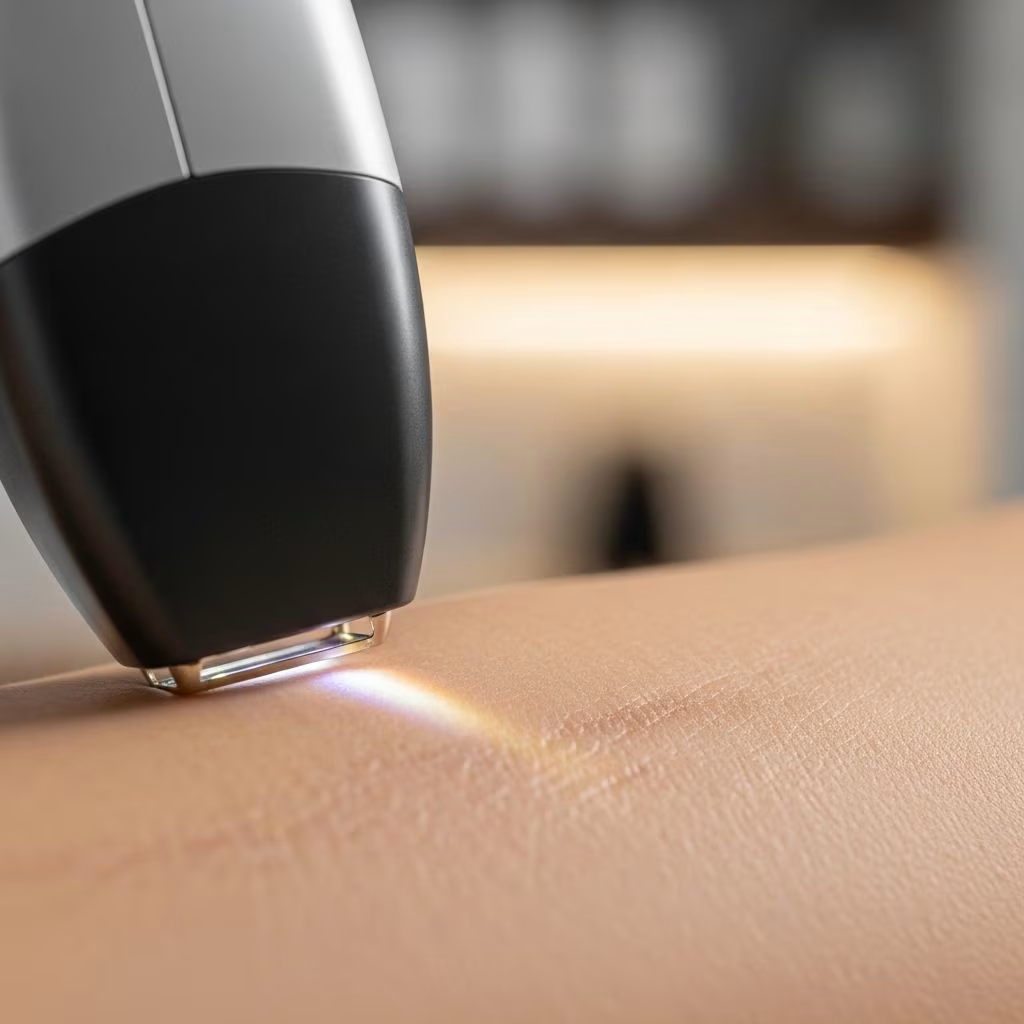
Stretch marks, clinically known as striae distensae, affect millions of people globally and often lead to cosmetic concern and reduced self-confidence. With advances in dermatological technology, laser therapy has emerged as a leading treatment option, offering promising results in reducing the visibility and improving the texture of stretch marks. This comprehensive guide explores the science, practicalities, benefits, options, and limitations of laser treatments for striae, empowering readers to make informed decisions about their skin health.
Understanding Stretch Marks (Striae)
Stretch marks are long, narrow streaks or lines that develop on the skin when it is stretched rapidly beyond its elasticity. Medically referred to as striae distensae, they commonly occur in the following situations:
- During pregnancy
- Rapid weight gain or loss
- Pubertal growth spurts
- Hormonal imbalances
- Use of corticosteroid medications
These marks initially appear as red, purple, or pink streaks (striae rubrae), later fading to white or silvery lines (striae albae) as they mature. The underlying mechanism involves the rupture of collagen and elastin fibers within the skin’s dermis, leading to atrophic linear scars.
Introduction to Laser Therapy
Laser therapy for stretch marks is a non-invasive, technologically advanced approach designed to stimulate the skin’s natural healing and remodeling processes. By delivering concentrated light energy to targeted areas of the skin, laser treatments aim to:
- Promote the production of collagen and elastin
- Improve skin texture and elasticity
- Diminish the depth, color, and visibility of stretch marks
- Even skin tone
This method has become increasingly popular due to its effectiveness, minimal invasiveness, and relatively short recovery times compared to surgical options.
Types of Laser Treatments for Stretch Marks
Laser treatments for stretch marks are broadly classified based on their mechanism of action:
- Ablative Lasers: Remove the outermost layers of skin to stimulate deep healing and skin regeneration.
Example: Fractional CO2 lasers, Er:YAG lasers. - Non-ablative Lasers: Target deeper skin layers without damaging the surface, primarily triggering collagen and elastin synthesis.
Example: Pulsed dye lasers, 675 nm laser, Nd:YAG lasers.
The choice between ablative and non-ablative lasers depends on factors such as skin type, severity and age of the stretch marks, downtime tolerance, and desired outcome.
| Type | How It Works | Best For | Downtime | Results |
|---|---|---|---|---|
| Ablative Laser | Removes surface layers, triggers skin renewal | Deeper, older stretch marks | Longer (several days to 2 weeks) | More dramatic, but higher risk |
| Non-ablative Laser | Heats inner layers without breaking skin | Early, superficial stretch marks | Minimal (hours to 1–2 days) | Gradual, lower risk |
Prominent Devices and Wavelengths
- 675 nm lasers – specifically investigated for stretch marks, showing significant improvement and patient comfort.
- Fractional CO2 lasers – commonly used for skin resurfacing and deeper scars.
- Pulsed dye lasers – helpful for early, red (vascular) stretch marks.
- Nd:YAG lasers – for mature, white striae.
- HELIX CoolPeel laser – blends pigment and texture targeting for broad improvement.
How Laser Therapy Works for Stretch Marks
Lasers deliver concentrated light at specific wavelengths, penetrating the skin to exert their effect in three main ways:
- Thermal Stimulation: Heat generated in the dermal layers disrupts old collagen and elastin, prompting the body to produce new, organized fibers, thickening and tightening the skin.
- Targeted Pigment Breakdown: Some lasers target blood vessels (for red stretch marks) or pigment, reducing coloration and promoting a more uniform tone.
- Controlled Injury & Remodeling: Ablative lasers create microscopic wounds, triggering healing mechanisms that renew the skin’s surface and smooth out textural irregularities.
Each treatment session is customized to the patient’s skin type, mark severity, and tolerance, often requiring a series of sessions to achieve optimal results.
Clinical Evidence and Results
Recent clinical studies support the efficacy of laser therapy in managing striae distensae.
- 675 nm Laser Therapy: In clinical trials, patients treated on the abdomen, thighs, buttocks, and breasts with three sessions (one month apart) showed a significant improvement on the Manchester Scar Scale, with total mean scores improving from 14.16 to 10.06 at six months after treatment (p < 0.01).
- Patient Satisfaction: According to the American Society of Plastic Surgeons, 92% of laser stretch mark removal patients were satisfied with their results, reporting improvements in depth, color, and texture.
- Photographic Evidence: Before-and-after images in clinical studies consistently demonstrate visible improvements in the appearance of stretch marks, including smoother and more elastic skin.
Note: While notable improvement is common, stretch marks may not be completely eradicated. The objective is a significant reduction, blending, and camouflaging of marks rather than a total cure.
Benefits of Laser Therapy
- Non-invasive – No surgery or anesthesia required.
- Minimal downtime – Patients can often resume normal activities immediately after treatment.
- Customizable – Energy levels, wavelengths, and devices adapted for various skin types and stretch mark stages.
- Quick results – Many patients observe visible improvement after a few sessions.
- Improvement in skin quality – Enhanced firmness, texture, and tone.
Potential Side Effects and Limitations
- Temporary redness, swelling, or mild discomfort – Common, resolving within hours to days.
- Rare risks of blistering, hyperpigmentation, or scarring – Higher for darker skin types or with improper technique.
- Not suitable for everyone – Certain skin conditions, infections, pregnancy, or recent tanning may preclude treatment.
- Results vary – Influenced by skin type, mark severity and age, and adherence to aftercare.
- Incomplete removal – Lasers typically fade and improve stretch marks, seldom erasing them entirely.
- Higher cost – More expensive than some alternatives like microneedling, though results may justify investment.
What to Expect During and After Treatment
Before the Session:
- An initial consultation with a dermatologist or technician to assess skin type, stretch mark characteristics, and medical history.
- Pre-treatment skin cleansing and topical anesthetic application for comfort.
- Test patches may be performed to gauge skin reaction and optimal energy levels.
During the Session:
- The laser handpiece is systematically moved over the affected area using controlled, overlapping pulses.
- Mild heat, tingling, or warmth may be felt; pain is generally minimal, especially with modern cooling techniques.
- Sessions generally last 30–60 minutes depending on the treated region’s size.
Immediately After:
- Application of cooling compresses or moisturizers to soothe the skin.
- Redness, mild swelling, or sensitivity may persist for a few hours to a couple of days.
- No significant downtime – most patients can resume normal routines immediately.
Care Considerations and Recovery
- Avoid sun exposure and tanning for at least two weeks pre- and post-treatment to minimize the risk of pigmentation changes.
- Use gentle cleansers and avoid harsh exfoliants or retinoids until the skin has healed.
- Apply dermatologist-recommended moisturizers and, if prescribed, topical steroids or antibiotic ointments.
- Wear SPF 30+ sunscreen daily on treated areas to prevent discoloration.
- Follow all post-procedure instructions from your provider for optimal healing and results.
Providers may schedule multiple sessions (typically 3–6, one month apart) based on results, goals, and the specific device used.
Laser Therapy vs. Other Stretch Mark Treatments
| Treatment | Invasiveness | Sessions Needed | Downtime | Effectiveness |
|---|---|---|---|---|
| Laser Therapy | Non-invasive | 3–6 | Minimal | Moderate to significant improvement |
| Microneedling | Minimally invasive | 4–8 | Minimal | Moderate improvement |
| Creams/Topicals | None | Daily, long-term | None | Slight, mostly for prevention or early marks |
| Surgical (Tummy Tuck) | Invasive | 1 | Weeks | Complete removal, but only in excised area |
Laser therapy often outperforms topical agents and is less invasive than surgery, making it a preferred option for many patients seeking a balance between efficacy and downtime. For some, combination therapy with microneedling or other modalities may enhance results.
Frequently Asked Questions (FAQs)
Q: Can lasers completely remove stretch marks?
No, laser therapy cannot completely remove stretch marks but significantly improves their appearance by fading discoloration, improving texture, and blending them with surrounding skin.
Q: How many sessions are typically required?
Most patients benefit from 4–6 sessions spaced several weeks apart; the exact number depends on skin type, mark age, and specific device used.
Q: Is the procedure painful?
The procedure is generally well tolerated, with most patients experiencing only mild warmth or tingling sensations; topical anesthetics and cooling devices further enhance comfort.
Q: Are results permanent?
While the improvements are long-lasting, new stretch marks can develop with future skin stretching. Maintenance or additional touch-up sessions may be needed in some cases.
Q: Who is a suitable candidate?
Most healthy adults with realistic expectations can undergo laser therapy. However, those with certain skin conditions, infections, recent tanning, or pregnancy should consult a specialist before proceeding.
Q: Can people with dark skin tones use laser therapy?
Laser therapy can be used for darker skin types, but risks of hyperpigmentation and scarring are higher—specialist assessment and tailored device settings are crucial.
Key Takeaways
- Laser therapy is an effective, evidence-based option for reducing the visibility of stretch marks.
- Multiple devices and techniques, including ablative and non-ablative lasers, can be customized to patient needs.
- Clinical studies and patient reviews support significant improvement in texture, color, and skin quality, though complete removal is rare.
- Minimal downtime and non-invasiveness make laser therapy a popular choice among patients seeking skin rejuvenation.
- Consultation with a qualified dermatologist or laser specialist is essential for personalized recommendations and best outcomes.
References
- https://pmc.ncbi.nlm.nih.gov/articles/PMC10222465/
- https://www.victoriandermalgroup.com.au/information-centre/laser-vs-microneedling-for-stretch-marks
- https://www.primeaesthetica.com/blog/laser-stretch-mark-removal.html
- https://www.tannanplasticsurgery.com/treatments-for-stretch-marks/
- https://www.dermpathatlanta.com/post/can-lasers-get-rid-of-stretch-marks
- https://www.beverlyhillslaserinstitute.com/laser-treatment-stretch-marks
- https://www.mayoclinic.org/diseases-conditions/stretch-marks/diagnosis-treatment/drc-20351144


