


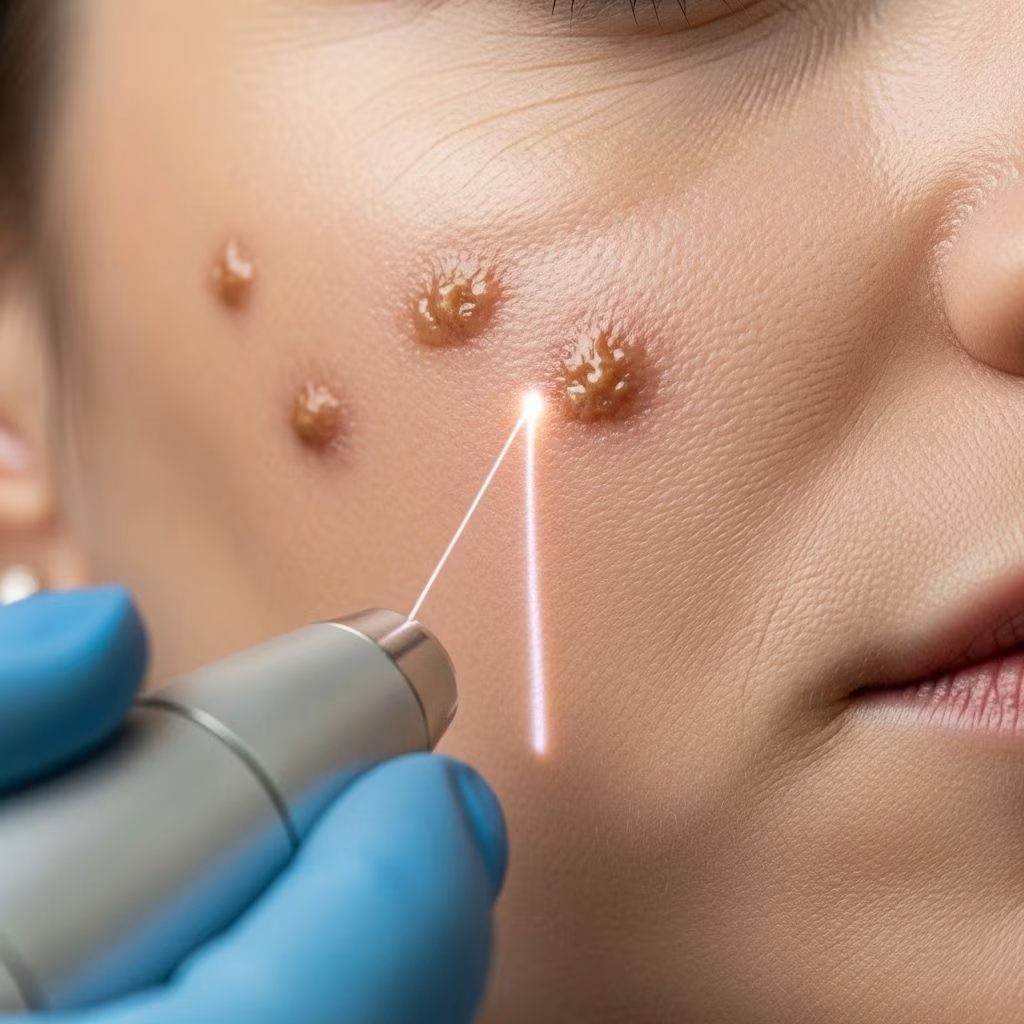
Overview of Seborrheic Keratosis
Seborrheic keratosis is the most common benign tumor of the epidermis. These skin growths are typically characterized by their “stuck-on” appearance—discrete, often brown or black, and with a waxy or warty texture.
Though harmless, seborrheic keratoses are frequently considered cosmetically undesirable and sometimes cause irritation, pruritus (itchiness), or psychological distress.
Their prevalence increases with age and sun exposure, and while they can appear anywhere on the body except the palms and soles, they predominantly affect the face, trunk, and limbs.
Why Remove Seborrheic Keratoses?
- Cosmetic concern: Many patients seek removal for aesthetic reasons, particularly when lesions are on visible areas such as the face or neck.
- Physical discomfort: Lesions located in friction-prone areas (collar line, waistband) may become irritated or itchy.
- Diagnostic ambiguity: Rarely, growths mimic malignant lesions, warranting biopsy or removal for confirmation.
- Patient preference: Increasing availability of minimally invasive techniques motivates individuals to pursue removal.
Laser Treatment for Seborrheic Keratosis
Laser therapy has emerged as a modern, minimally invasive option for the removal of seborrheic keratoses.
It is particularly suitable for thin lesions, offering efficient results with minimal downtime and reduced risk of scarring compared to traditional methods.
- Non-invasive: Laser does not cut or puncture the skin, offering a less traumatic alternative.
- Precision: Lasers selectively target the pigmented cells of the keratosis, sparing surrounding skin.
- Minimal scarring: The focused nature of laser energy reduces the chance of scar formation.
- Cosmetic outcome: Results are generally considered superior, with a rapid return to normal activities.
Types of Lasers Used
Several types of lasers can be employed for seborrheic keratosis removal. Each laser differs in its wavelength, pulse duration, and depth of penetration—matching the unique properties of the lesion:
| Laser Type | Wavelength (nm) | Typical Use |
|---|---|---|
| Picosecond Laser (e.g., PicoWay Candela) | 532 | Targets superficial, pigmented lesions; effective in skin of color |
| Erbium:YAG Laser | 2940 | Removes superficial skin growths with reduced risk of hyperpigmentation |
| Fractional CO2 Laser | 10,600 | Useful for thicker, more raised lesions |
| Pulsed Dye Laser (PDL) | 585–595 | May aid in vascularity and pigmentation issues |
| Nd:YAG Laser | 1064 | Deeper penetration for selected cases |
Picosecond lasers have shown notable success in patients with Asian skin types, minimizing the risk of pigmentary changes.
Erbium:YAG and fractional CO2 lasers are favored for their safety profiles and effectiveness with thin lesions.
The Laser Removal Procedure
- Consultation: The dermatologist first reviews the patient’s medical and dermatologic history, precisely diagnosing seborrheic keratosis and ruling out malignant or suspicious lesions.
- Anesthesia: Most treatments do not require numbing medicine; a topical anesthetic can be applied for patient comfort if needed.
- Laser application: The laser’s focused light beam is targeted onto the growth, destroying keratotic cells instantly. Treatment endpoint may include “light white frost” indicating effective ablation.
- Duration and frequency: Sessions are brief, often lasting minutes, and typically require no downtime. Some patients need multiple treatments for complete removal.
Patients usually return home the same day, resuming daily activities almost immediately.
Digital photographs may be taken to document progress and outcome.
Healing Process and Aftercare
- Immediately after treatment, the treated area may appear gray, becoming darker over the following two weeks.
- Aftercare: Applying plain Vaseline or petrolatum ointment keeps the area moist and promotes optimal healing.
- Sun protection: Sunscreen application and limiting sun exposure are crucial to prevent hyperpigmentation and ensure good cosmetic results.
- The lesion will typically fall off and be replaced by new skin over the course of two weeks.
Mild discoloration or pinkness may be present at first, fading gradually with appropriate aftercare. Post-inflammatory pigmentary changes (darkening/lightening of skin) are rare, especially when proper aftercare is followed.
Clinical Results and Effectiveness
Studies demonstrate high success rates for laser treatment of seborrheic keratosis:
- Marked reduction in lesion size, color, and number after several laser sessions.
- Cosmetic outcomes are generally excellent, with minimal incidence of complications such as scarring or texture change.
- Long-term monitoring (up to 24 months) reveals minimal recurrence in successfully treated patients.
- Comparative studies show lower rates of post-treatment hyperpigmentation with lasers than with methods such as cryotherapy.
No significant swelling, scarring, or adverse events are typically observed when lasers are used by qualified dermatologists.
Suitability and Risks
- Best candidates: Patients with thin, clearly defined lesions are excellent candidates for laser removal.
- Skin of color: Historically, concerns about pigmentary changes limited laser use; newer picosecond and Erbium:YAG lasers reduce this risk and are safe for darker skin types when performed with care.
- Risks: Mild discomfort, transient discoloration, rare pigment loss or increased pigmentation (especially in those prone to such changes), and minimal risk of infection.
- Contraindications: Raised or thick lesions respond less well to laser and may need alternative removal techniques (e.g., cryotherapy, shave excision).
Appropriate pre-procedural assessment can minimize risks and identify the most suitable candidates for laser therapy.
Comparison with Other Treatments
| Treatment Method | Pros | Cons |
|---|---|---|
| Laser Therapy | Non-invasive, low scarring, fast healing, excellent cosmetic results | Best for thin lesions, may require multiple sessions, cost higher than cryotherapy |
| Cryotherapy | Quick, effective for thicker lesions, office-based | Risk of pigment loss, especially in dark skin, blistering, slower healing |
| Shave Removal | Removes thicker growths, single procedure | Can cause scarring, longer healing, risk of infection |
| Electrodessication (Hyfrecation) | Controlled removal, minimal bleeding | Scarring, longer downtime |
Patient Experience and Expectations
Understanding the patient journey can help set expectations for laser treatment outcomes:
- Pain: Most patients experience little to no discomfort. No anesthesia is required for the majority, though a topical numbing cream can be used for sensitive areas.
- Downtime: Minimal; patients can resume normal activities immediately after treatment.
- Caring for the treated area: Simple aftercare—moisturization and sun protection—is sufficient.
- Results timeline: Visible improvement within two weeks; final cosmetic outcome observed over several months.
Consulting with an experienced dermatologist ensures optimal selection of treatment methods and management of expectations.
Frequently Asked Questions (FAQs)
What is seborrheic keratosis?
Seborrheic keratosis is a benign (non-cancerous) skin growth that typically appears as waxy, “stuck-on” patches or plaques. They are common in older adults and result from the proliferation of epidermal cells.
Is laser treatment safe for all skin types?
Recent advances—especially picosecond and Erbium:YAG lasers—have made laser treatment safe for darker skin types with cautious use and follow-up. Pre-& post-operative care and patient selection are crucial to minimize pigmentary risks.
Does laser completely remove seborrheic keratosis?
Laser treatment significantly reduces or eliminates thin lesions. Raised or thick lesions may require alternative treatment methods, or a combination approach for best results.
How long does it take to heal?
Most treated areas heal within one to two weeks, with mild discoloration resolving over subsequent weeks. Adhering to aftercare instructions accelerates recovery.
Can seborrheic keratosis recur after laser removal?
Recurrence is rare in successfully treated lesions, but new growths can appear elsewhere on the skin over time due to genetic and environmental factors.
What does the procedure feel like?
Laser treatment is typically well-tolerated; most patients describe a brief sensation of warmth or mild snap but no pain. Topical anesthetics are available for sensitive individuals.
Is there a risk of scarring?
Laser treatment minimizes scarring risk due to its non-invasive nature. Scarring is rare when performed by qualified professionals and aftercare is properly followed.
Conclusion
Laser treatment offers a safe, effective, and cosmetically superior option for the removal of seborrheic keratoses, especially thin or superficial lesions. Advances in laser technology, meticulous patient selection, and dedicated aftercare practices have enhanced its suitability for diverse skin types. For individuals considering removal, consultation with a board-certified dermatologist will ensure an optimal, tailored management plan and best aesthetic outcome.
References
- https://www.wallstreetdermatology.com/procedures/seborrheic-keratosis-treatment/
- https://pmc.ncbi.nlm.nih.gov/articles/PMC11107074/
- https://mokshaderm.com/seborrheic-keratosis-treatments-cincinnati/
- https://www.jkslms.or.kr/journal/view.html?uid=6&vmd=Full
- https://my.clevelandclinic.org/health/diseases/21721-seborrheic-keratosis
- https://www.mayoclinic.org/diseases-conditions/seborrheic-keratosis/diagnosis-treatment/drc-20353882
- https://drmelissaerwin.com/medical/seborrheic-keratoses/


