


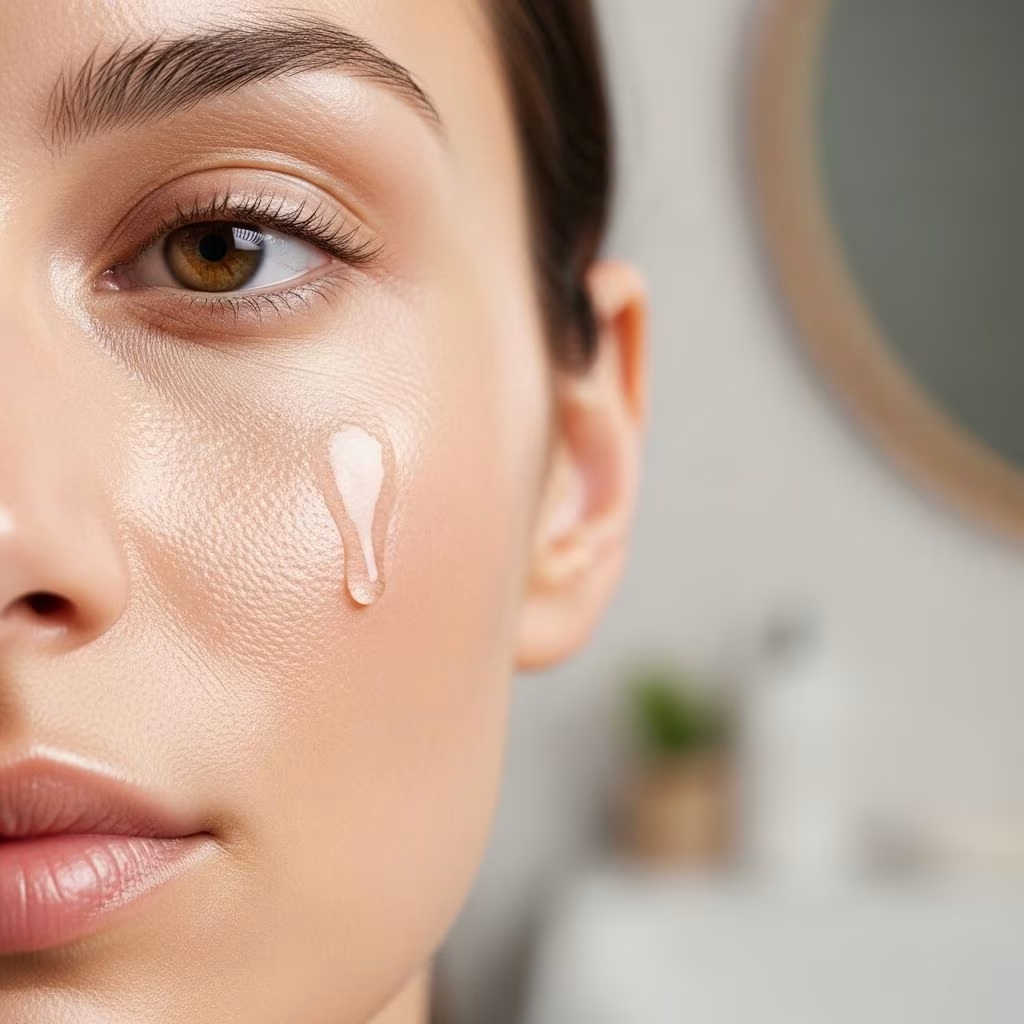
Hyaluronic acid is celebrated as one of the best skincare ingredients for hydration, plumping, and supporting a youthful complexion. Yet, despite its popularity, many users inadvertently make mistakes in how they layer and use hyaluronic acid—undermining its hydrating potential and sometimes even leading to dryness or irritation. In this comprehensive guide, learn how to avoid the most common hyaluronic acid layering mistakes, understand their consequences, and discover step-by-step solutions for maximized skin benefits.
Introduction to Hyaluronic Acid
Hyaluronic acid (HA) is a naturally occurring polysaccharide in the human body, prevalent in skin, connective tissue, and eyes. It functions as a humectant, attracting and retaining immense amounts of water, and is best known for giving skin its plump, dewy, and hydrated appearance.
- Why it’s a star ingredient: HA can hold up to 1,000 times its weight in water, making it a powerful moisturizer for all skin types.
- Topical HA products (serums, creams, mists) are widely used to increase skin hydration, smooth fine lines, and improve elasticity.
The Science of Hyaluronic Acid Layering
Layering skincare correctly is critical to maximizing the effectiveness of actives like hyaluronic acid. Since HA is a humectant, the conditions under which it’s applied greatly affect its performance.
| Correct Layering | Result |
|---|---|
| HA on damp skin, sealed with moisturizer | Long-lasting hydration, plump skin |
| HA on dry skin, no occlusive on top | Potential dehydration, tightness, even irritation |
When hyaluronic acid is used improperly, it may draw moisture from deeper skin layers rather than the environment, especially in dry or low-humidity climates, leading to dryness rather than the sought-after hydration.
Top Hyaluronic Acid Layering Mistakes
Despite its reputation for simplicity, using hyaluronic acid is not foolproof. The following are the most frequent layering mistakes that can hinder its benefits:
1. Applying Hyaluronic Acid to Dry Skin
- The Mistake: Putting HA on completely dry skin, expecting immediate hydration.
- What Happens: Instead of attracting moisture from the environment, HA may pull water from the skin itself, leaving it feeling tight and drier than before.
- The Fix: Always apply hyaluronic acid to slightly damp skin—after washing, or by spritzing with a gentle facial mist—to maximize water absorption and retention.
Sources:
2. Not Sealing HA with a Moisturizer or Oil
- The Mistake: Relying on HA alone for hydration, and skipping a moisturizer or occlusive barrier afterward.
- What Happens: Without something to lock it in, the moisture HA attracts may evaporate, potentially making skin drier than before. This is particularly problematic in arid environments.
- The Fix: Always follow hyaluronic acid application with a moisturizer (and facial oil if desired) while HA is still slightly damp, to trap hydration in the skin.
Sources:
3. Using HA After Thicker Products
- The Mistake: Applying hyaluronic acid serum after a thick moisturizer, sunscreen, or oil-based product.
- What Happens: Barrier-forming agents in thicker products prevent HA from properly absorbing, wasting its potential benefits.
- The Fix: Layer skincare from thinnest to thickest—HA should go on after cleansing and toning, but before creams, oils, or sunscreen.
Sources:
4. Overusing Hyaluronic Acid
- The Mistake: Applying HA numerous times a day or using in excessive quantities, thinking more is better.
- What Happens: Overuse can paradoxically lead to dehydration by drawing too much water from lower skin layers, especially if the environmental humidity is low or there’s no moisturizer applied on top.
- The Fix: Apply HA once or twice daily, as recommended for your skin type and product strength.
Sources:
5. Using the Wrong Hyaluronic Acid Formula for Your Skin Type
- The Mistake: Purchasing any available HA serum or cream without considering the texture or ingredient list in relation to your skin type.
- What Happens: Lightweight, watery serums might not be sufficient for dry skin, while heavier creams could clog pores on oily skin types.
- The Fix: Match the product formulation to your specific skin needs—choose lightweight serums for oily/combination skin, and more emollient, multi-weight formulas for dry skin.
Sources:
6. Incorrect Pairing with Other Actives
- The Mistake: Using HA immediately after strong actives (like high-strength retinol, AHAs, or BHAs) or layering too many actives in one session.
- What Happens: Can increase sensitivity, irritation, or negate the hydrating benefit of HA.
- The Fix: Introduce actives slowly and layer HA after actives to buffer potential irritation. Avoid excessive active layering in a single routine.
Sources:
The Impact of Mistakes on Skin Health
Improper use of hyaluronic acid can backfire, undermining your skin’s hydration goals. Key consequences of layering mistakes include:
- Increased dryness: When HA is misapplied, it can dehydrate rather than hydrate the skin, leading to redness, flakes, and a tight sensation.
- Reduced product efficacy: When applied over thick creams, HA can’t penetrate the skin barrier, rendering it less effective.
- Wasted skincare investment: Layering in the wrong order or without a proper seal means your high-quality products may do little or nothing for you.
Step-by-Step: Correct Hyaluronic Acid Layering
Unlock the full hydrating power of hyaluronic acid by following this expert-backed layering routine:
- Cleanse: Use a gentle cleanser to remove impurities. Pat skin until just damp, not completely dry.
- Tone (Optional): Apply a hydrating toner or facial mist to keep skin moist—this provides a water-rich environment for HA.
- Apply Hyaluronic Acid: Dispense 1-2 pumps of HA serum onto your fingertips and gently press onto damp skin, focusing on dehydrated areas.
- Do Not Wait for HA to Dry: Immediately proceed to the next step to prevent moisture loss.
- Seal with Moisturizer: Apply a suitable moisturizer to lock in hydration. The moisturizer’s emollient or occlusive ingredients act as a protective barrier.
- Sunscreen (AM Routine): In the morning, complete your routine with broad-spectrum SPF.
- Optional – Facial Oil (PM Routine): For dry or mature skin, follow moisturizer with a nourishing facial oil to further seal moisture.
Recommended AM Routine:
- Cleanser
- Facial mist or hydrating toner
- Hyaluronic acid serum
- Moisturizer
- Sunscreen
Recommended PM Routine:
- Double cleanser (if wearing makeup)
- Facial mist or hydrating essence
- Hyaluronic acid serum
- Hydrating night cream
- Optional: Facial oil
Choosing the Right Hyaluronic Acid Products
Hyaluronic acid comes in various molecular weights and product types:
- Low Molecular Weight (LMW) HA: Penetrates deeper layers of the skin, giving long-term hydration but may cause irritation in very sensitive skin.
- High Molecular Weight (HMW) HA: Stays on the surface, provides immediate plumping and smoothing effect.
- Multi-weight formulations: Combine both types for layered hydration and minimal irritation.
Match the formula to your skin’s needs:
- Oily/Combination: Lightweight, gel-based serums.
- Dry/Mature: Thicker, cushiony serums or creams with added moisturizers like squalane, ceramides, or glycerin.
- Sensitive: Fragrance-free, gentle HA formulas with soothing ingredients such as aloe or panthenol.
Best Practices, Extra Tips, and Common Myths
- Myth: “More hyaluronic acid equals more hydration.”
Fact: Overuse can reverse hydration; stick to label directions. - Tip: If you live in a very dry climate, pair HA with heavier creams or use a humidifier to provide enough ambient moisture for HA to attract.
- Myth: “All HA products are the same.”
Fact: Molecular weight, added ingredients, and product type affect both efficacy and suitability. - Tip: Use HA both morning and night for optimal results, ensuring proper layering every time.
- Reminder: Always perform a patch test with new HA products or formulations, especially if you have sensitive skin or are introducing other actives.
Frequently Asked Questions (FAQs)
Q: Why does my skin feel tight or drier after using hyaluronic acid?
A: This most commonly happens when you apply HA to dry skin or skip sealing it with a moisturizer. HA can pull moisture from within the skin itself if not enough water is available externally, causing tightness or dehydration.
Q: Can hyaluronic acid be used with retinol, vitamin C, or acids?
A: Yes. Hyaluronic acid is generally compatible with most actives, including retinol and vitamin C. For best results, layer HA after actives to promote healing and hydration, but avoid overwhelming your skin with too many actives at once.
Q: How often should I use hyaluronic acid?
A: Once or twice daily is recommended—more frequent use does not result in extra benefits, and overuse can sometimes contribute to dehydration.
Q: What is the best time of day to use hyaluronic acid?
A: Both morning and night routines can include HA. In the morning, follow with sunscreen; at night, use a rich moisturizer or facial oil if your skin needs extra hydration.
Q: Is hyaluronic acid suitable for acne-prone or sensitive skin?
A: Generally yes, since HA is non-comedogenic and gentle. Use fragrance-free, alcohol-free formulas and patch test if you are highly sensitive.
Conclusion
Hyaluronic acid is a transformative skincare ingredient when used correctly but can backfire if layered improperly. Always apply it to damp skin, seal with an appropriate moisturizer, and follow a smart step-by-step routine based on your skin’s unique needs. Avoid the common layering mistakes discussed above to maximize hydration, plumpness, and skin health for a dewy, radiant complexion all year round.
References
- https://www.dermaworks.co.uk/blogs/news/how-to-use-hyaluronic-acid-are-you-making-these-common-mistakes
- https://us.gotoskincare.com/blogs/the-go-to-guide/hyaluronic-acid-mistakes
- https://www.skinician.com/blogs/skincare-ingredients/hyaluronic-acid-dos-donts
- https://www.tirabeauty.com/article/articles/youll-never-layer-skincare-serums-the-wrong-way-after-reading-this
- https://blairskincare.com/blogs/news/are-you-layering-your-skincare-wrong-here-s-how-to-fix-it
- https://www.youtube.com/watch?v=bnV8xR63gSs


