


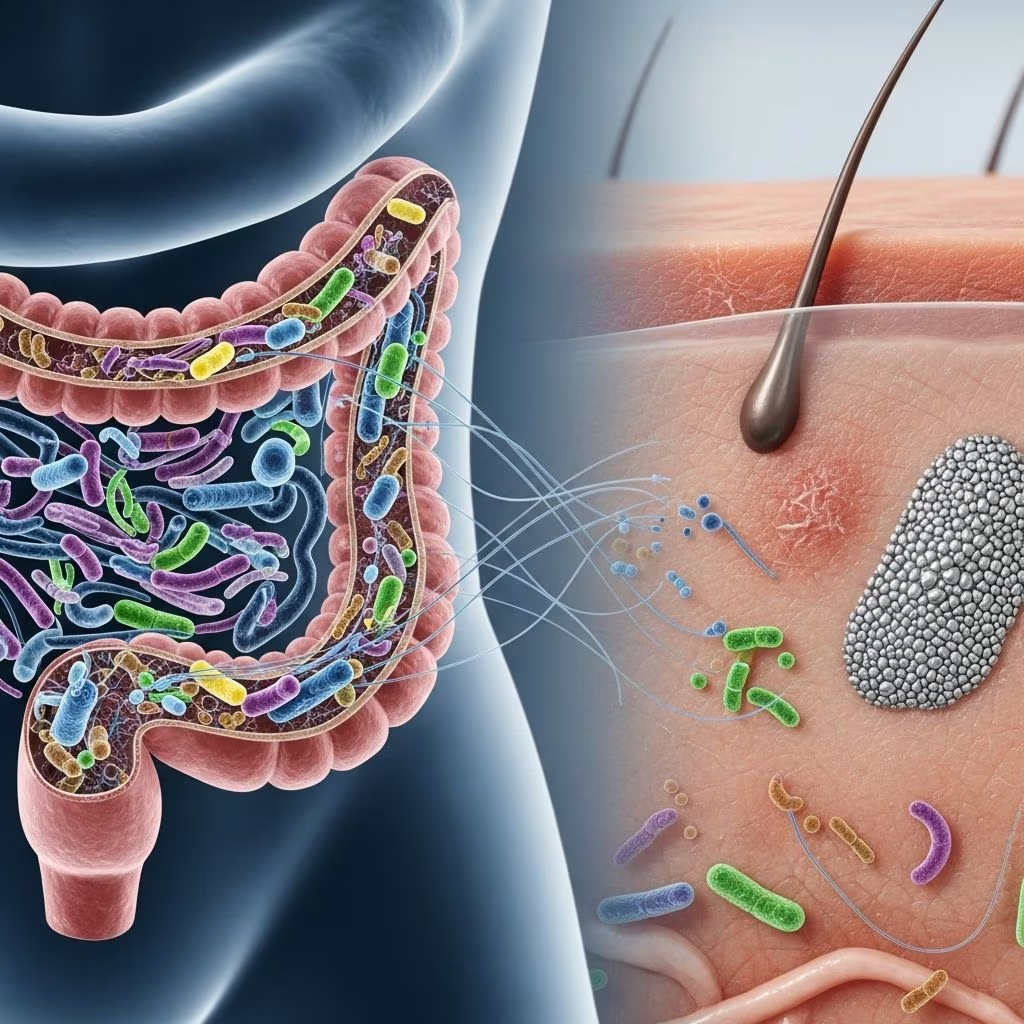
Emerging scientific discoveries reveal profound connections between our gut’s microbial ecosystem and the health of our skin. Once considered separate entities, the gut and the skin are now understood to communicate in intricate ways, influencing the onset and progression of inflammatory skin disorders such as eczema and psoriasis. Below, we explore this fascinating relationship, known as the gut-skin axis, and examine mechanisms, key findings, and potential interventions to optimize both gut and skin well-being.
Introduction: The Gut-Skin Axis
The skin and gut are two of the body’s largest and most interactive organs, each housing unique microbial communities. Research has established a bidirectional relationship between these systems, where changes in gut microbiota can lead to local and systemic immune changes, often reflected in skin health . Several studies link gastrointestinal symptoms and disorders to common dermatological conditions, suggesting complex interactions via immune, metabolic, and neuroendocrine pathways.
The Human Microbiome: Gut and Skin
The microbiome refers to the trillions of microorganisms living in and on the human body. The gut alone contains hundreds of microbial species, mainly bacteria, along with fungi, viruses, and archaea.
- Gut microbiota play crucial roles in digestion, immune function, and metabolic regulation.
- Skin microbiota help maintain a barrier against pathogens and modulate inflammatory responses.
- Studies show the gut and skin microbiomes can influence each other through immune signaling and metabolic byproducts like short-chain fatty acids (SCFAs) .
Disruption of the delicate balance of these microbial communities – termed dysbiosis – is strongly associated with both intestinal and skin disorders.
Mechanisms Connecting Gut Health and Skin Disorders
How exactly does the gut influence the skin? Researchers have identified several plausible mechanisms linking the gut-skin axis, though much remains under investigation:
- Immune modulation: Healthy gut microbes help educate and regulate immune responses, suppressing unnecessary skin inflammation.
- Barrier function: Gut dysbiosis and increased intestinal permeability (“leaky gut”) can allow inflammatory molecules into circulation, triggering or worsening skin inflammation.
- Metabolic outputs: Microbes in the gut produce SCFAs and vitamins (e.g., biotin, folate) that may benefit the skin either directly or by modifying systemic inflammation .
- Neuroendocrine signaling: Stress and brain-gut communication can alter both gut and skin health, underpinning psychosomatic dimensions of skin disorders.
| Gut Microbial Functions | Potential Skin Effects |
|---|---|
| SCFA production (e.g. butyrate) | Anti-inflammatory, supports skin barrier |
| Regulation of T cells | Modulates skin immune responses (Th17, Treg balance) |
| Synthesis of vitamins (biotin, B vitamins) | Supports keratinocyte function and skin renewal |
| Detoxification & immune priming | Reduces risk of skin hypersensitivity, allergies |
Eczema and the Gut-Skin Axis
Atopic dermatitis (eczema) is a common chronic skin disease characterized by itchiness, redness, and barrier dysfunction. Both skin and gut microbial imbalances have been consistently observed in individuals with eczema .
Key Findings
- Children and adults with eczema often show reduced diversity in their gut microbiota, especially lower levels of beneficial Lactobacillus and Bifidobacterium species.
- Early-life gut dysbiosis, often due to cesarean birth, formula feeding, or antibiotics, is associated with higher risk of eczema development.
- Gut dysbiosis is thought to enhance skin inflammation by disrupting immune tolerance (Treg cells) and increasing systemic allergic responses .
Several studies suggest that restoring gut microbial balance with probiotic supplementation or dietary changes can reduce eczema severity, especially when started early :
- Probiotics containing Lactobacillus rhamnosus or Bifidobacterium species have been shown to reduce eczema risk and flare frequency in certain populations.
- Dietary diversity and fiber intake foster beneficial microbial populations that support skin health.
Psoriasis and Gut Microbial Dysbiosis
Psoriasis is a chronic, immune-mediated skin disorder manifesting as thick, scaly plaques. Its pathogenesis involves aberrant T cell–driven inflammation, but new evidence highlights a significant role for the gut microbiome .
Notable Links & Insights
- Patients with psoriasis often display intestinal dysbiosis with decreased levels of anti-inflammatory bacteria (e.g., Faecalibacterium prausnitzii) and increased opportunistic bacteria.
- This gut imbalance is hypothesized to promote systemic inflammation via increased intestinal permeability and enhanced release of pro-inflammatory cytokines, notably IL-17 and TNF-alpha.
- Clinical correlations have been observed between gastrointestinal disorders (such as Crohn’s disease) and psoriasis, supporting the concept of a gut-derived inflammatory drive .
Emerging treatments targeting the gut microbiome – including probiotics, prebiotics, and even fecal microbiota transplantation (FMT) – are being studied as adjunctive strategies to manage psoriasis .
Diet, Lifestyle, and Microbiome Interventions
Diet plays a central role in shaping the gut microbiome and, thus, influencing skin disease risk and progression. Critical dietary patterns and interventions include:
- High-fiber diets: Increase beneficial SCFA production, helping to lower inflammation and restore gut-skin balance.
- Fermented foods: Sources of live microbes (e.g., yogurt, kefir, kimchi) that reinforce intestinal diversity.
- Omega-3 fatty acids: Present in fatty fish and flaxseed, these reduce pro-inflammatory signaling and support skin barrier integrity.
- Avoidance of ultra-processed foods: Diets rich in added sugars and unhealthy fats are known to induce dysbiosis and worsen both gut and skin inflammation .
In addition to diet, judicious use of antibiotics, stress management, and avoidance of unnecessary antibacterial skin products can help preserve both gut and skin microbial harmony .
Diet and Probiotics: How Do They Help?
- Specific probiotics may promote regulatory immune responses and decreased severity of inflammatory skin diseases.
- Prebiotic fibers, such as inulin and oligosaccharides, feed beneficial gut bacteria, amplifying their positive effects on the skin.
- Dietary polyphenols (from colorful fruits, vegetables, tea) have been shown to modulate both gut and skin microbiota favorably.
Future Directions: Microbiome Therapies for Skin Health
As our understanding of the gut-skin axis evolves, several therapeutic strategies are on the horizon:
- Personalized probiotics: Tailored microbial formulations aimed at correcting individual dysbiosis profiles for eczema or psoriasis.
- Prebiotic therapies: Compounds that selectively enhance growth of skin-beneficial gut microbes.
- Fecal microbiota transplantation (FMT): Early-stage research suggests FMT may improve refractory skin conditions by radically resetting gut microbial balance .
- Postbiotics: Bioactive microbial metabolites (e.g., SCFAs) are studied as potential anti-inflammatory agents for skin therapy.
Further research is required to determine the efficacy, safety, and best applications of these new approaches.
Frequently Asked Questions (FAQs)
Q: What is the gut-skin axis?
A: The gut-skin axis is the concept describing how the microbiome in the intestine communicates and influences the skin’s health, and vice versa, via immune, metabolic, and nervous system pathways .
Q: How can gut health affect eczema and psoriasis?
A: Gut dysbiosis may trigger immune changes that increase systemic and skin inflammation, contributing to the onset or worsening of eczema and psoriasis .
Q: Can probiotics help my skin?
A: Some clinical studies show probiotic supplements (mainly Lactobacillus and Bifidobacterium species) may reduce the severity or risk of eczema, and experimental evidence supports their role in modulating immune responses in psoriasis .
Q: What dietary changes are most beneficial for gut and skin health?
A: Diets rich in fiber, diverse plant foods, healthy fats (omega-3s), and fermented products support gut microbial diversity and reduce the risk of skin inflammation. Avoiding ultra-processed foods and excess sugars also benefits both gut and skin .
Q: Are antibiotics helpful or harmful for skin-gut health?
A: While antibiotics can be life-saving, their broad action often disrupts gut and skin microbiota, potentially worsening or predisposing to inflammatory skin conditions. Use should be reserved for clear indications and ideally combined with strategies to restore microbiome diversity .
References
- The Gut Microbiome as a Major Regulator of the Gut-Skin Axis, Frontiers in Microbiology
- The gut-skin axis: feel it in your gut, wear it on your skin, Gut Microbiota for Health
- Impact of gut microbiome on skin health: gut-skin axis observed, PMC9311318
- Full article: Impact of gut microbiome on skin health, Tandfonline
- Gut Health and Its Impact on the Skin, Dermatology Times
- Exploring the possible relationship between skin microbiome and gut microbiome, Nature
References
- https://www.frontiersin.org/journals/microbiology/articles/10.3389/fmicb.2018.01459/full
- https://www.gutmicrobiotaforhealth.com/the-gut-skin-axis-feel-it-in-your-gut-wear-it-on-your-skin/
- https://pmc.ncbi.nlm.nih.gov/articles/PMC9311318/
- https://www.tandfonline.com/doi/full/10.1080/19490976.2022.2096995
- https://pmc.ncbi.nlm.nih.gov/articles/PMC7916842/
- https://www.dermatologytimes.com/view/gut-health-and-its-impact-on-the-skin
- https://www.nature.com/articles/s41598-024-57649-z


