


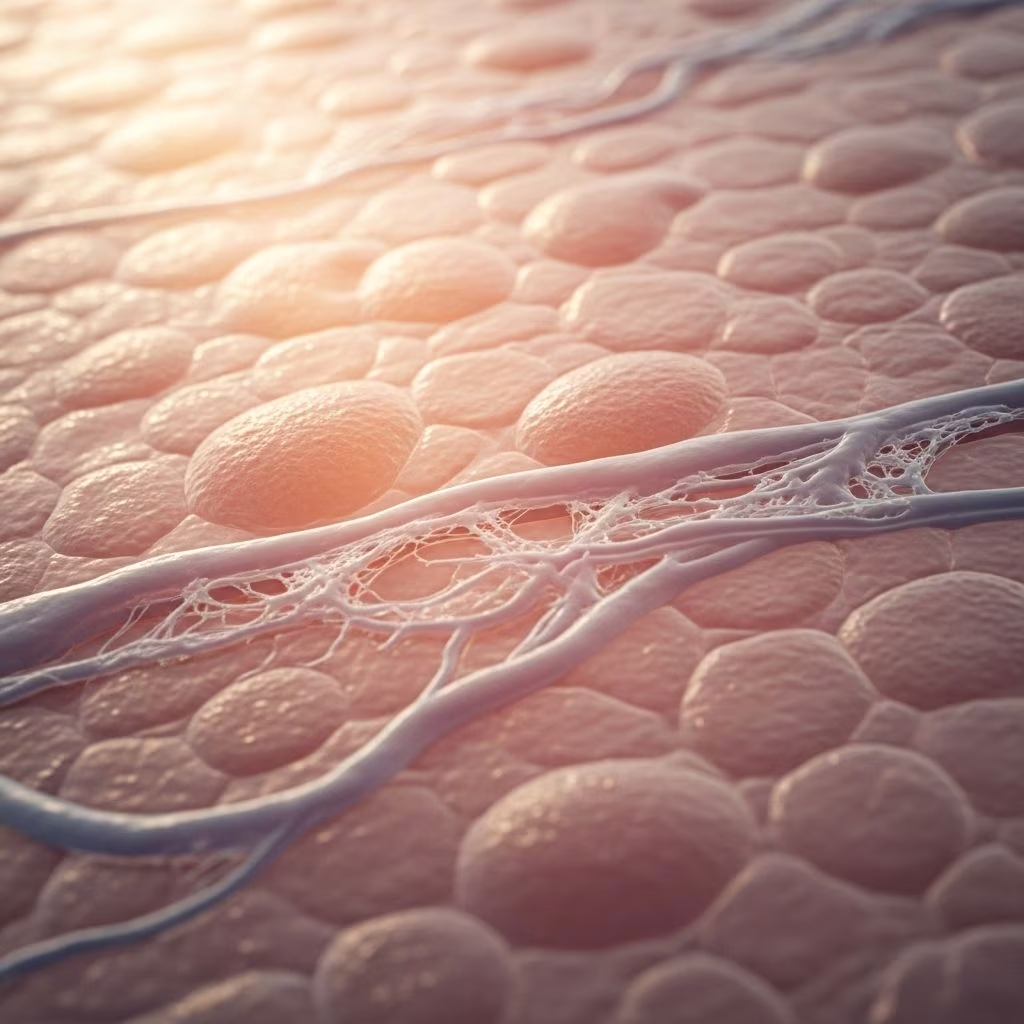
Sunlight is vital for life and offers benefits such as vitamin D synthesis and mood enhancement. However, too much sun, especially its ultraviolet (UV) radiation, is a major cause of skin damage, premature aging, and the rising incidence of skin cancers globally. This article examines the mechanisms by which sun exposure damages your skin’s collagen, accelerates aging, and increases cancer risk—and offers evidence-based advice to protect your skin.
What is Sun-Damaged Skin?
Skin that is frequently or continuously exposed to the sun without proper protection undergoes structural and biochemical changes over time. Sun-damaged skin includes:
- Dry, flaky texture due to lost moisturization and depleted natural oils.
- Sunburn: acute injury manifesting as redness, pain, and sometimes blistering.
- Actinic keratosis: persistent scaly patches or bumps that can progress to cancer.
- Photoaging: premature aging with fine lines, wrinkles, and skin thinning.
- Collagen changes: reduced, disorganized collagen, causing easy bruising and loss of elasticity.
These changes result from ultraviolet radiation altering normal skin structure and function, often beginning in childhood and accumulating through life .
Ultraviolet Radiation and the Skin
The primary culprits in sun-induced skin damage are ultraviolet A (UVA) and ultraviolet B (UVB) rays:
- UVA (320–400 nm) penetrates deeply into the skin, causing oxidative stress and indirectly damaging DNA and collagen. Responsible for most photoaging.
- UVB (280–320 nm) is more intense, damages the outer skin layer, and causes sunburn and direct DNA mutations—directly leading to skin cancers.
Both UVA and UVB trigger the production of reactive oxygen species (ROS), leading to cellular changes, inflammation, and genetic mutations .
Collagen: How Sun Exposure Causes Breakdown
Collagen is the major structural protein in skin, giving it firmness, elasticity, and the ability to withstand daily stresses.
Sun exposure disrupts collagen through several mechanisms:
- Oxidative stress: UV rays generate ROS, which break down collagen and harm the extracellular matrix (ECM).
- Activation of Matrix Metalloproteinases (MMPs): UV exposure increases levels of these enzymes, which specifically destroy existing collagen fibers.
- Reduced collagen synthesis: UV impairs signaling molecules like TGF-β, resulting in lower production of new collagen.
- Inflammation: Chronic UV promotes persistent inflammation, further degrading skin’s structural support.
The end result is skin that loses strength and elasticity, becomes thinner and more prone to wrinkling, and bruises easily due to fragile blood vessels .
Impact on the Dermis
The dermis is the skin’s middle layer and is especially rich in collagen. Chronic sun exposure damages this layer, resulting in:
- Fine lines and deep wrinkles
- ‘‘Leathery’’ or thickened texture (solar elastosis)
- Yellowed or mottled appearance
- Loss of youthful plumpness
Damage can begin at a relatively young age, especially for individuals who are outdoors frequently or use tanning beds .
Visible Effects of Collagen Loss
The visible effects of ultraviolet-induced collagen loss include:
- Wrinkles and fine lines: particularly around the eyes, mouth, and forehead
- Skin laxity: sagging in the cheeks, jawline, and neck as collagen depletes
- Easy bruising: especially in older adults, due to weakened support of capillaries
- Uneven skin tone and hyperpigmentation: often accompanying collagen loss
- Thinner, more fragile skin: more prone to tearing or injury
A dramatic example is “farmer’s arms,” where the outer arms show much greater aging and wrinkling than non-sun-exposed inner arms, highlighting sun’s effect on collagen-rich skin .
Sun Exposure and Premature Skin Aging (Photoaging)
Photoaging is the term for premature aging caused predominantly by chronic sun exposure, rather than by chronological aging alone.
Main features of photoaged skin:
- Coarse wrinkles and deep furrows
- Rough, dry, or leathery skin texture
- Uneven pigmentation (age spots, freckles)
- Loss of skin tone, elasticity, and a plump, youthful look
- Broken capillaries and easy bruising (actinic purpura)
Research indicates that solar UV causes up to 80–90% of visible skin aging effects, including most wrinkles and pigmentation issues, regardless of ethnic background .
UV Radiation & Skin Cancer Risk
Sun exposure is the most important environmental risk factor for all major types of skin cancer:
| Type of Skin Cancer | Main UV Link | Description and Risk |
|---|---|---|
| Basal Cell Carcinoma (BCC) | Primarily UVB-induced DNA damage | Most common; rarely deadly, but can be disfiguring when unchecked. |
| Squamous Cell Carcinoma (SCC) | Chronic cumulative UV exposure | Can invade deeper tissues; precursor lesions: actinic keratosis. |
| Melanoma | Intermittent, intense UV (sunburn); also cumulative exposure | Less common but much more lethal; arises from pigment cells (melanocytes). |
The damage occurs through:
- Direct DNA mutations in skin cells (e.g., p53 gene mutations)
- Production of reactive oxygen species, causing further genetic instability
- Loss of normal cell-cycle control and apoptosis (programmed cell death)
- Impaired immune function, leaving cancerous cells unchecked
Individuals with repeated, severe sunburns in childhood and adolescence face particularly elevated melanoma risk later in life. Chronic sun exposure throughout adulthood increases risk for both SCC and BCC .
Individual Risk Factors
- Fair skin and light eyes: Less melanin means less natural UV protection .
- High cumulative lifetime sun exposure (occupation, outdoor hobbies).
- Family or personal history of skin cancer
- History of frequent sunburns: especially at a young age
- Living near the equator or at high elevation (where UV exposure is more intense)
- Using tanning beds: Strongly increases both aging and cancer risk .
Prevention and Protection Strategies
Most sun-induced skin damage is preventable. Protection strategies include:
- Use broad-spectrum sunscreen (SPF 30 or higher), even on cloudy days
- Reapply sunscreen every 2 hours, or after swimming or heavy sweating
- Wear protective clothing: wide-brim hats, long sleeves, UPF-rated clothing
- Seek shade between 10 a.m. and 4 p.m., when UV is strongest
- Avoid intentional tanning and tanning beds
- Use sunglasses with UV protection to guard delicate eye-area skin
- Perform regular skin checks: Monitor for new or changing moles or spots and consult a dermatologist with any concerns
Can Skin Damage Be Reversed?
While some damage can be partially improved (e.g., using retinoids for fine lines or dermatologist-directed treatments for actinic keratosis), the best approach is prevention—protecting skin before significant damage occurs. Early medical treatment is essential if pre-cancerous lesions or suspicious moles appear .
Frequently Asked Questions (FAQs)
Q: Does a tan protect against future sunburns or cancer?
A: No. While a tan reflects some increased melanin, it offers minimal protection and actually indicates DNA damage has already occurred. Tanning (indoor or outdoor) significantly increases your cancer and photoaging risk .
Q: Is sun damage cumulative?
A: Yes. Every exposure adds to the total burden of DNA, collagen, and immune system damage—much of which cannot be fully undone .
Q: Can darker-skinned individuals get sun damage and skin cancer?
A: Yes. Although higher melanin offers some natural protection, all skin types are at risk for UV-induced damage, aging, and cancers—just usually at lower rates .
Q: Do clouds or glass block UV rays?
A: Not completely. Up to 80% of UV rays penetrate clouds, and UVA passes through ordinary window glass. Protection is needed even on overcast days and inside cars or buildings with windows .
Q: What is the best daily routine to limit sun damage?
A: Daily broad-spectrum sunscreen, protective clothing, and avoidance of peak sun hours form the cornerstone of effective prevention. Regular skin self-exams and prompt dermatologic care for suspicious spots are also key .
References
- Harvard Health – Sun-Damaged Skin: A to Z
- A Review on Sun Exposure and Skin Diseases (PMC, PubMed)
- Cleveland Clinic – Sun-damaged Skin: Photoaging, Signs, Causes & Treatment
- Feinberg School of Medicine (Northwestern University) – Sun’s Aging Effect on Skin
- Mayo Clinic – Sun Damage
- FDA – The Risks of Tanning
- Multiple: UV Radiation & Cancer
- Harvard Health – Fair Skin & Melanin
- FDA – Tanning Beds & Risk
- Prevention vs. Reversal
- FDA – Tanning & DNA Damage
- Cumulative Damage
- Sun Damage in Darker Skin
- UV and Clouds/Glass
- Daily Routine
References
- https://www.health.harvard.edu/diseases-and-conditions/sun-damaged-skin-a-to-z
- https://pmc.ncbi.nlm.nih.gov/articles/PMC9971785/
- https://pubmed.ncbi.nlm.nih.gov/36865856/
- https://my.clevelandclinic.org/health/diseases/5240-sun-damage-protecting-yourself
- https://news.feinberg.northwestern.edu/2012/06/20/sun-damage/
- https://www.mayoclinic.org/diseases-conditions/sunburn/in-depth/sun-damage/art-20546834
- https://www.fda.gov/radiation-emitting-products/tanning/risks-tanning


