


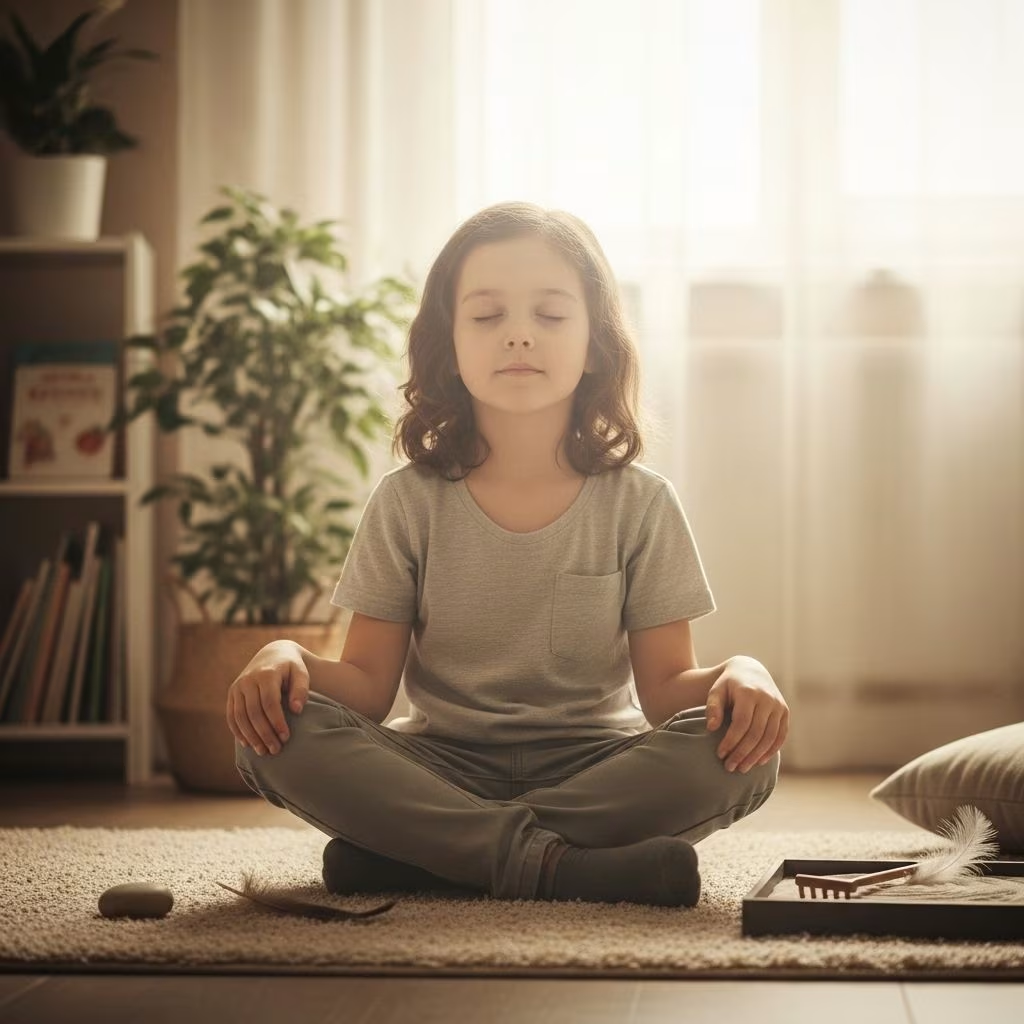
Mindfulness for Kids with Anxiety: Simple Techniques to Promote Calm and Wellbeing
Childhood anxiety is increasingly recognized as a major concern, affecting not only a child’s emotional health but also their ability to learn, socialize, and flourish. Mindfulness—a practice of focused awareness in the present moment—offers families, caregivers, and educators a toolkit of strategies to help kids develop greater resilience, self-regulation, and calm. This guide explores practical, research-supported mindfulness techniques for children with anxiety and provides step-by-step tips to help foster emotional strength in everyday life.
Understanding Child Anxiety and Mindfulness
Anxiety in children can manifest as persistent worries, irritability, physical symptoms (such as stomachaches or headaches), difficulty concentrating, or avoidance of certain situations. The Centers for Disease Control and Prevention report an increasing prevalence of anxiety disorders among children. Mindfulness helps children by teaching them to observe their anxious feelings without judgment and gently return their attention to the present moment.
Signs Your Child May Need Mindfulness Support
- Frequent or intense worries that interfere with daily life
- Physical complaints with no apparent medical cause
- Avoidance of school, social events, or new activities
- Trouble sleeping or concentrating
Benefits of Mindfulness for Anxious Kids
- Reduces stress and anxiety: Mindfulness has been shown to decrease overall anxiety and improve emotional regulation by calming the nervous system.
- Improves focus and attention: Mindfulness activities help children harness their attention and become more present, which can support learning and memory.
- Builds emotional resilience: Regular practice helps children bounce back from stressors and develop self-awareness.
- Promotes self-regulation: Children learn to respond rather than react to challenging emotions, fostering self-control and patience.
Setting the Foundation: Creating a Mindful Environment
Before introducing mindfulness exercises, establish a safe and supportive space where your child feels comfortable. Here are some basic approaches to create an environment conducive to mindfulness:
- Choose a quiet, distraction-free location with soft lighting and comfortable seating.
- Let your child’s comfort guide the session (e.g., eyes closed or softly gazing downward, sitting or lying down).
- Keep mindfulness practices brief and enjoyable, especially for younger children.
- Integrate mindfulness language into daily routines; for example, notice colors, sounds, or sensations together.
Simple Mindfulness Techniques for Kids
Mindfulness activities for children are most effective when they’re simple, engaging, and tailored to a child’s age and preferences. Below are practical techniques designed to reduce anxiety and can be practiced at home, in the classroom, or in therapy sessions:
1. 5-4-3-2-1 Grounding Technique
A sensory-based activity that draws attention away from anxious thoughts and brings focus to the immediate environment. Guide your child to identify:
- 5 things they can see
- 4 things they can hear
- 3 things they can smell
- 2 things they can touch
- 1 thing they can taste
This technique can be done using a worksheet or spoken prompts. It helps slow racing thoughts and brings calm.
2. Hugging and Self-Hug Techniques
Physical touch provides stability and comfort. Encourage your child to gently place each hand on opposite shoulders for a self-hug while repeating affirmations like “I am grounded” or “I am safe.”
3. Roots Visualization Technique
Ask your child to imagine that they are a tree with roots extending from their feet deep into the earth, anchoring and stabilizing them. Visualization fosters a sense of security during moments of anxiety.
4. Mindful Walking
Slow and attentive walking helps relieve anxious energy. Guide children to notice the feeling of the ground under their feet and the movement of their body with every step.
5. Reorientation Technique
Anxiety can create spiraling thoughts about what could go wrong. To reorient, ask your child to identify simple facts about themselves and the present moment:
- My name is…
- Today is…
- I am wearing…
This helps redirect attention and restore calm.
Grounding Exercises for Anxiety
Grounding techniques help children redirect nervous energy and anchor themselves in the present. Here are several evidence-based grounding practices:
- Hand Tracing Activity: Let your child trace their hand on a piece of paper and create patterns or colors inside the outline. This focuses their attention on the sensations of movement and coloring rather than anxious feelings.
- Stomp Stomp Blow: Alternate stomping each foot followed by a deep exhale. Guide your child to imagine that they are stomping out their worries and blowing away anxiety.
Breathing Techniques and Visualizations
Breathing-based mindfulness practices offer rapid relief for anxiety and foster greater self-awareness. Below are effective breathing activities:
1. Belly Breathing
Have your child place a hand on their belly and pay attention as it gently rises and falls with each breath. This slows the breath and signals calm to the nervous system.
2. Teddy Bear Breathing
Let your child lie down with a stuffed animal on their belly. Encourage them to breathe in and out, watching the toy move up and down. This practice is especially effective for younger children, making the process playful and comforting.
3. Four Square Breathing
| Step | How to Practice |
|---|---|
| Breathe In | Count to 4 as you breathe in |
| Hold Breath | Count to 4 while holding |
| Breathe Out | Count to 4 while exhaling |
| Hold Breath | Count to 4 while holding |
Repeat for several rounds. This rhythmic technique can quickly reduce feelings of panic.
4. Breath Ball Practice
Using a Hoberman sphere (expandable dome toy), mimic the movement of breathing: expand the ball for inhales and contract for exhales. This visual and kinesthetic cue links awareness of breath to physical sensation.
5. Balloon Breath Visualization
Guide your child to imagine their stomach as a balloon, inflating gently on the inhale and deflating softly on the exhale. This can be paired with gentle hand motions to reinforce the imagery.
Mindfulness in Daily Routine
For mindfulness to be effective, it should be practiced regularly, but in brief, positive intervals that fit a child’s attention span. Here are ways to integrate mindfulness into everyday routines:
- Practice before or after school, at bedtime, or during transitions between activities.
- Include short guided meditations or mindfulness stories. Imagine floating on a cloud, lying in a field of flowers, or breathing like the ocean.
- Use mindful moments (e.g., taking three slow breaths before meals or exams).
- Encourage children to keep a mindfulness journal where they record sensations, feelings, or calming activities.
Frequently Asked Questions (FAQs)
Q: At what age can a child begin mindfulness practices?
A: Simple mindfulness techniques can be adapted for children as young as preschool age, especially those involving sensory awareness, breathing, or play. Activities should match the child’s developmental stage and attention span.
Q: Can mindfulness replace professional therapy for anxiety?
A: Mindfulness is a supportive technique—not a substitute for professional mental health care. If your child’s anxiety is severe or persistent, consult a pediatrician or child psychologist for specialized support.
Q: What if my child cannot sit still during mindfulness?
A: Many children benefit from active mindfulness, such as mindful walking, hand tracing, or movement-based activities. Experiment with techniques to discover what fits your child best.
Q: How often should mindfulness be practiced?
A: Daily practice yields the greatest benefits, but even a few minutes several times a week can make a significant difference in anxiety levels and emotional regulation.
Q: Are there digital tools or apps for child mindfulness?
A: Yes, many child-focused mindfulness apps and websites offer guided meditations, soundscapes, and calming stories (e.g., Calm Kids, Headspace, Smiling Mind, etc.).
Additional Resources for Parents and Teachers
- Child Mind Institute: Tips on anxiety and mindfulness for kids
- Mental Health Center Kids: Grounding exercises and sensory activities
- Calm Blog: Guided meditation and breathing exercises for children
- Mindful.org: Mindful parenting strategies and breath practices
- Connecticut Children’s: Calming exercises and stress management for kids
- Waterford.org: Mindfulness activities for the classroom
- Therapist Aid: Printable mindfulness worksheets for children
Key Takeaways
- Mindfulness offers children simple, effective ways to manage anxiety and build emotional resilience.
- Techniques such as grounding, breathing exercises, visualization, and mindful movement can be customized for age and comfort level.
- Regular practice—even in short sessions—can help reduce anxiety and foster lifelong emotional wellbeing.
References
- https://mentalhealthcenterkids.com/blogs/articles/grounding-exercises-for-kids
- https://www.calm.com/blog/meditation-for-kids
- https://www.mindful.org/mindfulness-for-kids/
- https://www.youtube.com/watch?v=70j3xyu7OGw
- https://www.connecticutchildrens.org/growing-healthy/12-calming-exercises-teach-your-child
- https://childmind.org/article/anxiety-and-mindfulness/
- https://www.waterford.org/resources/mindfulnes-activities-for-kids/
- https://www.therapistaid.com/therapy-worksheet/mindfulness-for-children


