


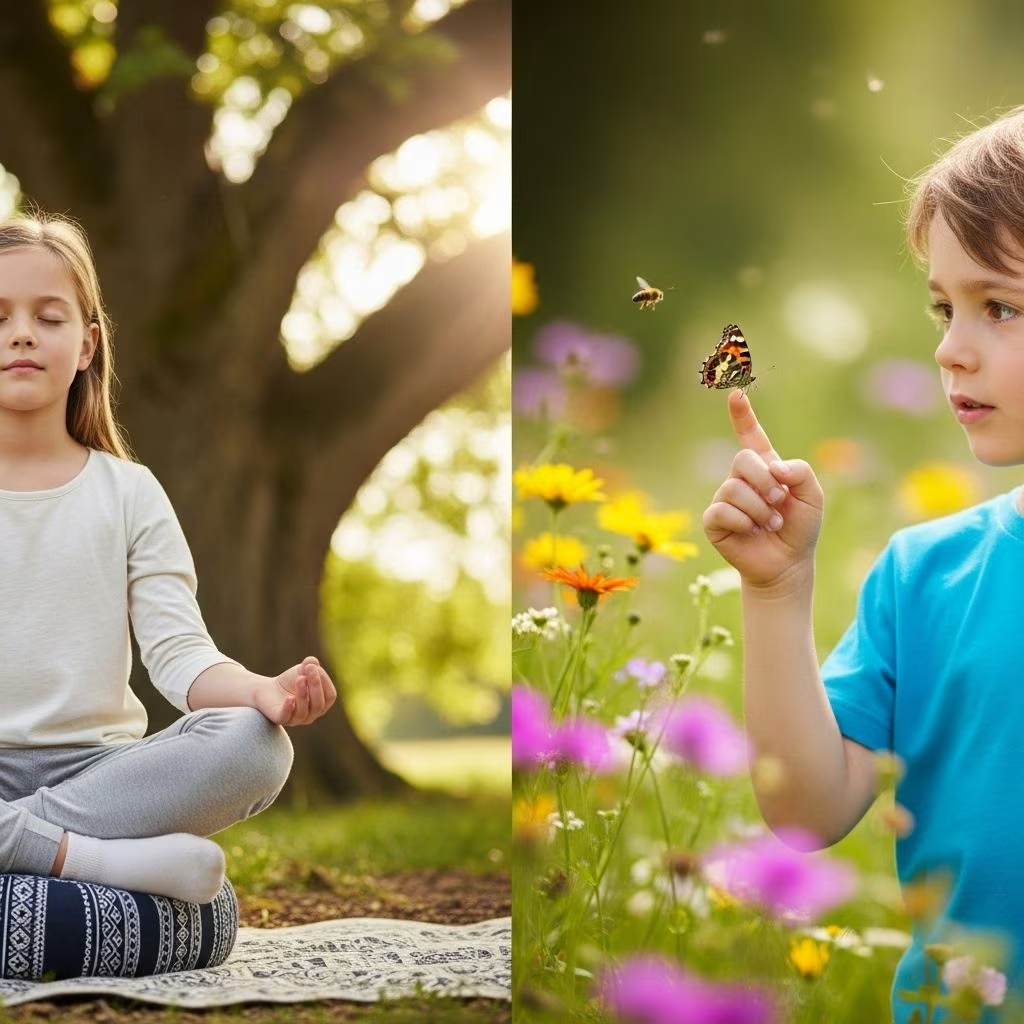
In today’s fast-paced world, children face unprecedented levels of stress and distraction. From academic pressures to social media influences, young minds are constantly bombarded with stimuli that can affect their mental well-being. As parents and educators search for effective tools to help children navigate these challenges, two terms frequently emerge: meditation and mindfulness. While often used interchangeably, these practices have distinct characteristics and benefits for children. Understanding the key differences between meditation and mindfulness can help you choose the most appropriate approach for your child’s unique needs.
What is Meditation for Kids
Meditation for children is a structured practice that involves setting aside dedicated time to focus the mind and achieve a state of calm awareness. It is a formal exercise typically performed in a specific position, often sitting quietly with eyes closed or resting. The practice has been used since ancient times to improve health and well-being, and modern science increasingly supports its effectiveness for children’s mental health.
When children meditate, they engage in deliberate techniques designed to train their attention and awareness. The practice creates a peaceful space of non-judgment where children can enjoy the present moment without the constant rush of modern life. Unlike casual relaxation, meditation requires intentional effort and follows specific methods or traditions.
There are several types of meditation practices suitable for children. Concentration meditation focuses on a single point, such as the breath or a sound. Mindfulness meditation involves observing thoughts and feelings without judgment. Movement-based meditation incorporates physical activity like yoga. Cultivating positive emotions meditation helps children develop compassion and kindness. Each type serves different purposes and can be adapted to suit a child’s age and developmental stage.
The structured nature of meditation means it typically has a defined beginning and end. Children sit down with the intention to meditate, practice for a set duration, and then conclude the session. This formality helps establish routine and discipline, teaching children the value of dedicated practice time for their mental well-being.
What is Mindfulness for Children
Mindfulness for children is a way of being present and aware in the current moment. Jon Kabat-Zinn, widely recognized as the father of contemporary mindfulness practices, defines it simply as paying attention in a particular way: on purpose, in the present moment, and non-judgmentally. Unlike meditation, mindfulness is not confined to a specific time or place but can be practiced throughout daily activities.
For children, mindfulness means learning to notice what is happening around them and within them right now, rather than worrying about the past or future. It helps them stay grounded in their experiences, whether they are eating, playing, walking, or interacting with others. This quality of awareness can transform ordinary moments into opportunities for connection and calm.
Mindfulness teaches children to observe their thoughts and feelings without becoming overwhelmed by them. When a child practices mindfulness, they learn to recognize when their mind has wandered and gently bring their attention back to the present. This skill proves invaluable when facing challenging emotions like anxiety, frustration, or anger, giving them time to choose their response rather than reacting impulsively.
The beauty of mindfulness lies in its accessibility. Children do not need special equipment, a quiet room, or extended periods of time to be mindful. They can practice mindfulness while brushing their teeth, eating lunch, or listening to a teacher. It becomes an integrated part of how they experience and interact with the world.
Core Differences Between Meditation and Mindfulness
While meditation and mindfulness share common roots and often complement each other, they differ in fundamental ways that matter when teaching children these practices.
Structure and Format
Meditation is a formal, structured practice with a defined beginning, middle, and end. It requires setting aside dedicated time, typically in a quiet space, where children sit or lie down with the specific intention to meditate. The practice follows particular techniques or methods, creating a disciplined approach to mental training.
Mindfulness, by contrast, is an informal quality of awareness that can be cultivated anytime and anywhere. Children can be mindful while engaged in any activity, from eating breakfast to playing sports. It does not require stopping what they are doing or finding a special place to practice.
Time Commitment
Meditation demands a time commitment, even if just for a few minutes. Children must pause their regular activities to engage in the practice. For young children with limited attention spans, this can range from one to ten minutes, gradually increasing as they develop their practice.
Mindfulness requires no additional time beyond what children are already spending on their daily activities. A child can practice mindful eating during their regular mealtime or mindful walking while moving from one place to another. This makes mindfulness particularly accessible for busy families and classroom settings.
Focus and Attention
Meditation typically involves focusing attention on something specific, whether it is the breath, a mantra, a visualization, or bodily sensations. This concentrated focus trains the mind to remain steady and resist distraction. When attention wanders, which it naturally does, children learn to gently redirect it back to the chosen focal point.
Mindfulness emphasizes broad, open awareness of the present moment. Rather than narrowing attention to one thing, mindfulness encourages children to notice whatever is happening right now, including thoughts, feelings, sensations, sounds, and sights. This expansive awareness helps children develop a comprehensive understanding of their internal and external experiences.
Goals and Outcomes
Meditation aims to achieve specific states of consciousness, such as deep relaxation, clarity, or insight. The practice works toward cultivating particular qualities like concentration, equanimity, or compassion. Success in meditation can be measured by the ability to sustain focus and achieve desired mental states.
Mindfulness seeks to develop a quality of presence and non-judgmental awareness that permeates daily life. The goal is not to achieve a special state but to fully inhabit each moment as it unfolds. Success in mindfulness means noticing when the mind has wandered and returning to present-moment awareness without self-criticism.
Relationship Between the Two
Understanding the relationship between meditation and mindfulness clarifies their distinct roles. Meditation can be seen as a formal training ground where children develop mindfulness skills in a controlled environment. The awareness cultivated during meditation sessions then extends into daily life as mindfulness. In this sense, meditation is one way to practice and strengthen mindfulness, but mindfulness itself is the quality of awareness that can exist independent of formal meditation practice.
Benefits of Meditation for Kids
Research increasingly supports the profound benefits meditation offers children. These advantages extend beyond temporary relaxation to create lasting positive changes in how children think, feel, and behave.
Improved Attention and Focus
Regular meditation practice strengthens children’s ability to concentrate and maintain attention. Studies have documented improvements in attention among children who practice meditation for just eight weeks. This enhanced focus translates to better academic performance and the ability to complete tasks more effectively. For children with ADHD, meditation provides a valuable tool for managing attention difficulties without relying solely on medication.
Stress and Anxiety Reduction
Meditation helps children manage and reduce stress and anxiety by teaching them to activate their body’s relaxation response. The practice lowers heart rate and blood pressure while decreasing stress hormones. Children learn to recognize the physical sensations of stress and use meditation techniques to calm themselves before anxiety escalates. Research with fourth through sixth graders showed documented decreases in anxiety after mindfulness meditation training.
Emotional Regulation
Through meditation, children develop greater emotional awareness and control. They learn to observe their feelings without being overwhelmed by them, creating space between an emotional trigger and their response. This skill proves particularly valuable for children who are easily upset or impulsive. Instead of having an immediate tantrum when frustrated, children who meditate can pause, notice their frustration, and choose how to respond.
Better Sleep Quality
Many children struggle with bedtime anxiety or difficulty falling asleep. Meditation practices before bed help quiet racing thoughts and relax the body, making it easier for children to transition into sleep. Parents report that children who practice meditation regularly fall asleep faster and sleep more soundly through the night.
Enhanced Self-Awareness
Meditation helps children develop a deeper understanding of their own minds and bodies. They learn to recognize their thought patterns, emotional triggers, and physical sensations. This self-awareness forms the foundation for personal growth and healthy decision-making that serves them throughout life.
Benefits of Mindfulness for Children
Mindfulness offers children a practical set of skills they can apply immediately to everyday challenges. These benefits make mindfulness an essential life skill in our distraction-filled world.
Present-Moment Awareness
Mindfulness teaches children to fully experience what is happening right now instead of dwelling on past mistakes or worrying about future events. This present-moment awareness helps children appreciate and engage more deeply with their experiences, from enjoying a meal to connecting with friends. It reduces the tendency to miss important moments while lost in thought.
Improved Social Skills
When children practice mindfulness, they become better listeners and more empathetic friends. By staying present during conversations and noticing their own reactions, they develop stronger interpersonal skills. Mindfulness helps children recognize when they are making assumptions or reacting defensively, allowing them to choose more constructive responses in social situations.
Reduced Impulsivity
Mindfulness creates a pause between impulse and action. Children learn to notice the urge to act without immediately following through, giving them time to consider consequences and make better choices. This proves especially helpful for children with ADHD, autism, or anger management challenges who struggle with impulse control.
Academic Performance
Mindful children bring better attention and focus to their schoolwork. They are less distracted by intrusive thoughts or external stimuli, allowing them to absorb and retain information more effectively. Teachers who incorporate mindfulness training into lesson plans report improvements in student behavior, participation, and academic achievement.
Resilience and Coping Skills
Mindfulness equips children with tools to face daily challenges and setbacks. When difficulties arise, mindful children can acknowledge their feelings without becoming overwhelmed, maintaining perspective and finding constructive solutions. This resilience helps them navigate the inevitable ups and downs of childhood with greater ease.
Practical Meditation Techniques for Kids
Introducing meditation to children requires age-appropriate techniques that capture their interest and accommodate their developmental stage. The following methods have proven effective for teaching children meditation.
Diaphragmatic Breathing Meditation
Diaphragmatic breathing, also called belly breathing, forms the foundation of many meditation practices for children. This technique uses the diaphragm, a dome-shaped muscle under the lungs, to achieve deeper, more calming breaths.
To practice diaphragmatic breathing, children should sit comfortably or lie flat on their bed or floor. They place one hand on their chest and one on their belly, imagining their belly is a balloon. When inhaling, they fill the balloon with air so their belly rises. When exhaling, they squeeze air out of the balloon and their belly falls. Children lying down can place a light object like a stuffed animal on their stomach and watch it move up and down with each breath. Practicing ten breaths at a time, several times daily, builds diaphragm strength and teaches conscious breath awareness.
Breath Awareness Meditation
Mindfulness meditation on breath involves sitting quietly with eyes closed or resting, bringing attention to the breath. Children focus on the sensation of air entering and leaving their nostrils, the expansion of their chest, or the rise and fall of their belly. When attention drifts, which naturally happens, they gently return focus to the breath without judgment. This simple yet powerful practice teaches concentration and present-moment awareness.
Chime or Bell Meditation
Children respond well to auditory focal points. In chime meditation, an adult rings a bell or chime while children sit quietly with eyes closed. They listen carefully until they can no longer hear the sound, then open their eyes. This practice trains sustained attention and helps children learn to focus on subtle sensory experiences. Some families incorporate visualization during the chime meditation, such as imagining floating on a cloud.
Body Scan Meditation
Body scan meditation guides children’s attention systematically through different parts of their body. Starting with the toes and moving upward, children notice sensations in each area without trying to change anything. This practice develops body awareness, releases physical tension, and helps children recognize where they hold stress in their bodies.
Visualization Meditation
Visualization engages children’s natural imagination. An adult guides children through a peaceful scene, such as walking through a forest, floating on a cloud, or sitting by the ocean. Children imagine the sights, sounds, smells, and sensations in vivid detail. Visualization meditation promotes relaxation while harnessing children’s creative capacities.
Practical Mindfulness Activities for Children
Mindfulness activities for children should be fun, interactive, and easily integrated into daily routines. These practices help children develop present-moment awareness in engaging ways.
Mindful Eating
Mindful eating transforms mealtime into an awareness practice. Children select a small piece of food, such as a raisin or a piece of chocolate. They examine it closely, noticing colors, textures, and shapes. They smell it, noticing any aroma. When they place it in their mouth, they pay attention to the taste, texture, and sensations as they slowly chew and swallow. This practice teaches children to fully experience their food rather than eating mindlessly.
Mindful Walking
Walking becomes a mindfulness practice when children pay close attention to the physical sensations of each step. They notice how their feet lift, move through the air, and contact the ground. They observe the shifting of their weight, the movement of their legs, and the rhythm of their steps. This practice can happen anywhere, from walking to school to moving around the house.
Five Senses Exercise
The five senses exercise grounds children in the present moment by engaging all their senses. Children identify five things they can see, four things they can touch, three things they can hear, two things they can smell, and one thing they can taste. This simple practice quickly brings scattered attention back to the here and now.
Bubble Blowing
Blowing bubbles naturally encourages mindful breathing while providing visual feedback. Children take a deep breath in, then slowly and steadily exhale to create bubbles. They watch the bubbles float away, noticing their colors and movement. This playful activity teaches breath control while developing present-moment awareness.
Mindful Listening
In mindful listening, children close their eyes and listen carefully to sounds around them. They notice distant sounds, nearby sounds, and sounds within their own body. Rather than labeling or judging sounds, they simply observe them as they arise and fade. This practice develops auditory awareness and teaches children to distinguish between hearing and truly listening.
Which Practice is Right for Your Child
Choosing between meditation and mindfulness for your child depends on several factors, including age, temperament, challenges, and lifestyle. In reality, most children benefit from exposure to both practices, as they complement each other beautifully.
Age Considerations
Younger children, particularly those under age seven, often find informal mindfulness activities more accessible than formal meditation. Their shorter attention spans and natural inclination toward movement make activities like bubble blowing, mindful walking, and sensory exercises ideal starting points. As children mature and develop longer attention spans, they can gradually incorporate brief meditation sessions.
Older children and teenagers can benefit from both structured meditation and integrated mindfulness practices. They have the cognitive development to understand abstract concepts like observing thoughts and the discipline to maintain a regular meditation practice.
Temperament and Learning Style
Some children thrive with structure and routine, making formal meditation practices appealing. They appreciate the defined time, clear instructions, and measurable progress. Other children resist rigid structure and respond better to flexible mindfulness activities they can adapt to their preferences.
Active, kinesthetic learners often prefer movement-based practices like mindful walking or yoga. Visual learners engage well with visualization meditations. Auditory learners connect with chime meditation or mindful listening exercises.
Specific Challenges
Children with ADHD benefit from both meditation and mindfulness, but may need modifications. Shorter meditation sessions with frequent position changes prevent restlessness. Mindfulness activities with physical movement or tangible objects help maintain engagement.
Children with anxiety often respond well to breathing-focused meditation and grounding mindfulness exercises that anchor them in the present moment. Children with anger management issues benefit from practices that create space between trigger and response.
Practical Integration
Rather than choosing one practice exclusively, consider integrating both into your child’s routine. Start each day with a brief meditation session to set a calm, focused tone. Throughout the day, encourage mindfulness during regular activities. Before bed, return to meditation to promote relaxation and sleep.
Remember that consistency matters more than duration. A few minutes of daily practice yields better results than lengthy sessions once a week. Make the practices enjoyable rather than forcing them, allowing children to develop intrinsic motivation.
Frequently Asked Questions
Q: At what age can children start learning meditation and mindfulness?
A: Children can begin learning age-appropriate mindfulness activities as early as age three or four. Simple practices like belly breathing with stuffed animals or mindful eating work well for preschoolers. Formal meditation can be introduced around age seven or eight when children develop longer attention spans. Start with very brief sessions of one to three minutes and gradually increase duration as skills develop.
Q: How long should children meditate each day?
A: For young children ages 5-7, start with one to three minutes of meditation. Children ages 8-11 can practice five to ten minutes, while teenagers can build up to 15-20 minutes. The key is consistency rather than duration. Daily practice for just a few minutes produces better results than longer, irregular sessions. Let your child’s attention span and interest guide you, gradually increasing time as they become comfortable.
Q: Can meditation and mindfulness help children with ADHD?
A: Yes, research shows meditation and mindfulness can significantly benefit children with ADHD. These practices improve attention, reduce impulsivity, and help children manage their symptoms more effectively. The key is adapting practices to accommodate shorter attention spans and the need for movement. Use brief sessions, incorporate physical elements, and provide clear structure. Many parents and teachers report noticeable improvements in focus and behavior when children with ADHD practice regularly.
Q: What if my child resists or says meditation is boring?
A: Resistance is common, especially when children are new to these practices. Make it fun and interactive rather than forcing compliance. Use games, stories, and age-appropriate language. Let children choose which techniques to try. Practice together as a family so children do not feel singled out. Keep sessions very short initially. If formal meditation does not appeal to your child, focus on informal mindfulness activities during regular routines. Most importantly, model the practices yourself and share your own positive experiences.
Q: Do meditation and mindfulness have any risks for children?
A: For most children, meditation and mindfulness are safe and beneficial practices. However, children who have experienced trauma may find certain practices triggering, particularly those involving silence or stillness. In such cases, work with a qualified mental health professional who can adapt practices appropriately. Some children may initially experience increased awareness of uncomfortable emotions, which is normal as they develop emotional intelligence. This is why teaching these practices with proper guidance and support is important.
Q: Should schools teach meditation and mindfulness to students?
A: Many educators and health organizations support incorporating mindfulness training into school lesson plans. Schools that have implemented these programs report improvements in student attention, behavior, academic performance, and overall well-being. Teachers find that brief mindfulness breaks help students reset and refocus. The practices are inexpensive, accessible, and beneficial for children of all backgrounds. Many schools now include mindfulness as part of social-emotional learning curricula.
Q: How can I tell if meditation or mindfulness is working for my child?
A: Look for subtle changes in behavior and emotional regulation. Your child may handle frustration more calmly, focus better on homework, fall asleep more easily, or show increased self-awareness. They might spontaneously use breathing techniques when upset or comment on present-moment experiences. Some children report feeling calmer, less worried, or more in control of their reactions. Keep in mind that benefits develop gradually over time with consistent practice. Track changes over weeks and months rather than expecting immediate transformation.
Q: Can I teach my child meditation and mindfulness without special training?
A: Yes, parents can introduce basic meditation and mindfulness practices to their children without formal training. Start with simple techniques like belly breathing, mindful eating, or chime meditation. Many excellent resources, including books, apps, and videos designed for children, provide guidance. However, practicing yourself first helps you understand the techniques and model them effectively. If your child has specific mental health challenges, consider working with a trained mindfulness instructor or therapist who specializes in children.
References
- https://thoughtbubbles.org.uk/adults-children-and-mindfulness-meditation-the-same-or-different/
- https://health.choc.org/handout/mindfulness-and-meditation-practices-for-kids/
- https://www.healthychildren.org/English/healthy-living/emotional-wellness/Pages/Just-Breathe-The-Importance-of-Meditation-Breaks-for-Kids.aspx
- https://childmind.org/article/the-power-of-mindfulness/
- https://www.nccih.nih.gov/health/meditation-and-mindfulness-effectiveness-and-safety
- https://www.calm.com/blog/mindfulness-vs-meditation
- https://erie.macaronikid.com/articles/5faafc70724ff14cfbbaf2a0/dear-jennie-whats-the-difference-between-mindfulness-and-meditation
- https://teachchildrenmeditation.com/the-difference-between-meditation-and-mindfulness/


