


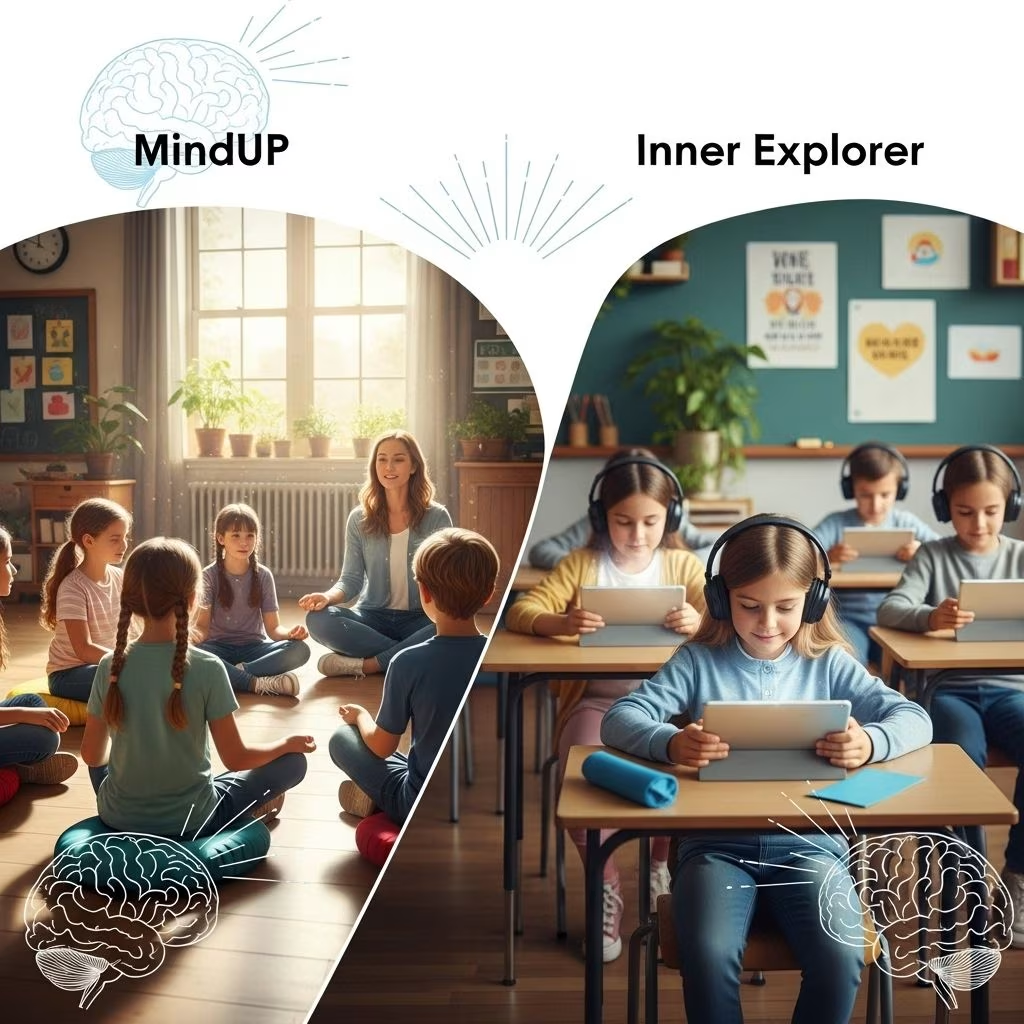
Mindfulness education is transforming classrooms, helping students and educators manage stress, build self-awareness, and foster emotional resilience. Two leading programs are shaping mindfulness in schools: MindUP and Inner Explorer. This article examines each program’s approach, content, implementation, evidence base, and overall impact in educational settings.
Introduction to School Mindfulness Programs
Mindfulness—the practice of paying deliberate attention to the present moment—has been embraced by schools worldwide as a strategy for nurturing student well-being, improving focus, and enhancing classroom climate. Programs structured around mindfulness-based interventions have demonstrated measurable benefits for both students and educators.
Among the various curriculums available, MindUP and Inner Explorer stand out for their accessibility, evidence base, and demonstrated effectiveness in diverse learning environments.
Program Overviews
| Program | Founding | Target Group | Program Format | Cost & Licensing |
|---|---|---|---|---|
| MindUP | Founded by The Hawn Foundation; based on social-emotional learning and neuroscience | Pre-K to grade 8 | In-class curriculum; teacher-led with training | Licensed curriculum, teacher training required |
| Inner Explorer | Founded by educators; rooted in Mindfulness-Based Stress Reduction (MBSR) | Pre-K to grade 12 | Audio-guided daily practice; minimal teacher prep | Subscription-based, web access |
MindUP: Foundations and Philosophy
MindUP integrates principles from social-emotional learning (SEL), neuroscience, and positive psychology. It aims to teach children how their brains work, emotion regulation techniques, and practical tools to strengthen attention and empathy.
- Developed by The Hawn Foundation, drawing on research in child development and psychology
- Lessons blend classroom mindfulness, perspective-taking, and science of the brain
- Available for early childhood through grade 8, with adaptations for different age groups
Inner Explorer: Foundations and Philosophy
Inner Explorer’s program is built on the Mindfulness-Based Stress Reduction (MBSR) protocol, one of the most widely studied mindfulness frameworks. Its audio-guided sessions require no prior teaching experience, making daily mindfulness practice approachable and time-efficient for busy classrooms.
- Offers programs from pre-kindergarten through high school (and in Spanish)
- Daily practices are 5–10 minutes, with audio narration by a diverse team
- No lesson prep required—teachers participate alongside students
Curriculum Structure and Delivery
MindUP Curriculum
- 15 core lessons delivered over a semester or school year
- Focuses on three pillars: neuroscience of the brain, mindfulness practices, and positive psychology
- Lessons include mindful awareness exercises, sensory activities, and group discussions
- Requires teachers to complete MindUP training before delivering content
MindUP’s curriculum includes instruction on the brain’s functions (for example, teaching about the amygdala and prefrontal cortex) to help children understand emotional impulses. Lessons are interactive, requiring students to practice focused attention, gratitude, and acts of kindness. Compassion and empathy-building are embedded, with activities encouraging students to see perspectives beyond their own.
Inner Explorer Curriculum
- Daily 5–10 minute audio-guided mindfulness sessions
- Structured around MBSR key practices: awareness of breath, body scans, mindful listening, and reflection
- No special training required; designed for seamless integration into class routines
- Provides age-appropriate levels, from pre-K through high school, suitable for morning, transition, or post-recess periods
Inner Explorer uses narrated audio tracks that lead both teachers and students through short mindfulness exercises. Sessions may include simple movement (such as the “Shark Fin” motion), breathing exercises, and guided self-reflection, all crafted to reduce stress and improve classroom readiness.
Implementation in Schools
| Feature | MindUP | Inner Explorer |
|---|---|---|
| Teacher Training | Teachers must complete MindUP Fundamentals and (optionally) advanced workshops | No prior mindfulness experience required; teachers and students participate together |
| Integration | Integrated as SEL block or lesson within classroom time | Integrated as brief daily routine, often at transition points (e.g., morning, post-recess) |
| Preparation | Moderate prep: educators plan and deliver lessons, facilitate discussions, model practices | Minimal prep: select and play daily audio session; students follow guided instructions |
| Parental Engagement | Optional family resources and take-home activities | Platforms offer family access for home practice |
| Languages | Primarily English | English and Spanish |
Classroom Experience
- MindUP: Emphasizes whole-class activities, direct instruction, reflective journaling, group discussions, and peer engagement.
- Inner Explorer: Focuses on quiet, inward-directed practice—students follow audio prompts with eyes closed or in a relaxed posture. Both teachers and students benefit from the routine, regardless of previous mindfulness experience.
Evidence and Outcomes
MindUP Outcomes
- Research indicates improvements in empathy, perspective-taking, and reduction in bullying behaviors.
- Classrooms report increased teamwork, more positive peer interactions, and improved impulse control.
- Student self-report and teacher observations reveal greater emotional regulation and resilience.
Studies adapting the MindUP curriculum observed measurable declines in negative behaviors and an increase in positive, collaborative interactions. The inclusion of social-emotional learning concepts helps students translate mindfulness skills into daily life.
Inner Explorer Outcomes
- Multiple studies, supported by MBSR research, show reductions in student and teacher stress, improved focus, and greater classroom readiness.
- Recognized for improving executive function skills, including working memory and attention.
- Listed as a CASEL-endorsed SEL-supportive program.
Reports from schools using Inner Explorer highlight both short-term and cumulative benefits, such as students returning from recess more calm and ready to learn, and teachers reporting less burnout and higher job satisfaction. Its consistent, no-prep routine is cited as a key driver in broad adoption and sustained practice.
MindUP vs Inner Explorer: A Comparative Analysis
| Aspect | MindUP | Inner Explorer |
|---|---|---|
| Core Philosophy | SEL-focused, neuroscience teaching, experiential learning | MBSR-rooted, focus on direct mindfulness experience |
| Curriculum Length | 15 lessons, lesson-based format | 100+ audio sessions, ongoing daily practice |
| Facilitation Requirements | Teacher-led, requires foundational training | Teacher/student co-participation, no specific mindfulness experience needed |
| Evidence and Endorsements | Peer-reviewed studies, positive classroom impact; widely used and recognized | Recognized by CASEL and BrainFutures, evidence from MBSR studies |
| Best for… | School communities wanting comprehensive SEL integration and interactive, teacher-led lessons | Schools seeking practical, low-prep, daily mindfulness with broad scalability |
Key Differences
- Content delivery: MindUP relies on trained teachers facilitating pre-planned lessons, group discussions, and targeted exercises. Inner Explorer uses audio narration to guide the class through short mindfulness practices, minimizing the burden on teachers.
- Intensity and frequency: MindUP’s curriculum is scheduled less frequently—typically once or twice a week but with longer, more involved lessons. Inner Explorer is used daily in condensed sessions for greater routine and cumulative effect.
- Philosophical emphasis: MindUP devotes significant time to teaching about the brain and SEL concepts; Inner Explorer immerses participants in experience with guided mindfulness practice.
- Implementation flexibility: Inner Explorer’s no-prep model allows for rapid scale across classrooms, ideal for schools with limited staff training bandwidth.
Choosing the Right Program for Your School
Selecting between MindUP and Inner Explorer depends on a school’s priorities, available resources, and educational philosophy.
- If your goal is in-depth SEL integration, teacher-led discussions, and exploration of neuroscience, MindUP may be the better fit.
- If your school needs an efficient, low-prep, and research-driven solution for daily mindfulness, Inner Explorer offers a practical path to schoolwide adoption.
- Both programs are evidence-based and can foster significant improvements in student behavior, focus, and school culture.
Tips for Successful Implementation
- Secure buy-in from educators and leadership by sharing research and pilot data
- Start with a pilot program before scaling across the whole school
- Encourage daily practice for sustained impact—consistency matters more than duration
- Engage families with information on program goals and home mindfulness resources
- Monitor progress via student and teacher feedback, adapting implementation as needed
Frequently Asked Questions (FAQs)
Q: What age groups are suitable for MindUP and Inner Explorer?
A: MindUP is designed for pre-kindergarten to grade 8, with variations for younger and older students. Inner Explorer offers separate audio programs for pre-K through high school, extending its reach through all school years.
Q: Is teacher mindfulness experience required?
A: MindUP recommends and often requires teachers to complete foundational mindfulness training to deliver the curriculum effectively. Inner Explorer, in contrast, is structured to make mindfulness accessible to all teachers and students, regardless of prior experience—no special training is needed.
Q: How long does each session last?
A: MindUP lessons typically run for 20–30 minutes, delivered weekly or biweekly. Inner Explorer sessions last 5–10 minutes, intended for daily practice as part of the school routine.
Q: What outcomes can we expect from daily mindfulness practice?
A: Studies consistently report improvements in attention, emotional regulation, peer interactions, empathy, and a reduction in stress and behavioral issues in classrooms utilizing these programs.
Q: Can families participate in the program?
A: Both programs offer family resources—MindUP extends optional activities for families; Inner Explorer provides web-based access so students and families can practice at home.
Conclusion
MindUP and Inner Explorer are at the forefront of school mindfulness programming, each with a distinct approach. MindUP provides a robust, lesson-based, teacher-driven curriculum integrating neuroscience and SEL principles; Inner Explorer offers an accessible, scalable, and highly practical platform for daily, evidence-based mindfulness. Both contribute to healthier, more focused, and compassionate school communities, guiding educators and students toward lifelong skills for well-being.
References
- https://innerexplorer.com
- https://www.heardalliance.org/wp-content/uploads/toolkit/promotion/MINDFULNESS_PROGRAMS_for_K-12.pdf
- https://www.aetna.com/health-guide/mindfulness-transform-schools.html
- https://commons.lib.jmu.edu/cgi/viewcontent.cgi?article=1014&context=edspec201019
- https://thespiritedschoolcounselor.wordpress.com/2014/06/18/mindfulness-3-curriculum-resources/
- https://search.proquest.com/openview/1a10f0e82a7e41ef72c445e00e08335f/1?pq-origsite=gscholar&cbl=18750&diss=y
- http://www.mindfulcranks.com/podcast-episodes/2019/12/31/episode-19-candy-gunther-brown-debating-mindfulness-in-public-schools
- https://pg.casel.org/review-programs/


