


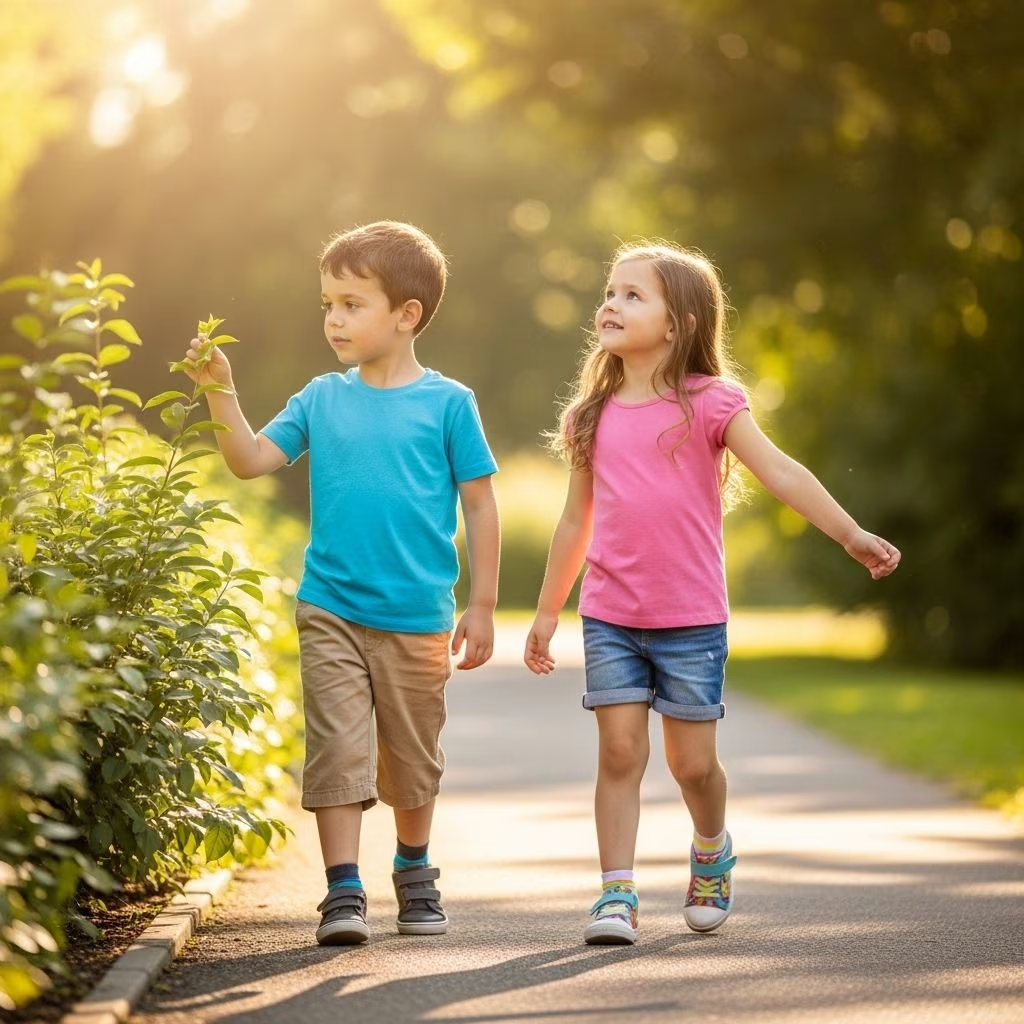
Balancing the high energy of children with the quest for calm can be a daily challenge. Parents are always searching for effective ways to help their kids channel their vigor, develop self-awareness, and nurture emotional resilience. Two movement practices that seem similar—mindful walking and simple strolling—actually offer distinct benefits for active, curious minds. This article explores both approaches in detail, offering parents and educators practical insights to transform routine walks into powerful tools for child development.
Defining Mindful Walking vs Strolling
Mindful walking is a practice that combines movement with conscious attention to the present moment. It invites kids to be aware of their body, breath, and surroundings while walking, making each step intentional. Mindful walking can be done indoors or outdoors, alone or with others, and is often encouraged as a playful, engaging exercise using games, imagination, or reflection .
Strolling, in contrast, is a leisurely walk taken without particular attention or focus. While often enjoyable and relaxing, strolling typically lacks the elements of intentional awareness, body-focused attention, or structure that define mindful walking. Children may stroll while lost in thought, chatting, or distracted by their environment.
Both practices involve physical movement, but mindful walking is purpose-driven, while strolling is naturally unstructured.
Why Mindful Walking Matters for Energetic Kids
Energetic children crave outlets for movement but also benefit from learning self-regulation and awareness. Mindful walking addresses both needs:
- Improves Focus and Attention: Kids learn to direct their concentration to movement, breath, and sensory input, boosting their ability to focus in other contexts .
- Reduces Stress and Anxiety: Focusing on the present while walking helps release worries and manage overstimulation .
- Enhances Physical Fitness: Mindful walking is gentle exercise that also hones coordination, balance, and body awareness without overwhelming growing bodies .
- Boosts Emotional Regulation: By pausing to notice and discuss feelings, children develop resilience and learn to manage strong emotions .
- Promotes Sensory Awareness: Kids are encouraged to notice sounds, sights, smells, and textures—fueling curiosity and learning .
- Cultivates Gratitude and Appreciation: Noticing small wonders in nature or daily life can foster gratitude and positive emotions .
- Fosters Social Bonding: Shared mindful walking strengthens connections among peers, siblings, or families via calm shared experience .
- Encourages Creativity and Play: Mindful walking often includes playful elements—imaginative games, silly walks, or character role-play—that engage active children and make the practice feel like fun .
- Develops Mind-Body Connection: Awareness of posture, muscle movement, and breath fosters lifelong self-understanding and well-being .
- Accessible for All Ages and Abilities: Mindful walking can be adapted to suit different developmental stages and physical abilities, making it inclusive for diverse groups .
How to Practice Mindful Walking with Kids
Mindful walking becomes most effective when parents use creative approaches geared to age and personality. Here are common techniques and approaches:
Core Steps for Mindful Walking
- Set an Intention: Before the walk, calmly explain to your child that you’ll walk together paying attention to how your bodies feel or what you notice around you .
- Start Slowly: Walk at a gentle, relaxed pace. Encourage walking without shoes when safe, heightening bodily sensations .
- Focus on the Senses: Pause the walk to ask kids to notice five things they can see, four things they can hear, three things they can feel, and so on. Invite them to notice the feeling of the ground under their feet, the air on their skin, or the rhythm of their breath .
- Explore Playful Techniques: Use games that require attention, like silent ninja walks (trying not to make a sound), imitation games (walking like animals, characters, or in different moods), or silly walk challenges that make them concentrate on their movements .
- Reflect and Share: After walking, pause for a few breaths. Ask how their bodies feel and discuss any observations—was it calming, fun, tiring, or energizing?
Popular Mindful Walking Activities for Kids
- Silent Walking: Pretend to be spies, ninjas, or explorers who walk without a sound, sharpening attention and deepening awareness .
- Silly Walks: Inspired by the Monty Python “Ministry of Silly Walks,” kids are encouraged to exaggerate their walks in fun ways, focusing on balance and body control while laughing .
- Imitational Walking: Kids choose to mimic different characters (animals, storybook heroes) or recreate their own moods through movement, encouraging empathy and self-reflection .
- Sensory Scavenger Hunt: Invite kids to collect or identify natural objects or notice details along the walk (e.g., finding a certain color, sound, or texture) .
- Pause and Breathe: Periodically stop, stand still, and practice deep slow breathing, teaching kids to return to calm .
The Benefits and Limitations of Ordinary Strolling
Strolling offers its own advantages. It is:
- Relaxing and Social: Unstructured walks provide opportunities for conversation, connection, and simply enjoying nature or a neighborhood .
- Accessible Exercise: Even without structured mindfulness, strolling gets kids moving and can relieve restlessness .
- Creativity and Free Play: Strolling without a fixed agenda allows children’s imaginations to roam or free-form play to emerge organically .
However, strolling lacks intentional focus. Distractions, mind wandering, or arguments may arise, and there’s less direct learning of self-regulation or sensory awareness. Although beneficial for physical health and general relaxation, strolling is not as effective as mindful walking for teaching presence, emotional grounding, or focus .
Mindful Walking vs Strolling: Comparing Outcomes
| Aspect | Mindful Walking | Strolling |
|---|---|---|
| Intentionality | Highly intentional; focused on the present moment | Largely unintentional; mind may wander |
| Emotional Regulation | Promotes stress relief, self-awareness, and resilience | Provides general relaxation, less guidance for managing emotions |
| Sensory Engagement | Encourages noticing of sights, sounds, smells, touches | Often distracted, less sensory focus |
| Social Connection | Enriched through shared reflective or playful experience | Can be social, often conversational, but not always connected |
| Energy Channeling | Teaches directing energy with intention; calms restlessness | Relieves excess energy through movement alone |
| Learning Outcomes | Boosts focus, patience, gratitude, empathy, and creativity | Supports relaxation and physical health |
| Adaptability | Highly adaptable (games, silence, imitation, etc.) | Inherently flexible, but less structure for growth |
Tips for Integrating Mindful Walking in Daily Life
- Make mindful walking a morning ritual on the way to school or after meals to set a positive tone for the day .
- Use natural transitions—such as walks to the park, from school, or during family outings—to turn ordinary strolls into mindful moments .
- Start with short sessions (5–10 minutes) for young children, gradually building up as they enjoy it .
- Combine play and mindfulness by incorporating games, characters, and imagination .
- Encourage occasional shared silence during walks, then invite discussion or play after .
- Practice in nature whenever possible—sensory input from trees, birds, and weather enhances the experience .
- Model calm, focused behavior yourself to inspire children through your own presence .
- Reflect on the walk after finishing—ask kids if they notice differences in their mood or energy .
Making Mindful Walking Engaging and Fun
Children are naturally playful; integrating fun keeps mindful walking fresh and effective.
- Animal Walks: Roar like a lion, hop like a bunny, or slither like a snake. Changing pace and style draws focused attention .
- Environmental Imagination: Pretend to walk through different landscapes—mud, snow, hot sand—to encourage new sensations and creative thinking .
- Silly Levels: Let children rate their walk’s silliness from 1 to 10, then practice shifting up or down. This helps regulate energy and self-control .
- Imitation Games: Take turns choosing a character or mood to walk like; discuss how it feels in the body and mind .
- Sensory Challenges: Challenge kids to walk as quietly as possible or listen for the faintest sound .
Afterward, always circle back with a brief reflection: What was most fun? What did you notice? Encourage gratitude by thanking your feet or the trees you passed.
Frequently Asked Questions (FAQs)
What is the main difference between mindful walking and strolling?
Mindful walking is focused, intentional, and sensory-aware, while strolling is a relaxed, often distracted, walk without special focus.
Can mindful walking help hyperactive or anxious kids?
Yes. Mindful walking channels excess energy into calm, focused movement and helps children learn emotional self-regulation, manage anxiety, and build resilience.
How can I motivate my energetic child to try mindful walking?
Make the activity playful—incorporate silly walks, characters, or sensory games. Let your child choose activities and celebrate their creative ideas.
Is it better to practice mindful walking indoors or outdoors?
Both can be effective. Outdoors offers more sensory variety, while indoors may feel more controlled and calm. Adapt to what’s best for your child’s environment and needs.
How often should mindful walking be practiced?
Consistency is more important than duration. Try 2–4 times per week, or integrate mindful moments into daily family routines—after meals or as transitions between activities.
What role do adults play during mindful walking?
Adults should model mindful attention, participate playfully, and encourage reflection and sharing, helping children internalize mindfulness skills.
Conclusion
Both mindful walking and ordinary strolling offer valuable movement opportunities for energetic kids. But mindful walking, with its focus on intentionality, present-moment awareness, and playful engagement, delivers deeper benefits for children’s focus, emotional health, creativity, and self-regulation. By infusing everyday walks with mindfulness, parents give children lifelong tools for channeling energy, building resilience, and experiencing the world with curiosity and calm.
References
- https://rainbowkiddies.com/parenting_tips/mindful-walking-practices-for-kids-easy-engaging-and-fun/
- https://www.mindful.org/6-ways-to-engage-kids-and-teens-in-mindful-walking/
- https://www.eomega.org/article/walking-meditation-for-kids
- https://jewishgrandparentsnetwork.org/family-room/mindful-walking-with-kids-and-teens/
- https://empoweringeducation.org/blog/benefits-of-mindfulness-for-children/
- https://mindfulness.com/mindful-living/mindful-walking
- https://youthfirstinc.org/mindful-walking/
- https://blissfulkids.com/playful-mindfulness-for-children-walk-on-a-rainbow/
- https://www.towardwellbeing.com/take-a-mindful-walk


