


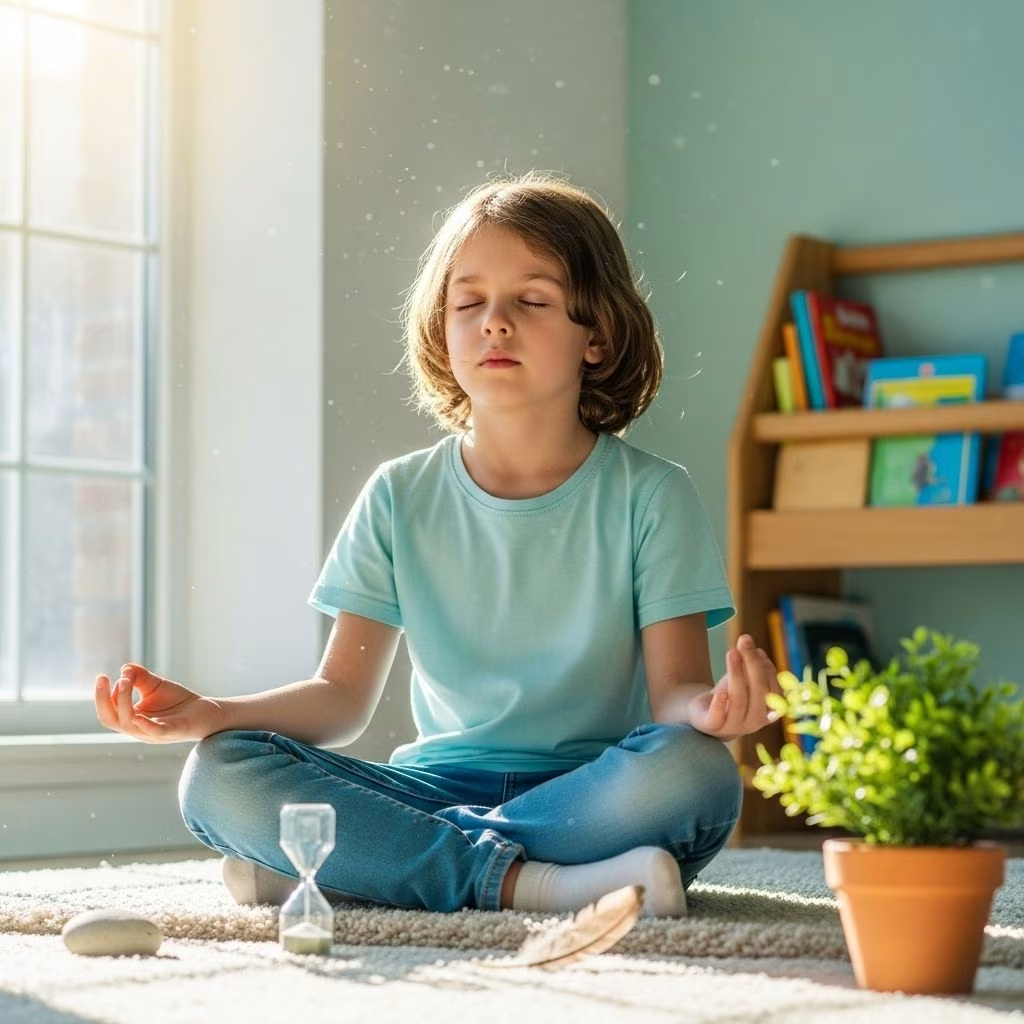
Children with ADHD face unique challenges when it comes to practicing mindfulness. Their active minds, difficulty sitting still, and struggles with sustained attention can make traditional mindfulness practices feel impossible. However, with thoughtful adaptation strategies, mindfulness can become a powerful tool for helping these children improve focus, manage emotions, and develop greater self-awareness. This comprehensive guide explores evidence-based mindfulness techniques specifically adapted for children with ADHD, providing parents and educators with practical strategies they can implement immediately.
Understanding Mindfulness and ADHD
Mindfulness involves paying attention to the present moment without judgment. For children with ADHD, this practice addresses core challenges including difficulty sustaining attention, impulsivity, and emotional dysregulation. Research demonstrates that mindfulness training helps ADHD children focus and enhance their attention, awareness, and self-control through consistent practice of mindfulness exercises during training sessions and as homework assignments.
The connection between our bodies and minds plays a crucial role in mindfulness effectiveness. When children experience emotions, their bodies respond physiologically. Deep breathing and other mindfulness practices help calm these physiological reactions, which in turn calms the mind. This bidirectional relationship makes mindfulness particularly valuable for ADHD management.
Studies involving ADHD children aged 6 to 11 who participated in programs combining yogic deep breathing and concentration meditation showed remarkable improvements in school performance that were sustained throughout the year. Both adolescents with ADHD and their parents have reported decreased stress levels and fewer ADHD symptoms after completing mindfulness programs, demonstrating the practice’s effectiveness across multiple domains of functioning.
Why Adaptation Matters for ADHD Children
Standard mindfulness practices often require extended periods of stillness and focused attention, which can be particularly challenging for children with ADHD. Attempting to force traditional meditation practices onto ADHD children without modification typically results in frustration, resistance, and abandonment of the practice altogether. Adaptation strategies acknowledge the unique neurological differences in ADHD children and work with their natural tendencies rather than against them.
Key adaptation principles include: starting with very short practice periods, incorporating movement when possible, using engaging visual or tactile elements, providing clear structure and concrete instructions, and allowing flexibility in how exercises are performed. These modifications transform mindfulness from an intimidating challenge into an accessible and even enjoyable practice.
The goal of adaptation is not to lower standards but to create accessible entry points that allow ADHD children to experience mindfulness benefits. As children develop comfort and skill with adapted practices, they can gradually progress toward more traditional forms if desired. However, many children find that adapted versions continue to serve them well throughout their development.
Breathing-Based Mindfulness Techniques
Breathing exercises form the foundation of many mindfulness practices, but they require specific adaptations for ADHD children. Practicing mindful breathing as a strict, structured activity may be too difficult initially, so starting simple is essential.
Single Breath Focus
The simplest adaptation involves teaching your child to take one deep breath before starting any activity. While this sounds basic, even concentrating on one deep breath can improve focus on the task at hand. This technique requires minimal time commitment and can be seamlessly integrated into daily routines. Once your child masters single-breath focus, you can occasionally remind them to take breathing breaks during everyday activities.
For example, while doing homework, ask your child to stop periodically and take a breathing break. They should inhale deeply, pause, and then exhale slowly, concentrating on the pause between inhaling and exhaling. Repeating this process four or five times creates a meaningful mindfulness moment without overwhelming the child.
The S.T.O.P. Technique
The S.T.O.P. technique expands on breathing breaks by incorporating additional steps that strengthen mindfulness while providing clear structure that ADHD children often need. This four-part technique allows children to be more attentive to what’s happening and make better decisions.
S equals Stop: The child stops whatever they are doing or intending to do. This creates a moment of pause that interrupts automatic reactions.
T equals Take a few breaths: The best breath is a deep breath, filling the abdomen and exhaling completely. Have your child count as they breathe: counting to three on the inhale while feeling the abdomen expand, then counting to three on the exhale while feeling the abdomen empty and relax.
O equals Observe: The child observes what’s going on internally and externally. They should ask themselves what they are doing and what they are about to do. Emphasize that there are no good or bad answers. They should then ask if what they are about to do matches what they want to be focused on at the moment.
P equals Proceed: Now the child has an opportunity to move in a purposeful direction, to do the action they intended with greater awareness and intention.
The 7-11 Breathing Pattern
This technique works particularly well for calming anxiety before tests, presentations, or other high-pressure situations. The child simply breathes in for 7 seconds and out for 11 seconds. After a few repetitions, brain chatter quiets considerably, and physical restlessness often decreases. Maintaining the 7-11 breath for 12 to 15 repetitions settles breathing into 4 to 6 breaths per minute, a range scientifically proven to optimize long-term focus.
Non-Breathing Mindfulness Activities
Not all children take to breathing exercises immediately. Many other methods can increase self-awareness and mindfulness without focusing exclusively on breath. These alternatives often prove more engaging for children who find breathing exercises boring or difficult.
Body Scan Meditation
People with ADHD often have a complicated relationship with their bodies. Frustration builds when they cannot concentrate on goals they want to achieve. The body scan technique helps children feel more comfortable in their skin while simultaneously increasing mindfulness.
First, have your child find a comfortable resting position, either lying down or sitting in a comfortable chair. With eyes closed or open, they should note the sensation on the very top of their head. Tell them to label this feeling if there is any and release any tension in that part of the body. Then repeat the process for every body part, moving down the face to the shoulders, down each arm to the fingers, down the torso, and finally down each leg to the toes.
Encourage your child to imagine that their attention is like a flashlight, pointing attention at each section of the body to illuminate it. This concrete visualization helps ADHD children understand and execute the practice more effectively.
Mantra Meditation
In mantra meditation, the object of focus is a word or sound repeated mentally. In Transcendental Meditation, a meaningless word is thought recurrently without trying to concentrate too hard on it. When the mind wanders, the child simply brings attention back to the mantra without concern or self-judgment. This technique can be particularly effective for ADHD children because it provides a clear, simple focal point.
Mindful Movement Through Yoga
Some yoga types use deep breathing exercises and concentration meditation, such as focusing on a specific thought like the word Om. The combination of physical movement with mindfulness practice makes yoga especially suitable for ADHD children who struggle to sit still. The physical poses provide structure and concrete goals, while breathing and concentration elements develop mindfulness skills.
Observing Your Mind
This advanced technique involves watching thoughts as they arise without getting caught up in them. Children can imagine their thoughts as clouds floating across the sky or leaves floating down a stream. This practice helps develop metacognitive awareness, the ability to observe one’s own thinking processes. For ADHD children, this skill can be transformative in managing impulsivity and emotional reactions.
Sensory Engagement Strategies
Children with ADHD often respond well to mindfulness practices that engage their senses in concrete, tangible ways. These multisensory approaches provide the stimulation and variety that helps maintain attention.
The Mindful Jar
Also known as a sensory jar or calm-down jar, these offer fun DIY activities to do with your child. You and your child should make the jars together, which creates investment in the tool. Create jars with glitter, sequins, beads, or other materials suspended in liquid. When complete, shake the jar and have your child watch until all the contents settle.
The visual effect is mesmerizing and calming. You can relate this to mindfulness by explaining that thoughts and feelings are just like glitter—when we are upset, they spin all over the place inside our heads. We need them all to settle before we can calm down. The act of watching the glitter provides a concrete focal point that makes the abstract concept of calming the mind tangible and understandable.
Mindful Coloring and Art
Have your child choose their favorite art tool, whether crayons, pencils, or gel pens. Encourage them to notice how it feels as it moves on the paper—the texture, the sound, the visual result. If they want to go beyond coloring within lines, try doodling or Zentangling, drawing soothing, repeatable shapes to create intricate patterns. The repetitive nature of these activities naturally induces a mindful state while the creative aspect maintains engagement.
Mindful Eating Exercise
Transform snack time into mindfulness practice by having children eat very slowly while paying attention to every aspect of the experience. They should notice colors, textures, smells, and tastes. Ask them to describe what they experience using all their senses. This practice develops present-moment awareness while working with an activity children naturally find rewarding.
Out-Loud Sense Noting
Have your child verbally identify things they notice through each sense: things they see, hear, feel, smell, or taste. This externalization of attention makes mindfulness more concrete and accessible. You can structure this as a game by challenging them to find five things they can see, four things they can touch, three things they can hear, two things they can smell, and one thing they can taste.
Structured Mindfulness Programs
While informal mindfulness practices are valuable, structured programs provide systematic skill development with proven effectiveness.
Guided Meditations for Children
Guided meditations pull multiple mindfulness practices including deep breathing, visualization, and grounding into one cohesive experience. For kids with ADHD, guided meditations can increase focus and prolong attention span, reduce stress and anxiety, build resilience and a growth mindset, improve emotional regulation, and enhance self-awareness and empathy.
Look for guided meditations with themes likely to interest your child, as they will be more likely to engage in the entire meditation this way. Options range from adventure-based journeys to nature explorations to superhero narratives that incorporate mindfulness principles.
Mindfulness-Based Activities and Games
Breathing Practice with Stuffed Animals: Begin by picking out a favorite stuffed animal for each participant. Have your child lie down with the stuffed animal on their belly and watch it rise and fall with each breath. This makes breathing visible and provides a playful element that maintains engagement.
Sitting Meditation Adapted: Start with just two to three minutes rather than extended periods. Use a timer so children know when the practice will end. Allow them to keep eyes open if closed eyes increase restlessness. Permit fidgeting or shifting as long as they maintain general stillness.
Walking Meditation: This moving meditation involves walking very slowly while paying attention to each component of the walking motion. Children lift one foot, move it forward, place it down, shift weight, and repeat. The physical movement makes this practice more accessible for ADHD children than sitting meditation.
Freeze Game: Play music and have children dance or move freely. When the music stops, they freeze completely and notice what they feel in their bodies, what thoughts are present, and what they hear around them. This combines the appeal of a game with mindfulness practice.
STEM Projects as Mindfulness Practice
STEM projects require attention to detail and present-moment focus. Whether coding a new game or observing a plant’s growth, children need to be present. This inherent demand for focus has parallels with mindfulness. Practicing presence during STEM projects can make it easier for children to practice mindfulness for self-regulation, such as using visualization or grounding techniques when upset.
Implementation Tips for Parents and Educators
Successful implementation of mindfulness practices for ADHD children requires thoughtful planning and realistic expectations. These practical tips help maximize the likelihood of sustained practice and meaningful benefits.
Start Small and Build Gradually
Begin with one simple mindfulness practice such as a breathing routine, a yoga sequence, or a guided meditation lasting just two to three minutes. Consistency with brief practices produces better results than sporadic longer sessions. As your child develops comfort and skill, gradually extend duration or add complexity.
Create Environmental Supports
Designate a specific location for mindfulness practice that is quiet, comfortable, and free from distractions. Use sensory cues like chimes, a singing bowl, or a small bell to signal the beginning and end of practice. These auditory markers help transition into and out of mindfulness states while providing structure.
Practice Together
Model mindfulness by practicing alongside your child rather than simply instructing them. Children learn more effectively through observation than instruction alone. When you practice together, you also develop your own mindfulness skills and can authentically share your experiences, making the practice feel more like a shared journey than an imposed requirement.
Integrate into Daily Routines
Rather than treating mindfulness as a separate activity, weave brief practices into existing routines. Take three deep breaths before meals, practice a body scan at bedtime, or use the S.T.O.P. technique when transitioning between activities. This integration makes mindfulness a natural part of life rather than another task on the to-do list.
Maintain Flexibility and Patience
Some days will be easier than others. Your child may engage enthusiastically one day and resist completely the next. This variability is normal, especially with ADHD. Avoid power struggles over practice. If your child genuinely cannot engage on a particular day, try a different technique or take a break and return later. Forced practice creates negative associations that undermine long-term success.
Celebrate Small Wins
Notice and acknowledge when your child successfully uses mindfulness skills, even in small ways. Did they remember to take a deep breath before starting homework? Did they use a calming technique when frustrated? Positive reinforcement strengthens the connection between mindfulness practice and beneficial outcomes.
Measuring Progress and Adjusting Approaches
Tracking progress helps maintain motivation and identify which strategies work best for your individual child. However, progress may look different than expected.
Observable Changes
Look for improvements in school performance, particularly sustained attention during tasks. Notice whether emotional reactions become less intense or recovery from upsets happens more quickly. Observe whether your child initiates mindfulness practices independently or requests them during challenging moments. These behavioral changes indicate developing mindfulness skills even if the practices themselves still seem difficult.
Self-Reported Experiences
Ask your child about their experiences with different techniques. Which ones do they enjoy? Which ones help them feel calmer or more focused? Do they notice any differences in how they feel or perform on days when they practice versus days they don’t? Children’s subjective experiences provide valuable information for tailoring approaches.
Adjusting Strategies
If particular techniques consistently generate resistance or show no benefits after several weeks of regular practice, try different approaches. The variety of mindfulness adaptations means you can almost certainly find methods that resonate with your child. Some children respond better to movement-based practices, others to sensory activities, and still others to guided imagery or breath work.
Long-Term Perspective
Mindfulness skills develop gradually over time. Research studies showing significant benefits typically involve programs lasting several months with regular practice. Expect slow, incremental progress rather than dramatic immediate changes. The goal is sustainable skill development that serves your child throughout life, not quick fixes.
Frequently Asked Questions
Q: How long should mindfulness sessions last for children with ADHD?
A: Start with just 2 to 3 minutes for young children or those new to mindfulness. As they build tolerance and skill, gradually increase to 5 to 10 minutes. Even brief daily practice produces more benefits than longer sporadic sessions. Some breathing techniques take only 30 seconds but still provide meaningful benefits when practiced consistently.
Q: What if my child refuses to practice mindfulness?
A: Avoid forcing practice, as this creates negative associations. Instead, model mindfulness yourself and invite your child to join when interested. Try different techniques to find ones that appeal to them. Frame practices as games or challenges rather than meditation. Consider whether you’re attempting sessions that are too long or at poor times of day. Sometimes taking a complete break and reintroducing mindfulness later with fresh approaches works best.
Q: Can mindfulness replace ADHD medication?
A: Mindfulness should not be considered a replacement for medication or other treatments prescribed by healthcare professionals. However, it can be a valuable complementary tool that enhances overall ADHD management. Research shows mindfulness reduces symptoms and improves functioning, but treatment decisions should always involve consultation with qualified healthcare providers familiar with your child’s specific situation.
Q: At what age can children with ADHD start mindfulness practice?
A: Children as young as 4 or 5 can begin very simple mindfulness practices adapted to their developmental level, such as taking one deep breath or watching a mindful jar. Studies have shown benefits for ADHD children aged 6 to 11 in structured programs. The key is matching the complexity and duration of practices to the child’s developmental stage and attention capacity rather than chronological age alone.
Q: How quickly will we see results from mindfulness practice?
A: Some children notice subtle improvements in focus or calmness within a few weeks of consistent practice. However, more substantial changes in ADHD symptoms, emotional regulation, and self-awareness typically emerge over several months of regular practice. Research studies showing significant benefits usually involve programs lasting 8 to 12 weeks or longer. Patience and consistency are essential for realizing mindfulness benefits.
Q: Should mindfulness practice happen at specific times of day?
A: The best time depends on your child’s natural rhythms and daily schedule. Many families find success with brief morning practices to set a calm tone for the day, or bedtime practices to aid relaxation and sleep. However, the most important factor is consistency rather than timing. Choose times when your child is neither too tired nor too energized, and when you can practice without rushing or interruptions.
Q: What if breathing exercises make my child more anxious?
A: Some children find focused attention on breathing increases anxiety rather than reducing it. If this occurs, shift to non-breathing mindfulness techniques like body scans, mindful coloring, sensory jars, or movement-based practices. These alternatives provide mindfulness benefits without the anxiety-triggering element. You can always revisit breathing techniques later once your child has developed general mindfulness skills and comfort.
Q: How can teachers incorporate mindfulness in classrooms with ADHD students?
A: Teachers can use brief whole-class mindfulness moments during transitions, such as three deep breaths before starting a new subject. Incorporate mindful movement breaks with simple yoga poses or stretching. Provide quiet spaces with sensory tools like stress balls or fidget items for students who need mindfulness breaks. Use chimes or bells to signal mindful listening moments. These universal strategies support ADHD students while benefiting the entire class.
References
- https://www.psychiatryredefined.org/mindfulness-meditation-techniques-children-adhd/
- https://hes-extraordinary.com/manage-adhd-mindfulness
- https://utahparentcenter.org/wp-content/uploads/2020/04/Easy-Mindfulness-Exercises-for-Kids-with-ADHD.pdf
- https://impactparents.com/blog/adhd/mindfulness-and-adhd-4-relaxation-games-for-children/
- https://chadd.org/attention-article/from-my-classroom-to-yours-supporting-adhd-with-mindfulness-techniques/
- https://pmc.ncbi.nlm.nih.gov/articles/PMC3267931/
- https://www.additudemag.com/mindfulness-meditation-for-kids-with-adhd/
- https://www.kidsyogastories.com/yoga-mindfulness-adhd/
- https://www.adhdcentre.co.uk/6-essential-mindfulness-practices-to-help-with-6-common-adhd-symptoms/


