


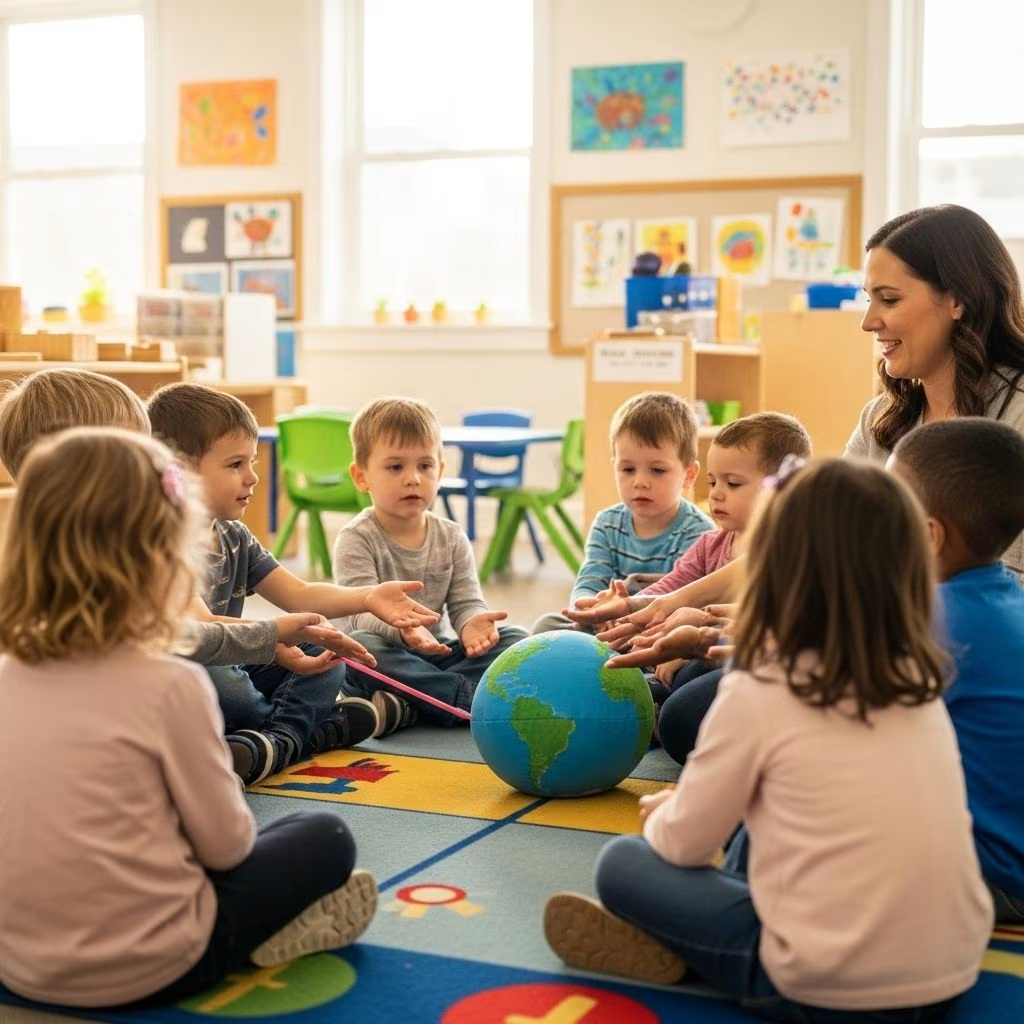
Creating a Mindful Sharing Circle for children aged 3-5 in daycare is a transformative way to nurture essential social skills, develop empathy, and cultivate lifelong emotional wellness. Well-structured sharing circles foster community and inclusion, empowering young children to express themselves, listen actively, cooperate, and become mindful of others’ feelings and perspectives. This comprehensive article explores the purpose, structure, and best practices for hosting a Mindful Sharing Circle, and provides practical activity ideas to inspire every daycare educator or parent working with preschoolers.
Definition and Purpose of a Mindful Sharing Circle
A Mindful Sharing Circle is a group activity where young children gather—typically seated in a circle—to engage in discussions, storytelling, sharing objects, and expressive games designed to foster social connection, empathy, and emotional awareness. Inspired by both traditional circle time and mindfulness techniques, the mindful sharing circle adds a reflective and empathetic dimension to classic group activities, encouraging each child to listen actively, recognize their own feelings, and learn to appreciate different perspectives in a safe, supportive environment.
Benefits of Mindful Sharing Circles for Preschoolers
- Social Skills: Children develop turn-taking, sharing, listening, and cooperation skills essential for positive peer relationships.
- Empathy and Understanding: Mindful sharing activities encourage children to recognize and respect the thoughts and feelings of others, planting early seeds of empathy.
- Emotional Regulation: Techniques like breathing exercises, yoga, and gratitude help children identify and manage their emotions calmly and mindfully.
- Confidence and Self-Expression: Sharing personal stories, ideas, or objects builds children’s confidence and verbal abilities.
- Sense of Community: Regular group circles create a feeling of belonging and safety, which is crucial for a positive daycare experience.
Preparing for a Mindful Sharing Circle
Intentional preparation is key to a successful sharing circle, particularly for young children who thrive on reassuring routines and welcoming environments.
- Physical Space: Arrange seating in a circle or semi-circle where all children face each other, free from distractions and clutter. Use a bright rug or placemats to mark spaces for inclusivity and comfort.
- Materials: Gather any props, books, talking objects (like a ‘sharing stick’ or plush toy), and any visual aids or instruments required for the activities planned.
- Schedule: Choose a time in the day when children are most receptive (such as after a snack), and ensure sessions are not too long—generally 15–20 minutes is ideal for ages 3–5.
- Routine: Establish predictable steps for opening, guiding, and closing the sharing circle. Children feel most secure when they know what to expect.
Key Components of a Mindful Sharing Circle
While flexibility is important, each mindful sharing circle should include these essential elements:
- Opening Ritual: Start with a signal—such as a calming chime, song, or breathing exercise—to welcome children and shift them into a focused, present mindset.
- Guided Discussion or Activity: Lead with a sharing prompt, question, or engaging activity (e.g., passing a sharing object, reflective storytelling, or a group game) to invite contributions from each child.
- Mindful Moment: Incorporate a brief mindfulness exercise such as deep belly breathing or a gratitude circle to promote relaxation and emotional self-awareness.
- Closing Ritual: End with a song, a gentle group cheer, or a closing affirmation (“We are kind friends!”) to reinforce positive group energy and mark the session’s close.
Planning and Structure: Step-by-Step Guide
Below is a standard structure for a 15–20 minute Mindful Sharing Circle, including example scripts and timing suggestions:
| Time Estimate | Activity | Example |
|---|---|---|
| 2–3 min | Opening Ritual | Ring a chime, sing a welcome song, or do a simple breathing exercise |
| 2–3 min | Mindful Moment | “Let’s take three big breaths together and feel our bellies rise.” |
| 5–8 min | Core Sharing/Activity | Prompt: “Can you share a time when you helped a friend?” Activity: Pass the talking stick for each child to respond |
| 3–5 min | Cooperative Game | Roll the ball to say something kind to a peer or play “Pass the Smile” |
| 2–3 min | Closing Ritual | Sing a goodbye song, express gratitude (“Thank you for sharing today!”) |
20 Mindful Sharing Activities and Games
Variety ensures every child finds connection points within the sharing circle. Here are 20 activity ideas that integrate mindfulness, sharing, and social development. Rotate and adapt them based on group needs:
- Pass the Smile: Children smile and then gently pass the smile to the next friend, nurturing joy and connectedness.
- Gratitude Circle: Each child shares something or someone they are thankful for, fostering positivity and appreciation.
- Breathing Buddies: Use soft toys on bellies as children notice the rise and fall with mindful breaths.
- Story Sharing: Children take turns telling a short story from their lives or finishing a sentence prompt (“I feel happy when…”).
- Kindness Bouquet: Cut paper flowers; every child names an act of kindness and adds a flower to a group vase.
- Roll the Ball Compliment Game: Roll a ball to a peer and give them a compliment as you do so, supporting both social confidence and kindness.
- Pass the Toy: Use a special soft toy (“sharing bear”)—only the child holding it speaks, teaching turn-taking.
- Sharing Stories with Puppets: Puppets model sharing behaviors or narrate a short story about helping a friend.
- Feelings Faces: Show emoji or illustrated faces expressing different emotions; children guess or share a matching story from their experience.
- Mindful Listening Game: Ask children to listen with eyes closed for a gentle sound (bell, shaker), then describe how it made them feel.
- Nature Sharing Circle: After a nature walk, each child presents an object they found (“a smooth stone”, “a green leaf”) and describes its feel or color.
- Animal Yoga: Children take turns choosing and demonstrating simple animal-inspired yoga poses (“Let’s all stand tall like a giraffe!”).
- Sharing Challenge: Pair children to work together with one toy or solve a puzzle, rotating roles as “leader” and “helper”.
- Feelings Wheel: Spin a feelings wheel; the pointer tells the child to share a time they felt that emotion.
- “What Would You Do?”: Use story cards or photos prompting children to discuss solutions for sharing or turn-taking challenges.
- Guided Imagery: Briefly guide children to imagine a peaceful scene and share what they noticed or felt (clouds, sunshine, birds).
- Ring Around Kindness: Group chant or song about kindness, adding new verses with children’s suggestions.
- Collaborative Art: A group picture is created with each child adding a part, reinforcing cooperation and group ownership.
- “I Wish My Friend Knew…”: Each child shares one thought or feeling with the group (“I wish my friend knew I love to draw”).
- Musical Sharing: Play music and have children pass an object around; whoever has it when the music stops answers a simple, mindful question.
Tips and Best Practices
- Consistency Matters: Schedule the sharing circle regularly and use familiar openers or closers to anchor it in the daily routine.
- Keep Activities Age-Appropriate: Choose simple, engaging activities that match developmental abilities and diversify formats (stories, games, music, movement).
- Be Sensitive to Temperaments: Some children may feel shy or anxious. Allow ‘pass’ options, use nonverbal sharing (holding up a color card), and avoid pressure.
- Balance Active and Quiet Engagement: Alternate between lively games and calm, thoughtful activities to keep energy balanced and maximize attention.
- Role-Model Mindfulness: Teachers and caregivers should embody calm, attentive listening and respectful turn-taking. Children imitate adult behavior most effectively when it’s consistent and genuine.
- Visual Aids and Props: Use illustrated cards, puppets, or a soft object as a “talking stick” to clarify whose turn it is, supporting understanding and focus, especially for visual learners.
- Keep Sessions Short and Sweet: Limit circle time to about 15–20 minutes, respond to cues of restlessness by transitioning to a new activity or closing as needed.
- Set Clear Expectations: Explain sharing circle ‘rules’ in simple language: “We listen when a friend is talking,” “Everyone gets a turn,” and “It’s okay to pass.” Refer to these rules gently as reminders.
Frequently Asked Questions (FAQs)
Q: How often should a mindful sharing circle be held in daycare?
A: Aim for at least once daily. Consistent practice provides meaningful repetition and helps children internalize social-emotional lessons. However, frequency can be adjusted based on the needs and schedule of the group.
Q: What if a child refuses to participate or feels too shy to share?
A: Participation should always be voluntary. Offer nonverbal options (such as holding up a picture card or simply listening quietly), and affirm that it’s okay to ‘pass’ a turn. Gentle encouragement over time helps most children gain comfort.
Q: How do you handle disagreements or disruptive behavior during the sharing circle?
A: Use these moments as teaching opportunities: calmly model problem-solving, invite both children to express their perspectives, and guide the group in listening and validating feelings. Revisit group rules often and keep the tone reassuring and supportive.
Q: Can mindful sharing circles work with children under age 3 or older than 5?
A: While the approach is most effective for ages 3–5, principles can be adapted for toddlers (using more sensory or movement activities and very brief sessions) or for older children (incorporating deeper reflection and more complex discussions).
Q: What is the difference between traditional circle time and a mindful sharing circle?
A: Both include group gatherings for stories and activities, but a mindful sharing circle emphasizes reflective listening, mindfulness, empathy, and intentional sharing—beyond simply academic or entertainment objectives.
Conclusion: Building Foundations for Healthy Relationships
By thoughtfully integrating mindful sharing circles into daycare for ages 3-5, educators and caregivers nurture an atmosphere where social-emotional skills flourish. These early lessons in empathy, sharing, and mindfulness set the stage for resilient, compassionate, and capable learners—laying a foundation for lifelong well-being and positive relationships. Start small, adapt to your unique group, and celebrate the daily moments of kindness and connection that bloom within your sharing circle.
References
- https://www.vancopayments.com/child-care/blog/circle-time-activities-for-preschoolers
- https://mybrightwheel.com/blog/circle-time
- https://www.rasmussen.edu/degrees/education/blog/morning-circle-time-activities/
- https://earlyimpactlearning.com/17-sharing-activities-for-preschoolers/
- https://mentalhealthcenterkids.com/blogs/articles/social-skills-activities-for-preschoolers
- https://www.youtube.com/watch?v=_LZg09acL8g
- https://veryspecialtales.com/sharing-activities-for-kids/
- https://parentapp.ca/blog/20-engaging-circle-time-activities-for-toddlers-preschoolers


