


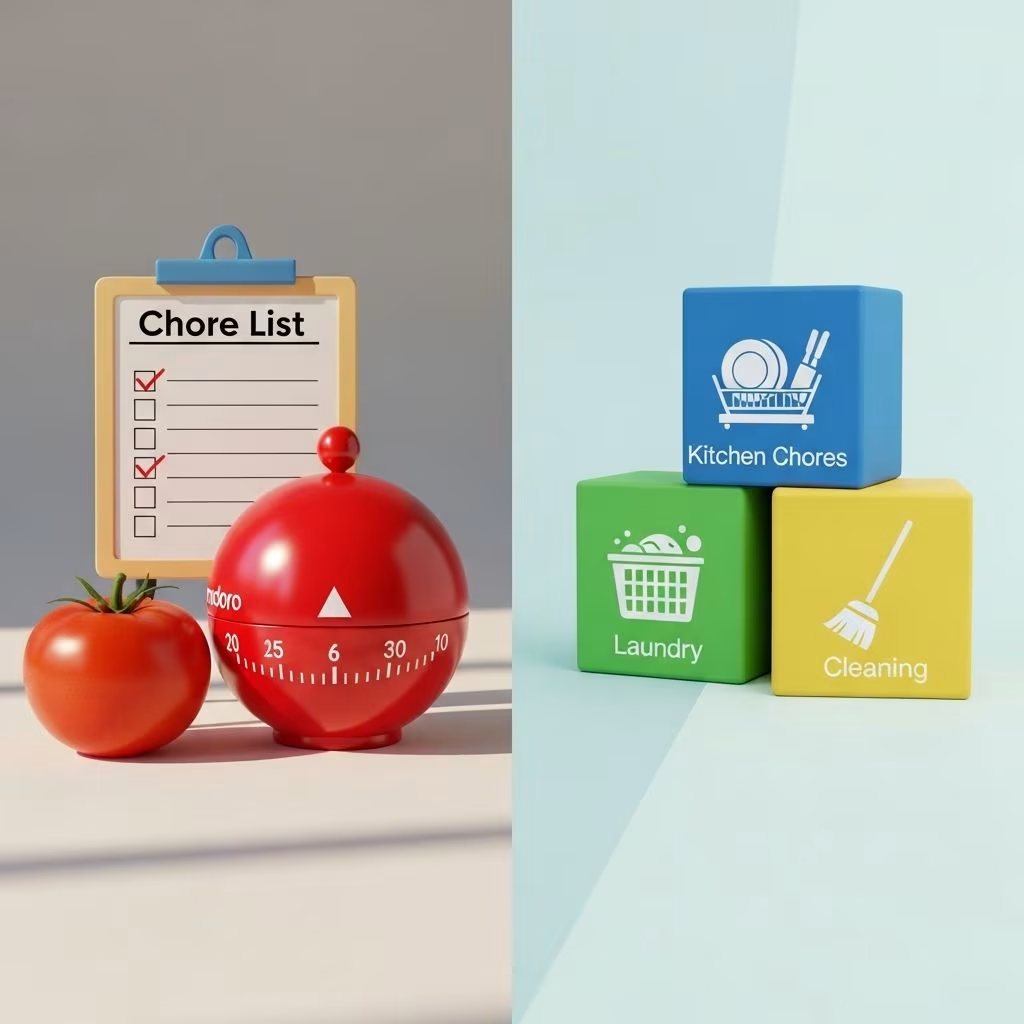
Keeping a household running smoothly often comes down to how effectively families manage their routine chores. Two widely recognized methods—the Pomodoro Technique and themed blocks—offer structured approaches to organizing family chore time. This article explores both strategies, their respective advantages and drawbacks, practical tips for implementation, and guidance on selecting the right method for your family.
Introduction
Chores are necessary for a functional, harmonious home, but motivating every family member—especially children—can be tough. There’s no one-size-fits-all solution, but structured time management techniques can transform how families approach routine tasks. Here, we compare the Pomodoro Technique—which uses timed work and rest intervals—with the themed block approach, which groups similar tasks into focused sessions.
Understanding the Pomodoro Technique
The Pomodoro Technique was developed by Francesco Cirillo in the late 1980s. It’s a time management strategy that breaks tasks into short, timed intervals—typically 25 minutes of focused work followed by a 5-minute break. After four intervals (“pomodoros”), a longer break is taken, often 15–30 minutes. The term ‘pomodoro’ (Italian for tomato) comes from the tomato-shaped timer Cirillo used as a student.
- Improves Focus: By concentrating for short bursts, children and adults alike can keep their attention sharp and avoid distractions.
- Reduces Burnout: Frequent breaks prevent mental fatigue and keep the mood positive.
- Builds Discipline: Routine use fosters healthy work/rest habits, which are critical to long-term productivity.
Studies and anecdotal evidence suggest that Pomodoro works because it lowers barriers to starting, makes large chores less intimidating by chopping them into mini-goals, and creates a sense of urgency that keeps procrastination at bay.
Core Principles
- Work in a timed interval (typically 25 minutes)
- Take a short break (5 minutes) after each interval
- Repeat; after 4 cycles, take a longer break (15–30 minutes)
Adaptations for Family Chore Time
Pomodoro is flexible and can be customized for different family needs:
- For younger children: 10–15 minute intervals may be more appropriate, with 5-minute breaks.
- For tweens and teens: 20–30 minute intervals closely match traditional Pomodoro.
- Adults and multi-age families: Everyone works within their capacity but on a synchronized timer to foster teamwork and solidarity.
Applying Pomodoro to Family Chore Time
Implementing Pomodoro for family chore routines can make cleaning, tidying, and other tasks less daunting and even fun.
How It Works in a Family Setting
- Assign a list of chores to each family member.
- Set a visible timer for the chosen interval (e.g., 25 minutes).
- Everyone works on their designated chore until the timer sounds.
- Take a group break—have snacks, listen to a song, chat.
- Repeat the cycle as needed for longer cleaning sessions.
Benefits for Families
- Motivation: A clear end in sight makes even reluctant children more likely to start and persist with chores.
- Momentum: Multiple short sessions prevent energy dips and procrastination.
- Family Bonding: Synchronous work and breaks can become quality time.
Engagement Strategies
- Pair the timer with fun music or playlists.
- Let each child pick their starting chore or alternate assignments to keep things fresh.
- Gamify progress—track completed pomodoros on a chart and offer small rewards.
What Are Themed Blocks?
Themed block scheduling is a time-management strategy in which you dedicate longer, focused “blocks” of time to specific types of tasks (themes), rather than alternating tasks or using a strict timer for each segment. Each block may last from 30 minutes to several hours, depending on the theme and needs of the group.
- Unlike Pomodoro, themed blocks aren’t based on frequent timed breaks; instead, the focus is on grouping similar chores for extended, distraction-free work.
- Themes can be broad (“Kitchen Deep Clean”) or narrow (“Laundry Morning,” “Yard Work Saturday”).
Origins and Uses
Themed blocking is popular in professional and academic circles for managing complex schedules and reducing context switching. In the home, it’s adapted to chore systems and project management, helping families tackle large tasks without constant interruptions.
Themed Blocks in the Family Chore Context
In a family setting, themed blocks help organize chores by type or location:
- Monday evenings: Laundry Block
- Wednesday afternoons: Tidy Bedrooms Block
- Saturday morning: All-family Yard Block
How It Works
- Assign themes or categories for each chore block.
- Set a start and end time for each session (e.g., “3:30–4:30pm: Bathrooms”).
- Work uninterrupted on the designated theme as a team.
- Transition to the next task only after the block ends.
Strengths for Family Chore Management
- Deep Work: Longer blocks encourage detailed, focused cleaning or decluttering.
- Reduces Context-Switching: Fewer interruptions than Pomodoro; ideal for tasks requiring setup/cleanup time.
- Encourages Mastery: With repeated themed blocks, family members get better at specific chores.
- Flexible Customization: The duration, theme, and frequency of blocks can shift with changing family needs.
Pomodoro vs Themed Blocks: Feature Comparison
| Aspect | Pomodoro Technique | Themed Blocks |
|---|---|---|
| Time Interval | Short, fixed intervals (typically 25 mins) | Longer, flexible blocks (30–120 mins or more) |
| Breaks | Frequent, scheduled breaks (5 mins) | Fewer, longer breaks if any |
| Chore Assignment | Individual or team, focused per interval | Grouped by theme (e.g., whole-family tackles bathrooms) |
| Best For | Routine tasks, short attention spans, motivating kids | Complex tasks, deep cleaning, large families |
| Flexibility | Structure is fixed; some adaptation for ages | High; blocks can expand/contract as needed |
| Distraction Management | Very effective—”just 25 minutes” focus periods | Requires self-discipline over longer stretches |
| Transition | Frequent, can interrupt flow | Smoother, less transition time between tasks |
Benefits and Challenges of Each Approach
Pomodoro Technique
- Benefits:
- Makes starting easier; minimizes procrastination.
- Ideal for children and adults who struggle with focus or motivation.
- Breaks make chores less overwhelming, keeping morale high.
- Can be gamified with timers, charts, and group rewards.
- Challenges:
- May interrupt deep cleaning tasks that need longer periods of sustained effort.
- Frequent stops may frustrate some family members who prefer working for longer stretches.
- Strict timing may not suit all ages or personalities—requires adaptation for children.
Themed Blocks
- Benefits:
- Allows for deep cleaning or detailed projects without feeling rushed.
- Adaptable to weekends or special occasions (“Garage Declutter Day”).
- Encourages teamwork and mastery—everyone sees the theme through from start to finish.
- Challenges:
- Can feel overwhelming, especially for young children or those with short attention spans.
- Greater risk of fatigue or distraction during longer blocks.
- Lack of frequent breaks may reduce motivation unless breaks or celebrations are scheduled.
How to Choose the Best Method for Your Family
The right choice depends on your family’s ages, schedules, attention spans, and preference for structure. Consider these factors:
- Children’s ages & maturity: Younger kids often thrive on shorter, more frequent tasks (Pomodoro); teens and adults may prefer themed blocks for autonomy.
- Task type: For big, detailed cleaning (garage, kitchen), themed blocks offer better flow. For everyday tidying, Pomodoro keeps things light.
- Family energy & temperament: Does your family resist starting chores, or lose momentum quickly? Pomodoro builds momentum in small steps. Do you prefer to “get it done and move on”? Blocks might fit better.
- Scheduling needs: School nights may lend themselves to shorter Pomodoros; weekends can accommodate longer blocks.
Practical Tips for Implementation
- Get buy-in: Discuss both methods with the family. Let everyone participate in scheduling and theme selection.
- Make it visible: Use a large timer or app for Pomodoro; a whiteboard or chart for themed block assignments.
- Start small: New routines work best when introduced with limited scope—try one block or Pomodoro session at a time before scaling up.
- Incorporate positive reinforcement: Celebrate completed sessions with treats, praise, or extra free time.
- Be flexible: Don’t be afraid to adapt timeframes, break lengths, or themes as you discover what works for your unique family.
- Rotate chores and leaders: Keep sessions fresh by shifting tasks and letting different members take the lead.
- Minimize distractions: Put away devices and other distractions during focused work time; save screen time for breaks as an incentive.
Frequently Asked Questions (FAQs)
What if my kids lose focus during longer themed blocks?
Break up the block into mini-milestones or add a midway break. Rotate stations or allow kids to pick their favorite part of the themed task first to keep energy high.
Can Pomodoro work for really small children?
Yes. Adjust interval lengths to match younger children’s attention spans, such as 10 minutes on, 5 minutes off. Make breaks engaging—sing a favorite song or include a quick physical stretch to reset focus.
How do I transition between the two approaches?
You can hybridize—use Pomodoro intervals for regular weekday chores, but switch to themed blocks for weekend deep cleans or special projects.
Is it possible to combine the methods?
Absolutely. For example, use a two-hour themed block for “garage day,” but within that period, split tasks with Pomodoro timers to keep momentum and ensure breaks for everyone.
How can I keep track of our family’s progress?
Use a visible chart, sticker system, or digital app to log completed blocks or pomodoros. Reward the family with a group treat—movie night, favorite meal—at week’s end.
Final Thoughts
Whether you choose the Pomodoro Technique, themed block scheduling, or a custom blend, the true value lies in building a sense of teamwork, consistency, and pride in family achievements. Experiment, observe what works for your household’s unique rhythms, and celebrate progress along the way. With these methods, family chore time can be transformed from a dreaded obligation into an opportunity for collaboration and shared accomplishment.
References
- https://specialedresource.com/pomodoro-technique-studying-with-kids
- https://leighannmarquiss.com/5-ways-use-pomodoro-method-kids/
- https://www.todoist.com/productivity-methods/pomodoro-technique
- https://www.profkrg.com/benefits-of-the-pomodoro-technique
- https://freedom.to/blog/the-pomodoro-technique-does-it-really-work/


