


Introduction
Modern learning environments, whether in schools or home settings, demand sustained attention and engagement from children and adults alike. Amid these demands, educators and caregivers face a persistent challenge: how to keep minds fresh and focused without losing momentum. Enter the Brain Break Box: a simple yet transformative tool that, when used as a scheduled routine interruption, can recharge mental energy, bolster self-regulation, and create a more joyful and productive atmosphere for learning and working.
This article explores the concept, evidence, and practical application of the Brain Break Box as a scheduled tool to interrupt routines, drawing on the latest research in neuroscience, education, and psychology.
What Are Brain Breaks?
Brain breaks are short, intentional pauses from academic work or other mentally demanding tasks. Typically lasting 1-5 minutes, they allow the mind to rest, reset, and rejuvenate before returning to focus-intensive activity.
- Can be planned or spontaneous
- Include movement, mindfulness, sensory, or creative activities
- Are essential for both children and adults
The key is intentionality: a brain break is designed to address the build-up of stress and cognitive overload, preventing fatigue and disengagement.
Understanding the Brain Break Box
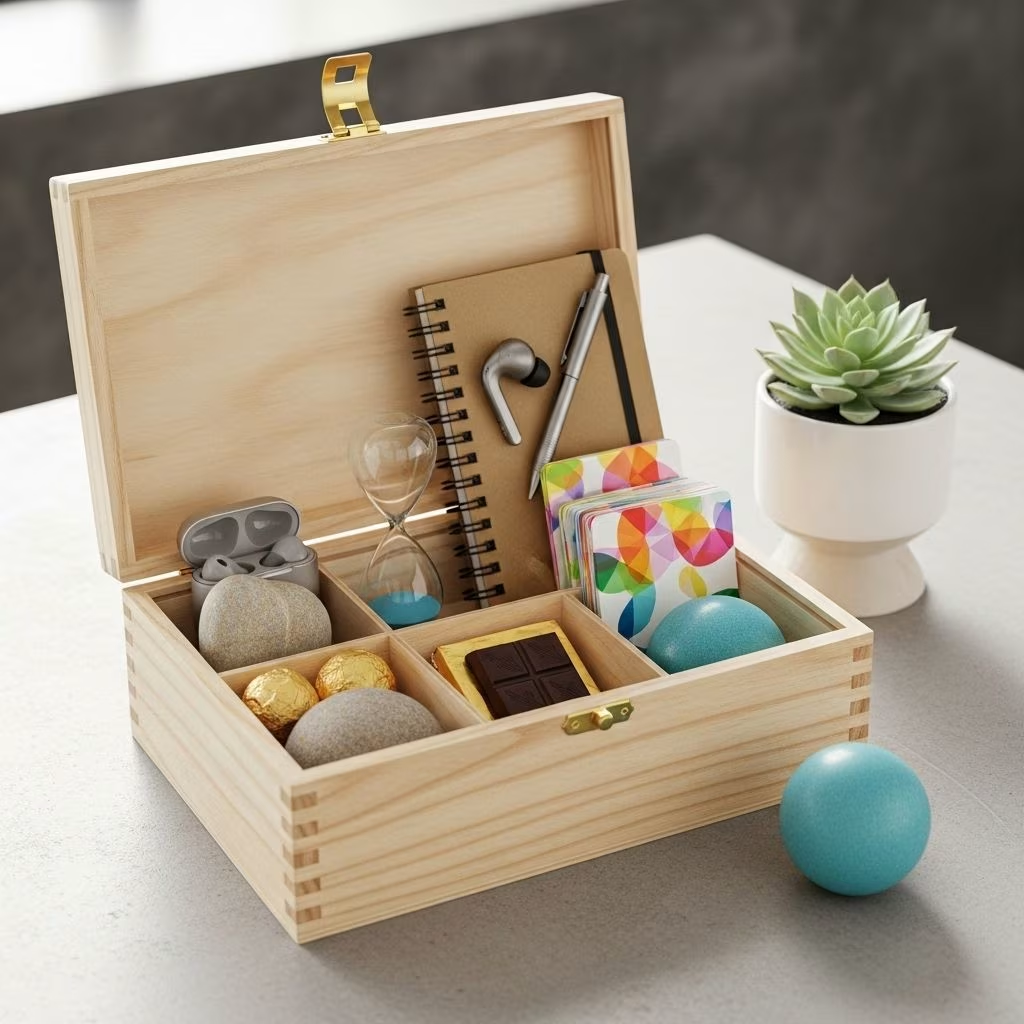
The Brain Break Box (sometimes called a ‘Break Box’) is a physical container or kit filled with tools and prompts designed for self-regulation, sensory stimulation, and relaxation. Used as part of a routine, it offers guided options that learners or educators can access during scheduled breaks.
- Typically contains fidget tools, heavy work items, calm-down cards, creative prompts, and sensory objects
- Accessible to individual students or as a classroom resource
- Used intentionally at set times to maximize focus and minimize disruption
While brain breaks can occur without special equipment, a Brain Break Box adds structure and variety, ensuring that breaks are effective, safe, and tailored to the user’s needs.
The Science Behind Scheduled Routine Interruptions
Prolonged focus leads to mental fatigue. Neuroscientific research shows that attention is a limited resource: as individuals engage in sustained tasks, blood flow to key brain regions associated with vigilance and reaction time decreases. This depletes attentional reserves and reduces performance.
Scheduled brain breaks:
- Restore attentional resources by temporarily disengaging from the primary task
- Decrease theta waves (markers of mental fatigue) and replenish motivation
- Facilitate ‘active mode’ processing, where the brain consolidates learning and memories during brief moments of rest
This is particularly important in children, whose attentional systems are more fragile and susceptible to overload. In the absence of breaks, focus and productivity steadily decline and behavior issues may emerge.
| Effect | Short Description | Notable Evidence |
|---|---|---|
| Improved Focus | Regains attention after sustained tasks | Brain imaging study (Lim, 2013) |
| Reduced Mental Fatigue | Lowers theta wave activity | Brain blood flow research (2010) |
| Boosted Creativity | Processes information subconsciously | Classroom behavior studies |
| Lowered Stress | Promotes positive emotional state | PBIS Rewards Guide |
| Improved Self-Regulation | Regulates emotion and arousal | Movement and sensory processing research |
Benefits of Brain Break Boxes
When a Brain Break Box is part of a scheduled routine interruption, benefits are maximized for all involved:
- Focus and Attention: Scheduled breaks minimize off-task behavior and support sustained engagement
- Self-Regulation: Having physical access to calming and sensory tools helps students manage emotions, anxiety, and excessive stimulation
- Social and Emotional Growth: Activities in the box promote creativity, social interaction, and positive peer relationships
- Reduced Disruptions: Regular, expected interruptions lower the likelihood of unscheduled disruptive behaviors
- Inclusivity: Boxes are especially valuable for children with sensory processing disorders, autism, or special needs
- Teacher Well-Being: Also beneficial for educators, who report lower stress and higher satisfaction when scheduled breaks are used
Over time, scheduled brain breaks create an environment where both learning and emotional intelligence are nurtured, making classrooms happier and more productive.
Designing an Effective Brain Break Box
An effective Brain Break Box contains activities and items that are engaging, safe, and suited for the age and sensory profiles of its users.
Components to include:
- Fidget toys: stress balls, putty, fidget spinners
- Heavy work items: weighted beanbags, resistance bands
- Mindfulness cards: breathing exercises, positive affirmations
- Movement prompts: jump rope, movement dice, dance cards
- Creative activities: coloring sheets, origami paper
- Noise-canceling headphones, sunglasses, or scented pads for sensory comfort
Boxes can be tailored:
– Individual Boxes contain personally selected items
– Shared Classroom Boxes may include a wider range
– Special Needs Boxes feature extra sensory-friendly or adaptive tools
Implementation Strategies in Classrooms and Homes
Consistent, scheduled routines are key:
- Plan brain breaks every 20-30 minutes or in response to early signs of fatigue
- Announce and visually schedule breaks, so students know when to expect them
- Allow choice but offer structure: students select from the box but within predefined time and activity options
- Monitor for effectiveness and adjust frequency or box contents as needed
- For home environments, breaks can be scheduled between homework, chores, and screen time
Teachers and parents report that routine use of a Brain Break Box leads to smoother transitions between tasks, fewer behavioral challenges, and better moods.
Popular Brain Break Activities for Different Ages
Both simple and creative activities work well as routine interruptions:
| Age Group | Movement Breaks | Mindfulness | Sensory Activities |
|---|---|---|---|
| Preschool | Animal walks, wiggle dance | Belly breathing, “pretend to sleep” | Soft fabric, scented items |
| Elementary | Jumping jacks, quick stretch, dance party | Counting breaths, listening to chimes | Play dough, fidget tools |
| Middle School | Wall push-ups, yoga poses | Guided visualization, gratitude cards | Weighted items, stress balls |
| High School | Walking laps, chair stretches | Progressive muscle relaxation | Putty, sensory strips |
| Adults | Desk stretches, standing “power pose” | 1-minute breath focus | Hand massage, calming object |
Variety ensures both engagement and effectiveness.
Brain Break Box for Children with Special Needs
Brain Break Boxes are especially beneficial for children with autism, ADHD, sensory processing disorders, and related conditions. For these learners, scheduled routine interruptions and access to sensory tools:
- Help regulate sensory input, minimizing overload
- Foster independence: children can learn to self-select calming activities
- Lower anxiety and promote transitions between activities
- Reduce disruptive behaviors by meeting sensory and self-regulation needs proactively
Discussions with occupational therapists suggest individualizing each box to a child’s preferences and sensitivities, and educating children on how and when to use the box.
Common Challenges and Solutions
While Brain Break Boxes are effective, some challenges may arise:
- Overuse: Students may seek breaks excessively.
Solution: Set clear limits and monitor use; alternate between independent and group breaks. - Disruption: Scheduled interruptions may break concentration for some tasks.
Solution: Coordinate timing with task requirements and provide advance notice. - Engagement: Some students may be reluctant to participate.
Solution: Include a range of activities and encourage peer modeling; solicit student feedback on box contents. - Resource Constraints: Constructing boxes for every student or classroom may strain resources.
Solution: Use simple, inexpensive materials or rotate items among groups.
With thoughtful planning and ongoing adaptation, these challenges can be minimized.
Frequently Asked Questions (FAQ)
Q: How often should scheduled brain break box interruptions occur?
A: Research suggests breaks every 20–30 minutes for young children. Adapt frequency based on task complexity and signs of fatigue.
Q: Is a brain break box suitable for adults or older students?
A: Yes! Brain breaks benefit people of all ages. Activities and tools should be age-appropriate to promote engagement.
Q: How do I know what to put in a brain break box?
A: Start with sensory-friendly items, fidgets, and movement prompts. Ask users for input and adjust as needed for effectiveness and safety.
Q: Can scheduled brain breaks disrupt learning?
A: When properly timed and structured, breaks enhance learning and behavior. The key is to interrupt routines before fatigue sets in, not during critical instructional moments.
Q: How do I introduce brain break boxes to my class?
A: Clearly explain the purpose, show the box, and model expected use. Use visual schedules and positive reinforcement to build the habit.
Conclusion: The Transformative Potential
The Brain Break Box, when integrated as a scheduled routine interruption, is more than a collection of toys or activities: it is a powerful tool for nurturing attention, creativity, and emotional well-being. Its structure offers predictability and choice, empowering learners to self-regulate and thrive in challenging environments. With growing evidence from neuroscience and classroom practice, educators and parents are finding that small, intentional pauses—guided by a well-designed break box—can transform the culture of learning, leading to happier classrooms, more productive homes, and strengthened focus for all.
References
- https://www.pbisrewards.com/blog/what-is-a-brain-break/
- https://www.dreambox.com/math/guides/fun-brain-breaks
- https://www.theottoolbox.com/brain-breaks/
- https://www.teachhub.com/classroom-management/2020/07/what-are-brain-breaks/
- http://www.friendshipcircle.org/blog/2014/06/03/how-to-create-a-break-box-to-stimulate-your-child-with-special-needs
- https://www.brainfacts.org/thinking-sensing-and-behaving/learning-and-memory/2020/kids-need-brain-breaks-010920
- https://www.edutopia.org/article/17-brain-breaks-tailored-for-high-schoolers/
- https://www.readingrockets.org/topics/autism-spectrum-disorder/articles/brain-breaks-evidence-based-behavior-strategy
- https://funandfunction.com/media/wysiwyg/uploads/2014/10/Activity_Guide_web.pdf


