


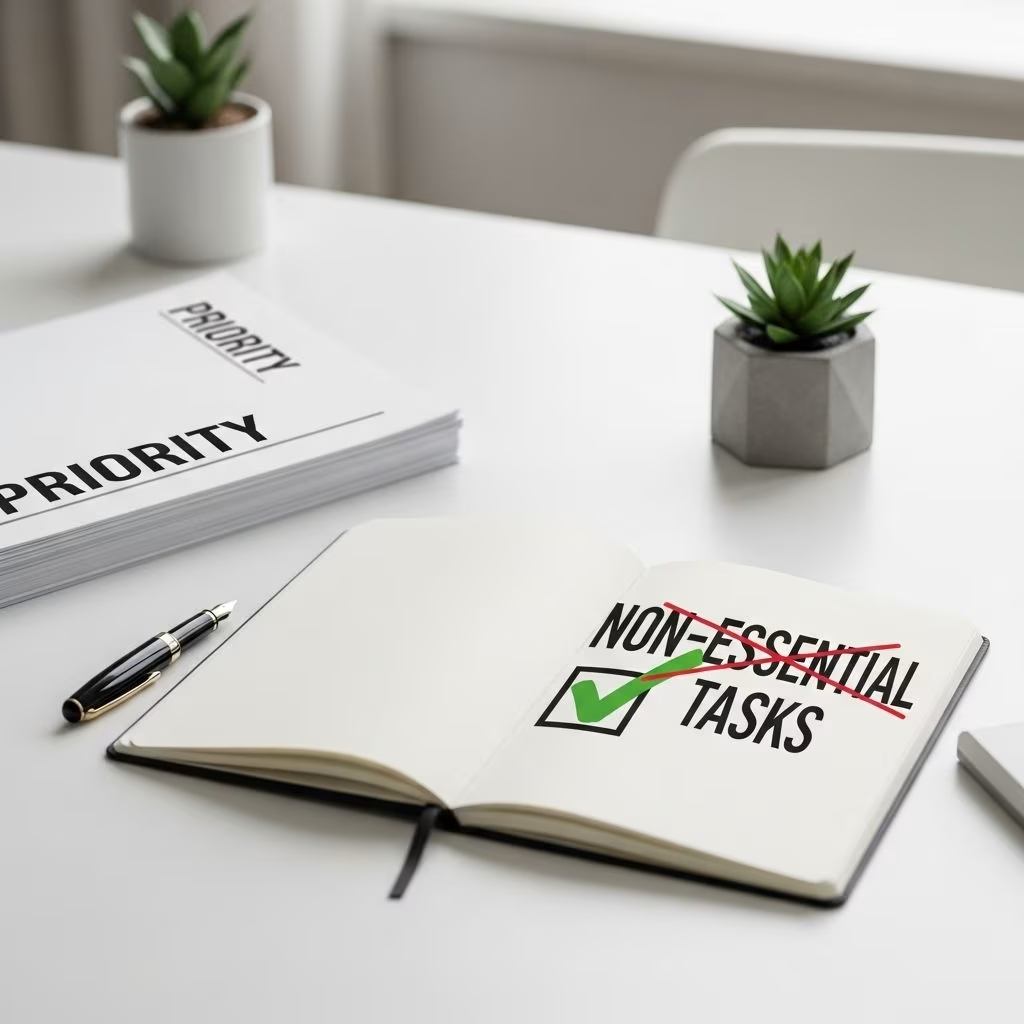
Permission to Skip Routine for Non-Essential Tasks: A Comprehensive Guide
In today’s fast-paced work environment, organizations and individuals increasingly question the necessity of adhering strictly to every routine, especially when certain tasks are deemed non-essential. Granting permission to skip or temporarily suspend such routines can be instrumental in boosting productivity, enhancing well-being, and supporting adaptability. This article explores why this approach is gaining momentum, the best practices for implementation, and the effects on both employees and organizations.
Understanding Routine and Non-Essential Tasks
Routine tasks are repeated activities or processes that maintain organizational flow but may not always drive direct value or innovation. Examples include filing paperwork, scheduling recurring meetings, preparing routine reports, or administrative housekeeping. In contrast, non-essential tasks are those that, while part of routines, do not materially affect organizational outcomes or individual goals if occasionally omitted or rescheduled.
- Routine Essential: Fundamental for compliance, quality, or mission-critical objectives (e.g., safety checks, payroll processing).
- Routine Non-Essential: Tasks that can be postponed, delegated, or omitted temporarily without major consequences (e.g., updating an internal wiki, organizing files).
The distinction between essential and non-essential tasks is key to determining where flexibility and permission can be granted without risk.
The Psychology Behind Skipping Non-Essential Routines
People are naturally drawn to tasks that deliver quick results or psychological “rewards”—for example, ticking off a simple task on a checklist. However, this can lead to a “busy-work” trap, where individuals focus on low-impact, non-essential routines rather than tasks that move the needle on key objectives. Regularly prioritizing essential over non-essential routines aligns with cognitive science research, supporting higher motivation, less burnout, and greater engagement with purposeful work.
- Focusing on high-impact activities increases perceived accomplishment and satisfaction.
- Freeing oneself from unnecessary routines creates mental space for creative and strategic thinking.
- Thoughtful omission of non-essential routines reduces decision fatigue and prevents time from being consumed by the trivial many.
Productivity and the Pareto Principle
The Pareto Principle (80/20 rule) holds that roughly 80% of valuable results come from 20% of tasks. When employees or individuals are permitted to skip non-essential routines, they can shift their energy to impactful tasks, directly influencing organizational and personal productivity.
| Task Type | Impact on Objectives | Recommended Approach |
|---|---|---|
| Essential (High Impact) | Direct and significant | Maintain; prioritize without exception |
| Routine Non-Essential | Marginal or indirect | Assess for delegation, automation, or periodic omission |
Re-evaluating the necessity of every routine—in light of the 80/20 principle—enables sharper focus and resource allocation.
Organizational Perspectives on Permission
Permission to skip non-essential routines often involves a cultural and procedural shift within an organization. Managerial attitudes, HR policies, and communication norms play a large role in how comfortably employees can occasionally forgo certain routines.
- Trust over Micro-Management: Encouraging autonomy fosters accountability and innovation.
- Clear Policies: Defining which tasks are truly essential prevents confusion and selective neglect.
- Flexibility: Responds to individual needs without undermining team continuity or performance.
A healthy workplace culture acknowledges that skipping or deferring non-essential routines is not a sign of laziness, but a mark of strategic focus and trust.
Risks and Benefits of Granting Permission
Permission to skip routines offers significant upside when applied thoughtfully:
- Benefits:
- Reduces work-related stress and undesirable busy-work.
- Increases agility in responding to urgent or high-value opportunities.
- Empowers employees to self-regulate workload and avoid burnout.
- Promotes innovation and growth by freeing bandwidth for critical tasks.
- Risks:
- May lead to accidental neglect of important routines if criteria are not clear.
- Can disrupt workflow continuity or create knowledge gaps.
- Potential for uneven workload if abused or misunderstood among team members.
Framework for Permission Decision-Making
Establishing a decision-making framework minimizes risks and maximizes the benefits of skipping non-essential routines. Here is a step-by-step guide organizations and individuals can follow:
- Task Audit: List all recurring tasks. Categorize as essential or non-essential based on impact and risk.
- Assessment: Identify which non-essential routines can be safely omitted occasionally, considering team dependencies and deadlines.
- Communication: Inform relevant stakeholders. Ensure that decisions to skip routines are transparent and justifiable.
- Contingency Planning: Prepare for coverage, rescheduling, or quick catch-up if omitted tasks become important at a later phase.
- Review and Feedback: Regularly evaluate outcomes to fine-tune permissions and ensure critical standards are maintained.
This framework can be adapted for formal organizational use or as a tool for personal productivity management.
Practical Strategies for Individuals
- Review Your To-Do List Regularly: At the start and end of each week, audit which items are routine and which drive core goals.
- Negotiate Workflows: Discuss with managers or collaborators when priorities shift, and jointly decide which routines may be omitted to focus on urgent projects.
- Utilize Deferred Lists: Create a “Routines” list for low-impact tasks to revisit during slower periods.
- Establish Non-Negotiables: Clearly define tasks that should never be skipped.
- Embrace Asynchronous Practices: Use technology to automate or remind yourself of non-essential routines on flexible schedules.
By regularly reflecting on routines, individuals can consciously opt out of tasks that add little value, reserving energy for what matters most.
HR Policy Design Considerations
Human Resources departments can facilitate healthy permission practices with structured policy. Key considerations include:
- Explicit Permission Frameworks: Clearly define which permissions (e.g., leave, skipping tasks, adjusting deadlines) exist, and the protocol for requesting them.
- Employee Autonomy: Allow employees to skip or reschedule non-essential routines within set boundaries, supporting trust and job satisfaction.
- Flexible Leave and Absence Policies: Include mechanisms for temporary relief from certain duties without penalty, especially during peak workloads or personal constraints.
- Transparent Communication: Use internal communication tools to track and make visible when routine non-essential tasks are being skipped, ensuring team alignment.
- Ongoing Training: Educate staff and managers on differentiating between essential and non-essential routines, and how to exercise permission responsibly.
Case Studies and Scenarios
Scenario 1: The Weekly Update Email
In a software company, employees routinely send out weekly update emails. During a product launch crunch, management communicates that these emails are not required for two weeks, allowing focus on critical deadlines. Result: heightened focus, minimal impact on overall communication clarity, and successful launch.
Scenario 2: Administrative Overload in HR
An HR team finds itself handling both payroll entries and a surge in recruitment drives. Non-essential data entry routines are postponed with clear documentation, freeing up the team to manage the urgent recruitment needs. Post-peak, missed entries are updated, with no loss of compliance or efficacy.
Scenario 3: Organization-Wide Busy Periods
During fiscal year-end or busy retail seasons, companies like retailers or tax firms allow staff to forgo certain non-critical meetings, filing tasks, or social events, supported by explicitly communicated policies. The organization uses a checklist to ensure nothing falls through the cracks over the long term.
Frequently Asked Questions (FAQs)
Q: How do I decide if a task is non-essential?
A: Non-essential tasks are those that do not directly contribute to critical outputs or compliance and can be temporarily omitted without material risk. Review the impact of skipping the task, dependencies, and history to assess its necessity.
Q: Can skipping non-essential routines ever be mandatory?
A: Yes, during emergencies or high workload periods, management might formally instruct employees to skip or postpone non-essential routines to concentrate efforts where needed most.
Q: Will skipping routines affect long-term work culture?
A: If approached transparently and consistently, it can foster a culture of trust and efficiency. However, indiscriminate omission can undermine accountability, so clear frameworks are vital.
Q: What if skipping a non-essential task leads to an overlooked issue?
A: Robust tracking and review cycles help ensure that anything skipped temporarily is revisited later. Proper documentation and contingency planning minimize risk.
Q: How can leaders communicate permission to skip routines?
A: Leaders should clarify the rationale, boundaries, and duration of permission, and provide checklists or documentation to support the transition back to full routines afterward.
Key Takeaways
- Permission to skip non-essential routines is a practical strategy for modern organizations seeking improved focus, agility, and well-being.
- A clear distinction between essential and non-essential tasks, coupled with transparent frameworks and open dialogue, supports sustained productivity and high morale.
- Both individuals and employers benefit when busy-work is deprioritized to make space for meaningful, high-impact contributions.
References
- https://www.carlpullein.com/blog/how-to-not-get-caught-up-in-unimportant-busy-work/19/9/2018
- https://www.sesamehr.com/blog/time-off-management/how-to-manage-different-employee-permissions-from-hr/
- https://employmentautism.org.uk/managing-busy-periods-at-work/
- https://www.assuredpartners.com/news-insights/blogs/agribusiness/2024/creating-a-safe-workplace-the-importance-of-formal-non-routine-work-program/
- https://hbr.org/2022/11/when-and-how-to-say-no-to-extra-work
- https://www.askamanager.org/2018/10/my-staff-tells-me-what-theyre-doing-rather-than-asking-permission.html
- https://www.workplacestrategiesformentalhealth.com/resources/accommodation-strategies


