


- Introduction
- Why Explore Light Outdoors?
- Flashlight Experiments
- Mirror Play
- Shadow Exploration
- Combining Flashlights, Mirrors, and Shadows
- Inspiring the Next Generation
- Safety Considerations
- Conclusion
- Frequently Asked Questions (FAQs)
Introduction
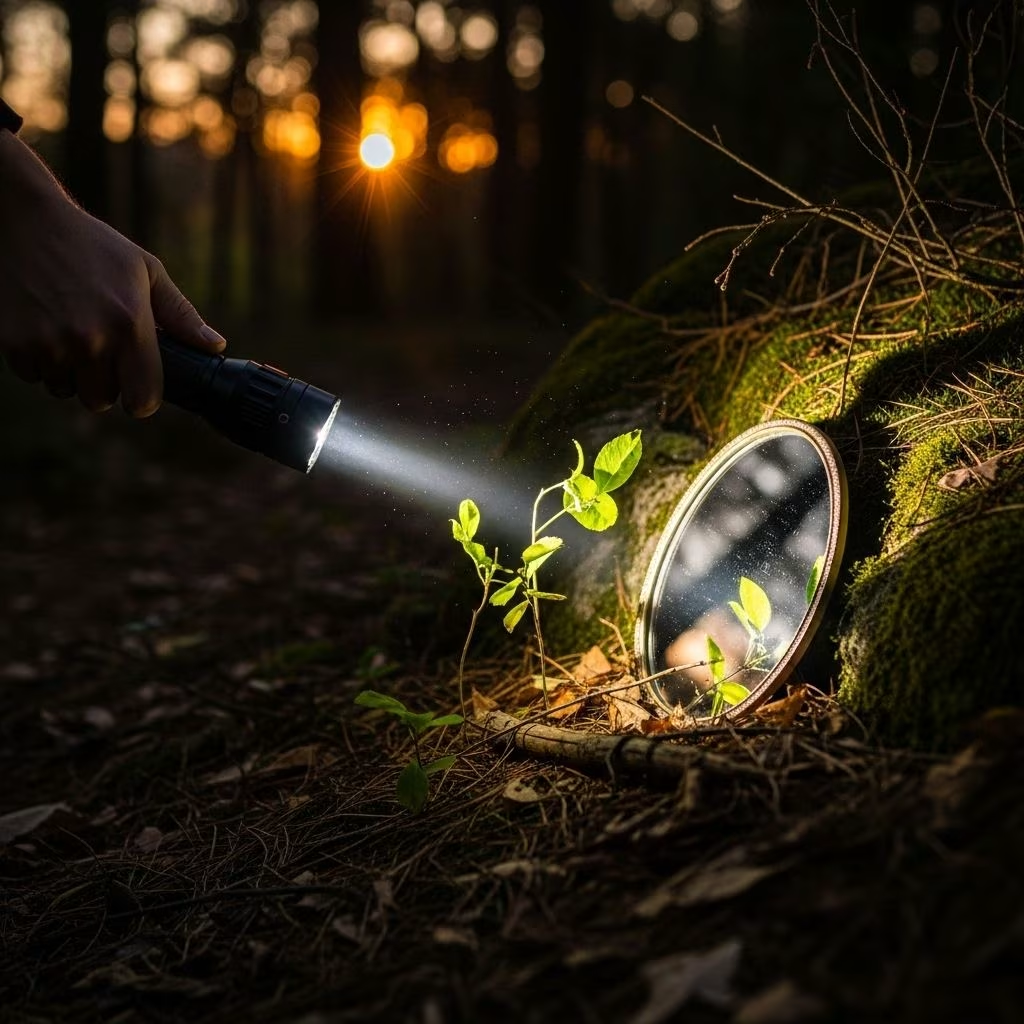
Light, in its many forms and effects, is a fundamental aspect of the world around us—driving not just the rhythms of nature but also the curiosity of curious young minds. “Light Play Outdoors: Flashlights, Mirrors, Shadows” is more than just a collection of activities; it is an invitation to children and educators alike to step outside, observe, manipulate, and marvel at the wonders of natural and artificial light.
Why Explore Light Outdoors?
Outdoor environments provide the perfect laboratory for experimenting with light. Natural sunlight, combined with portable tools like flashlights and mirrors, allows children to experience firsthand the principles of reflection, refraction, shadows, and color. These activities are not only engaging but also foundational in teaching concepts such as physics, biology, and even art. Outdoor learning with light is accessible, flexible, and can be adjusted for all ages—from toddlers to elementary-aged children.
Flashlight Experiments
Flashlights are a simple yet powerful tool for exploring light outdoors. Here are a few engaging activities:
- Colorful Shadow Play: Shine a flashlight through translucent, colored objects (such as stained glass, colored plastic, or even magnetic tiles) to project colorful shadows onto walls or the ground. Children can experiment with different materials to see how the color and intensity of the shadow changes.
- Shadow Tracing: On a sunny day, have children arrange objects on a large piece of paper and trace the shadows cast by both natural sunlight and flashlight beams. Compare the clarity and sharpness of these shadows at different times of day.
- Nighttime Light Trails: After dark, use flashlights to create light trails in the air. Try “drawing” letters, shapes, or even simple messages with the flashlight beam, observing how the light moves through space and gradually fades.
These activities help children understand how light travels in straight lines and how it interacts with different surfaces.
Mirror Play
Mirrors introduce the concepts of reflection and angle, making them ideal for outdoor science exploration.
- Sunlight Relay: Use a mirror to bounce sunlight onto a distant surface. Experiment with the angle of the mirror to change the direction of the reflected light. This demonstrates the law of reflection—light bounces off a surface at the same angle it hits it.
- Multiple Reflections: Place several mirrors around a play area and see how many times sunlight or a flashlight beam can be “relayed” between mirrors. This activity highlights how complex systems of mirrors, like those in telescopes or periscopes, work.
- Art with Mirrors: Use mirrors to reflect sunlight onto dark paper and observe the patterns created by the reflected light. Adding water to the mirror can create intricate, moving light designs as the water surface ripples.
Mirror play not only teaches scientific principles but also encourages creativity and spatial reasoning.
Shadow Exploration
Shadows are a visible marker of light’s interaction with objects—a natural phenomenon that is ripe for exploration.
- Shadow Puppets: Use hands, cardboard cut-outs, or toys to create shadow puppets against a wall or sheet. Vary the distance of the light source to change the shadow’s size and sharpness.
- Shadow Length and Direction: Track how shadows change throughout the day by marking the outline of a child’s shadow every hour. This ties into understanding the Earth’s rotation and the sun’s apparent motion in the sky.
- Shadow Tag: A fun group game where children chase and tag each other’s shadows instead of their bodies, reinforcing the concept that shadows are tied to the position of the light source.
Shadow exploration also provides a foundation for learning about day and night cycles, timekeeping, and even astronomy.
Combining Flashlights, Mirrors, and Shadows
For a more complex and engaging experience, try integrating all three elements:
- Mirror-Powered Flashlight Relay: Use mirrors to redirect a flashlight beam across a series of surfaces, illuminating otherwise dark corners or creating dynamic light patterns on the ground.
- Changing Shadow Qualities: Hold a mirror in front of a flashlight as it shines on an object, and observe how the reflected light changes the shadow’s intensity and shape.
- Color Mixing with Light and Mirrors: Combine colored filters on flashlights and mirrors to mix light colors, demonstrating additive color mixing principles in a hands-on way.
These integrated activities provide a deeper understanding of light’s properties and encourage problem-solving and teamwork.
Inspiring the Next Generation
Outdoor light play is more than just fun—it fosters creativity, scientific inquiry, and a sense of wonder about the natural world. Activities with flashlights, mirrors, and shadows can be easily adapted for different age groups, subject areas, and learning environments. Here are some tips for educators and parents:
- Encourage Inquiry: Ask open-ended questions such as “What happens if we use more mirrors?” or “How does the shadow change when the light moves?”
- Document Discoveries: Have children take photos, draw diagrams, or write descriptions of their observations.
- Tie to the Curriculum: Connect shadow and light activities to lessons in science, art, math, and geography.
Safety Considerations
While outdoor light play is generally safe, it’s important to keep a few safety guidelines in mind:
- Avoid staring directly at the sun or reflecting its light into anyone’s eyes.
- Supervise young children during mirror and flashlight experiments.
- Use age-appropriate materials and avoid sharp-edged mirrors.
Conclusion
“Light Play Outdoors: Flashlights, Mirrors, Shadows” offers a hands-on, engaging way for children to discover the science of light. By experimenting with flashlights, mirrors, and shadows, kids can explore essential concepts such as reflection, refraction, shadow formation, and color—all while enjoying the freedom and inspiration of the outdoor environment. These activities not only nurture curiosity and creativity but also lay the foundation for lifelong scientific learning.
Frequently Asked Questions (FAQs)
What age group is outdoor light play suitable for?
Outdoor light activities can be adapted for toddlers, preschoolers, and elementary-aged children, with supervision as appropriate.
What materials do I need to get started?
Basic materials include flashlights, mirrors (child-safe), colored plastic or glass, paper, and everyday outdoor objects to cast shadows.
How do shadow activities teach about the Earth and sun?
Tracking shadow length and direction throughout the day helps children understand the Earth’s rotation and the sun’s apparent movement in the sky.
Can I do light play activities indoors?
Yes, but outdoor sunlight provides a brighter and more dynamic environment for exploring shadows and reflection.
Are there any safety concerns with mirror and flashlight experiments?
Yes, always avoid looking directly at the sun or reflecting sunlight into eyes, and supervise young children during all experiments.
References
- https://childsplayabc.wordpress.com/2023/06/12/sun-science-activity-ideas/
- https://littlebinsforlittlehands.com/outdoor-science-activities-kids/
- https://www.weareteachers.com/outdoor-science/
- https://www.sciencebuddies.org/blog/teach-visible-light-science
- https://mommypoppins.com/anywhere-kids/boredom-busters/light-experiments-toddlers-preschoolers-kids
- https://www.kidssciencelabs.com/blog/top-32-easy-science-experiments-for-kids-at-home
- https://www.science-sparks.com/shadow-activity-ideas/
- https://www.kiwico.com/diy/lists/awesome-outdoor-science-activities


