


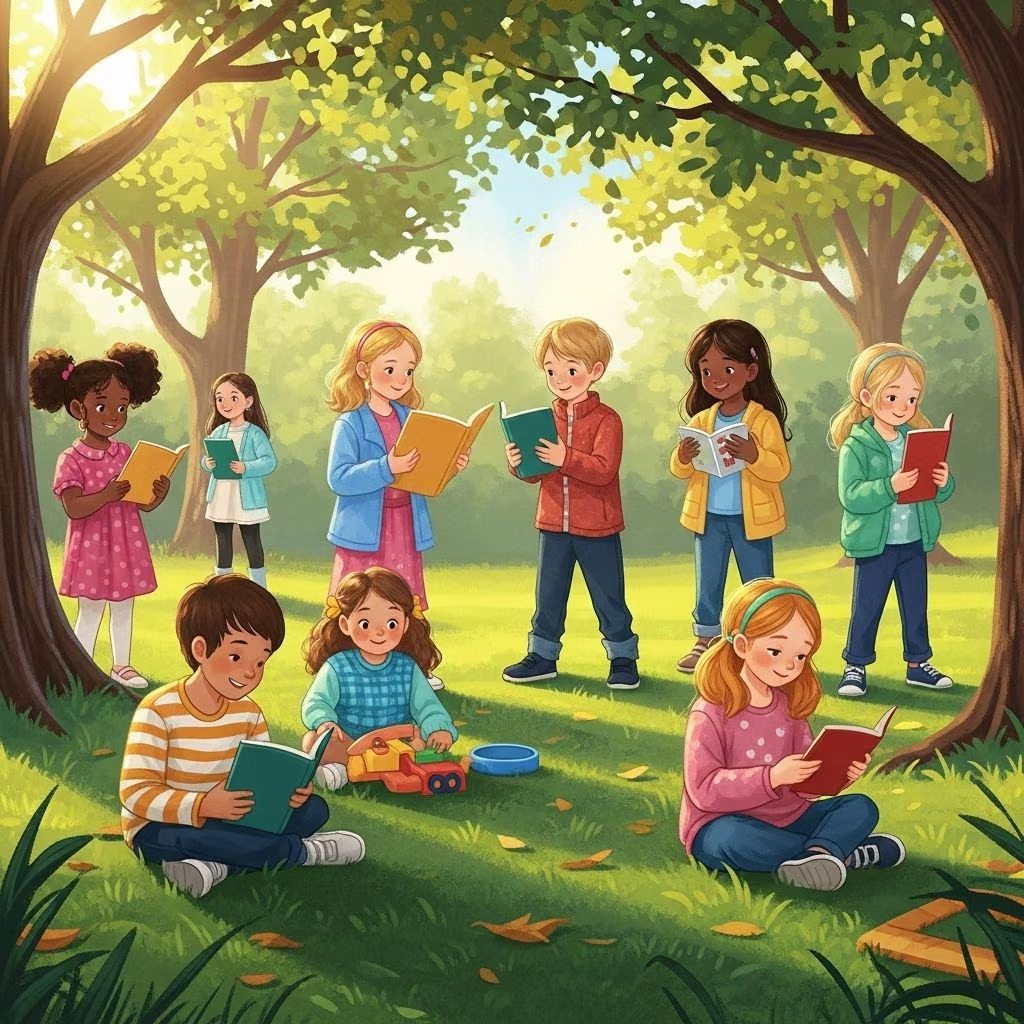
When children engage in outdoor play, they communicate far more than simple joy or physical activity. Every interaction with nature, every imaginative scenario, and every question about their environment represents a window into their developing literacy needs. Understanding how to tune into these outdoor play cues enables parents and educators to support reading development in organic, meaningful ways that align with each child’s natural learning rhythms.
The connection between outdoor play and literacy development runs deeper than many realize. While it might seem counterintuitive that running through a forest or building with sticks relates to reading comprehension, research demonstrates that these physical experiences form the foundation for complex cognitive skills necessary for literacy. By learning to read the signals children send during outdoor play, caregivers can identify precisely which pre-reading skills need nurturing and when intervention might prove most effective.
Understanding Play Cues as Literacy Indicators
Children naturally signal their developmental needs through play behaviors. When a child repeatedly picks up leaves and arranges them in patterns, they may be demonstrating emerging print awareness. When they narrate elaborate stories while climbing trees, they are exercising narrative skills crucial for reading comprehension. These observable behaviors serve as authentic assessment opportunities that reveal far more about a child’s literacy readiness than formal testing ever could.
Outdoor play cues manifest through verbal expressions, physical actions, social interactions, and sustained attention patterns. A child who pauses during a nature walk to examine textures closely demonstrates the observational focus required for distinguishing letter shapes. Another who insists on reading every sign encountered during a hike shows strong print motivation and an understanding that environmental print carries meaning. These moments represent teachable opportunities when children are most receptive to literacy learning because the context feels natural and self-directed rather than imposed.
The key to effectively tuning into these cues lies in observant presence. Rather than directing every moment of outdoor time with structured activities, adults who allow unstructured play while maintaining engaged observation can identify patterns in children’s interests and behaviors. This approach respects child-led learning while ensuring that emerging literacy needs receive appropriate support exactly when the child demonstrates readiness.
The Six Pre-Reading Skills Observable Outdoors
The Every Child Ready to Read program identifies six critical pre-reading skills that children must develop before formal reading instruction proves effective. Each of these skills manifests distinctly during outdoor play, providing clear indicators for adults who know what to observe.
Print Motivation appears when children show interest in books, writing, or environmental text during outdoor activities. A child who eagerly brings books outside or asks to read signs demonstrates this foundational enthusiasm for literacy. Outdoor play cues indicating print motivation include requesting story time in nature, pretending to read to toys or companions, and expressing curiosity about words encountered in the environment.
Print Awareness emerges through understanding that writing follows rules and carries meaning. Children demonstrating this skill during outdoor play might trace letters in sand, notice that signs provide information, or understand that different symbols represent different meanings. They begin recognizing that the squiggles on trail markers or park signs communicate specific messages, showing awareness that print serves functional purposes.
Letter Knowledge becomes observable when children identify letters in natural settings or create letter-like shapes with found materials. A child who arranges sticks into the shape of their initial or identifies letters in cloud formations demonstrates developing letter recognition. These spontaneous connections between environment and alphabet indicate readiness for more formal letter instruction.
Vocabulary Development flourishes outdoors through exposure to diverse concepts and language opportunities. Children who ask numerous questions about their surroundings, use increasingly specific terminology for natural objects, or enjoy learning new words for things they encounter demonstrate active vocabulary building. The richness of outdoor environments naturally introduces children to specialized vocabulary rarely encountered in indoor settings.
Phonological Awareness involves hearing and manipulating sounds in words. Outdoor play cues for this skill include enjoying rhyming games during walks, creating songs about nature, noticing similar sounds in bird calls and words, or playing sound identification games spontaneously. A child who delights in the rhythm of footsteps or invents chants while jumping shows developing phonological sensitivity.
Narrative Skills encompass understanding story structure and describing experiences coherently. Children demonstrate these skills through imaginative play scenarios, retelling adventures after nature walks, creating stories about animals or plants encountered, or understanding cause and effect in natural processes. Building elaborate fort narratives or assigning roles during outdoor dramatic play indicates strong narrative development.
Recognizing Specific Outdoor Play Cues
Certain play behaviors serve as particularly reliable indicators of specific literacy needs. Learning to recognize these cues enables targeted support that meets children exactly where they are developmentally.
Physical Manipulation Cues: When children spend extended time manipulating small objects like pebbles, acorns, or twigs, they build the fine motor strength necessary for writing. This hand strength development appears essential for eventual pencil control and letter formation. Children who struggle with these manipulations or avoid them might benefit from additional fine motor activities to support their physical readiness for writing tasks.
Storytelling Engagement: Children who naturally weave narratives into their outdoor play demonstrate strong narrative skills. Building a stick fort becomes constructing a castle for imaginary characters. Hiking up a hill transforms into a quest adventure. This spontaneous storytelling indicates well-developed imagination and story comprehension, skills that translate directly to reading comprehension. Children who engage in this behavior show readiness for more complex stories and benefit from having adults join their narratives to extend vocabulary and plot complexity.
Sound Exploration: A child fascinated by mimicking bird calls, creating rhythm with sticks, or identifying distant sounds demonstrates emerging phonological awareness. This natural sound play forms the foundation for understanding that words comprise individual sounds that can be isolated and manipulated. Such children benefit from explicit phonics games that build on their natural sound sensitivity.
Question Patterns: The types of questions children ask during outdoor play reveal their cognitive processing and language development. Children asking primarily “what” questions demonstrate different developmental needs than those asking “why” or “how” questions. Those progressing to hypothetical questions show abstract thinking crucial for comprehending complex narratives. Tracking question evolution helps adults understand which literacy skills to emphasize.
Attention Duration: How long children sustain focus on outdoor activities indicates their capacity for the sustained attention required for reading. Children who flit rapidly between activities might need support developing concentration before formal reading instruction proves effective. Conversely, those who engage deeply with single activities for extended periods demonstrate the focus necessary for decoding and comprehension tasks.
Social Interaction Style: How children interact with peers during outdoor play reveals communication skills essential for literacy. Those who negotiate roles, explain ideas clearly, and engage in collaborative storytelling demonstrate language proficiency that supports reading development. Children who struggle with these interactions might benefit from additional language-building activities before formal literacy instruction.
Responding to Play Cues with Targeted Activities
Once adults recognize specific play cues indicating literacy needs, they can respond with activities that support development in those precise areas without interrupting the organic flow of outdoor play.
For children showing strong print motivation cues, bring books outdoors regularly and create cozy reading spots under trees or on blankets. Choose stories that connect to the outdoor environment to deepen engagement. Allow children to see adults reading outdoors as well, modeling that reading represents a pleasurable activity worth pursuing in any setting.
When children demonstrate developing print awareness, point out environmental print encountered during outdoor adventures. Read signs together, discuss what various symbols mean, and explore how writing provides information in outdoor spaces. Create opportunities for children to make their own signs for forts or gardens, helping them understand that writing serves functional purposes.
Children showing readiness for letter knowledge benefit from playful letter hunts in nature. Challenge them to find objects shaped like specific letters or create letters using natural materials. This approach makes letter learning feel like discovery rather than drill, maintaining the joy of outdoor exploration while building crucial literacy skills.
For vocabulary expansion, engage children in rich conversations about everything encountered outdoors. Use specific terminology for plants, animals, weather phenomena, and landscape features. When children ask questions, provide detailed answers that introduce new words naturally. Encourage children to describe their observations using increasingly precise language, gently introducing synonyms and more sophisticated vocabulary.
Supporting phonological awareness outdoors happens through sound games integrated into natural play. Play “I spy” focusing on beginning sounds of objects observed. Create rhyming games during walks. Clap out syllables in nature words. These activities build sound sensitivity while feeling like games rather than lessons.
To develop narrative skills, ask children to tell stories about their outdoor adventures. Encourage them to describe what happened in sequence, explain cause and effect relationships observed in nature, and predict what might happen next in ongoing observations like watching tadpoles develop. Join their imaginative play narratives, extending plots and introducing story elements like problems and solutions.
Creating Literacy-Rich Outdoor Environments
Thoughtfully designed outdoor spaces support literacy development by providing materials and opportunities that invite engagement with all six pre-reading skills. These environments don’t require elaborate setups but rather intentional inclusion of literacy-supporting elements within natural settings.
Reading Nooks: Establish comfortable outdoor reading areas with weather-resistant book storage, blankets, and seating. Position these spaces in appealing locations like under shade trees or overlooking interesting views. Stock them with nature-themed books and rotate selections to maintain interest. These dedicated spaces signal that reading belongs outdoors just as much as running and climbing.
Environmental Print: Include meaningful signs and labels in outdoor spaces. Garden markers identifying plants, trail signs indicating directions, and instructional signs for equipment all demonstrate that writing serves practical purposes. Involve children in creating these signs to build understanding of writing’s communicative function.
Natural Writing Materials: Provide sticks for drawing in sand or dirt, sidewalk chalk for pavement surfaces, and paintbrushes with water for mark-making on various surfaces. These tools invite experimentation with symbols and letter formation in low-pressure contexts. The temporary nature of these marks allows children to practice without fear of mistakes.
Loose Parts: Supply collections of natural materials like stones, shells, sticks, and leaves that children can arrange and manipulate. These materials support both fine motor development and symbolic thinking as children use objects to represent letters, create patterns, or construct narrative scenarios.
Storytelling Spaces: Designate areas specifically for storytelling and dramatic play. Amphitheater-style seating areas, stages made from logs, or puppet theaters invite narrative creation and performance. These spaces legitimize storytelling as a valued outdoor activity deserving dedicated space and time.
Interactive Gardens: When possible, create gardens where children can plant, tend, and harvest. Gardening provides countless literacy opportunities including following written instructions, labeling plants, documenting growth, and describing observations. The sequential nature of plant growth also teaches narrative structure through natural processes.
Developmental Stages and Play Patterns
Children’s outdoor play cues evolve as they progress through developmental stages. Understanding typical patterns at different ages helps adults distinguish between age-appropriate behavior and indicators of potential literacy challenges requiring intervention.
Toddlers (1-3 years): At this stage, outdoor play focuses on sensory exploration and gross motor development. Literacy cues appear subtle, primarily through interest in being read to outdoors and beginning to notice environmental print. Toddlers demonstrate print motivation by bringing books outside and requesting stories. They show early phonological awareness through enjoyment of rhyming songs and repetitive sounds during play. Fine motor skills develop through manipulation of natural materials, though purposeful mark-making remains limited.
Preschoolers (3-5 years): Outdoor play becomes more imaginative and social during these years. Children begin creating elaborate narratives during play, demonstrating developing story comprehension. They show interest in writing their names with sticks or chalk and may begin identifying letters in environmental print. Questions about the world proliferate, driving vocabulary expansion. Preschoolers typically enjoy structured literacy activities like scavenger hunts and alphabet games when presented playfully. Their ability to sustain attention gradually increases, allowing for longer story times and more complex activities.
Early Elementary (5-7 years): Children this age increasingly integrate reading and writing into outdoor play. They might create signs for forts, maintain nature journals, or read informational books about creatures encountered. Their narratives become more complex with clear story structure. They demonstrate strong phonological awareness and may spontaneously practice decoding words encountered outdoors. These children benefit from opportunities to apply emerging reading skills in functional outdoor contexts.
Recognizing age-appropriate outdoor play cues helps adults avoid pushing children beyond their developmental readiness while ensuring they receive necessary support. A three-year-old who shows no interest in letter identification demonstrates normal development, while a six-year-old avoiding all literacy-related activities might benefit from additional support.
Practical Strategies for Parents and Educators
Observation Techniques: Dedicate specific outdoor sessions purely to observation without intervention. Note which activities children gravitate toward, how long they sustain attention, what language they use, and how they interact with peers. Document patterns over time to identify both strengths and areas needing support. Use these observations to plan responsive activities that meet identified needs.
Balancing Structure and Freedom: Effective outdoor literacy learning requires balance between child-directed exploration and adult-guided activities. Allow substantial unstructured time when children lead play and adults observe for cues. Intersperse this with brief, targeted activities addressing observed needs. Avoid over-structuring outdoor time, which can diminish the natural learning opportunities that make outdoor play valuable.
Following Children’s Interests: When children demonstrate fascination with particular aspects of nature, use those interests as literacy learning springboards. A child captivated by insects benefits from reading books about bugs, learning insect vocabulary, and creating stories featuring insect characters. This interest-based approach maintains engagement while building crucial literacy skills.
Modeling Literacy Behaviors: Children who regularly see adults reading, writing, and discussing texts outdoors internalize that literacy represents a natural part of life rather than an isolated school subject. Bring your own reading outdoors, write nature observations, discuss books with other adults in children’s presence, and demonstrate enthusiasm for environmental print. This modeling proves more powerful than explicit instruction for many children.
Integrating All Six Skills: Design outdoor experiences that address multiple pre-reading skills simultaneously. A nature scavenger hunt might build vocabulary through discussion of items found, develop phonological awareness through a focus on beginning sounds, and encourage narrative skills by having children describe their hunting adventure afterward. This integrated approach mimics how children naturally learn and proves more effective than isolated skill practice.
Documentation and Sharing: Take photos of outdoor literacy moments and children’s nature writing or drawings. Share these with families to help parents recognize literacy learning in outdoor play. Create documentation panels showing how outdoor experiences connect to literacy development. This visible evidence helps all stakeholders understand the educational value of outdoor time and encourages continued prioritization of nature-based learning.
Adapting for Different Learners: Children demonstrate diverse learning styles and needs. Some thrive with more structured outdoor literacy activities while others need extensive free exploration. Some learn best through movement-based activities while others prefer quiet observation. Tune into individual children’s cues to determine which approaches prove most effective for each learner. Be prepared to modify activities based on observed responses.
Frequently Asked Questions
Q: How much outdoor time do children need for optimal literacy development?
A: Research suggests children benefit from at least 60-90 minutes of outdoor play daily. This duration allows sufficient time for both unstructured exploration and guided literacy activities. However, quality matters as much as quantity. Even shorter outdoor sessions prove valuable when adults tune into play cues and provide responsive support.
Q: What if weather limits outdoor access?
A: While consistent outdoor access proves ideal, literacy learning continues in all weather conditions with appropriate preparation. Rain offers opportunities to discuss weather vocabulary, observe water’s behavior, and read related stories under covered areas. Snow invites writing in fresh powder and tracking animal prints. When weather truly prohibits outdoor time, bringing natural materials indoors maintains connections between nature and literacy learning.
Q: Can outdoor play really replace traditional literacy instruction?
A: Outdoor play complements rather than replaces formal literacy instruction. The pre-reading skills developed through outdoor play create foundations that make formal instruction more effective. Children who enter formal reading instruction with strong vocabulary, phonological awareness, and narrative skills acquired through rich outdoor experiences typically progress more rapidly than those lacking these foundations.
Q: How do I recognize if my child needs additional literacy support beyond outdoor play?
A: Warning signs include persistent difficulty with age-appropriate literacy tasks, lack of progress despite consistent support, extreme resistance to literacy activities, or significant gaps compared to developmental milestones. If outdoor play cues suggest struggles across multiple pre-reading skills, consider consulting with early childhood literacy specialists for assessment and intervention strategies.
Q: What role does technology play in outdoor literacy learning?
A: Technology can support outdoor literacy when used thoughtfully. Digital cameras allow children to document observations for later storytelling. Tablets might display field guides for plant or animal identification. However, technology should enhance rather than dominate outdoor experiences. Prioritize direct sensory engagement with nature, using technology selectively to extend learning rather than replace hands-on exploration.
Q: How can I convince skeptical administrators or parents of outdoor play’s literacy value?
A: Document observable literacy learning during outdoor play through photos, videos, and written observations. Connect these moments explicitly to recognized literacy standards and pre-reading skills. Share research demonstrating outdoor play’s cognitive benefits. Invite skeptics to observe outdoor sessions and point out literacy learning in real-time. This evidence-based approach helps shift perceptions of outdoor play from frivolous to educationally essential.
Q: Are certain outdoor environments better for literacy development than others?
A: Diverse outdoor environments each offer unique literacy benefits. Natural areas rich with plants and wildlife provide extensive vocabulary building opportunities. Urban outdoor spaces filled with environmental print support print awareness. Varied terrain promoting gross motor challenge builds the physical foundations for fine motor control needed in writing. Rather than seeking perfect environments, maximize whatever outdoor access exists by intentionally highlighting literacy learning opportunities within each setting.
Q: How do I balance safety concerns with allowing free exploration?
A: Effective outdoor literacy learning requires balancing safety with appropriate risk-taking. Establish clear safety boundaries while allowing freedom within those limits. Conduct thorough safety assessments of outdoor spaces, removing serious hazards while accepting minor risks inherent in outdoor play. Teach children to recognize and manage age-appropriate risks. This approach maintains safety while preserving the exploratory freedom essential for optimal learning and development.
Tuning into children’s outdoor play cues transforms ordinary nature time into powerful literacy learning opportunities. By observing carefully, recognizing developmental indicators, and responding with appropriate support, adults help children build the foundational skills necessary for reading success. This approach respects children’s natural learning processes while ensuring they receive guidance exactly when their play signals readiness. The result is literacy development that feels joyful rather than forced, emerging organically from experiences children genuinely value and enjoy.
References
- https://adventurouschild.com/can-outdoor-reading-boost-literacy/
- https://blogs.iu.edu/earlyliteracy/2025/04/04/sunshine-stories-developing-early-literacy-outdoors/
- https://decoda.ca/outdoor-play-for-pre-reading-skills/
- https://www.teachoutdoors.co.uk/how-nature-can-support-childrens-reading-development/
- https://www.scarymommy.com/outdoor-play-helps-kids-learn
- https://publications.aap.org/pediatrics/article/142/3/e20182058/38649/The-Power-of-Play-A-Pediatric-Role-in-Enhancing
- https://pmc.ncbi.nlm.nih.gov/articles/PMC7432422/
- https://brightpathkids.com/family-blog/why-outdoor-play-is-essential-for-childrens-growth
- https://www.naeyc.org/resources/position-statements/dap/principles


