


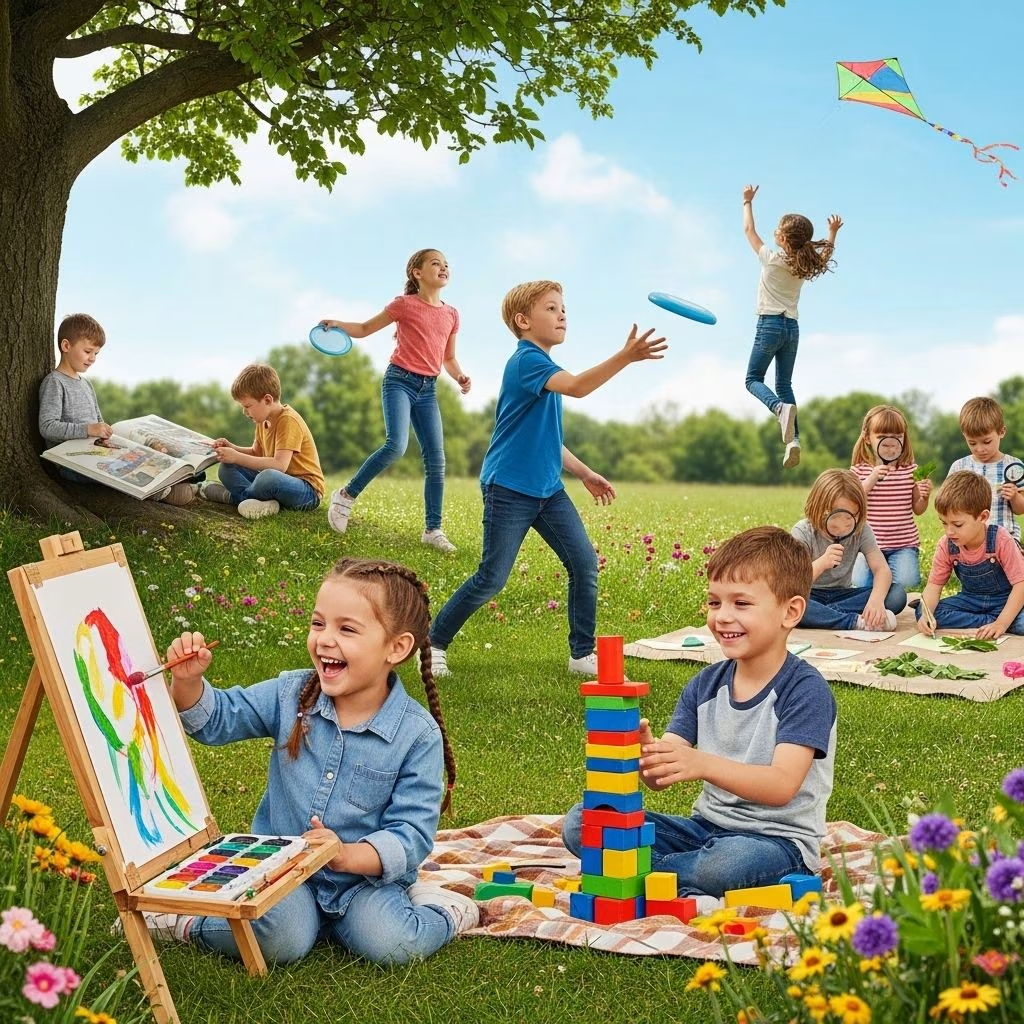
In an age where digital screens have become nearly omnipresent, parents and caregivers often seek fresh, effective, and enjoyable ways to engage children without resorting to television, tablets, or smartphones. Screen-free activities do more than just reduce screen time — they foster imagination, family bonding, essential life skills, and lifelong interests. Here, you’ll find 50 thoroughly researched, creative, and practical screen-free activities, along with alternatives and tips for raising happy, engaged, and well-rounded kids beyond the glow of devices.
Why Go Screen-Free?
Limiting screen time is associated with better physical health, improved sleep quality, enhanced social and cognitive development, and reduced behavioral issues in children. Experts recommend balancing screen exposure with engaging, real-world experiences that nurture curiosity and promote healthy growth.
Outdoor Exploration
Fresh air fosters creativity, movement, and wonder. Here are engaging ways to rediscover the outdoors:
- Nature Scavenger Hunt: Create a checklist of items — a pinecone, a red leaf, a feather. Hand kids a bag and explore a park or your backyard .
- Camping in the Backyard: Pitch a tent or sleep on a trampoline, tell stories under the stars, and enjoy nighttime sounds .
- DIY Obstacle Course: Use cones, ropes, and boxes to create a circuit. Challenge children to crawl, hop, and balance through the course .
- Bike or Scooter Adventures: Ride around the neighborhood or local trails, focusing on both movement and road safety .
- Stick Fort Building: Collect branches and foliage to build secret dens or fairy houses in the garden .
- Cloud Watching: Lie on a blanket, spot shapes, and weave imaginary stories out of fluffy cloud patterns .
- Water Balloon Target Practice: Draw chalk targets on pavement and aim water balloons for points and laughs .
- Glow Stick Hide-and-Seek: Play as dusk falls, using glow sticks for friendly competition and excitement .
- Outdoor Hopscotch or Jump Rope: Classic games develop coordination and counting skills .
- Backyard Planting: Involve children in planting seeds or starting a mini-herb garden .
Arts & Crafts and DIY
Hands-on creativity develops fine-motor skills, patience, and pride in accomplishment. Try these varied crafts:
- Rock Painting: Gather stones, paint cheerful designs, and hide them for neighbors to find .
- Cardboard Box Creations: Repurpose large boxes into forts, cars, or rocket ships using paint, tape, and imagination .
- Papier-Mâché Sculptures: Make animals, planets, or masks from paper, glue, and paint .
- DIY Bird Feeders: Thread cereal onto string or use recycled containers to welcome feathered friends .
- Homemade Bracelets & Jewelry: Use string, beads, and even pasta shapes for friendship bracelets or necklaces .
- Shadow Drawing: Set toys on white paper outside and trace their shaded outlines. Color in the shadows for playful results .
- Collages from Magazines: Cut out pictures or words, then organize them into themed collage masterpieces .
- Paper Airplane Challenge: Fold various designs and see whose flies farthest .
- DIY Windsocks or Kites: Construct from fabric or paper and decorate with markers or glitter before flying outdoors .
- Homemade Ice Cream in a Bag: Blend simple ingredients, shake in a bag, and enjoy a sweet treat .
Indoor Games & Challenges
Keep children active and entertained inside with these classic and modern ideas:
- Hangman or Simon Says: Pen-and-paper or call-and-response games are interactive and fun for siblings or groups .
- Indoor Skee-Ball: Use laundry baskets and rolled-up socks as balls to score points .
- Obstacle or Treasure Hunts: Lay out clues or obstacles through living spaces for kids to solve and conquer .
- Homemade Board Games: Design the board, rules, and pieces — then invite family for playtime .
- Indoor Snowball Fight: Use soft socks for a wintry battle free of mess .
- Bingo or Charades: Classic group games encourage cooperation and creativity .
- Puppet Theater: Make sock or paper bag puppets, write a script, and put on a home show .
- LEGO or Block Building: Challenge kids to themed builds or free exploration — then display their inventions .
- Storytelling Circle: Take turns adding onto a story, building giggles and unexpected plots .
- Try Tongue Twisters: See who can say the trickiest phrase the fastest without stumbling .
Family Fun & Social Activities
- Family Cooking Night: Involve children in meal planning and preparation — from making sandwiches to baking cookies .
- Talent Show at Home: Host a showcase of magic tricks, dancing, or musical performances .
- Game Night: Rotate through board games, word games, or create new ones together .
- Shop Keeper Game: Set up a pretend shop, make play money, and practice real-life math .
- Costume Dress-Up: Use old clothes or costumes to spark role-play and storytelling .
- Neighborhood Wash Station: Organize a bike or toy wash with soap, water, and towels for fun and responsibility .
- Kindness Missions: Secretly do something nice for a family member or friend and enjoy the happiness it brings .
- Silly Photoshoots: Dress up, create props, and take funny family photos for memories .
- Read-Aloud Nights: Gather to read favorite stories together, encouraging a love of books and conversation .
- Mini Science Fair: Host experiments like homemade volcanoes or simple chemical reactions, discussing how things work .
Nature-Inspired Adventures
- Stargazing: Spread a blanket outside at night, use a star chart, and try spotting planets or constellations .
- Bird Watching: Grab binoculars and a notepad to note different birds or listen for calls .
- Sponge Boat Races: Make boats from sponges, float them in buckets or pools, and see whose travels fastest .
- Bug Hunt: Go on a search for beetles, ants, or butterflies, observing gently and releasing them .
- Sense Walk: Take a slow walk focusing on what you hear, smell, and feel — like rustling leaves or cool grass.
- Mini Garden: Use pots or window boxes to grow herbs, flowers, or vegetables and learn about the growing process .
- Rock Collection: Start a collection and learn to identify types or origins of found stones .
Creative Building & Construction
- Block Skyscrapers: Use wooden blocks, LEGO, or recycled materials to build tall towers or detailed village scenes .
- Homemade Dollhouses: Create houses from cardboard boxes and furnish them with upcycled odds and ends .
- Pretzel & Peanut Butter Sculptures: Stack, construct, and eat your handiwork .
- Pipe Cleaner Carnival: Build animals, rings, and games with bendy pipe cleaners .
- Giants’ Fort or Tent: Pile up cushions and blankets for an indoor hideout or reading nook .
- Sandcastles & Mud Pies: Play in the sandbox or garden, designing creative buildings and imaginary food.
Movement, Sports & Fitness
- Jump Rope Challenges: Double Dutch, counting games, and skill tricks strengthen coordination .
- Dodgeball or Freeze Tag: Use soft balls or simply play chase with siblings or friends .
- Scooter Parades: Decorate scooters or bikes and parade through the neighborhood .
- Simple Family Yoga: Practice animal-inspired or guided poses for stretching and focus .
- Swing and Slide Adventures: Spend time on the local playground enjoying classic equipment .
- Slam Dunk Contest: If you have a trampoline or backyard hoop, organize dunk competitions for giggles and exercise .
- Everyday Dance Party: Put on music and move; invent new dances or follow silly movement instructions.
Quiet Time & Mindfulness
- Drawing or Coloring: Use coloring books, plain paper, or sidewalk chalk for self-expression .
- Origami: Fold animals, boats, or flowers from colorful paper.
- Puzzle Time: Jigsaw puzzles or DIY puzzles made from family photos .
- Journaling: Encourage children to write about their day, draw their favorite moment, or keep a nature log.
- Reading Alone or Together: Build a cozy corner for regular storytime .
- Breathing Exercises: Teach simple deep breathing or short guided meditations for calmness and focus .
Learning & Life Skills
- Cooking & Baking: Measure, mix, and create simple recipes (with supervision as needed) .
- Gardening: Let kids weed, plant, and harvest — they’ll learn responsibility and patience .
- Basic Sewing or Weaving: Use child-safe needles, fabric, and yarn on easy projects.
- Car or Bike Wash: Teach kids how to wash wheels or the family car for a blended learning and play activity .
- Organizing a Room: Turn tidying into a game with rewards or music.
- Build a Birdhouse or Feeder: Follow simple plans and basic tools for woodwork experience .
- Plan a Budget: Use coins and play money to teach basic math and saving concepts.
Creative Alternatives to Screens
- Audio Books: Listen to captivating stories or fairy tales, encouraging imagination without visual screens.
- Music & Sing-Alongs: Try karaoke, write new lyrics to well-known tunes, or play homemade shakers as a family band .
- Mental Puzzles: Riddles, brainteasers, and math games keep thinking skills sharp.
- Mail Letters or Drawings: Send greetings to family, friends, or pen pals for practicing writing and communication skills.
- Charity and Community Service: Make cards for senior homes, donate old toys, or collect items for local food banks.
- Educational Board Games: Invest in cooperative, logic, or trivia-based games that don’t require a device.
- Creative Free Play: Sometimes, the best alternative is simply allowing room for unstructured, child-led play!
| Aspect | Excessive Screen Time | Screen-Free Activities |
|---|---|---|
| Physical health | Increased risk of inactivity, poorer sleep | Promotes movement, better sleep, coordination |
| Social skills | May reduce face-to-face interaction | Encourages teamwork, empathy, communication |
| Creativity | Passive consumption | Stimulates imagination, problem solving |
| Emotional wellbeing | Potential for irritability, over-stimulation | More relaxation, mindful moments |
Frequently Asked Questions (FAQs)
Q: How much daily screen time is considered healthy for children?
A: The American Academy of Pediatrics recommends that for children aged 2-5 years, screen time should be limited to one hour or less per day of high-quality programming with adult supervision. For older kids, the focus should be on balanced use, ensuring that screens do not displace sleep, physical activity, or face-to-face social interaction.
Q: What are some ways to encourage reluctant kids to try screen-free activities?
A: Involve kids in choosing and planning activities, offer variety, praise creativity, participate together, and make new activities feel like a fun adventure or challenge. Rotating choices and mixing familiar favorites with new activities can spark more enthusiasm.
Q: Are all screen-free activities suitable for rainy days?
A: Many indoor ideas—like crafts, building, board games, puppet shows, puzzles, and cooking—are perfect for rainy days. For energetic movement, set up safe obstacle courses, dance breaks, or yoga indoors.
Q: How can screen-free time benefit family relationships?
A: Screen-free activities often involve teamwork, communication, and shared laughter, all of which build stronger family bonds and lifelong memories.
Q: Can screen-free play support my child’s academic performance?
A: Yes: activities like reading, puzzles, storytelling, science experiments, and math games boost cognitive skills crucial for academic success, while fostering curiosity and a love for learning.
With a blend of organized and spontaneous activities, parents and educators can provide children with the building blocks for a balanced, imaginative, and connected childhood—no screens required.
References
- https://www.springfreetrampoline.com/blogs/beyond-the-bounce/screen-free-activities-for-kids
- https://www.peacefulparenthappykids.com/read/screen-free-activities-kids
- https://www.kingascorner.com/screen-free-activities-for-kids/
- https://screenfree.org/project/101-screen-free-activities/
- https://technosapiens.substack.com/p/67-screen-free-activities-for-kids


