


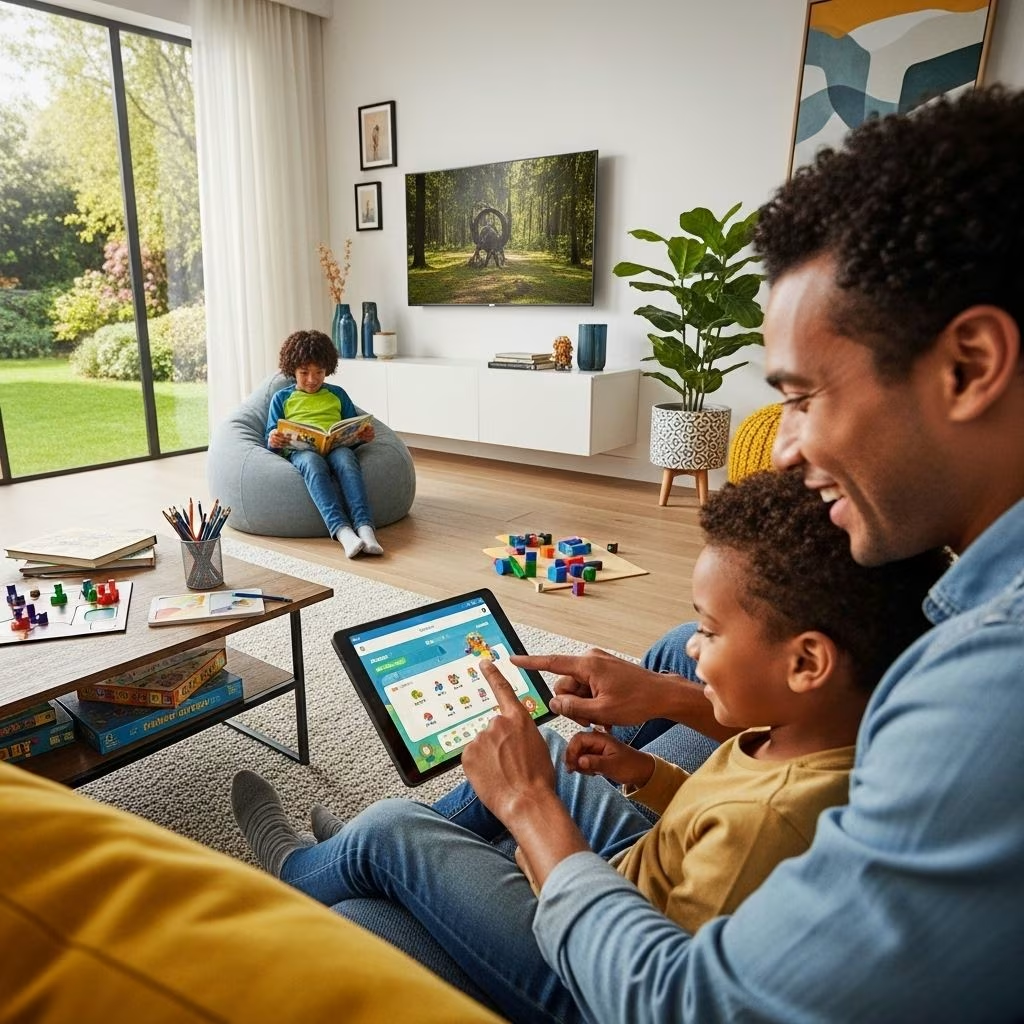
In today’s digitally saturated world, parents face unprecedented challenges in managing their children’s screen time while simultaneously navigating their own relationships with technology. The concept of parental modeling—where children learn behaviors by observing and imitating their parents—has become increasingly critical in the context of digital media use. Research consistently demonstrates that parents’ screen time habits significantly influence their children’s digital behaviors, creating a powerful ripple effect that can either promote healthy technology use or contribute to problematic patterns.
The statistics are striking: approximately 72.9% of parents report using screens around their adolescents, despite 85.3% agreeing that they should limit their own screen use in front of their children. This disconnect between intention and behavior highlights a fundamental challenge in modern parenting—the difficulty of modeling the very behaviors we wish to instill in our children. Understanding the mechanisms through which parental screen time habits influence children is essential for developing effective strategies that promote healthy digital citizenship across generations.
Understanding Parental Modeling in Digital Contexts
Parental modeling in screen time management operates through the lens of social learning theory, which posits that individuals learn behaviors by observing and imitating others, particularly those they view as role models. Children naturally look to their parents as primary examples of how to navigate the world, including the digital landscape. When parents frequently use smartphones during family meals, check emails constantly during conversations, or scroll through social media while spending time with their children, they inadvertently communicate that such behaviors are normal and acceptable.
The concept extends beyond simple imitation. Parental screen time modeling encompasses several dimensions: the frequency and duration of parental device use in children’s presence, the contexts in which screens are used, the emotional responses parents display toward technology, and the priority parents assign to digital activities versus face-to-face interactions. Each of these dimensions contributes to the complex web of beliefs and behaviors children develop regarding screen use.
Research indicates that parental screen use when with their child is associated with higher total screen time and problematic use of social media, video games, and mobile phones in early adolescents. The association is particularly strong, with studies showing that greater parental screen time modeling correlates with increases in adolescent screen time, problematic social media use scores, problematic video game use scores, and problematic mobile phone use scores. This suggests that children not only adopt similar usage patterns but may also develop problematic relationships with digital media when parents fail to model healthy boundaries.
Research Findings on Parental Screen Time Modeling
Recent empirical studies have illuminated the profound impact of parental screen time habits on children’s digital behaviors. A comprehensive study of 12-13-year-old early adolescents in the United States revealed striking patterns in how parental behaviors shape youth screen time. While 76.2% of parents reported attempting to limit their adolescents’ screen use during the week, the actual modeling of healthy behaviors told a different story.
Key Research Findings:
Greater parental screen time modeling showed significant associations with multiple problematic outcomes. When parents used screens around their children, adolescents exhibited higher total screen time with a correlation coefficient of 0.66, increased problematic social media use with a coefficient of 0.82, elevated problematic video game use at 0.38, and substantially higher problematic mobile phone use at 1.31. These statistical relationships demonstrate not merely correlation but a dose-response pattern where increased parental screen use corresponds with progressively more concerning child behaviors.
The context of screen use matters tremendously. Family mealtime screen use emerged as particularly influential, associated with higher adolescent screen time and problematic use across all categories including social media, video games, and mobile phones. The practice of allowing screens during meals—reported by approximately one-third of parents—creates a powerful message about the acceptability and even primacy of digital engagement over face-to-face family connection.
Interestingly, research spanning different age groups confirms that parental modeling effects begin early and persist throughout development. Studies of younger children have consistently shown that greater parental screen time use correlates with increased screen time in children, along with more frequent co-use of screens. This pattern suggests that habits established in early childhood, largely through parental modeling, become entrenched and difficult to modify as children mature.
The Impact of Parental Screen Habits on Children
Developmental and Behavioral Consequences
The consequences of parental screen time modeling extend far beyond simple usage metrics. Excessive screen time in children, often mirroring parental patterns, has been linked to a constellation of developmental concerns. Research has documented associations between high screen time and language delays, attention problems, obesity, and aggressive behavior in young children. When parents model constant device engagement, children may miss critical opportunities for language development, physical activity, and emotional regulation that occur through parent-child interactions.
The impact on social-emotional development deserves particular attention. Children whose parents frequently use devices during interactions may experience what researchers term “technoference”—interruptions in parent-child connection caused by technology. These interruptions can undermine attachment security, reduce the quality of parent-child relationships, and impair children’s ability to develop healthy social skills. When a parent’s attention repeatedly shifts to a screen during playtime or conversation, children receive an implicit message that digital content holds greater value than their presence.
Formation of Digital Habits and Attitudes
Perhaps most concerning is how parental modeling shapes children’s fundamental attitudes toward technology. Children develop their understanding of appropriate screen use boundaries, the role of technology in daily life, and the priority assigned to digital versus real-world experiences primarily through observation of parental behavior. When parents demonstrate an inability to disengage from devices, children learn that constant connectivity represents the norm rather than an exception.
The formation of these attitudes occurs largely outside conscious awareness. A child who observes a parent reflexively checking their phone at every notification learns that immediate response to digital stimuli takes precedence over sustained attention to other activities. Similarly, when parents use screens as a default response to boredom or discomfort, children internalize technology as the primary tool for emotional regulation rather than developing internal coping mechanisms.
Barriers to Effective Screen Time Modeling
Parental Guilt and Stress
Many parents experience significant guilt around their children’s screen time, which paradoxically can intensify rather than alleviate the problem. Higher parental screen guilt has been associated with increased parental stress related to screen time, which in turn can reduce parent-child relationship satisfaction. This guilt-stress cycle often stems from the gap between parents’ intentions to limit screens and their actual behaviors, creating psychological distress that may actually impair effective parenting around technology.
Interestingly, research indicates that child screen time itself may not directly correlate with parental stress or relationship satisfaction—rather, it is the parent’s guilt about screen time that drives negative outcomes. This finding suggests that parents would benefit more from developing consistent, manageable approaches to screen time management rather than pursuing unrealistic ideals that generate ongoing guilt and stress.
Evidence-Based Strategies for Parents
Modeling Intentional Device Use
The foundation of effective screen time management begins with parents examining and modifying their own device habits. This requires moving beyond simple restriction toward intentional use patterns that children can observe and emulate. Parents should practice putting devices away during designated family times, demonstrating that technology serves specific purposes rather than providing constant background presence.
Intentional modeling means narrating technology use when appropriate. Parents might explain, “I’m using my phone to check our directions” or “I need to respond to this work message, and then I’ll put my phone away.” This verbalization helps children understand that screen use serves specific functions and has defined endpoints rather than representing an endless stream of engagement.
Critical to this approach is demonstrating the ability to delay gratification and resist the pull of notifications. When a phone buzzes during family dinner, a parent who acknowledges the notification but chooses not to check it immediately models impulse control and prioritization of face-to-face connection. These seemingly small moments accumulate into powerful lessons about digital citizenship.
Creating a Family Media Plan
A comprehensive family media plan provides structure and clarity around screen time management while allowing flexibility for individual family needs. This plan should address multiple dimensions of technology use rather than focusing solely on duration limits.
Components of an Effective Family Media Plan:
Screen-Free Times: Designate specific times when all family members, including parents, put away devices. This typically includes family meals, the first hour after school or work, and the hour before bedtime. These protected times ensure regular opportunities for connection and demonstrate that relationships take priority over digital engagement.
Screen-Free Zones: Identify physical spaces that remain technology-free. Bedrooms, dining areas, and vehicles during short trips represent common screen-free zones. Parents should honor these zones consistently, modeling the ability to function without constant device access.
Content Guidelines: Rather than focusing exclusively on quantity, address the quality and nature of screen time. Parents should model discernment in content selection, demonstrate critical evaluation of digital media, and engage children in discussions about what they encounter online.
Balance Requirements: Establish expectations that screen time balances with other activities. Parents can model this by demonstrating their own engagement in hobbies, physical activity, reading, and social connection that doesn’t involve screens. The implicit message—that fulfilling lives require diverse activities—proves more powerful than explicit rules alone.
Device Management Strategies: Create practical systems for managing devices. This might include charging stations outside bedrooms, designated storage locations during family time, and notification management strategies. Parents who implement these systems for their own devices demonstrate practical approaches children can adopt.
Cultural and Contextual Considerations
Effective screen time management must account for cultural variations in technology use and family practices. Research from diverse contexts reveals that certain practices—such as using screens during feeding or at family meals—may be more prevalent in some cultural settings than others. Interventions that ignore these cultural realities risk being perceived as irrelevant or impractical.
In many cultures, shared media consumption represents an important form of family bonding. Rather than eliminating these practices entirely, parents might focus on ensuring that shared screen time remains genuinely interactive and bounded by clear start and end points. The goal shifts from eliminating screens to ensuring they serve connection rather than replacing it.
Socioeconomic factors also require acknowledgment. Parents facing economic constraints may rely more heavily on screens due to limited access to alternative childcare or activities. Support systems should provide practical alternatives rather than judgment, recognizing that ideal recommendations may be inaccessible to families with limited resources.
The emphasis should remain on incremental, sustainable changes rather than perfection. Parents who reduce their own screen time during key moments—even if they cannot eliminate it entirely—still provide valuable modeling. Small, consistent changes in parental behavior accumulate into meaningful shifts in family digital culture over time.
Frequently Asked Questions
Q: How much does my own screen time really affect my child?
A: Research demonstrates substantive effects. Greater parental screen time modeling is significantly associated with higher child screen time and increased problematic use of social media, video games, and mobile phones. Children learn primarily through observation, making parental habits the most powerful influence on their own technology behaviors.
Q: What if my work requires constant device access?
A: Communicate the distinction between work-related and recreational screen use to your children. Explain when you’re using devices for work purposes and establish clear boundaries around when work access ends. Model putting devices away after work hours and during family time whenever possible, demonstrating that even necessary professional use has limits.
Q: Is it hypocritical to limit my child’s screen time if I use screens frequently?
A: Rather than viewing it as hypocrisy, consider it an opportunity for honest conversation and mutual growth. Acknowledge the challenge of managing screens, involve older children in discussions about healthy usage for all family members, and commit to reducing your own screen time during key family moments. Parallel efforts toward better habits demonstrate authenticity more than perfection.
Q: At what age does parental modeling become most important?
A: Parental modeling influences children from infancy through adolescence, though the mechanisms evolve. Young children directly imitate parental behaviors, while older children and teens may rebel against explicit rules but still internalize observed patterns. Consistent modeling across developmental stages provides the strongest foundation for healthy habits.
Q: What are the most critical times to avoid screen use as a parent?
A: Research indicates that parental screen use during family meals and when spending direct time with children shows the strongest associations with problematic child screen behaviors. Prioritize being fully present during mealtimes, bedtime routines, after-school transitions, and designated family activities. These protected times have outsized influence on child development and relationship quality.
Q: How can I reduce my own screen time guilt?
A: Focus on consistent, realistic practices rather than perfection. Parental guilt about screen time actually increases stress and may harm parent-child relationships more than moderate screen use itself. Develop clear, manageable guidelines you can maintain, implement them consistently, and release unrealistic expectations that generate ongoing guilt without improving outcomes.
Q: Should screen time limits be the same for parents and children?
A: While specific time limits may differ based on developmental needs and work requirements, the principles should remain consistent. Both parents and children benefit from screen-free times and zones, balanced media consumption, and intentional rather than reflexive device use. Focus on shared family norms rather than identical numerical limits.
Conclusion
Parental modeling in screen time management represents one of the most powerful yet underutilized tools for promoting healthy digital habits in children. The evidence is clear: children’s screen time patterns, their development of problematic use behaviors, and their fundamental attitudes toward technology are profoundly shaped by the examples parents set through their own device habits. While 85.3% of parents recognize they should limit their screen use in front of children, the gap between intention and behavior remains substantial.
Effective screen time management requires moving beyond rule enforcement toward authentic modeling of healthy digital citizenship. This involves establishing screen-free times and zones that apply to all family members, demonstrating intentional and bounded device use, maintaining presence during critical family moments, and engaging in collaborative rather than authoritarian limit-setting. The goal is not perfection but rather consistent demonstration of values around technology use, human connection, and balanced living.
Parents must also navigate real-world constraints including work demands, economic pressures, and cultural practices that influence technology use patterns. Recognizing these challenges while pursuing incremental improvements proves more sustainable than pursuing unattainable ideals that generate guilt and stress. The most effective approaches acknowledge practical realities while maintaining commitment to core principles of intentional technology use.
Ultimately, parental modeling in screen time management reflects broader questions about what parents want children to learn regarding relationships, attention, self-regulation, and priorities. When parents demonstrate that face-to-face connection takes precedence over digital distraction, that boredom can be tolerated without immediately reaching for a device, and that technology serves human purposes rather than dominating human attention, they provide children with invaluable lessons extending far beyond screen time statistics. These lessons shape not only how children use technology but who they become in an increasingly digital world.
References
- https://www.nature.com/articles/s41390-024-03243-y
- https://www.tandfonline.com/doi/full/10.1080/15213269.2024.2310839
- https://pmc.ncbi.nlm.nih.gov/articles/PMC12198805/
- https://www.luriechildrens.org/en/blog/screen-time-2025/
- https://acpeds.org/media-use-and-screen-time-its-impact-on-children-adolescents-and-families/
- https://www.childandfamilydevelopment.com/blog/evidence-based-parenting-behaviors-managing-screentime/
- https://www.e-cep.org/m/journal/view.php?number=20125555713


