


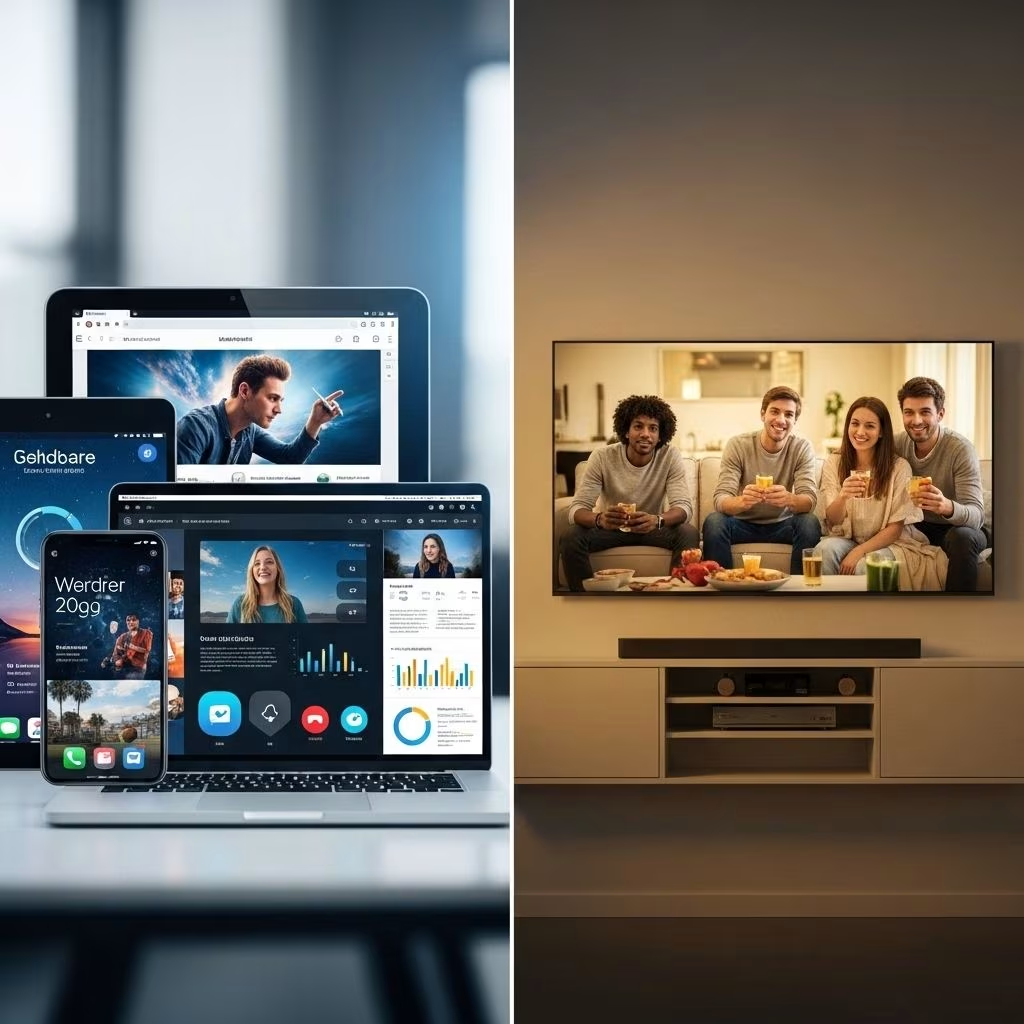
In 2025, our eyes drift between smartphone screens, tablets, laptops, and ever-evolving televisions. But are all screens created equal, or do they play distinctly different roles in our consumption of content, our personal well-being, and our daily routines?
Introduction: The Proliferation of Screens
The dawn of the 2020s cemented a simple truth: screens are everywhere. Television, once the lone giant in the living room, now shares the spotlight with pocketable powerhouses—smartphones, ultra-portable tablets, and immersive laptops. Smart TVs have blurred boundaries, offering streaming, apps, and connectivity once reserved for personal devices. But do these screens deliver content, connection, or even health effects in the same way? This article breaks down the core differences, market trajectories, and human factors that distinguish televisions from other digital screens.
TV vs. Digital Devices: Defining the Modern Screen
Television—whether traditional (linear broadcast/cable) or modern (smart TVs)—typically refers to large, stationary displays designed for group, sit-back experiences. Digital devices include:
- Smartphones—handheld, highly interactive, always connected
- Tablets—mid-sized, versatile for both work and play, touch-first
- Laptops/computers—portable or stationary, productivity-centric, full-featured input/output
Key differences between these screens revolve around their intended use (passive vs. interactive), typical content types, input methods (remote vs. touch/keyboard), and physical context of use (living room vs. personal, on-the-go).
Technological Differences: Panel Tech, Resolutions, Integration
Television technology in 2025 spans advanced OLED, QLED, and Mini-LED panels, with many premium sets boasting 4K or even 8K resolutions, deep blacks, high peak brightness, and large screen sizes (55–98 inches common). Flagship TVs from brands like LG, Sony, Samsung, Panasonic, and TCL deliver exceptional picture quality, HDR, and high refresh rates for gaming. Integration with smart home ecosystems and AI-enhanced features are now standard in many high-end TVs.
Digital devices, meanwhile, focus on portability and interaction. Smartphones and tablets typically use OLED or high-end LCD panels with 60–144Hz refresh rates but smaller form factors (5–13 inches). Their primary strength is interactivity and versatility (touch, voice, apps, cameras), not cinematic scale.
| Feature | Modern Television | Digital Devices |
|---|---|---|
| Screen Size | Large (55-98 in) | Small–medium (5-17 in) |
| Resolution | 4K to 8K | HD to 4K (rarely higher) |
| Display Tech | OLED, QLED, Mini-LED | OLED, LCD, AMOLED |
| Interactivity | Remote, voice, limited app input | Touch, keyboard, stylus, voice |
| Smart Home Integration | Increasingly advanced | Often native, core device feature |
Market Trends & User Behavior in 2025
The TV and digital device landscape has seen dramatic shifts. Streaming platforms like Netflix, Disney+, Hulu, and YouTube dominate media coverage, but linear TV still holds a majority of global viewing time—especially for live sports, news, and older audiences.
- Global average TV viewing time is 3 hours 13 minutes daily, including broadcast, streaming, and recorded content.
- TV’s share is slightly down over two years (–5%), but this may be partly due to including older viewers in newer surveys.
- In the US, streaming is the default for 70% of viewers, but globally, linear TV comprises 57% of total viewing time.
- Younger viewers (16–24) spend 51% of their TV time streaming; older viewers (55–64) still favor linear TV (67%).
- Subscription fatigue: 52% of US viewers cite cost as a major reason to reconsider streaming subscriptions.
- Ad-supported streaming (FAST platforms) is booming, with usage up 92% YoY in the US.
Digital devices outstrip TVs in sheer hours of use for browsing, communication, social media, and gaming. Video viewing on smartphones now rivals, and for some populations eclipses, that of traditional TV for quick, on-the-go consumption (especially among Gen Z and Millennials).
The Content Experience: Passive vs. Interactive Engagement
TV screens are ideal for:
- Long-form storytelling: films, prestige TV series, documentaries
- Shared viewing and social experiences (sports, events, family movie nights)
- High-fidelity sound and visuals (big screens, surround audio setups)
Digital devices excel in:
- Personalized, bite-sized content (social video, TikTok, YouTube shorts)
- Interactive applications (games, education, live chat, work productivity)
- On-demand access anywhere (commuting, waiting rooms, work breaks)
Screen type shapes consumption: TV content is usually passively consumed and often social; digital device content is interactive, personal, and tailored to individual attention spans and contexts. Hyperscale social platforms (TikTok, Instagram, YouTube) are increasingly redefining how we experience and create video content, pushing traditional TV to innovate in discovery and engagement.
Audience Demographics: Who Watches What, Where, and How?
Consumer behavior in 2025 is highly dependent on age, region, and lifestyle:
- Teens and young adults (16–24) prefer smartphones/tablets for most screen use, with streaming as their dominant TV experience.
- Families favor smart TVs for shared activities, children’s programming, and bundled streaming services.
- Seniors (65+) remain loyal to linear TV (broadcast/cable), valuing ease of use and habitual viewing.
- Work and education often take place primarily on laptops and tablets, with entertainment a secondary function.
Globally, regional trends vary. Developing markets—where mobile internet is more accessible than home broadband—often leapfrog to smartphone-centric media lifestyles. In contrast, established markets (US, UK, Japan) retain deep-rooted TV viewing for high-profile events.
Health, Wellbeing, and Screen Exposure
Are all screens equal in their impact on health? Research indicates differences in eye strain, posture, attention, and social effects:
- Extended use of small digital devices increases risks of digital eye strain, poor posture, and reduced sleep quality (especially due to blue light exposure).
- TV viewing, with its fixed distance and typically more relaxed setting, may be less straining on the eyes and body—but tends to promote sedentary behavior.
- Multiscreening (using a phone while watching TV) is common, fragmenting attention and increasing overstimulation.
Screen time guidelines from health organizations urge moderation, regular breaks, and conscious boundaries—especially for children, whose developmental needs differ from adults.
The Future: Convergence, Competition, or Coexistence?
Do TVs and digital devices compete or complement? The answer is increasingly nuanced:
- Smart TVs now integrate many features of digital devices: app ecosystems, voice assistants, screen sharing, and multi-user profiles.
- Streaming boxes and sticks (Apple TV 4K, Google TV Streamer) blur the line further, bringing interactivity and app-rich environments to traditional screens.
- Gen Z and Alpha may never develop TV-first habits, preferring multi-device, multi-platform viewing over communal TV time.
- Linear TV remains vital for live sports, breaking news, and older demographics.
The likely scenario? Coexistence and specialization: TVs anchor communal, immersive content; digital devices deliver hyper-personal, interactive, and mobile experiences. User preference—and not device capability—will determine the winner in each context.
| Use Case | TV Advantage | Digital Device Advantage |
|---|---|---|
| Sports Event | Big screen, family/friends, high-quality streaming | Instant replays, stats on 2nd screen, chat with friends |
| Casual Viewing | Cinematic, relaxed, shared | Watch anywhere, personal schedule, portable |
| Education/Work | Presentation, group learning | Interactive learning, productivity tools, multitasking |
| Social Media/Short Video | Some TV apps, limited | Designed for interactivity, creation, sharing |
Frequently Asked Questions (FAQs)
Q: Is there a quality difference between TV screens and digital devices?
A: Yes. TVs typically offer superior resolution, size, and sound for cinematic content, whereas digital devices prioritize portability, interactivity, and versatility. Each excels in specific contexts (family viewing vs. personal browsing).
Q: Are smart TVs replacing the need for other devices?
A: Smart TVs incorporate many features of digital devices, like apps and voice controls, but cannot fully replace phones, tablets, or laptops for work, social interaction, and on-the-go access.
Q: Which type of screen is better for my health?
A: Both have their risks. Prolonged digital device use often leads to eye strain and poor posture. Excess TV can increase sedentary time. Health experts recommend moderate, mindful screen time and regular breaks.
Q: Are traditional TVs becoming obsolete?
A: Not yet. While streaming and digital devices grow rapidly, TVs retain a crucial role for live events, families, and high-quality viewing, as well as among older demographics.
Q: Will future screens all be the same?
A: Unlikely. As needs diversify, screens will specialize (immersive vs. mobile, shared vs. personal), but convergence (integration of apps, voice, AI) will continue to blur boundaries.
Conclusion: Are All Screens Equal?
The answer: No—while digital devices and TVs may overlap in features, the context, experience, and culture they foster differ greatly. TVs anchor collective, immersive, high-quality viewing, while digital devices excel in personal, interactive, and versatile engagement. The future is not about choosing one over the other but understanding the value each brings to our evolving media landscape.
References
- https://www.accio.com/business/digital-tv-trends
- https://datareportal.com/reports/digital-2025-sub-section-tv-trends-and-realities
- https://www.tomsguide.com/us/best-streaming-players,review-2140.html
- https://www.whathifi.com/best-buys/best-tv
- https://www.deloitte.com/us/en/insights/industry/technology/digital-media-trends-consumption-habits-survey/2025.html
- https://www.consumerreports.org/electronics-computers/tvs/best-tvs-of-the-year-a3862868628/
- https://www.youtube.com/watch?v=1gcLrfx5XMs
- https://www.nielsen.com/insights/2025/tv-digital-whats-winning-global-audience/


