


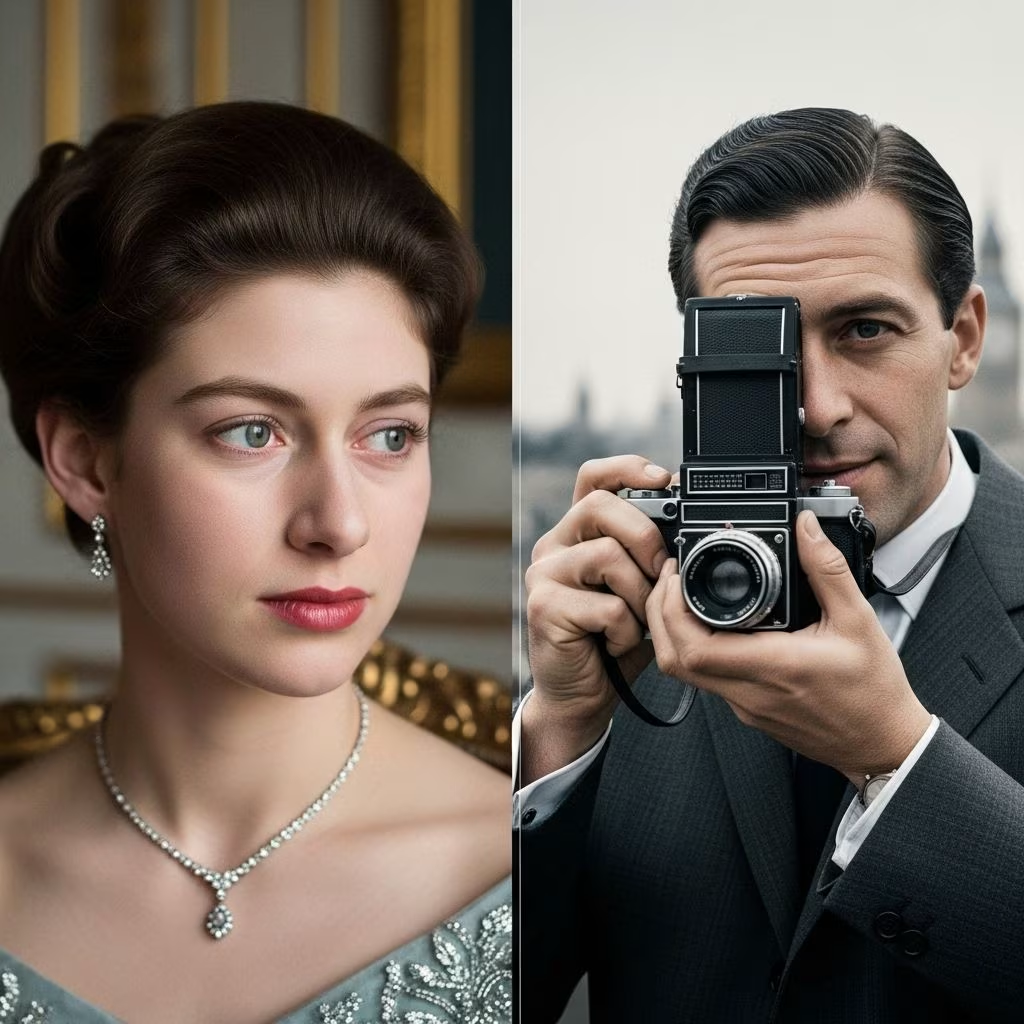
The Tumultuous Romance of Princess Margaret and Lord Snowdon: A Complete Timeline
Princess Margaret, the younger sister of Queen Elizabeth II, and Antony Armstrong-Jones—later known as Lord Snowdon—starred in one of the most iconic, lavish, and ultimately tragic romances of the British royal family. Their marriage, celebrated in a blaze of media attention, embodied glamour and innovation but soon unraveled amid ongoing scandals and heartbreak. Below, we delve deeply into their full relationship timeline, examining every high and low, pivotal event, and cultural impact along the way.
Contents
- The Early Beginnings
- A Secret Courtship
- The Engagement: Undercover Romance Exposed
- The Iconic Royal Wedding
- Glamour, Change, and Early Married Life
- Growing Pressures: Public Scrutiny and Private Strain
- Affairs, Scandals, and Breakdown
- Official Separation and History-Making Divorce
- Life After Divorce and Final Years
- Legacy: The Enduring Fascination
- Frequently Asked Questions
The Early Beginnings
Before meeting Lord Snowdon, Princess Margaret’s love life was already the subject of intense tabloid fascination. Her heartbreak over Captain Peter Townsend—a royal equerry and divorcé she was forbidden to marry—dominated headlines and public sentiment in 1955, setting the stage for future romances colored by both scrutiny and defiance.
After the end of her relationship with Townsend, Margaret became one of the most eligible and sought-after women in British society, captivating the attention of the media and the aristocratic class alike.
A Secret Courtship
Princess Margaret and photographer Antony Armstrong-Jones first crossed paths in 1958 at a dinner party hosted by Lady Elizabeth Cavendish, Princess Margaret’s lady-in-waiting. Armstrong-Jones’s sharp wit and charismatic presence made him an instant favorite amid the upper echelons of London society.
- Armstrong-Jones was not initially seen as a likely suitor. While other potential partners gained more media attention, their connection remained invisible to the press and public.
- Margaret and Armstrong-Jones maintained a clandestine relationship for months, often meeting in secret at his photographic studio.
- The secrecy added a thrilling element to their early romance, all while the outside world speculated endlessly on Margaret’s personal life.
The Engagement: Undercover Romance Exposed
By Christmas of 1959, Armstrong-Jones formally sought permission from Queen Elizabeth II to propose. The Queen consented, but stipulated that no public announcement should precede the birth of her own third child, Prince Andrew.
- Proposal: Armstrong-Jones proposed privately to Margaret in December 1959, shortly after Margaret received news that her former love, Peter Townsend, had become engaged to another.
- Public Announcement: The engagement was revealed on February 26, 1960, capturing the world’s attention.
- Scandal and Rumors: Prior to and after the engagement, Armstrong-Jones was linked to several women, including actress Jacqui Chan and Gina Ward. He was later revealed to have fathered a child with Camilla Fry, a daughter born just before his royal wedding.
The Iconic Royal Wedding
On May 6, 1960, Princess Margaret and Antony Armstrong-Jones were married at Westminster Abbey. Their marriage was historic, not only for its grandeur but because Armstrong-Jones became the first commoner in 400 years to marry the daughter of a king.
- The ceremony was broadcast live by the BBC, reaching fans worldwide and symbolizing a new, more modern era for British royalty.
- The princess’s wedding dress, designed by Norman Hartnell, set trends for years to come with its minimalist, elegant style.
- The event ushered in an age of royal celebrity culture, with Margaret and Armstrong-Jones painted as both glamorous and relatable.
Glamour, Change, and Early Married Life
In the wake of their marriage, the couple appeared to be the epitome of 1960s cool—frequenting fashionable parties, hosting society notables, and embarking on high-profile international tours.
- Public fascination reached fever pitch, with Margaret and Lord Snowdon often compared to contemporary style icons and celebrities.
- Children: The couple had two children—David Armstrong-Jones (born 1961), known as Viscount Linley, and Lady Sarah Armstrong-Jones (born 1964).
- Professional Pursuits: Armstrong-Jones continued to thrive as a celebrated photographer, while Margaret undertook royal duties and championed the arts.
Growing Pressures: Public Scrutiny and Private Strain
As the 1960s progressed, the cracks began to show beneath the dazzling surface of their marriage.
- Diverging Lives: Lord Snowdon pursued an increasingly busy professional life, often working overseas or immersing himself in artistic circles far from the palace.
- Princess Margaret’s royal obligations and love of London’s high society led her in different directions, with both partners growing distant.
- Their relationship set many “firsts” for the royal family but also exposed them to growing rumors, gossip, and speculation in the press.
By the late 1960s, reports surfaced of “rift and estrangement,” with both parties allegedly seeking companionship outside the marriage.
Affairs, Scandals, and Breakdown
Their once-secret marriage became one of the most publicized and scrutinized unions in royal history, especially as rumors of affairs multiplied on both sides.
| Year | Key Event | People Involved |
|---|---|---|
| Mid 1960s–1976 | Affairs and Rumors Circulate | Lord Snowdon: Lady Pamela Colin, Gayle Hunnicutt, Lady Jacqueline Rufus Isaacs Princess Margaret: Antony Barton, Robin Douglas-Home |
| 1976 | Photos of Margaret with Roddy Llewellyn in Mustique | Roddy Llewellyn (Margaret’s companion, 17 years her junior) |
- The couples’ open extramarital affairs kept them in the tabloids and made them a lightning rod for ongoing scandal.
- 1976 Mustique Incident: Photographs of Margaret and Roddy Llewellyn on holiday in Mustique were published, causing a scandal that reverberated through the British press.
- Lord Snowdon expressed to the media that he was “desperately sad in every way that this had to come.”
Official Separation and History-Making Divorce
Following years of infidelity and emotional distance, the couple made their separation public in March 1976.
- Kensington Palace Statement: “Her royal highness, the Princess Margaret, Countess of Snowdon, and the Earl of Snowdon have mutually agreed to live apart.”
- Both pledged to continue their royal duties and maintain a level of decorum for the sake of their family, particularly their children.
- Despite reports that Lord Snowdon was taken by surprise by the announcement, both parties maintained a civil public front.
On May 10, 1978, after two years of separation, their divorce was made official. It marked the first divorce of a senior British royal since Henry VIII, signaling a historic change in the monarchy’s approach to marriage and public image.
- Armstrong-Jones retained his title, Earl of Snowdon, earned during the marriage.
- Neither Margaret nor Lord Snowdon remarried immediately, but both continued to feature in high society and royal events.
Life After Divorce and Final Years
Though their marriage ended, Princess Margaret and Lord Snowdon remained active in each other’s lives, particularly as they co-parented their two children.
- Mutual Public Appearances: The former couple reunited for the weddings of their son, Viscount Linley (1993), and their daughter, Lady Sarah (1994), sharing polite smiles for the cameras.
- Lord Snowdon remarried in 1978, but his second marriage also ended in divorce years later.
- Princess Margaret never remarried and grew increasingly reclusive in her later years, her health declining due to heavy smoking and multiple strokes.
- Margaret’s Death: Princess Margaret passed away in 2002, with Lord Snowdon remaining an important part of her family circle until her final days.
Legacy: The Enduring Fascination
The relationship between Princess Margaret and Lord Snowdon remains one of the most discussed and dramatized royal romances, inspiring numerous books, documentaries, and portrayals in television series such as The Crown. Their union, once considered radical, paved the way for greater openness and change within the British royal family—and served as a cautionary tale about the pressures of living under the world’s microscope.
- Their story is widely viewed as a turning point for royal marriages, representing both modernity and the enduring challenges of public life.
- Their struggles with fidelity, public expectation, and personal fulfillment continue to resonate with audiences today, ensuring their legacy endures.
Frequently Asked Questions
Q: Why was the marriage of Princess Margaret and Lord Snowdon so newsworthy?
A: Their marriage united royalty and commoner in unprecedented fashion and featured high society glamour, celebrity friends, and extensive media coverage. It was the first time in centuries a king’s daughter married a commoner, and their union set fashion and cultural trends.
Q: Did Princess Margaret and Lord Snowdon have children?
A: Yes, they had two children: David Armstrong-Jones, Viscount Linley, and Lady Sarah Armstrong-Jones. The couple remained connected as co-parents even after their divorce.
Q: What caused their eventual separation and divorce?
A: Both Margaret and Lord Snowdon engaged in multiple extramarital affairs. The combination of intense media scrutiny, contrasting personalities and lifestyles, and unmet emotional needs contributed to their marriage’s breakdown.
Q: What impact did their relationship have on the British monarchy?
A: Their marriage and divorce marked a modernization for the royal family, breaking centuries-old traditions and introducing candid discussion around royal relationships, privacy, and the impact of media attention.
Q: Did Princess Margaret or Lord Snowdon remarry after their divorce?
A: Lord Snowdon remarried in 1978 but later divorced again. Princess Margaret never remarried and maintained ties to her children and extended family until her death in 2002.
References
- https://www.townandcountrymag.com/society/news/a9255/princess-margaret-lord-snowdon-relationship/
- https://www.oprahdaily.com/entertainment/tv-movies/a29727388/princess-margaret-lord-snowdon-relationship-timeline/
- https://www.harpersbazaar.com/celebrity/latest/a28430957/princess-margaret-antony-armstrong-jones-relationship-timeline/
- https://www.elle.com/culture/movies-tv/a29803296/princess-margaret-antony-armstrong-jones-relationship-timeline/
- https://en.wikipedia.org/wiki/Princess_Margaret,_Countess_of_Snowdon


