


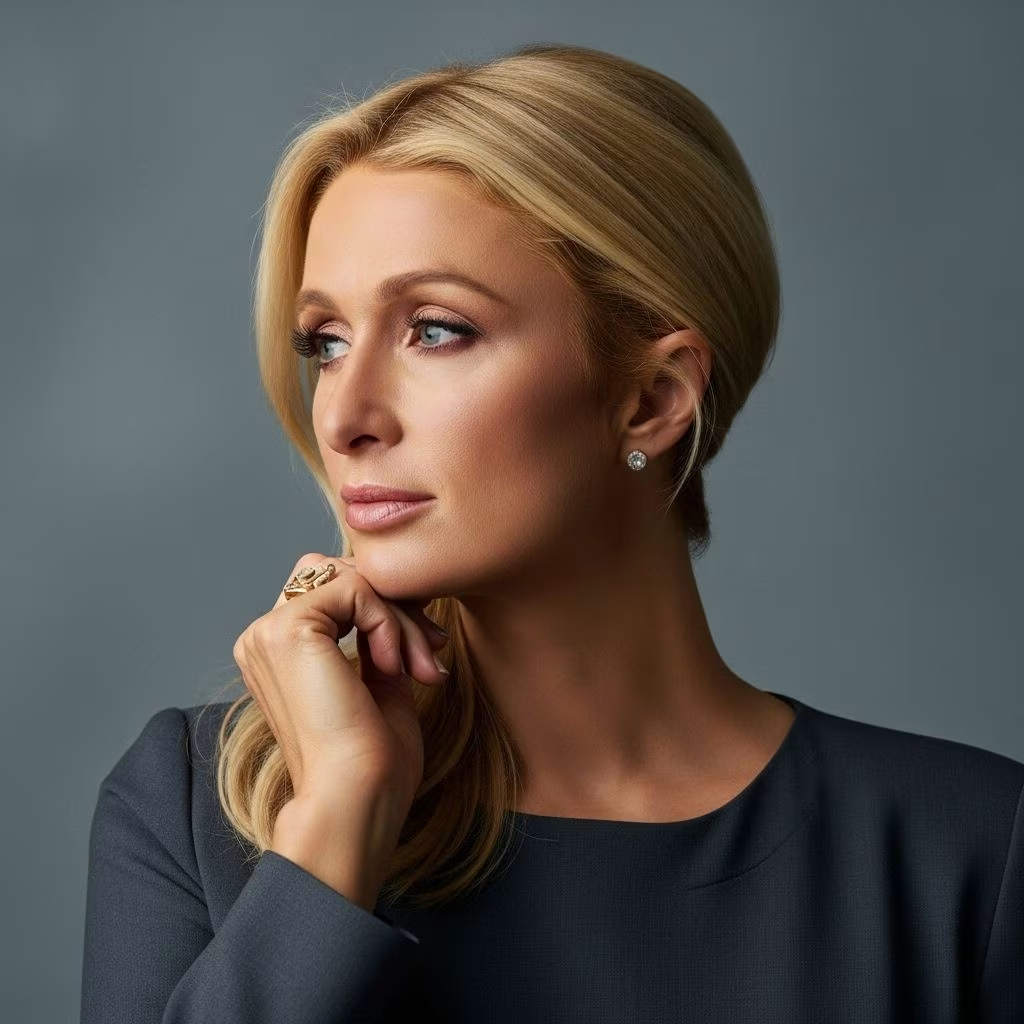
Paris Hilton: The Hidden Struggles Behind the Spotlight
Paris Hilton, one of the world’s most recognizable celebrities, has been a fixture in pop culture for decades. Beneath the glamour and headlines, Hilton’s life has been shaped by profound trauma and a courageous journey to reclaim her narrative. This article explores Paris Hilton’s experiences as a survivor of institutional abuse, her challenges in relationships, and her ongoing advocacy for change.
Early Life: A Catalyst for Trauma
In her new memoir, Paris Hilton unveils a critical turning point from her early adolescence: being groomed by her eighth-grade teacher. Hilton describes how, at just 14 years old, she became entangled in an inappropriate relationship with a teacher who reciprocated her feelings and manipulated her emotionally. The incident, marked by a secret meeting and a kiss that left her confused and vulnerable, became the “catalyst” for her parents’ drastic decision to send her away from home.
- Grooming incident at age 14 became a defining trauma.
- Her teacher, referred to as ‘Mr. Abercrombie’ in the memoir, left Hilton feeling betrayed and blamed.
- This experience led her parents to seek out disciplinary boarding schools miles away from their family.
Hilton says that for 25 years she framed the incident as her “first kiss,” only as an adult processing it as abuse. She writes, “Even now, knowing in my grown-up mind that no child is ever to blame for inappropriate adult behavior, my face is literally burning as I sit here telling you this terrible secret.”
Sent Away: Life Inside Abusive Youth Institutions
After the traumatic episode with her teacher, Paris Hilton endured years in what she describes as the ‘troubled teen industry.’ She was sent to multiple residential treatment centers and boarding schools, including the notorious Provo Canyon School (PCS) in Utah.
- Physically, verbally, and emotionally abused during 11 months at PCS.
- Subjected to solitary confinement in a cold, dark chamber for nearly 20 hours.
- Prescribed unknown pills that left her feeling numb and tired.
- Unable to contact parents—phone calls strictly monitored.
- Peers around her suffered sexual abuse; she witnessed distressing treatment almost daily.
Hilton describes a recurring nightmare: “Every single night, 99% of my nightmares were about being taken from my room and locked up in these places, trying to escape.” Through deep introspection, she realized her public persona, the “happy fantasy life,” was a defense mechanism to mask her pain.
The Mask: Constructing a Public Persona
Hilton’s rise to fame—characterized by her reality show stardom and tabloid coverage—contrasted sharply with her private suffering. While she portrayed herself as a carefree socialite, her internal world was dominated by trauma from institutional abuse.
- Hilton built a glossy “mask” as an escape from her distressing childhood realities.
- This persona helped her cope but made it difficult to process and articulate her trauma for years.
- It also shaped her relationships and emotional responses in adulthood.
Bonding Over Trauma: Connections That Last
In the wake of her disclosures, Hilton reconnected with other survivors she had met during her time at PCS. The shared experience of abuse became a lasting bond among a group of women whose lives, though divergent in adulthood, carry the scars of their youth.
- Hilton reunited with former PCS roommates—none had spoken of their treatment until decades later.
- These women, once strangers, became a support system as they worked to process and confront their trauma together.
Hilton’s journey highlights the power of survivor solidarity and the importance of communal healing for those who have experienced institutional abuse.
Testifying for Change: Public Advocacy and Congressional Testimony
After years of silence, Hilton stepped into the public arena to advocate for institutional reform and speak on behalf of survivors. She testified before the U.S. Congress about the abuses faced within youth treatment facilities, emphasizing the long-term effects that can last a lifetime.
- Hilton described being physically, verbally, and emotionally abused.
- Peers around her endured sexual abuse.
- She highlighted that many children in such facilities are separated from their families—often unnecessarily.
- 80% of children in orphanages are not orphans; institutionalization is often preventable.
- Hilton called attention to the manipulation of parents and the lack of transparency within youth treatment organizations.
“I learned nothing there except trauma.” — Paris Hilton
Hilton’s testimony amplified a global conversation about the dangers of institutional child care and the need for legislative and societal change.
Relationships: Navigating Trust, Love, and Recovery
The deep trauma from Hilton’s youth influenced her ability to connect and trust others. Her struggles to form healthy relationships are a direct legacy of the abuse she endured.
- Hilton has spoken candidly about how trauma shaped her romantic and interpersonal relationships.
- Tales of public breakups and high-profile romances often mask the complexity of her emotional world.
- She describes a cycle of difficulty trusting others and feeling safe—echoing patterns common among survivors of abuse.
- Over time, she has worked to break these cycles through therapy, advocacy, and developing closer bonds with fellow survivors.
As she processes her past, Hilton underscores the importance of recognizing that children are never to blame for adult misconduct and emphasizes the need for healing and self-compassion.
Healing and Recovery: From Silence to Voice
Hilton’s journey from victim to survivor has been marked by her determination to speak out, seek justice, and help others do the same. Healing, she says, is a continuous process requiring courage, reflection, and support.
“My face is literally burning as I sit here telling you this terrible secret. I’m not sure I’ll ever fully shake it off. But it’s a key part of my story, the catalyst for much of what followed.” — Paris Hilton
- Hilton attributes much of her recovery to finding her voice, sharing her memories, and forging connections.
- Her advocacy extends beyond her own experiences to champion survivors from similar institutions and the larger child welfare system.
- She has appeared in documentaries, interviews, and public forums to encourage open conversation about abuse and trauma.
Impact and Calls to Action
Hilton’s testimony reverberates across the celebrity world and into advocacy for youth safety, mental health, and institutional reform. Her efforts have driven awareness, inspired survivors to speak out, and challenged institutions to change.
- Increased media attention on the ‘troubled teen industry’ and institutional child abuse.
- Paris Hilton calls for transparency, accountability, and regulatory change.
- Encourages survivors to seek help and empowers families to question institutional claims.
- Highlights the need for trauma-informed approaches to child welfare.
| Type of Abuse | Institutional Symptoms | Long-term Effects |
|---|---|---|
| Physical | Beatings, solitary confinement | PTSD, nightmares, anxiety |
| Emotional/Verbal | Humiliation, threats | Self-esteem issues, trust problems |
| Sexual | Peer abuse, staff misconduct | Difficulty in relationships, emotional distress |
Frequently Asked Questions (FAQs)
Q: What motivated Paris Hilton’s parents to send her to boarding schools?
A: The grooming incident with her eighth-grade teacher was a decisive factor. Her parents sought institutional help, fearing for her safety and well-being, but were unaware of the realities Hilton would face.
Q: What kinds of abuse did Paris Hilton experience at youth treatment centers?
A: Hilton alleges she was physically beaten, verbally abused, emotionally manipulated, and witnessed sexual abuse of peers during her stay at Provo Canyon School, among other institutions.
Q: How has Hilton’s public persona affected her ability to cope with trauma?
A: Hilton developed a ‘mask’—an upbeat, glamorous personality—to shield herself from her painful memories, a coping mechanism common among trauma survivors.
Q: What is Paris Hilton doing to support other survivors?
A: Hilton testifies before Congress to advocate for regulatory change, fosters communities with fellow survivors, participates in documentaries, and raises awareness about institutional abuse.
Q: What is the ‘troubled teen industry’?
A: The ‘troubled teen industry’ refers to a network of youth treatment centers, boarding schools, and institutions purportedly serving at-risk children. Many have faced allegations of misconduct including physical, emotional, and sexual abuse.
- If you or someone you know is a survivor of sexual assault, resources like the National Sexual Assault Hotline are available for confidential support.
Conclusion: Breaking the Cycle of Silence
Paris Hilton’s testimony and activism mark a pivotal shift in the conversation around institutional abuse and trauma. By sharing her story, she challenges the culture of silence that has protected abusive systems for decades and empowers survivors to reclaim their voices.
Her experiences—and those of millions who have suffered in secrecy—underscore the need for compassion, transparency, and reform. Paris Hilton’s story is a reminder that behind celebrity facades often lie untold truths, and that healing begins when those truths are brought into the light.
References
- https://www.businessinsider.com/paris-hilton-groomed-aged-14-by-8th-grade-teacher-memoir-2023-3
- https://www.latimes.com/entertainment-arts/movies/story/2020-09-15/paris-hilton-documentary-abuse-provo-school
- https://www.hopeandhomes.org/news/paris-hilton-exposes-traumatic-institutional-child-abuse/
- https://abcnews.go.com/world-news-tonight-with-david-muirN/video/paris-hilton-opens-past-abuse-111469861
- https://www.youtube.com/watch?v=YdOpKGxxuI4
- https://www.instagram.com/reel/Cp2xDHlssHB/
- https://www.youtube.com/watch?v=OPxAdXExAD8
- https://www.imdb.com/news/ni56225831/


