


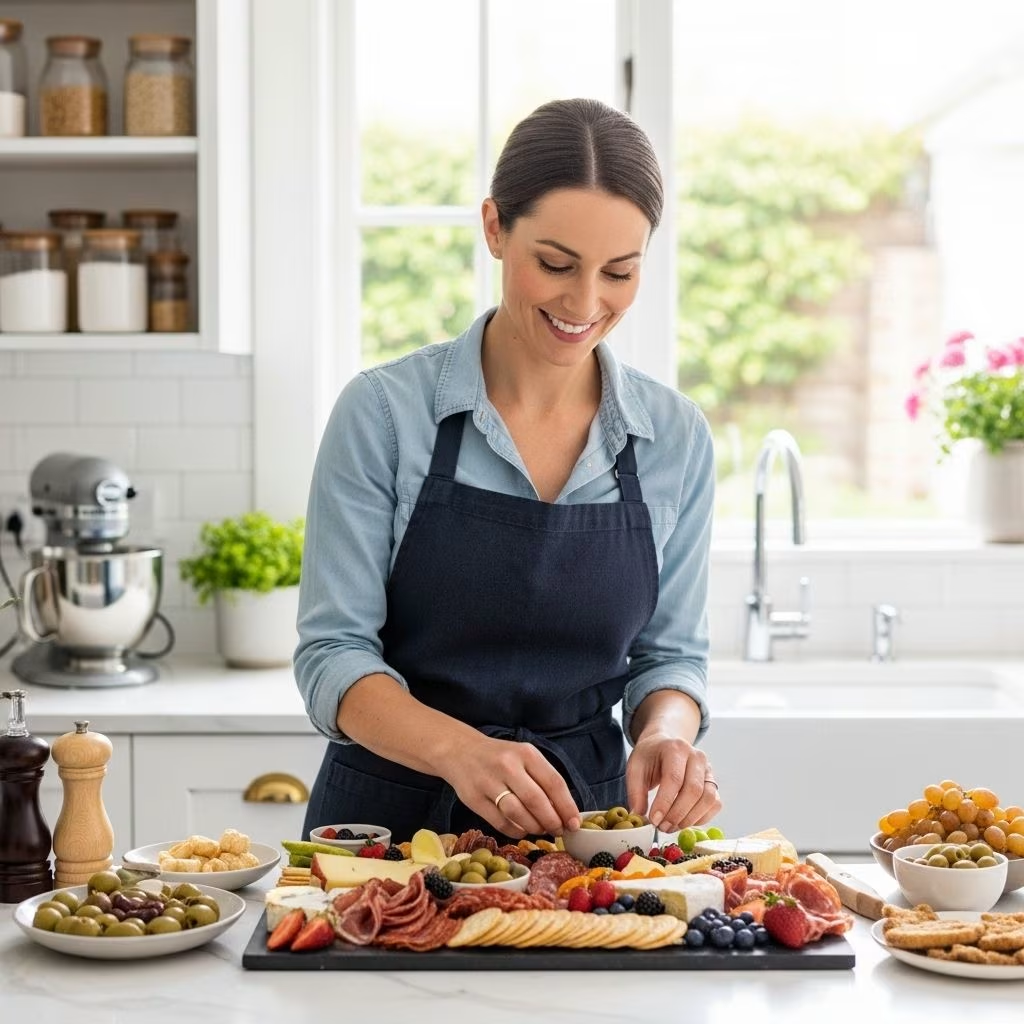
Is Nara Smith Really a ‘Tradwife’? Debunking the Internet’s Chicest Homemaker
Nara Smith is a viral sensation, celebrated for her meticulous cooking, perfect outfits, and seemingly blissful family life. Yet, debate swirls online: is she really the internet’s ultimate ‘tradwife,’ or is something more complex at play?
Who Is Nara Smith?
Nara Smith is a 23-year-old model and social media influencer with millions of followers on TikTok and Instagram. Married to fellow model Lucky Blue Smith, she’s a mother to three young children—Rumble Honey, Slim Easy, and Whimsy Lou. Her content is best known for its blend of domesticity and high fashion: making pasta from scratch while dressed in couture, and baking intricate desserts in silk robes.
- Background: South African/German heritage, married since 2020
- Career: Modeling since age 14, social media rise after sharing domestic content
- Family: Three children with Lucky Blue Smith; the couple’s relationship made headlines for both age-gap and glamour
Nara rarely discusses her religious beliefs or any explicit ideology, even though her content sometimes hints at Mormon traditions.
The Allure of Nara’s Domestic Aesthetic
What sets Nara Smith apart from other influencers is her obsessive attention to detail: she doesn’t just make cookies, she churns her own butter; doesn’t prepare dinner, she fashions handmade pasta, sauces, and desserts—all while never spilling on her designer clothes.
- Immaculate Appearance: Always perfectly groomed, nails and makeup flawless
- Labour-Intensive Cooking: Meals are made ‘from scratch,’ showcasing skill and patience
- Visual Storytelling: High production value, often filmed in an immaculate, sun-dappled kitchen
- Soft-Spoken Persona: Calm tone, understated delivery
This blend evokes both admiration and envy, presenting domesticity as an aspirational, exclusive art form.
‘Tradwife’ Persona: TikTok’s Glamorous Domestic Goddess
The debate over Nara’s status as a ‘tradwife’—a term denoting women who embrace traditional domestic roles—has fuelled widespread fascination and skepticism. Internet users call her the ‘Glam Tradwife,’ a housewife reimagined for the digital age: less about submission, more about curated perfection.
However, Nara herself rejects being defined by the tradwife label in any ideological sense:
- No Explicit Political Agenda: She has never advocated for women to stay home, have more children, or emulate her lifestyle
- Content Focus: She shares moments of homemaking because she enjoys them, not to impose them on others
- Behind the Scenes: Her husband participates equally in chores, and Nara maintains an active modeling career, often traveling for work
Despite this, her videos repeatedly center on traditional homemaker themes: preparing elaborate meals, crafting beautiful spaces for her family, and rarely highlighting the messier parts of motherhood or domestic life.
Online Reactions: Obsession, Critique, and Cultural Meaning
The internet’s response to Nara Smith is as divided as it is intense:
- Devoted Fans: Applaud her creativity, her sense of style, and the beauty of her home-cooked meals
- Harsh Critics: Accuse her of glamorizing unattainable standards and ignoring the real drudgery of domestic life
- Societal Context: Her biracial identity has also made her a target for specific vitriol; Black women, historically, face disproportionate backlash for their visibility online
| Group | Common Responses |
|---|---|
| Fans | Praise homemaking skills; envy her lifestyle; view her as a positive role model |
| Critics | Call out unattainable standards; see content as divorced from reality; critique overemphasis on appearances |
| Cultural Observers | Debate her impact on feminism, womanhood, and representations of race and class online |
Behind the Gloss: The Myths and Realities of Nara’s Brand
Though the videos convey harmony and elegance, Nara’s true day-to-day labor is far more complicated. She herself insists that:
- Division of Labor: She and her husband split household tasks equally; Lucky does everything from dishes to dressing their children
- Working Mom: Nara maintains a demanding modeling and influencer career. She travels for work and sometimes relies on her husband for childcare
- Choice, Not Chore: Cooking is a passion, not a duty. On busy days, they’ll eat out or take shortcuts
- Incompleteness of the Image: Her content highlights beautiful moments, not the exhausting or chaotic realities of motherhood
The Tradwife Debate: Is Nara Smith a ‘Return to Tradition’?
Some observers view Nara’s popularity as emblematic of a cultural yearning for stability, beauty, and clarity of roles amid social and economic chaos. She is often cited alongside the rise of the ‘tradwife’ internet niche—mainly white, conservative women explicitly promoting female submission and domesticity.
Key distinctions set Nara apart from typical ‘tradwife’ archetypes:
- Apolitical Content: Her posts never advocate submission or withdrawal from the workforce
- Modern Partnership: She and her husband divide household responsibilities equally
- Creative Fulfilment: Nara views homemaking as art, not as a prescribed role
- Cultural Hybridity: As a biracial, cosmopolitan influencer, her image both challenges and updates the ‘tradwife’ narrative
Instead, what’s on display is more about curated domesticity than about political ideology or nostalgia for a lost era.
Why Gen Z Can’t Look Away
Nara’s online success also reflects the changing landscape of social media—where influencers serve up idealized versions of home life that are more artwork than instruction.
- Contrast with ‘Stay-at-Home Girlfriend’ Trend: Nara’s homemaking is seen as passionate and creative, while previous trends were often derided as superficial
- Anthropological Curiosity: Many young, working women watch Nara out of fascination, not as an aspiration—it’s a peek into a world both familiar and alien
- Desire for Purpose: Her content projects a sense of peace, passion, and purpose, sparking conversations about what a fulfilling life looks like in an era of hustle and burnout
Race, Representation, and Internet Scrutiny
Nara’s biracial identity and visible success complicate perceptions in a largely white, conservative space. Part of the backlash—especially harsh online—reflects long-standing patterns of anti-Blackness and hostility toward Black women’s choices and happiness.
She has endured scrutiny and vitriol far exceeding what’s directed at white counterparts, a testament to the unique pressures faced by Black women in the public eye.
Nara Smith vs. The Stepford Wife Fantasy
On the surface, Nara’s online life looks like a revival of the idealized 1950s housewife, complete with vintage-inspired dresses and a sparkling kitchen. Yet, the comparison falls apart under closer inspection:
- Mutual Partnership: Both Nara and Lucky take on domestic and career roles; the division is pragmatic, not patriarchal
- Career Ambition: Modeling and content creation are significant components of Nara’s life and identity
- No Push for Female Submission: Unlike the Stepford model, Nara’s homemaking is framed as a personal, artistic pursuit
The reality: hers is a hybrid existence—neither the old-fashioned homemaker nor the fully ‘girlboss’ careerist, but an unprecedented blend of both.
The Impact of Nara Smith’s Persona: What Does Her Fame Mean?
The Nara Smith ‘tradwife’ discussion is more than a debate about one influencer. It reflects wider anxieties about gender roles, family dynamics, and economic uncertainty. Her popularity reveals key societal themes:
- Aestheticizing Domestic Labor: Making home life look beautiful, meaningful, even luxurious
- Ambivalence Toward Tradition: Mixing old-fashioned imagery with 21st-century values and ambition
- Influencer Economics: Turning homemaking into a full-time, lucrative career
For some, this is inspiring; for others, troubling. In either case, it is a reminder that social media will always blur boundaries between real life, performance, aspiration, and activism.
Frequently Asked Questions (FAQs)
Q: Does Nara Smith consider herself a tradwife?
A: Nara explicitly rejects being called a tradwife in the ideological sense. She enjoys homemaking but does not promote submission or assign rigid gender roles.
Q: Does Nara’s family follow traditional gender roles?
A: No, Nara and her husband split chores and parenting. Both have careers and participate actively in family life.
Q: Why has Nara Smith faced more backlash than similar influencers?
A: Her biracial identity and high visibility contribute to disproportionate scrutiny, reflecting broader societal prejudices.
Q: Is her online image an accurate reflection of her life?
A: No, her content is highly curated. She openly acknowledges that not all aspects of motherhood and homemaking are shown on social media.
Q: What draws Gen Z and millennial audiences to her?
A: Her content offers a blend of nostalgia, artistry, and escapism—drawing viewers from both admiration and anthropological curiosity.
Key Takeaways
- Nara Smith is not a traditional ‘tradwife’ but a modern influencer who blends homemaking with entrepreneurship.
- Her content is highly stylized, focusing on aestheticized domestic moments, and omits daily drudgery and struggles.
- Internet discussion about her highlights evolving debates about gender, race, and societal values.
- The fascination with her reflects deeper societal yearnings for meaning, order, and agency—refracted through a digital lens.
References
- https://amyexplains.substack.com/p/nara-smith-the-internets-greatest
- https://www.ensemblemagazine.co.nz/articles/tradwives-nara-smith-and-gen-z
- https://www.youtube.com/watch?v=KQgm-Kt7Ojc
- https://lifebonder.com/blog/2024/07/30/nara-smith-making-the-perfect-stepford-wife-from-scratch/
- https://www.refinery29.com/en-us/nara-smith-trad-wives-feminism
- https://www.deseret.com/indepth/2024/06/05/nara-smith-tradwife-influencer-cooking-luck-blue-smith/


