


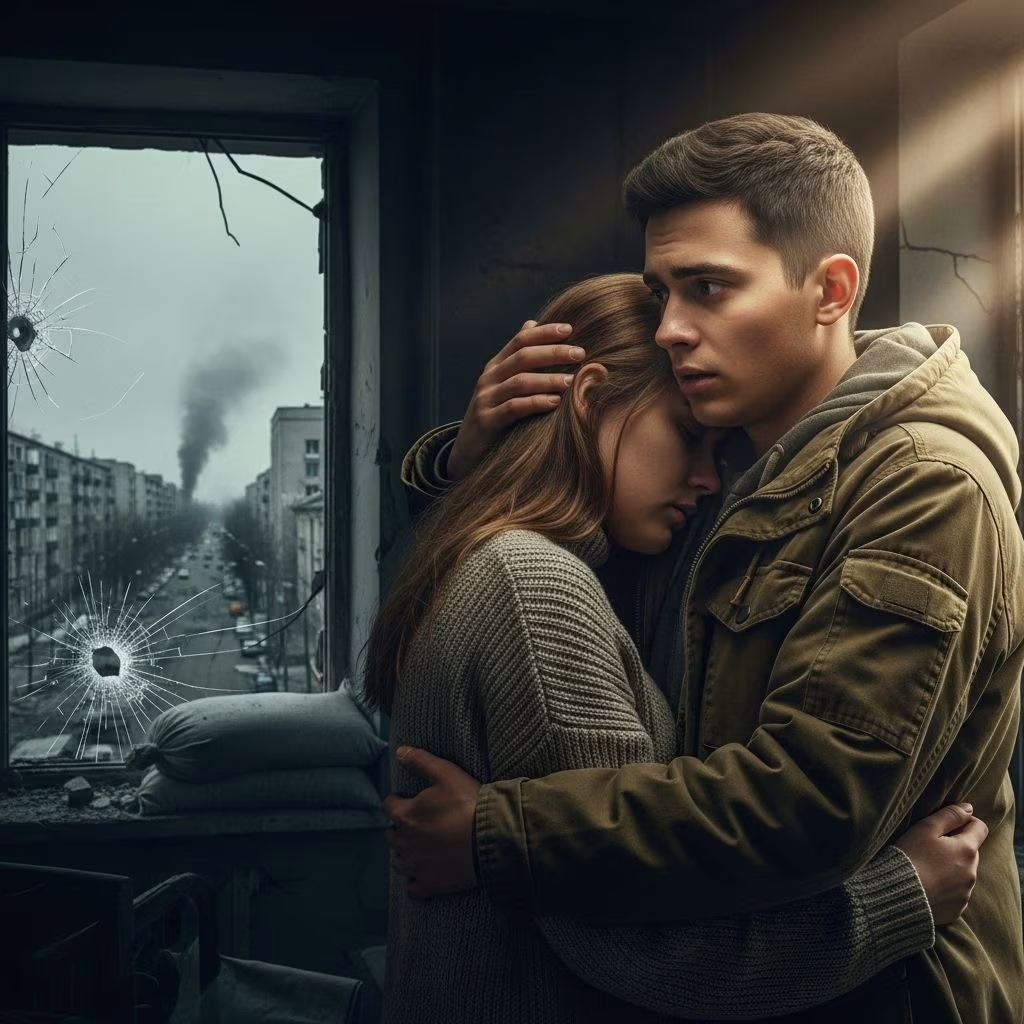
How Young Couples in Ukraine Are Redefining Love in the Midst of War
On the eve before Russian tanks rolled across the border into Ukraine, Vlada Somka and her partner Anton shared a heated argument—over mundane details of life, not war. No one, least of all the young couple, anticipated the scale of the crisis that would upend their world. Their story is one among thousands: young people torn between the universal urge for intimacy and the crushing reality of survival, conscription, and an uncertain future.
Before the Invasion: The End of Normalcy
Vlada and Anton, both 22, were at home in Kyiv the night before the invasion in February 2022. Their argument, about whether anyone in the 21st century would actually take up arms, seems tragically naive in hindsight. “We argued a lot that night, and he said no-one in the 21st century would take up weapons, it won’t happen. They said we would have to flee the country, but it won’t happen,” Vlada recalls.
As Russian forces massed on the border, ordinary life in Ukraine changed overnight. The prospect of war, long dismissed as a relic of the 20th century, suddenly became the defining feature of their relationship. For Anton, it became a literal countdown—men between 25 and 60 face mandatory conscription, and exemptions are rare. Rather than flee, Anton enlisted in a special forces unit, packing his AeroPress coffee maker and film camera. By January, he was on the frontline in the Sumy region, one of the war’s hottest zones.
Romance on a Knife Edge: Love Between Curfews and Conscription
As the conflict entered its fourth year, young couples in Ukraine have been forced to reinvent what love means in extraordinary circumstances. Midnight curfews, air raid sirens, and the omnipresent military presence frame every daily decision. Romance now happens in fragments: stolen moments between shifts, digital messages from the trenches, and brief reunions during short leaves.
- Many couples must choose between love and survival—whether to stay together or if one should flee the country.
- Texting and video calls become lifelines for partners separated by frontlines.
- Public displays of affection are riskier, with curfews and troop movements ever-present.
- Relationships are tested by trauma, loss, and the psychological toll of war.
Facing the Draft: Love, Duty, and Sacrifice
The draft looms large for Ukrainian men, and for Anton, it was a turning point. “He didn’t actually have a choice, but he did his best in this situation. He tried to take as much control as he could,” Vlada says. For many, refusal is not an option. The burden of military service reshapes relationships, often accelerating conversations about marriage, children, and even IVF.
Government-backed IVF clinics have seen an uptick in young couples seeking treatments, a bittersweet response to an uncertain future. “We have had couples who have produced an embryo, transferred it to the woman, and then probably the man has died or disappeared. Probably. But we don’t know for sure,” says Dr. Strelko, a fertility specialist in Kyiv. Even as international pressure mounts for a ceasefire, most Ukrainians see no end to the conflict in sight.
War and the Future of Ukrainian Families
For couples like Vlada and Anton, the war has changed what it means to dream. Their shared hope—to refurbish a vintage Soviet-model car and travel around Europe—now serves as a fragile anchor in a sea of uncertainty. “I love that we want to be free,” says Vlada. “It was our dream to travel the world, to see as many countries as possible. But I think we wouldn’t have continued our relationship if he decided to flee the country. I wouldn’t have joined him”.
Despite the danger and distance, there is also defiance. Vlada finds meaning in their shared sacrifice: “Sometimes you have to adjust to the catastrophe.” The resilience of Ukraine’s youth—facing down impossible choices and carrying forward the spark of normal life—is a story of hope amidst devastation.
The Broader Context: War, Society, and International Response
This personal crisis plays out against a backdrop of global tension and historical precedent. Western intelligence consistently warned of Russia’s intentions, but few predicted the ferocity of Ukraine’s resistance or the protraction of the conflict. International diplomacy, including calls for ceasefires, collides with the reality of relentless drone strikes, shelling, and mobilization. The war grinds on, with little movement on either side, and daily life is marked by loss and adaptation.
Dating in a War Zone: New Rules of Engagement
Digital Romance
With frequent separations, digital communication is now central to Ukrainian relationships. Couples use encrypted messaging apps, video platforms, and even online gaming to stay connected. Virtual dates and shared digital experiences offer a semblance of normalcy.
Curfews and Public Spaces
Nightlife is a shadow of its former self. Bars and restaurants, when open, operate under strict curfews. Public spaces, once vibrant with couples, are now lined with checkpoints and sandbags. Yet, people still find ways to celebrate anniversaries, birthdays, and fleeting moments of joy.
The Pressure to Procreate
Fertility clinics are busier than ever. The desire to create a legacy—even in wartime—drives young couples to consider IVF, surrogacy, and other assisted reproductive technologies. The emotional toll is immense, but so is the determination to build something lasting.
Sex, Consent, and Power: Reflections on War and Intimacy
Consent in Relationships
While not the central theme, the article touches on broader issues of consent and power dynamics in relationships, especially in contexts of trauma and upheaval. The experience of Ukrainian couples highlights the importance of mutual respect and communication, even—perhaps especially—under duress.
Navigating Trauma Together
For many, the psychological scars of war reshape intimacy. PTSD, anxiety, and depression are common. Couples must learn to navigate these challenges, often without access to the mental health resources they desperately need.
| Challenge | How Couples Adapt | Long-term Impact |
|---|---|---|
| Separation due to conscription | Digital communication, brief reunions | Strained but enduring bonds |
| Pressure to start a family | IVF, surrogacy, accelerated timelines | Increased stress, but hope for future |
| Trauma and mental health | Mutual support, therapy (when available) | Both resilience and ongoing struggle |
Frequently Asked Questions (FAQs)
How has conscription affected relationships in Ukraine?
Conscription has forced many couples to separate, often abruptly. Men between 25 and 60 are called to serve, and exemptions are rare. This has accelerated decisions about marriage, children, and sometimes IVF treatments, as couples try to secure a future amid uncertainty.
How do couples communicate when one partner is on the frontline?
Digital communication is essential. Messaging apps, video calls, and even online gaming help bridge the distance. These connections are lifelines for emotional support and maintaining intimacy.
Has the war changed attitudes toward marriage and children?
Yes, many young couples are more motivated to formalize their relationships and consider having children sooner than they might have otherwise. The desire to create a legacy and maintain hope for the future is strong, despite the risks.
What are the psychological effects of war on relationships?
The psychological toll is significant. Trauma, anxiety, and depression are common. Relationships are tested, but many couples also report a deepened sense of connection and resilience.
Are there support systems for couples affected by the war?
Support is limited but growing. Some NGOs and government programs offer counseling and medical care, but resources are stretched thin. Many couples rely on each other, family, and informal networks for support.
Conclusion: Love in the Time of War
In the face of unimaginable hardship, young Ukrainians are rewriting the rules of love and commitment. From rushed marriages to digital romances, IVF clinics to dreams of road trips—their stories are a testament to the resilience of the human spirit. For Vlada and Anton, and thousands like them, the question is not whether love can survive, but how it will be transformed by a war with no end in sight.
Further Reading
- Marie Claire Australia, July 2025: “Love in a War Zone” – in-depth interviews with Ukrainian couples
- Harvard University Press: “The American Origins of Russia’s War Against Ukraine” – geopolitical analysis of the conflict’s roots
- Women for Women International: Reports on the impact of war on families and mental health
War may have changed the landscape of love in Ukraine, but it has not extinguished it. The courage of young couples, their dreams, and their determination to build lives beyond the battlefield offer a powerful narrative of hope amid despair.
References
- https://www.magzter.com/fr/stories/fashion/Marie-Claire-Australia/LOVE-IN-A-WAR-ZONE
- https://www.hup.harvard.edu/features/the-american-origins-of-russias-war-against-ukraine
- https://www.scribd.com/document/882351616/Marie-Claire-Australia-July-2025
- https://www.zinio.com/publications/marie-claire-australia/2988/issues/671465/articles
- https://www.scribd.com/document/848334385/Marie-Claire-Australia-January-2025
- https://www.womenforwomen.org/newsroom?form=swh-sister&amount=40&RD_num_of_sisters=1&modifyAmount=no¤cy=USD&page=2


