


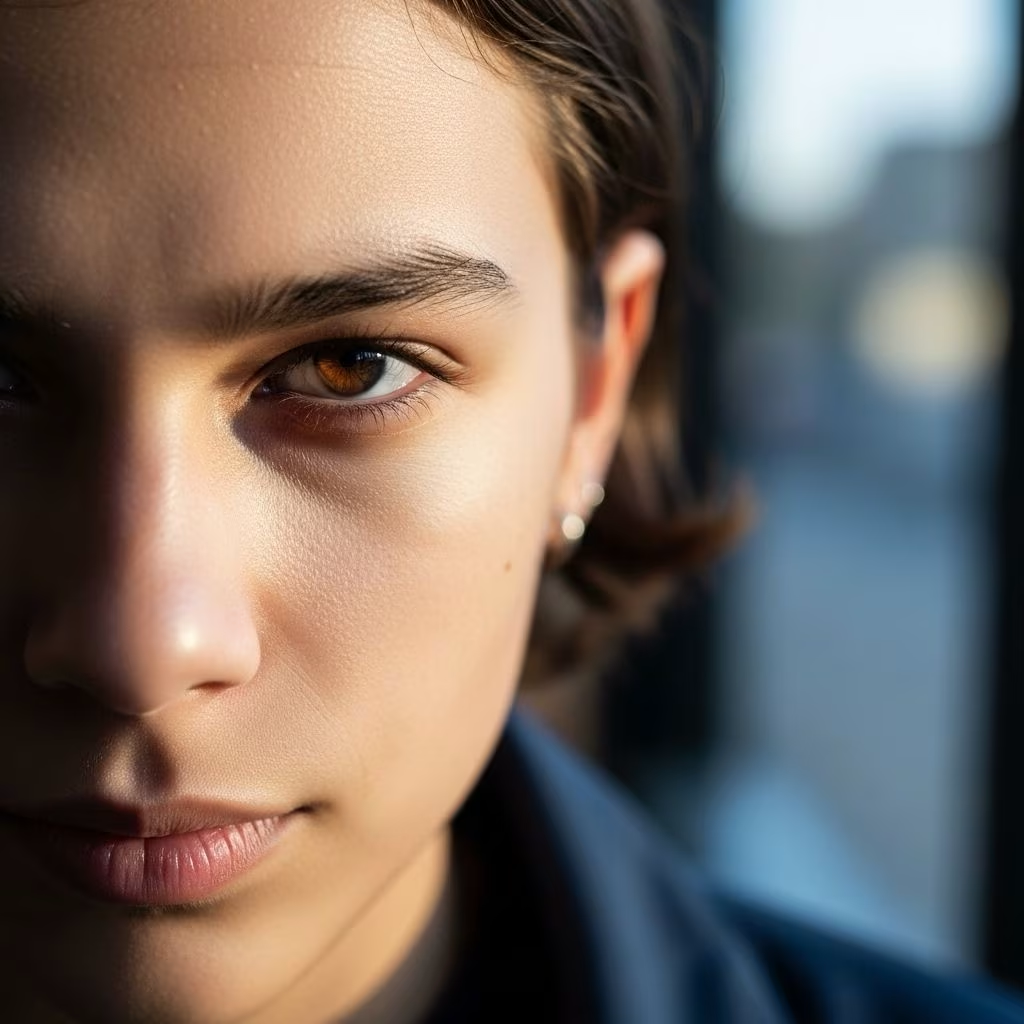
What is the Gen Z Stare?
In an age where every expression is instantly shared, analyzed, and meme-ified, the Gen Z stare has quietly—yet ubiquitously—taken center stage. Emerging first on TikTok and rapidly seeping into everyday experiences, celebrity interviews, and social commentary, the Gen Z stare is more than a fleeting trend. It’s a statement, a performance, a cultural signal, and, for some, a gentle rebellion against expectations.
Characterized by a blank, often glassy-eyed expression, the Gen Z stare is as much about what’s withheld as what’s displayed. It’s visible everywhere today: in retail counters, on red carpets, amidst classroom silence, and—above all—across millions of TikTok feeds. But where did it come from, what does it mean, and why does it matter?
Decoding the Gen Z Stare: More than Apathy
To outsiders, the look may seem simple: disinterest, apathy, or even passive-aggression. But the reality is richer and more layered. According to cultural writers and TikTokers alike, the Gen Z stare functions as a conscious performance in a hyper-expressive, overshared world. In place of the boisterous selfie-shooting positivity of previous generations, Gen Z is redefining engagement—sometimes, by actively disengaging.
- A blank face in busy places: You’ll see retail workers making eye contact but offering no greeting, or customers responding to basic small talk with nothing but a long, unreadable gaze.
- On social media: Videos tagged with #genzstare depict users holding their gaze, deadpan, while addressing ordinary situations—or sometimes, nothing at all.
- Among celebrities: The likes of Emma Chamberlain, Jenna Ortega, and even Kylie Jenner have become unofficial icons of the stare, coolly relaxed on carpets or talk shows, refusing to perform on command.
Why Is It Everywhere?
Unlike Millennials—who eagerly performed for the camera, curating smiles and captions to chase ‘likes’ and approval—Gen Z’s stare intentionally rejects the performance imperative. This is detachment as style: nonchalance, with a hint of irony. The stare is not only permissible but, to many younger viewers, aspirational—a “power move” that quietly deconstructs the need to be “always on.” It dares observers to interpret boredom, self-defense, or critique in a single look.
Where Did the Gen Z Stare Come From?
While it feels modern, the roots of the Gen Z stare stretch back through recent pop culture:
- 1990s Waif Models: The deadpan gazes of supermodels like Kate Moss set an early template for studied disinterest.
- Indie Sleaze Era (2010s): The Tumblr aesthetic saw intentional apathy and smudged mascara as a rejection of glossy happiness. Kristen Stewart, with her refusal to perform feminine smiles on cue, became an accidental mascot for this genre.
- Memes and Red Carpets: Gen Z’s version remixes these histories, now filtered through TikTok’s rapid virality and the irony-rich vocabulary of internet culture.
But it’s the context of the present—years shaped by social media burnout, pandemic isolation, and the pressure of online performance—that’s catapulted the stare to cultural prominence.
Why Now? The Cultural and Psychological Backdrop
Multiple factors have converged to turn the Gen Z stare into a generational signifier. It’s not just a meme, but a mirror reflecting deeper anxieties, frustrations, and shifting norms:
- Resistance to “Performative Positivity”: Many Gen Z’ers bristle at constant demands for smiles, energy, and engagement—both in real life and online. The stare serves as a challenge to those expectations.
- Pandemic-Era Social Anxiety: Lockdowns and virtual schooling left many young people uncomfortable with face-to-face interaction, leading to new communication habits and, in some cases, social withdrawal.
- Fear of Judgement and Being “Cringe”: Social media rewards conformity or spectacle, but also acts as a harsh arbiter of “cringe” moments. For some, the safest response is silence and a blank look, minimizing risk.
- Algorithmic Fatigue: After years of cultivating online identities for likes and validation, detachment is a form of psychological self-defense.
Real-World Examples: The Stare Everywhere
Outside the internet, the Gen Z stare is changing the atmosphere in public and professional spaces:
- Customer Service Settings: Servers, bartenders, and retail workers sometimes report “blank gazes” when trying to engage with Gen Z customers. Some say it feels as if casual conversation just isn’t worth the effort.
- In the Classroom: Professors note an increase in silent, non-responsive looks when asking for student participation. For some educators, it’s a source of frustration; for perceptive observers, it’s a sign of larger generational malaise.
- On Social Platforms: TikTok creators demonstrate the stare in skits, while others dissect its meaning and cultural future. Some creators clarify: not every Gen Z’er does this, but enough do to make the “stare” into a recognizable pattern.
The Conversation: Critics and Supporters Speak Out
Not everyone sees the Gen Z stare in the same light. The trend has sparked intergenerational debates—and memes—about what silence, detachment, and blank faces signify.
| Perspective | View on Gen Z Stare |
|---|---|
| Gen Z | A logical reaction to a performative world; a refusal to expend energy on forced interaction. |
| Millennials | Both critique and empathize; some see it as disconnection, others as relatable boundary-setting. |
| Older Generations | Often misinterpret the stare as rudeness, social awkwardness, or a lack of basic politeness. |
| Professors & Employers | Concerned by disengagement and what it means for communication in classrooms and workplaces. |
According to some commentators, the stare amounts to a “total lack of f*s”—but this blunt reading often overlooks the complex social pressures that have shaped its rise.
Why the Gen Z Stare Resonates on TikTok
TikTok has accelerated the spread and analysis of the Gen Z stare, making it easy for millions to both witness and reproduce the phenomenon:
- TikTok’s short, looping clips thrive on micro-expressions and subtle gestures.
- Creators deliver near-wordless skits or partake in “stare” challenges, validating each other’s blank, unenthused looks.
- Comments sections become forums for debate: Does the stare mean indifference, a shield from awkwardness, or a statement about the absurdity of social rituals?
This ability to quickly turn a personal quirk into a communal in-joke has kept the trend in the cultural spotlight—and guaranteed that, for now, the Gen Z stare is here to stay.
Deeper Meanings: The Psychological Side
- Social Anxiety: As pandemic isolation exacerbated anxiety and depression, many young people have come to prefer neutral, low-risk expressions in uncertain social situations.
- Digital Surveillance Culture: Growing up with smartphones and constant sharing creates self-consciousness and a fear of being misinterpreted or “cancelled.” The stare is a protective uniform.
- “Emotional Labor” Fatigue: For some, always putting on a happy face simply takes too much out of them. The stare is what’s left when the socially required performances are stripped away.
Pop Culture and the Critical Reception
Pop culture has always cycled through attitudes toward emotional display. From “resting bitch face” to silent film deadpans and paparazzi ennui, every generation discovers (and sometimes exaggerates) its own version of insouciance. The Gen Z stare is simply the era’s most algorithm-friendly iteration. Its propagation by celebrities and creators has kept it trending far beyond TikTok.
Is the Gen Z Stare Really New?
Observers have pointed out that “blankness” isn’t unique to Gen Z. What’s different is:
- The scale of reference and imitation, thanks to social media.
- The intensity of scrutiny: online, each microexpression can be dissected, analyzed, and judged by millions.
- The adoption as aesthetic: For previous generations, deadpan was the exception; for Gen Z, it’s become a genre all its own.
The Takeaway: What Does It Mean for Communication?
The Gen Z stare is neither a problem to fix nor a mystery to tut over. Instead, it’s a marker of shifting attitudes toward communication, performance, and authenticity. It reflects:
- Frustration with forced communication, especially in customer service and institutional contexts.
- A desire for boundaries and control over how energy is spent socially.
- The power—and risk—of irony and detachment in the age of algorithm-defined identity.
For Millennials, Boomers, and others trying to read the room, the Gen Z stare is a reminder: Sometimes, less is more—but there’s always more beneath the surface.
Frequently Asked Questions (FAQs)
Q: What is the Gen Z stare?
A: The Gen Z stare is a blank, often expressionless gaze popularized by Gen Z, used as a social signal or form of resistance to constant performative engagement, especially on platforms like TikTok.
Q: How did the Gen Z stare become so popular?
A: Its rise is attributed to TikTok virality, post-pandemic anxiety, a desire to reject “forced” positivity, and cultural icons embodying a minimalist, deadpan aesthetic.
Q: Is the Gen Z stare rude or disrespectful?
A: Interpretations vary: some believe it’s dismissive, while others see it as a valid way to assert boundaries and avoid unnecessary emotional labor.
Q: Are other generations guilty of the stare?
A: While every generation has its own version of deadpan detachment, the Gen Z stare’s rapid online amplification and adoption as an aesthetic make it unusually widespread.
Q: Does the Gen Z stare reflect social anxiety?
A: For some, yes. Pandemic isolation, digital hyper-scrutiny, and mental health challenges contribute to preferences for non-reactive, low-risk expressions.
Related Trends
- TikTok Challenges: Various visual and emotional trends that echo or play off the Gen Z stare’s aesthetic.
- Resting Bitch Face: A precursor trend focused on blank or neutral expressions, often misread as negative emotion.
- Soft Launching: The phenomenon of revealing relationship or life news in understated, non-performative ways.
Final Thoughts
The Gen Z stare is more than a pose. It’s a response to a world saturated with performance, pressure, and relentless connectivity. However you read it—blankness, rebellion, boundary, or burnout—one thing is clear: sometimes, the loudest statements are made by saying nothing at all.


