


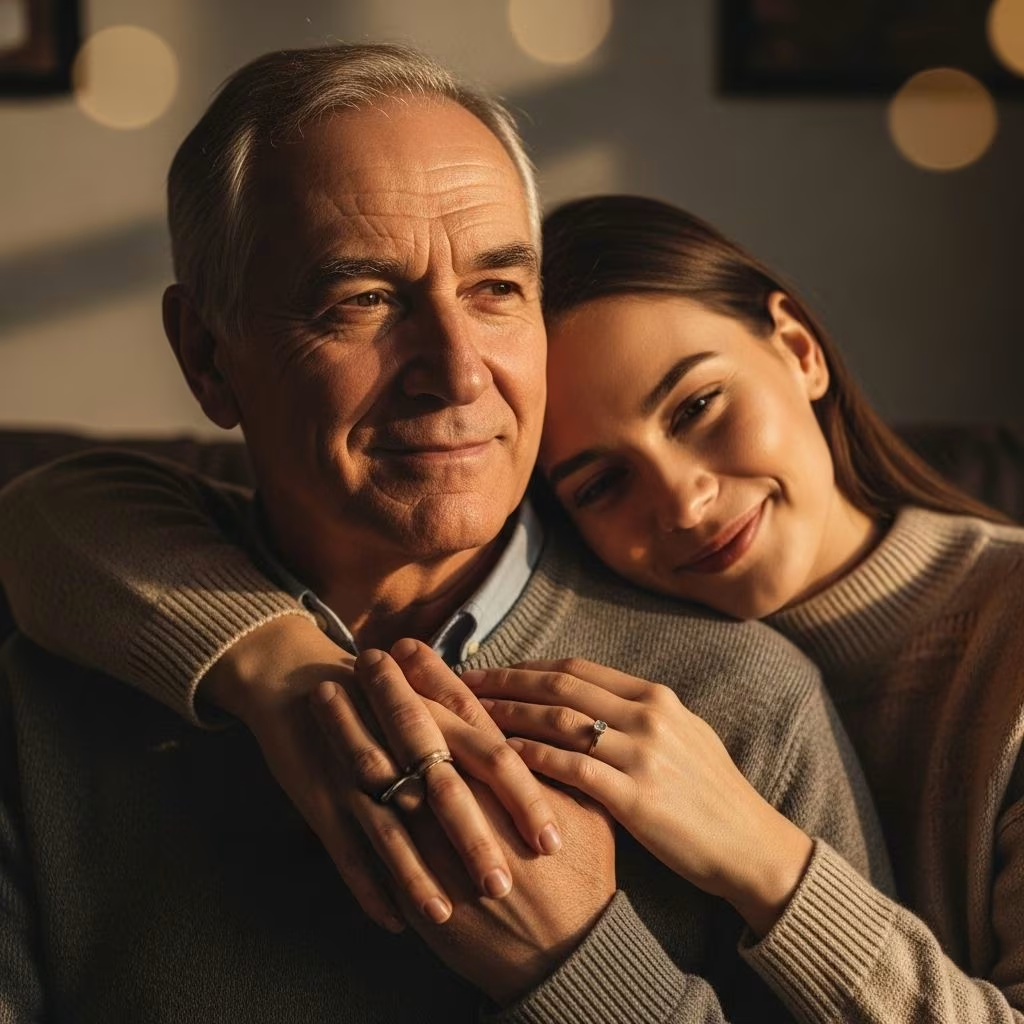
Age Differences in Romantic Relationships: A Comprehensive Guide
Age gaps in romantic partnerships intrigue psychologists, sociologists, and the public alike. Whether you are currently in an age-gap relationship or are simply curious about what makes these pairings unique, it’s vital to understand both the opportunities and obstacles that may arise. This guide delves into the foundational psychology, evolution of social perspectives, major challenges, surprising advantages, myths and realities, and expert advice on making these relationships thrive.
Core Insights About Age-Gap Relationships
- Age-gap relationships are those where there is a significant difference in age between partners—commonly defined as four years or more.
- These relationships occur across all cultures and age groups, with both younger women/older men and younger men/older women dynamics.
- While age gaps evoke social scrutiny, many couples report high levels of trust and satisfaction.
Why Are Age Differences Attractive?
Attraction across the age spectrum is complex. Older men may seek younger women for emotional appreciation, renewal of energy, or to share hard-won confidence. Conversely, younger partners may value the stability, wisdom, and life experience older partners offer. The reverse—older women with younger men—is less common, but also shaped by similar psychological factors.
Psychological Factors Driving Attraction
| Older Partner Seeks | Younger Partner Seeks |
|---|---|
| Renewed energy, feeling valued, authenticity | Stability, life experience, emotional maturity |
| Fresh perspective, motivation to stay engaged | Security, mentorship, access to broader social circles |
- According to evolutionary theory, age gaps may maximize reproductive success, especially when the older partner is male.
- Socio-cultural factors, such as differing levels of psycho-social development, also play a role in why these pairings exist.
Common Challenges in Age-Gap Relationships
Despite positive aspects, relationships with significant age gaps face unique difficulties. Understanding and addressing these issues is crucial for building healthy partnerships.
Social Judgment and Stigma
- Social scrutiny is one of the most reported challenges. Couples may encounter criticism or questioning from family, friends, and society.
- Constant attention or rumors can cause stress and lead to isolation or anxiety.
- Developing resilience and focusing on the relationship’s internal dynamics are key to overcoming outside pressure.
Different Life Goals and Stages
- Partners at different life stages may prioritize career advancement, family planning, or leisure differently.
- Energy levels and health expectations can conflict—older partners may have less stamina, while younger partners may crave more activity.
- Communication about future plans, values, and compromise is essential.
Potential Power Imbalances
- Differences in income, life experience, or social status can create subtle or overt power imbalances.
- Unaddressed imbalances may lead to resentment, lack of equality, or dependency.
- Both partners should actively address imbalances through honest dialogue.
Infidelity and Commitment Issues
- Younger partners may sometimes gravitate toward peers closer to their age, especially if sexual or social needs diverge.
- Open communication and trust help manage infidelity risk and maintain commitment.
Depression and Loneliness
- Older partners may struggle with age-specific issues such as health decline, retirement, or bereavement. Younger partners may find it hard to relate.
- Isolation from differing social circles may enhance feelings of loneliness or depression.
- Therapy and active support networks can help mitigate mental health risks.
What Makes Age-Gap Relationships Work?
Despite challenges, many age-gap couples enjoy rewarding, stable partnerships. Success depends on several foundational strategies.
Strong Emotional Connection
- Shared interests, mutual respect, and emotional intimacy build resilient bonds.
- Partners must value each other as equals, appreciating generational perspective differences.
Effective Communication Skills
- Honest discussion about priorities, values, and future plans is critical.
- Open dialogue about potential discomfort or differing life stages can prevent conflicts.
- Relationship counseling is recommended when communication breaks down.
Resilience to Social Pressure
- Successful couples develop coping strategies to weather external judgment.
- Focus on the strength and reality of the partnership rather than public opinion.
Negotiation and Compromise
- Flexible planning and willingness to compromise help bridge life stage differences.
- Revisiting goals as circumstances change ensures ongoing compatibility.
Advantages and Benefits of Age-Gap Relationships
| Advantage | Impact |
|---|---|
| Cross-generational learning | Partners gain unique insights and broaden perspectives. |
| Deeper trust and less jealousy | Research suggests age-gap couples may be more trusting and less jealous. |
| Increased life satisfaction | Some studies show that couples where the husband is older are generally happier. |
| Varied communication styles | Generational and cultural differences can enhance dialogue and mutual growth. |
Myths vs. Realities in Age-Gap Relationships
- Myth: Large age gaps doom couples to failure.
Reality: Many age-gap partners report high trust and stability if compatibility and communication are prioritized. - Myth: Only superficial attraction motivates age-gap relationships.
Reality: Emotional connection, maturity, and shared life goals often play larger roles than looks or status. - Myth: Age-gap relationships are abnormal.
Reality: These relationships are common and increasingly accepted across cultures.
Expert Strategies for Success
- Prioritize shared goals. Discuss aspirations for career, family, and lifestyle early in the relationship.
- Establish open communication. Address concerns, expectations, and potential challenges proactively to build trust.
- Address power dynamics honestly. Strive for equal say and mutual respect in decision-making.
- Seek professional guidance. Couples counseling offers support in overcoming persistent challenges and refining communication skills.
Frequently Asked Questions About Age-Gap Relationships
Q: Do age-gap relationships have a lower chance of success?
A: Not necessarily. With effective communication, mutual respect, and shared goals, many age-gap couples achieve high relationship satisfaction.
Q: What is considered a major age gap in relationships?
A: While definitions vary, many experts classify age differences of four or more years as significant, with effects increasing in gaps of over ten years.
Q: How do couples handle different life stages?
A: Successful couples frequently revisit goals and maintain open communication about evolving priorities, ensuring both partners feel heard and supported.
Q: Are power imbalances always present?
A: Not always, but differences in income, experience, or social status can create imbalances if not confronted openly and respectfully.
Q: Does society view age-gap relationships negatively?
A: Social stigma exists in many communities; however, public acceptance is growing and highly variable across cultures and generations.
Conclusion: Navigating Age Differences in Modern Relationships
Age differences in romantic relationships are neither inherently beneficial nor detrimental. The keys to thriving partnerships include understanding psychological motivations, managing social pressures, practicing open communication, and embracing opportunities for growth. By prioritizing mutual respect and shared values, age-gap couples can build lasting, fulfilling relationships despite their unique challenges.
References
- https://therapy-central.com/2025/09/06/age-differences-romantic-relationships-psychology/
- https://psychcentral.com/relationships/older-men-dating-younger-women
- https://www.youtube.com/watch?v=_jDVlyezVOQ
- https://docs.lib.purdue.edu/cgi/viewcontent.cgi?article=1024&context=psychpubs
- https://www.psychologytoday.com/us/blog/the-asymmetric-brain/202501/age-gaps-in-relationships-what-do-men-and-women-prefer
- https://www.eharmony.com/dating-advice/dating/age-gap-relationship/
- https://www.psychologytoday.com/us/blog/the-asymmetric-brain/202506/in-major-age-gap-relationships-which-partner-is-happier
- https://pmc.ncbi.nlm.nih.gov/articles/PMC3000022/


