


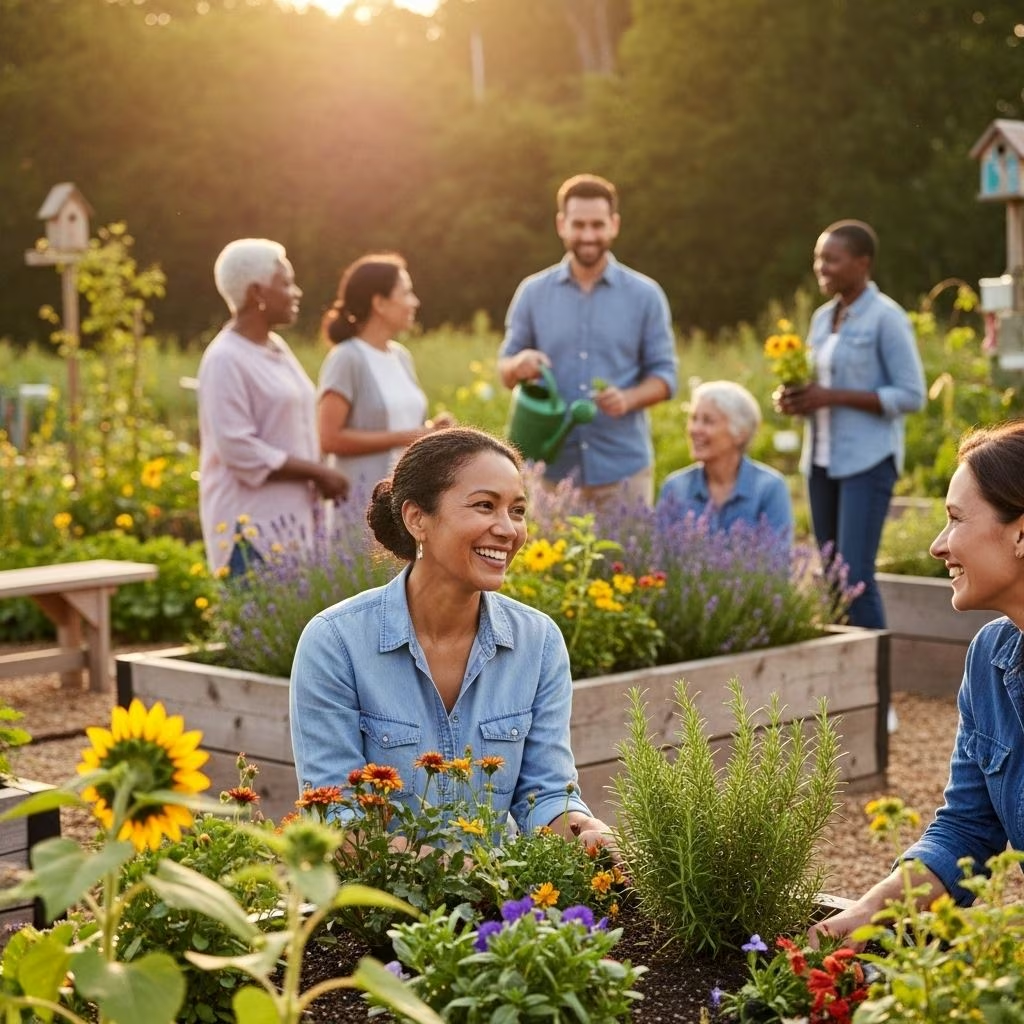
Introduction to Making New Friends After 40
Making new friends becomes increasingly challenging as we age, especially after the age of 40. The natural opportunities for social interaction that were abundant in our youth—such as school and college—diminish, leaving many to navigate the complex landscape of adult friendships alone. However, building new relationships is crucial for mental health and well-being. In this article, we will explore why making new friends in your 40s is difficult and provide practical strategies to overcome these challenges.
Why Is It Hard to Make New Friends After 40?
Several factors contribute to the difficulty of forming new friendships in midlife:
- Fewer Opportunities: Unlike younger years, adults have fewer structured environments where they can consistently interact with new people. For instance, the workplace, which was once a common place to meet friends, has become less conducive to socializing, especially due to remote work and the pandemic.
- Lack of Time: Adults often have packed schedules filled with work, family responsibilities, and personal obligations, leaving little time for socializing. Even if they are available, others in their age group may not be as free to engage in new friendships.
- Past Experiences: Previous negative experiences in friendships or romantic relationships can make individuals hesitant to form new connections. This fear of rejection or failure is common among peers in similar life stages.
Strategies for Making New Friends After 40
Despite these challenges, there are effective ways to expand your social circle:
- 1. Leveraging Old Friendships: Your existing friendships can be a powerful tool for meeting new people. Inform your friends about your desire to expand your social circle, and they might introduce you to someone they think you’d get along with.
- 2. Attending Social Gatherings: Participate in events like parties, barbecues, or dinners where you can meet new people. If you’re hosting an event, encourage your friends to bring guests. This can help foster an environment conducive to forming new friendships.
- 3. Joining Classes or Workshops: Engaging in educational activities or hobbies can provide a structured setting to meet like-minded individuals. This might include cooking classes, language courses, or art workshops.
- 4. Volunteering: Volunteering not only helps others but also offers an opportunity to connect with people who share similar values. Consider volunteering at a local soup kitchen, animal shelter, or environmental organization.
- 5. Using Apps and Online Platforms: Apps like Tinder and Bumble offer features for making friends, such as Bumble BFF. Websites like Meetup allow you to join groups based on shared interests and meet people in person.
- 6. Participating in Local Events: Engage in community events such as block parties, pub quizzes, or park runs. These events are great for connecting with neighbors and building local friendships.
The Importance of Friendship for Mental and Physical Health
Friendships play a vital role in maintaining both mental and physical health. Research indicates that having supportive friends can help mitigate feelings of loneliness and depression, while also contributing to better overall well-being and longevity. In the context of aging, friendships become even more crucial as they provide emotional support and help combat social isolation.
Frequently Asked Questions (FAQs)
Q: Why is it so hard to make new friends after 40?
It’s challenging due to fewer social opportunities, lack of time, and past experiences that may make you wary of new relationships.
Q: How can I use my existing friendships to meet new people?
Inform your friends about your desire to meet new people and ask them to introduce you to someone they think you might get along with.
Q: What are some effective ways to meet new people in my area?
Attend local events, join volunteer groups, and use online platforms like Meetup to connect with people who share similar interests.
Conclusion
Making new friends after 40 may require more effort, but it is not impossible. By leveraging existing friendships, engaging in social activities, and using technology, you can build a diverse and supportive social network. Remember, pursuing new friendships is an act of self-care that can enhance your mental health and overall quality of life.
References
- https://psychcentral.com/relationships/finding-new-friends-after-40
- https://pmc.ncbi.nlm.nih.gov/articles/PMC6441127/
- https://www.youtube.com/watch?v=LSgAoYkM6YA
- https://psychcentral.com/blog/imperfect/2018/10/breaking-up-with-a-friend-how-to-end-a-friendship-thats-no-longer-healthy-or-fulfilling
- https://www.apa.org/monitor/2023/06/cover-story-science-friendship
- https://pmc.ncbi.nlm.nih.gov/articles/PMC10872903/
- https://www.happiness.hks.harvard.edu/february-2025-issue/the-friendship-recession-the-lost-art-of-connecting
- https://www.rte.ie/lifestyle/living/2024/0724/1460658-how-i-started-making-friends-in-my-40s-after-big-life-changes/


