


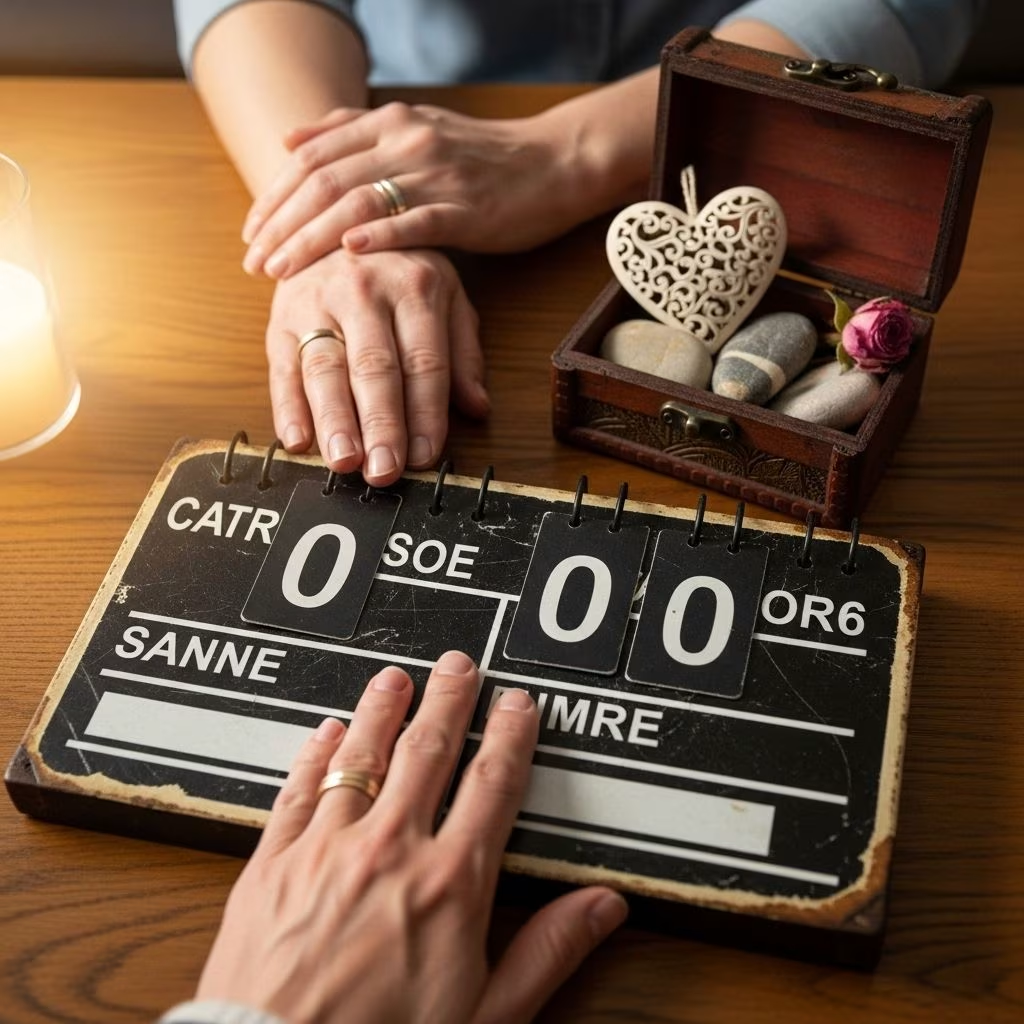
Stop Keeping Score in Relationships: Focus on Caring, Not Counting
Healthy, thriving relationships are built on trust, cooperation, and genuine care. Yet, many of us fall into the habit of keeping score—tracking who did what, who gave more, and who owes whom. This mindset erodes intimacy, creates resentments, and ultimately drives us apart. This article explores why keeping score is toxic, how it sneaks into our relationships, and what we can do to replace calculation with deep, lasting connection.
Why We Keep Score: The Roots of Counting in Relationships
At its core, score-keeping is the mental tracking of favors, efforts, and sacrifices in a relationship. We build invisible ledgers in our mind, expecting each contribution to be met with an equal return. Often:
- We tally up time, energy, or resources we give and expect reciprocity.
- We remember moments when we went out of our way for the other person.
- We feel resentment when we believe the scales are imbalanced.
This habit can emerge from:
- Insecurity or fear of not being valued.
- A desire for fairness or control.
- Past experiences of being taken for granted or exploited.
The Dangers of Keeping Score
Maintaining a mental scoreboard may feel justified, but over time it causes harm. Major reasons why score-keeping is destructive include:
- Fuels resentment: It encourages us to focus on what we’re losing or lacking, breeding bitterness and dissatisfaction.
- Turns relationships transactional: Rather than giving from care or love, every gesture comes with an expectation of repayment.
- Creates emotional distance: Instead of fostering teamwork, it sets up an adversarial stance—”me versus you”—instead of “us together.”
- Distracts from gratitude: The constant comparison makes it hard to appreciate what is actually shared and received.
Personal Reflections: A Realization
Many people first notice this pattern with small acts, like sharing food or helping with chores. The expectation of repayment makes even gifts or acts of kindness fraught with tension. Over time, a realization dawns: the true gifts in relationships are often invisible, incalculable, and more meaningful than any tally could capture.
Why It’s Impossible to Keep Accurate Score
One critical insight is that it’s impossible to track everything that matters in a relationship. Consider:
- Acts of emotional support or a listening ear in times of crisis may outweigh ten small tasks.
- Unseen efforts—like someone advocating for you when you’re not present—are never counted.
- The value of gestures varies from person to person. Something that’s easy for one may be challenging for another.
Because of this:
- Relationships are far too complex for any mental ledger.
- People contribute in countless hidden ways, often without realizing it themselves.
- Gratitude and open communication are more reliable foundations for connection.
Different Scoring Systems: Why Fairness Is Elusive
Another core problem: everyone has their own sense of what counts. What feels like a “big deal” to you might seem trivial to someone else, and vice versa. Consider the following contrasts:
| Person A’s Scorecard | Person B’s Scorecard |
|---|---|
| Remembers organizing events or buying gifts. | Values emotional check-ins and kind words. |
| Counts physical tasks (“I took out the trash 3 times!”) | Focuses on acts of patience or forgiveness. |
| Thinks financial contributions are most meaningful. | Places more emphasis on shared time or attention. |
This mismatch leads to misunderstandings. Instead of seeking absolute fairness, it’s healthier to trust that different forms of giving have value and that both people generally want to support each other in their own way.
Relationships Are Not a Competition
Perhaps the greatest damage caused by score-keeping is that it shifts the mindset from cooperation to competition:
- You become opponents, not partners.
- Every act is scrutinized for its relative value.
- You lose sight of shared joy and abundance, becoming focused on scarcity and keeping “even.”
- Mutual generosity is replaced by tit-for-tat behavior.
This “versus” approach breeds defensiveness and isolation rather than connection and security.
Shifting the Mindset: Embracing Teamwork and Generosity
The way out of this cycle is to see each other as teammates, not rivals. This fundamental shift changes everything:
- You stop asking “Am I winning?” and start valuing “Are we growing together?”
- Giving becomes an act of love, not a transaction.
- Cooperation replaces competition.
Ways to embrace a team-focused approach include:
- Recognizing each person’s unique strengths and contributions.
- Communicating openly about needs and appreciation.
- Celebrating moments of mutual support, not just individual achievements.
- Practicing empathy—trying to see the world from your partner, friend, or loved one’s perspective.
How to Stop Keeping Score: Practical Steps
- Notice the Score-Keeping Habit
Be honest with yourself about when and how you fall into counting. Paying attention is the first step to change. - Focus on Gratitude
Shift your awareness from what you’re “owed” to what you have received. Actively acknowledge and appreciate the big and small ways your loved ones contribute to your life. - Communicate Needs Directly
Instead of waiting for the “score” to balance, ask for what you want or need. Clear, direct communication often leads to better understanding and more satisfaction—without manipulation or silent resentment. - Assume Good Intentions
Give others the benefit of the doubt. Trust that people usually want to show up in positive ways, even if their expression is different than yours. - Celebrate Giving
Let generosity itself be the reward. Take joy in being able to support and care for someone you value.
When to Set Boundaries
Letting go of score-keeping does not mean allowing yourself to be taken advantage of or silenced. Healthy relationships still require clear boundaries and self-care. If you notice:
- The other person consistently takes without giving.
- Your contributions are ignored or expected without gratitude.
- You feel depleted, disrespected, or unable to communicate your needs.
Then it’s time to have an honest conversation, or reconsider your level of investment in the relationship. Non-score-keeping is about mutual respect and care, not martyrdom or one-sided effort.
Benefits of Letting Go of Score-Keeping
- More Authentic Connection: Conversations and gestures come from the heart, not obligation.
- Increased Gratitude: You notice and appreciate all the ways you enrich each other’s lives.
- Greater Emotional Freedom: You’re no longer trapped in resentment or expectation.
- Deeper Trust: Each person feels valued for who they are, not just for what they do.
- Longer-Lasting Relationships: Bonds grow when they aren’t weighed down by scores and tallies.
Common Myths About Not Keeping Score
| Myth | Reality |
|---|---|
| I’ll get taken advantage of if I stop keeping track. | Healthy boundaries still matter; open giving doesn’t mean abandoning self-respect. |
| If I give more, I lose. | Generosity tends to cultivate more generosity, creating a virtuous cycle. |
| Being fair means everything must be even. | Life and love are rarely perfectly balanced; equity matters more than equality. |
Cultivating a Relationship Built on Care, Not Calculation
Building a connection where both people feel safe, appreciated, and free to give stems from a willingness to care for each other without rolling out spreadsheets in our heads. Steps to develop this habit:
- Regular expressions of appreciation: Verbalize your gratitude often, not just for specific acts but for the person’s presence in your life.
- Practicing empathy: Slow down and consider how your partner or friend might be feeling or what might matter most to them.
- Letting go of perfection: Recognize that everyone brings unique strengths and struggles; perfection isn’t the goal, authenticity is.
- Repair after conflict: When misunderstandings happen, focus on restoring connection, not on proving who was “right” or “wrong.”
Paying it Forward: The Bigger Picture
Finally, letting go of score-keeping allows generosity to ripple outward. Every act of kindness given freely, every moment of support offered without expectation, strengthens not just your close relationships but your community as a whole. The goodwill you put into the world often returns in unexpected ways.
Frequently Asked Questions (FAQs)
Q: What if one person always feels like they’re giving more?
A: If you consistently feel depleted, address it openly with the other person. Keeping score silently breeds resentment; open dialogue clarifies misunderstandings and helps rebalance the relationship.
Q: Does not keeping score mean I should never say “no”?
A: Not at all. Healthy boundaries are essential. Letting go of score-keeping is about giving freely within your means, not about saying yes to everything at your own expense.
Q: How can I stop myself from slipping back into the habit?
A: Practice gratitude daily, communicate your needs directly, and remind yourself of the unique, immeasurable value both you and your loved ones bring to your shared life.
Q: Can this approach work in all types of relationships?
A: While especially powerful in close partnerships and friendships, the “no-score” approach benefits professional, family, and community relationships as well. The key is mutual respect and care.
Q: Isn’t it natural to want things to be fair?
A: Fairness matters, but perfect tallying is both impossible and unnecessary. Focus on equity, generosity, and open communication to build real fairness, rather than rigid balance sheets.
Letting go of score-keeping transforms relationships from battlegrounds of obligation into havens of trust and mutual care. Begin today. Focus on nurturing your bonds, giving thanks for the immeasurable ways you uplift each other, and watch your connections grow deeper and stronger than ever before.
References
- https://tinybuddha.com/blog/stop-keeping-score-in-relationships-start-taking-care-of-each-other/
- https://tinybuddha.com/blog/5-reasons-to-stop-keeping-score-in-relationships/
- https://tinybuddha.com/blog/dramatically-improve-your-relationships-by-becoming-a-team/
- https://tinybuddha.com/topic/is-this-the-end-of-a-friendship/
- https://www.instagram.com/reel/DOXDsxFCQBa/
- https://tinybuddha.com/topic/should-i-give-up-3/
- https://tinybuddha.com/topic/trust-issues-2/


