


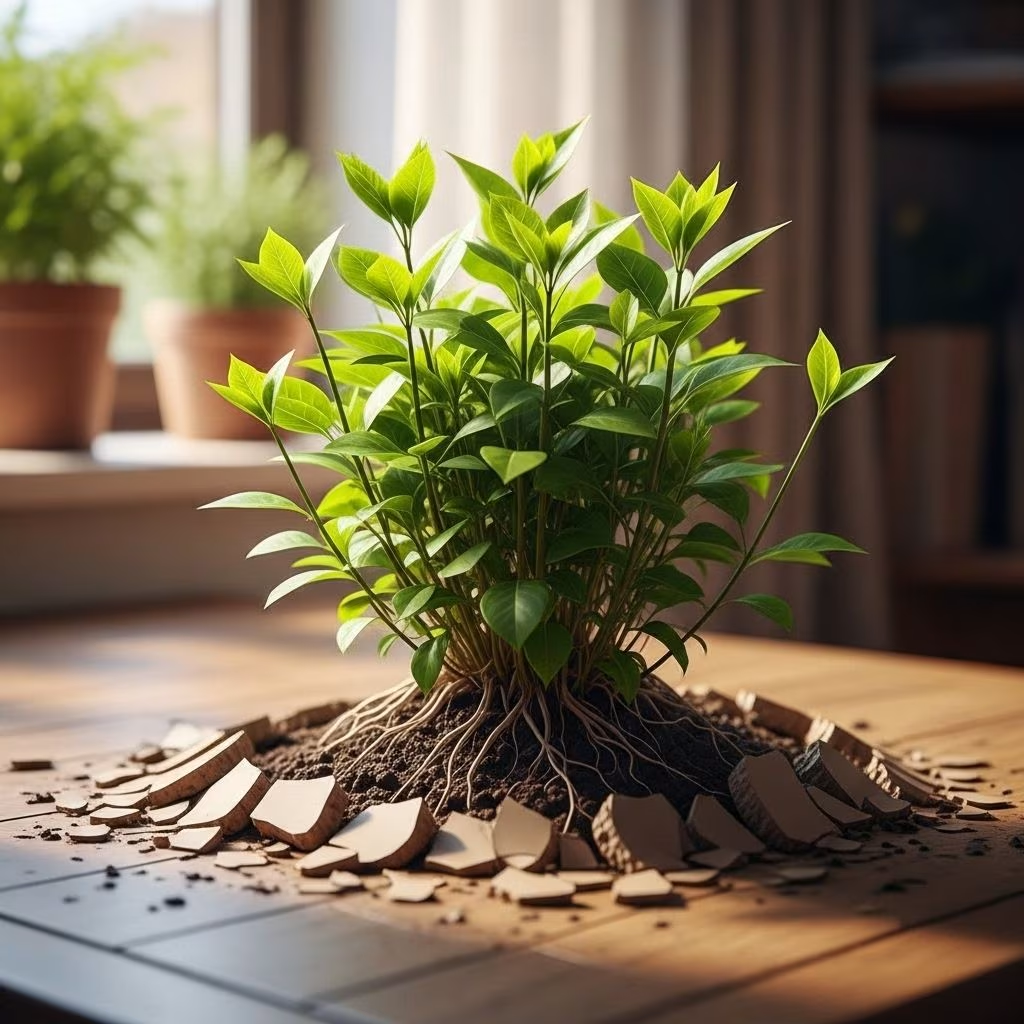
Relationships stand as some of life’s most profound teachers, presenting us with mirrors that reflect our deepest wounds, unmet needs, and untapped potential. The challenges we encounter within our intimate connections aren’t obstacles to avoid but rather invitations to evolve. When we approach relationship issues with curiosity rather than defensiveness, we unlock tremendous opportunities for personal transformation that extend far beyond the relationship itself.
The journey of relationship growth isn’t a destination we reach but rather a daily practice we commit to, much like meditation or physical exercise. Each day brings fresh opportunities to choose awareness over reactivity, compassion over judgment, and growth over stagnation. This ongoing commitment transforms our relationships from sources of frustration into powerful vehicles for spiritual and emotional development.
Understanding Why Relationship Issues Emerge
Relationship difficulties rarely appear without reason. They emerge as symptoms of deeper patterns, unhealed wounds, and unconscious behaviors that we carry from our past into our present connections. When two people come together, they bring not just their individual personalities but entire histories of family dynamics, past relationships, and childhood experiences that shape how they relate to others.
These patterns often remain invisible until a relationship becomes serious enough to trigger them. What begins as a perfect connection can gradually reveal areas where we struggle, where our partner’s needs clash with our own, or where old wounds resurface demanding attention. Rather than viewing these moments as relationship failures, we can recognize them as precisely the experiences we need for healing and growth.
Many people unconsciously seek partners who mirror their unresolved issues. Someone with an emotionally unavailable parent might find themselves repeatedly attracted to emotionally distant partners. This isn’t masochism but rather the psyche’s attempt to heal old wounds by recreating familiar dynamics, hoping this time the outcome will be different. The relationship becomes a stage where our deepest work can unfold if we’re willing to see it.
The Mirror Effect in Intimate Relationships
One of the most powerful aspects of intimate relationships is their mirror-like quality. Our partners reflect back to us aspects of ourselves we may not see clearly, including traits we’ve disowned, emotions we’ve suppressed, and needs we’ve denied. When your partner’s behavior triggers intense emotion in you, it’s worth asking what that reaction reveals about your inner landscape rather than focusing solely on their actions.
This mirroring works both ways. The qualities that first attract us to someone often reflect aspects of ourselves we wish to develop or have suppressed. The spontaneous partner might mirror our own desire for freedom, while the organized partner reflects our need for structure. As relationships deepen, we also begin to see the shadow sides of these qualities, which can feel disappointing until we recognize the growth opportunity present.
Understanding the mirror effect doesn’t mean blaming ourselves for our partner’s behavior or dismissing legitimate concerns. Rather, it means taking responsibility for our own reactions and using them as doorways to self-awareness. When we notice ourselves becoming defensive, critical, or withdrawn, we can pause and ask what unmet need or old wound might be activating these responses.
Common Relationship Patterns That Signal Growth Opportunities
Certain patterns emerge repeatedly in relationships, signaling areas ripe for personal development. Power struggles often indicate that both partners are trying to get their needs met without vulnerability, leading to escalating conflicts where winning becomes more important than understanding. These struggles usually stem from childhood experiences where expressing needs led to rejection or disappointment.
Pursuit and withdrawal dynamics create painful cycles where one partner seeks closeness while the other creates distance, with both feeling misunderstood and frustrated. The pursuer often fears abandonment and seeks reassurance through connection, while the withdrawer fears engulfment and protects autonomy through distance. Both patterns represent valid but opposing needs that require integration rather than victory.
Criticism and defensiveness form another destructive pattern where one partner’s attempts to improve the relationship through feedback trigger the other’s protective reactions, shutting down communication and creating resentment. Behind criticism often lies unspoken longing for connection, while defensiveness protects against feelings of inadequacy or shame. Breaking this pattern requires both partners to look beneath surface behaviors to the vulnerable needs underneath.
Codependency manifests when partners lose themselves in the relationship, prioritizing their partner’s needs, feelings, and opinions over their own. While this might initially feel like devotion, it eventually breeds resentment and prevents authentic intimacy. Codependent patterns usually develop in childhood environments where love felt conditional on meeting others’ needs or suppressing one’s own.
Transforming Conflict Into Catalysts for Growth
Conflict in relationships, while uncomfortable, serves as one of the most potent catalysts for personal transformation. When disagreements arise, we stand at a crossroads between repeating old patterns and choosing new responses. The discomfort of conflict can motivate us to examine our assumptions, challenge our habitual reactions, and develop greater emotional capacity.
Rather than viewing arguments as relationship failures, we can approach them as opportunities to practice crucial skills: emotional regulation when feelings run high, clear communication when expressing needs feels vulnerable, empathy when our partner’s perspective differs from our own, and repair when we’ve caused harm. Each conflict navigated consciously strengthens these capacities, benefiting not just the current relationship but all future connections.
The key lies in shifting from blame to curiosity. Instead of asking “What’s wrong with my partner?” we can ask “What is this conflict teaching me about myself?” This doesn’t mean accepting mistreatment or dismissing legitimate concerns, but rather taking ownership of our contribution to relationship dynamics. When both partners adopt this stance, conflicts transform from battles to be won into collaborative explorations of deeper understanding.
Successful conflict navigation requires learning to stay present with discomfort rather than rushing to resolution. Many people end arguments prematurely, sweeping issues under the rug to restore superficial harmony. While this provides temporary relief, it prevents the deeper processing necessary for genuine growth. Sitting with tension, allowing emotions to be fully expressed and heard, creates space for authentic understanding and lasting change.
The Role of Self-Awareness in Relationship Growth
Self-awareness forms the foundation of relationship growth. Without understanding our own triggers, patterns, and needs, we remain at the mercy of unconscious reactions that sabotage connection. Developing self-awareness requires honest self-reflection, willingness to see our blind spots, and courage to acknowledge aspects of ourselves we’d prefer to deny.
This awareness begins with noticing our emotional reactions without immediately acting on them. When your partner says something that triggers anger, can you pause and feel the anger fully before responding? Can you trace that anger to its source, perhaps discovering hurt, fear, or old wounds underneath? This space between stimulus and response is where growth lives, where we can choose conscious responses rather than automatic reactions.
Self-awareness also means recognizing our attachment patterns and how they shape relationship dynamics. Those with anxious attachment might notice their tendency to seek constant reassurance, while those with avoidant attachment might observe their impulse to withdraw when relationships become too intimate. Understanding these patterns doesn’t eliminate them overnight, but it creates the possibility of choosing different behaviors aligned with our deeper values rather than childhood conditioning.
Journaling serves as a powerful tool for developing self-awareness in relationships. Writing about conflicts, triggers, and patterns helps us see them more objectively, revealing themes and connections we might miss in the moment. Regular reflection on questions like “What did this argument really trigger in me?” or “What need was I trying to meet with that behavior?” deepens our understanding and accelerates growth.
Why Growth in Relationships Is a Daily Practice
Relationship growth isn’t achieved through occasional grand gestures or periodic intensive conversations. It unfolds through countless small choices made each day—the choice to listen deeply when tired, to speak honestly when scared, to stay present when uncomfortable, and to extend compassion when frustrated. These daily practices accumulate like deposits in a bank account, gradually transforming both individuals and the relationship itself.
The daily nature of this work stems from the reality that our unconscious patterns run deep and resist change. We can have profound insights about our behavior one day and still find ourselves repeating old patterns the next. This isn’t failure but rather the normal process of rewiring neural pathways and creating new habits. Consistent daily practice gradually makes conscious choices more natural until they become our new automatic responses.
Daily relationship practices might include: starting each day with a moment of connection before diving into logistics, checking in with yourself about your emotional state before attributing your mood to your partner’s behavior, noticing when you’re about to criticize and pausing to identify the underlying need, or ending each day with appreciation for something your partner did. These small rituals create a container for ongoing growth and prevent issues from accumulating unaddressed.
The concept of daily practice also helps us maintain perspective during difficult periods. Rather than catastrophizing a bad day or week as evidence the relationship is doomed, we can recognize it as part of the natural ebb and flow of growth. Just as we don’t abandon physical fitness after missing a workout, we don’t abandon relationship growth after a setback. We simply return to practice the next day with renewed commitment.
Navigating the Tension Between Individual Growth and Relationship Growth
One of the most challenging aspects of relationship growth involves balancing individual development with partnership needs. As we evolve personally, we sometimes outgrow relationships that once fit perfectly. What we bonded over initially may no longer resonate, or the version of ourselves our partner fell in love with may transform into someone quite different. This creates tension between honoring our personal growth and maintaining relationship stability.
Some relationships have the flexibility to accommodate both partners’ evolution, with each person’s growth enriching rather than threatening the connection. These relationships are characterized by curiosity about each other’s changing interests, support for individual pursuits, and willingness to renegotiate relationship agreements as needs shift. Partners in such relationships view themselves as two whole individuals choosing to share life rather than two halves completing each other.
Other relationships reach their natural endpoint when partners grow in divergent directions. This doesn’t mean the relationship failed; rather, it served its purpose for a season of life before completing. The painful reality is that not every relationship is meant to last forever, and recognizing when a relationship has run its course requires wisdom and courage. Staying in a relationship that no longer supports either person’s growth ultimately serves no one.
The key lies in maintaining open communication about individual growth and its impact on the relationship. When partners regularly share their evolving interests, values, and needs, they can assess together whether they’re growing in parallel directions or diverging paths. This ongoing dialogue prevents the shock of suddenly discovering you’re with a stranger and creates opportunities to consciously choose whether to adapt together or part ways with love and respect.
Practical Strategies for Daily Relationship Growth
Implementing daily relationship growth requires concrete practices rather than vague intentions. Morning connection rituals set a positive tone for the day, whether through a few minutes of conversation over coffee, a hug before parting ways, or sharing one thing you appreciate about each other. These brief moments of intentional connection counteract the tendency to take partners for granted amidst daily routines.
Regular check-ins create structured space for addressing issues before they escalate. Setting aside time weekly to discuss what’s working well and what needs attention prevents resentment from building. These conversations work best when both partners commit to speaking from “I” statements about their own experience rather than “you” statements that assign blame.
Individual practices support relationship health by helping each partner maintain their center. Meditation, therapy, journaling, exercise, and creative pursuits all contribute to individual wellbeing, which translates into showing up more resourced in the relationship. Partners who prioritize self-care have more emotional bandwidth for relationship challenges.
Curiosity over criticism transforms everyday interactions. When your partner does something that bothers you, approaching with genuine curiosity—”Help me understand what’s going on for you”—opens dialogue, while criticism—”You always do this”—shuts it down. This single shift in approach can dramatically improve relationship dynamics over time.
Repair attempts after conflicts matter more than avoiding conflicts altogether. Research shows that successful relationships aren’t characterized by never fighting but rather by effectively repairing ruptures when they occur. This might involve apologizing sincerely, acknowledging your partner’s perspective even when you disagree, or finding small ways to reconnect after tension.
When to Seek External Support for Relationship Growth
While daily practice forms the foundation of relationship growth, external support can accelerate progress and provide crucial guidance during stuck points. Couples therapy offers a structured environment where both partners can explore patterns with professional guidance, learn new communication skills, and process emotions safely. Waiting until a relationship is in crisis to seek therapy often makes repair harder than addressing issues early.
Individual therapy supports relationship health by helping each partner work through personal wounds, patterns, and triggers that show up in the relationship. Sometimes the most powerful gift we can give our partner is doing our own inner work so we bring a healthier, more conscious version of ourselves to the relationship. Personal growth inevitably enhances relationship quality.
Relationship workshops, retreats, and courses provide concentrated periods of learning and practice that can jumpstart growth. These experiences often create breakthrough moments by removing couples from daily routines and immersing them in relationship-focused time and attention. The skills and insights gained during intensive experiences can then be integrated through daily practice.
Books, podcasts, and online resources offer ongoing education about relationship dynamics, communication skills, and personal growth. While not substitutes for professional support when needed, these resources help couples develop shared language for discussing relationship issues and expose them to diverse perspectives on healthy relating.
Embracing the Journey of Continuous Growth
Perhaps the most important mindset shift in relationship growth involves releasing the fantasy of arriving at a perfect, conflict-free state. Relationships, like life itself, involve continuous evolution, ongoing challenges, and perpetual opportunities for deeper understanding. Embracing this reality frees us from the disappointment of unmet expectations and allows us to appreciate the richness of the journey itself.
This perspective transforms how we view relationship difficulties. Instead of interpreting challenges as evidence something is wrong, we can recognize them as invitations to the next level of growth. Each issue resolved develops our capacity for greater intimacy, authenticity, and love. The relationship becomes a spiritual practice, constantly calling us to expand beyond our comfort zones into fuller versions of ourselves.
The daily practice of relationship growth also cultivates qualities that enhance every area of life: patience, compassion, emotional intelligence, communication skills, and self-awareness. These capacities benefit our professional lives, friendships, parenting, and relationship with ourselves. Viewing relationship work as investment in overall life quality rather than just partnership maintenance can increase motivation for consistent practice.
Ultimately, relationship growth serves both personal evolution and partnership health. The most fulfilling relationships involve two individuals committed to their own development who choose to share that journey together. This creates a positive feedback loop where personal growth enhances the relationship, and relationship challenges catalyze personal growth. This virtuous cycle, maintained through daily practice, transforms relationships from sources of suffering into vehicles for profound transformation.
Frequently Asked Questions
Q: How long does it take to see real change in relationship patterns?
A: Meaningful change typically requires consistent practice over several months. While insights can occur quickly, rewiring deep patterns takes time. Most couples notice small improvements within weeks of implementing new practices, with more substantial shifts becoming apparent after three to six months of dedicated effort. The key is maintaining consistency rather than expecting overnight transformation.
Q: What if only one partner is willing to work on the relationship?
A: One person’s commitment to growth does create change in relationship dynamics, as systems naturally adjust when one element shifts. However, sustainable relationship transformation requires both partners’ engagement. If your partner isn’t ready to participate, focus on your own growth and healing. Sometimes this personal work inspires a partner to join the process, while other times it clarifies whether the relationship can meet both people’s needs.
Q: How do you know when relationship issues signal incompatibility versus growth opportunities?
A: Growth opportunities typically involve patterns both partners can work on together, with shared commitment to change. Fundamental incompatibility involves core values, life goals, or dealbreaker behaviors that one or both partners cannot or will not address. If you’ve both invested sincere effort over extended time without meaningful improvement, and the relationship consistently diminishes rather than enhances your wellbeing, incompatibility may be present.
Q: Can relationship growth work help abusive relationships?
A: No. Relationship growth practices are designed for basically healthy relationships with typical challenges, not abusive dynamics. Abuse involves intentional power and control, requiring specialized intervention and often necessitating separation for safety. If you’re experiencing physical, emotional, or psychological abuse, prioritize your safety and seek support from domestic violence resources rather than attempting to fix the relationship through personal growth work.
Q: Is it normal for growth to make the relationship feel harder before it gets better?
A: Yes, this is completely normal. As you become more aware of patterns and practice new behaviors, old dynamics get disrupted, which can create temporary discomfort. Additionally, growth work often involves addressing issues previously avoided, bringing them to the surface before resolution occurs. If both partners maintain commitment through this awkward middle phase, relationships typically emerge stronger and more authentic on the other side.
References
- https://tinybuddha.com/blog/how-we-can-let-people-go-when-a-relationship-runs-its-course/
- https://tinybuddha.com/blog/i-spent-years-chasing-love-until-i-finally-chose-myself/
- https://tinybuddha.com/blog/when-relationships-change-growing-together-not-apart/
- https://tinybuddha.com/blog/how-relationship-issues-can-lead-to-growth-and-why-its-a-daily-process/
- https://tinybuddha.com/blog/how-conflict-in-relationships-can-be-a-catalyst-for-growth/
- https://tinybuddha.com/blog/how-to-create-a-healthy-and-lasting-romantic-relationship/
- https://tinybuddha.com/blog/healing-is-not-linear-highs-and-lows-are-part-of-the-process/
- https://tinybuddha.com/blog/how-the-differences-in-your-relationship-can-be-gifts/


