


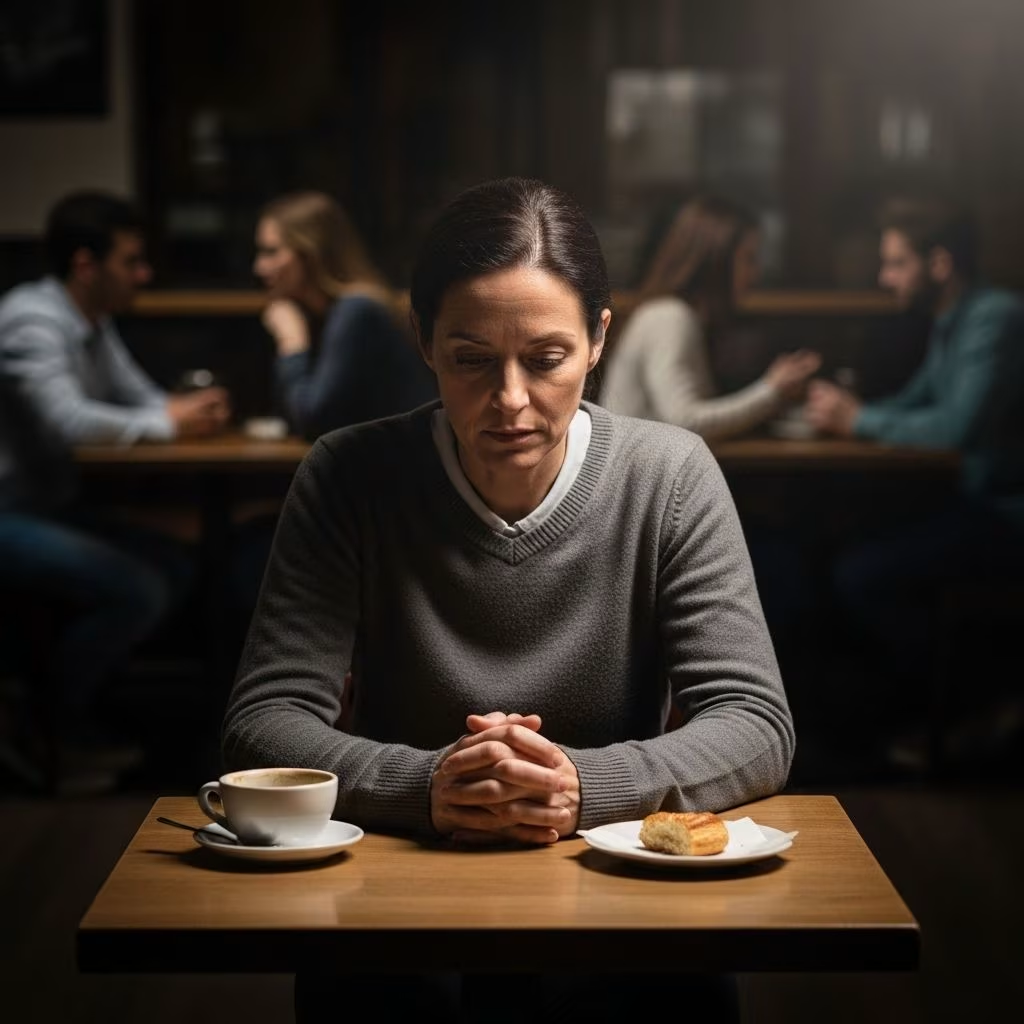
Why You Might Always Feel Like the Victim in Relationships
Feeling persistently cast in the role of victim within your relationships can be a confusing and painful experience. Although some people do endure legitimate victimization, chronically perceiving oneself as powerless or wronged often runs deeper than just difficult circumstances. This pattern may be tied to unhealed wounds, distorted self-beliefs, and subconscious dynamics learned over a lifetime.
By understanding the roots of these feelings and examining how they play out in our interactions, we can begin to unravel these patterns and move toward healthier, more empowered ways of relating.
Recognizing the Victim Mindset in Relationships
The victim mindset is characterized by a persistent sense of powerlessness and a tendency to see oneself as at the mercy of other people’s choices or circumstances. While it’s normal to feel hurt or disappointed at times, when we notice a recurring pattern—always feeling wronged, unloved, or unappreciated—we may be operating from deeply ingrained scripts.
Some of the common characteristics include:
- Constantly blaming others for your unhappiness or difficulties.
- Feeling powerless to change your circumstances.
- Frequently expecting rescue or validation from partners or friends.
- Experiencing a deep fear of abandonment or rejection.
- Repeating relationship patterns where your needs seem perpetually unmet.
- Struggling with boundaries and feeling overwhelmed by others’ problems or emotions.
Understanding that these feelings are often symptoms of old wounds—not a reflection of your value or reality—can be the first step to breaking free.
How Childhood Beliefs Set the Stage
Our earliest relationships—especially those with caregivers—profoundly shape our sense of self-worth and the beliefs we form about love and connection. When those early experiences include neglect, criticism, or inconsistent affection, distorted core beliefs can take root:
- “I don’t matter or have value unless someone else loves me.”
- “If I express my needs, I’ll be rejected or abandoned.”
- “My worth depends on pleasing or rescuing others.”
- “People I love always leave or hurt me.”
A person raised to believe their own happiness is unimportant—or that they must earn love through self-sacrifice—will unavoidably mirror these beliefs in their later relationships. These scripts run so deep we may not even realize when they are operating.
As the original article shares, when a child is made to feel unworthy or invisible, they often internalize these beliefs, regarding them as absolute truths about themselves. This can result in seeking out, or remaining in, relationships that validate these negative self-concepts, reinforcing cycles of pain and self-doubt.
One particularly powerful insight: “I subconsciously attracted into my life exactly what I believed I deserved. I didn’t know I was picking what I was picking.”
How We Attract What We Believe
The law of attraction is often simplified or misunderstood, but our internal beliefs truly shape the kinds of relationships and experiences we invite into our lives. If we believe we are unlovable, we may:
- Attract emotionally unavailable, unkind, or critical partners.
- Subconsciously pick relationships that feel familiar, even if unhealthy.
- Settle for mistreatment in the hope that persistence and sacrifice will “earn” acceptance.
- Choose jobs or environments where we feel unseen or undervalued, mirroring childhood experiences.
These patterns are not always conscious. As described in the reference account, the feeling of lacking self-worth due to a parent’s neglect led to seeking partners whose behaviors reiterated that internal narrative: “I had a fear of abandonment, so I attracted a man who would leave me because the belief that I’d be abandoned had to be confirmed.”
Moreover, if we assume our value is defined by the attention or approval of others, we can become tangled in toxic relationships where neither person meets their own (or each other’s) authentic needs.
Projection, Enmeshment, and Losing Ourselves
Projection is a psychological defense where we attribute our own unwanted feelings or beliefs to someone else. When struggling with a lack of self-worth, we may unconsciously project our pain onto a partner, expecting them to fix or complete us—or blaming them when they inevitably fail.
Enmeshment—the dissolution of personal boundaries—also frequently arises. Without a grounded sense of self, it’s easy to become absorbed in another person’s life, adopting their needs and values as our own to avoid facing our emptiness or loneliness.
- Losing sight of your own hobbies, friendships, goals, or even basic routines.
- Feeling incomplete, unworthy, or devoid of purpose outside the relationship.
- Absorbing another’s opinions or emotional state as your own, blurring individual identity.
These dynamics create a “toxic dance,” where both partners look to one another to fill internal voids, but neither can meet their own needs. This endless loop keeps both people stuck in cycles of longing, resentment, and dependency.
Breaking the Cycle: Moving Toward Healing
Breaking free from the victim role is not about blaming yourself for past pain or suggesting that you “chose” to suffer. It is, instead, about recognizing the power of your own beliefs and behaviors in shaping your relationships, and realizing you can begin to change them—starting now.
This process is rarely easy or straightforward. It often involves confronting deeply held pain, grieving unmet childhood needs, and challenging the inner critic. Support is vital—whether through therapy, compassionate friends, or self-reflection—to help interrupt the patterns that keep us stuck.
The journey typically involves:
- Becoming aware of your patterns and the beliefs driving them.
- Letting go of blame—both toward others and yourself—and embracing responsibility for your own healing.
- Building a new sense of self, one rooted in self-compassion and healthy boundaries.
- Gradually learning to meet your own needs, rather than outsourcing them to others.
As the original narrative recounts, it wasn’t until seeking the support of a skilled therapist and a mentor that change truly began. Through consistent self-work and a willingness to sit with pain, it became possible to replace distorted beliefs with healthier, more reality-based ones.
Practical Steps to Reclaim Your Power
While the process may feel daunting, tangible steps can help guide the shift from victimhood to empowerment. Here is a roadmap inspired by the article:
- Seek Professional Support
Working with a therapist—especially one trained in cognitive-behavioral approaches—can provide vital strategies for unpacking old beliefs and forming new, healthier patterns. - Practice Radical Self-Honesty
Get curious about your recurring relationship experiences. Ask yourself: What am I expecting from others? How do I reinforce my own sense of powerlessness? - Identify and Challenge Core Beliefs
Carefully examine and question your deepest assumptions. Are you truly unlovable? Is your worth conditional on another’s validation? Challenge these thoughts with evidence from your lived experience. - Establish Boundaries
Learn to separate your feelings and responsibilities from those of others. Healthy boundaries protect both your energy and your identity. - Practice Self-Compassion
Treat yourself gently. Old wounds may resurface, but kindness toward yourself creates the foundation for change. - Focus on Self-Care and Individual Growth
Cultivate interests, friendships, and pursuits outside of your relationships. Reclaim your sense of agency by taking up hobbies, pursuing personal goals, and nurturing your own well-being.
| Victim Mentality Behaviors | Empowered Actions |
|---|---|
| Blaming others for all relationship problems | Taking responsibility for your role and choices |
| Seeking validation as proof of self-worth | Affirming your own value without external permission |
| Repeating painful relationship cycles | Recognizing and interrupting familiar, harmful patterns |
| Fearing solitude and enmeshment | Cultivating independence, hobbies, and healthy solitude |
Frequently Asked Questions
What are the most common signs that I am stuck in the victim role in my relationships?
If you consistently feel powerless in relationships, blame others for your unhappiness, expect to be mistreated, or notice a repetitive cycle of pain and unmet needs, it may indicate a victim mindset at work.
Is it my fault if I attract toxic or unhealthy partners?
Responsibility does not mean blame. We often repeat patterns based on what feels familiar, not what serves us. With awareness and support, you can make new choices that honor your well-being.
How can therapy help break these patterns?
Therapy provides tools for identifying your core beliefs, understanding your emotional triggers, and developing healthier relationship habits. It supports you in building self-worth from within, rather than seeking it from others.
Will confronting these patterns mean blaming my childhood or parents?
Understanding your past is not about blaming, but about gaining insight into how your beliefs took shape. This self-awareness empowers you to make positive changes for your future.
Can I heal my victim mentality on my own?
Self-help, mindfulness, and honest self-reflection can all support healing, but most people find that trusted allies or professional guidance significantly accelerate and deepen their growth.
Final Thoughts: Embracing Your Power
Shifting from victimhood to self-empowerment is a profound, courageous journey. It asks us to examine uncomfortable truths and heal wounds that no longer serve us. Remember, you are not alone. Millions have walked this path—and emerged stronger, more self-assured, and free.
You do not have to stay in unhealthy dynamics or bear the burden of old pain indefinitely. With patience, support, and a commitment to your own healing, you can reclaim your sense of worth and create relationships rooted in respect, autonomy, and true love—with others and yourself.
References
- https://tinybuddha.com/blog/why-you-might-feel-like-youre-always-the-victim-in-relationships/
- https://tinybuddha.com/blog/breaking-the-chains-of-victimhood-when-youve-been-abused/
- https://tinybuddha.com/blog/thought-it-was-love-actually-abuse/
- https://thetattooedbuddha.com/2015/08/24/we-are-not-victims-we-are-warriors-of-love-compassion/
- https://tinybuddha.com/blog/how-to-stop-being-a-victim-and-start-creating-your-life/
- https://tinybuddha.com/blog/5-things-i-let-go-when-i-was-tired-of-playing-the-victim/
- https://tinybuddha.com/blog/how-to-make-peace-with-the-past-and-stop-being-a-victim/
- https://tinybuddha.com/blog/how-i-used-self-help-to-justify-a-toxic-relationship-and-what-i-now-know/
- https://tinybuddha.com/blog/i-am-a-survivor-not-a-victim-and-im-grateful-for-my-pain/


