


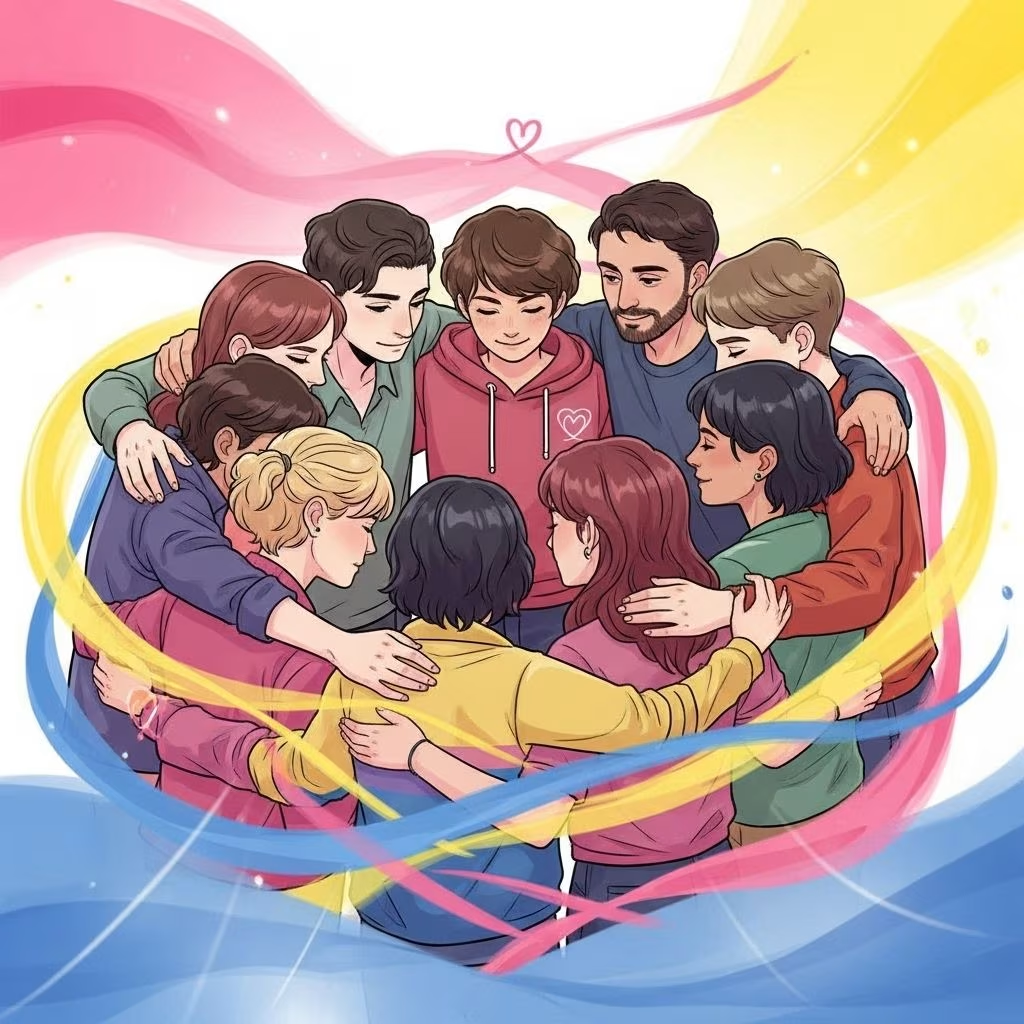
What Is Pansexuality?
The term “pansexual” refers to an individual’s capacity for romantic, emotional, or sexual attraction to people regardless of their gender identity. Unlike attraction based on binary gender categories (male or female), pansexuality embraces the full spectrum of gender identities, including non-binary, genderfluid, agender, bigender, transgender, and more.
It’s important to note that being pansexual is not solely about sex or physical attraction; pansexual people are just as capable of forming romantic and committed relationships as anyone else.
The Overlap and Difference Between Pansexuality and Bisexuality
Pansexuality is often compared and contrasted with bisexuality, another sexual orientation that describes attraction to more than one gender. Here’s how they differ:
- Bisexuality generally means attraction to more than one gender, often described as “same and other genders” or “two or more genders,” but not necessarily all.
- Pansexuality is attraction to people of all genders, where gender is not a determining factor in attraction.
Some people choose the pansexual label because they feel bisexuality implies a binary perspective, while others use bisexual to describe a broader spectrum. Ultimately, the choice of label is deeply personal and reflects how an individual experiences attraction.
Common Misconceptions
- Pansexuals are attracted to everyone: Just as heterosexual or homosexual people are not attracted to every person of their preferred gender(s), pansexuals are not attracted to every person they meet. They simply have the potential to be attracted to anyone, regardless of gender.
- Pansexuality and polyamory are the same: These are distinct concepts. Pansexuality refers to the potential to be attracted to people of any gender, while polyamory is the practice of having multiple romantic or sexual partners simultaneously. A pansexual person may or may not be polyamorous.
- Pansexuality is only about physical attraction: This is false. Pansexuals can form deep emotional and romantic connections, just like anyone else.
Why Do People Identify as Pansexual?
People may identify as pansexual for various reasons, but a common thread is the feeling that their attraction is not limited by gender. For some, the bisexual label feels restrictive or implies a focus on only two genders, while pansexuality more accurately reflects their inclusive experience.
Pansexuality is also chosen by those who feel that gender is irrelevant to their attraction—they are drawn to the person, not the gender. For others, it’s about explicitly including non-binary and gender-diverse people in their potential attraction.
26 Truths About Pansexuality
To give a nuanced understanding, here’s a curated list of truths about pansexuality, drawn from the original article’s spirit and expanded for depth:
- Pansexuality is real and valid, regardless of others’ misunderstandings or disbelief.
- Pansexuals can be in monogamous relationships; their orientation doesn’t dictate their relationship structure.
- Being pansexual is not a phase or a trend.
- Pansexuals are not “confused” or “indecisive.”
- Pansexuality includes attraction to people outside the gender binary.
- Pansexuals can have preferences, just like anyone else.
- Pansexuality is not inherently linked to promiscuity.
- Pansexuals can experience deep romantic love.
- Coming out as pansexual can be challenging due to societal misunderstanding.
- Pansexuals may feel invisible due to the lack of mainstream representation.
- Pansexuality is not a reaction to bisexuality; it’s a distinct identity.
- Pansexuals may use other labels as well (e.g., panromantic, asexual).
- Pansexuality is not about ignoring gender, but about not letting it limit attraction.
- Pansexuals value consent and boundaries in relationships.
- Pansexuals can be of any age, race, or background.
- Pansexuality is not “attention-seeking.”
- Pansexuals can be in long-term, committed relationships.
- Pansexuality is not tied to a specific political or social movement.
- Pansexuals may or may not disclose their orientation publicly.
- Pansexuality is one of many valid sexual orientations.
- Pansexuality is not a “new” concept, even if the term is recent.
- Pansexuals face unique challenges in dating and relationships.
- Pansexuals can experience biphobia or panphobia.
- Pansexuality is about potential, not certainty.
- Pansexuals may find community and pride in their identity.
- Pansexuality deserves respect and understanding.
Signs You Might Be Pansexual
Wondering if you might be pansexual? Here are some signs:
- You find yourself attracted to people regardless of their gender identity.
- Gender is not a factor in who you develop crushes on or fall in love with.
- You feel limited or misrepresented by labels like “bisexual” or “straight.”
- You relate to stories or experiences of pansexual people.
- You notice you’re drawn to people’s personalities, not their gender.
- You feel like you don’t “fit” into other sexual orientation categories.
- You’re open to relationships with people of any gender.
- You’re curious or excited by the idea of pansexuality.
Remember, only you can determine your sexual orientation. Exploring your feelings and experiences is a personal journey.
Common Myths and Misconceptions About Pansexuality
Pansexuality is often misunderstood. Here’s a breakdown of common myths and why they’re inaccurate:
Myth 1: Pansexuals Are Attracted to Everyone
This is false. Pansexuality simply means that gender does not limit attraction—not that every person is attractive to a pansexual. Just as heterosexual people aren’t attracted to every person of the opposite sex, pansexuals aren’t attracted to every person regardless of gender.
Myth 2: Pansexuality Is the Same as Polyamory
Pansexuality is about who you’re attracted to, while polyamory is about how many people you’re in a relationship with. These are separate aspects of a person’s identity.
Myth 3: Pansexuals Don’t See Trans People as Their Gender
This is a harmful stereotype. Pansexuals are attracted to trans men, trans women, and non-binary people, recognizing their true gender identities—not conflating “trans” with a separate gender category.
Myth 4: Pansexuality Is About Promiscuity
There is no connection between being pansexual and being promiscuous. Pansexuality is about attraction, not behavior.
What It Feels Like to Be Pansexual
Living as a pansexual person can be both rewarding and challenging. On one hand, it can feel liberating to love without gender as a barrier. Many pansexuals describe their attraction as being drawn to a person’s core—who they are, not what gender they identify as.
On the other hand, pansexuals often face misunderstanding, erasure, and even dismissal of their identity. Some people question the validity of pansexuality or assume it’s a phase. Coming out can be difficult, especially when others don’t understand or acknowledge the identity.
Pansexuals may also feel invisible in media and society, with few role models or accurate representations. This can lead to feelings of isolation or confusion when searching for community.
Pansexuality and Romance
Pansexuals are capable of deep romantic connections, whether monogamous or non-monogamous. Some pansexuals identify as panromantic, meaning they experience romantic attraction regardless of gender, even if their sexual attraction is different (such as asexual panromantics).
In relationships, it’s important for pansexuals and their partners to communicate openly about boundaries, expectations, and identity. Assumptions about monogamy, fidelity, or attraction should be discussed, not taken for granted.
Pansexuality and Intersectional Identities
Pansexuality intersects with other aspects of identity, such as ethnicity, disability, neurodiversity, and more. Pansexual people can belong to any race, culture, or background. Their experiences may be shaped by both their sexual orientation and other facets of their identity.
Supporting intersectionality within the pansexual community means recognizing and honoring these diverse experiences.
Supporting Pansexual Loved Ones
- Listen to their experiences without judgment.
- Educate yourself about pansexuality using reliable sources.
- Respect their chosen labels and pronouns.
- Advocate for their inclusion and visibility.
- Challenge myths and stereotypes when you encounter them.
Frequently Asked Questions (FAQs)
Q: Is pansexuality the same as bisexuality?
A: No. Bisexuality generally means attraction to more than one gender, while pansexuality means attraction regardless of gender, potentially including all gender identities.
Q: Can pansexuals be monogamous?
A: Yes, pansexuality is about who you’re attracted to, not how many partners you have. Pansexuals can be monogamous or non-monogamous.
Q: Do pansexuals only care about personality, not looks?
A: Not exactly. Pansexuals may be attracted to personality, but physical attraction still plays a role. The difference is that gender isn’t a factor in that attraction.
Q: Are pansexuals attracted to trans people?
A: Yes, pansexuals can be attracted to trans men, trans women, non-binary people, and others. The term “trans” is not a separate gender; trans people are included in all genders.
Q: Is pansexuality a phase?
A: No, pansexuality is a valid and enduring sexual orientation for those who identify with it.
Conclusion
Pansexuality is a nuanced and valid sexual orientation defined by attraction to people regardless of gender. It is distinct from bisexuality and polyamory, and is often misunderstood by those unfamiliar with its meaning. Pansexuals face unique challenges in visibility, acceptance, and inclusion, but also experience the joy of loving freely and authentically. By debunking myths, supporting pansexual individuals, and fostering open conversations, society can become more inclusive for people of all sexual orientations and gender identities.
References
- https://www.lovepanky.com/my-life/relationships/what-is-pansexual
- https://www.lovepanky.com/love-couch/romantic-love/pansexual-vs-bisexual
- https://www.minus18.org.au/articles/what’s-the-difference-between-bisexual-and-pansexual/
- https://www.rewriting-the-rules.com/sex/pansexual/
- https://en.wikipedia.org/wiki/Pansexuality


