


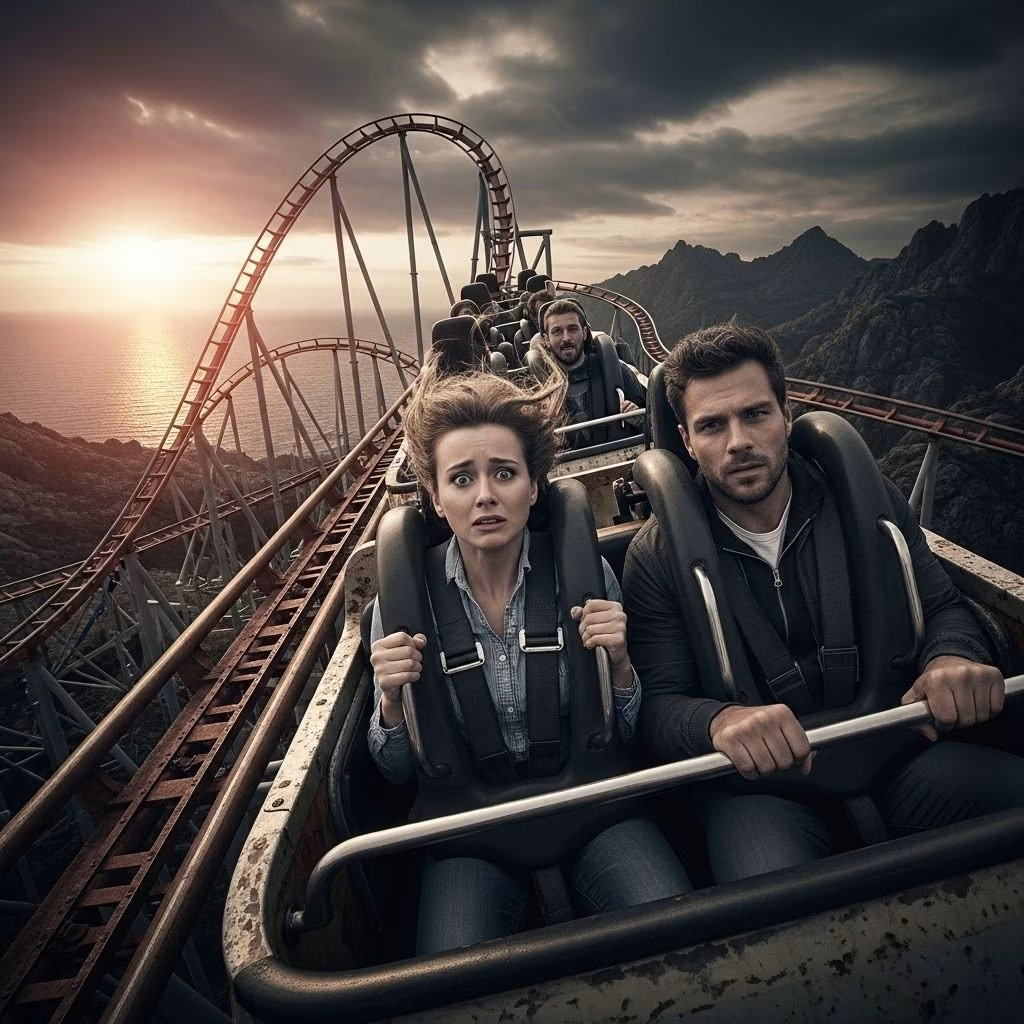
15 Signs You’re Trapped in an Emotional Roller Coaster Relationship
Relationships can be a source of comfort, growth, and happiness, but some seem to be a never-ending series of dramatic highs and crushing lows. If you find yourself swept up in constant emotional storms, you might be riding an emotional roller coaster within your relationship. This lifestyle can be both addictive and exhausting, often leaving you wondering if real love is supposed to feel this way.
This article guides you through the most telling signs that your relationship is defined by extreme ups and downs, the underlying reasons these patterns emerge, and steps to restore emotional stability.
What Is an Emotional Roller Coaster Relationship?
An emotional roller coaster relationship is marked by cycles of joy and despair, extreme connection followed by sudden conflict, and periods of intense affection punctuated by episodes of coldness or hostility. The unpredictability, unpredictably swinging between exhilarating closeness and alienating distance, keeps you guessing and emotionally depleted.
- Rapid mood swings—joy and affection can give way to anger or tears in a matter of moments.
- Recurring patterns—dramatic arguments often resolve in passionate make-ups, but conflict always returns.
- Chronic insecurity—you’re never sure where you stand or how your partner feels from day to day.
Why Do Some Relationships Feel Like a Roller Coaster?
These tumultuous cycles aren’t simply ‘drama’ or bad luck. They often arise from mismatched communication styles, attachment issues, or unconscious emotional needs. The volatility can feed a craving for intensity or distract from deeper personal dissatisfaction.
- Attachment anxiety—one partner seeks constant reassurance, while the other resists closeness.
- Unmet needs—using relationship chaos as a way to avoid dealing with internal emptiness or boredom.
- Lack of boundaries—over-reliance on each other for self-worth or validation can cause tangled emotional dynamics.
15 Telltale Signs You’re Caught in an Emotional Roller Coaster
If these experiences resonate with you, it may be time to assess if your relationship is truly serving your well-being.
-
Extreme Highs and Lows
Moments of deep connection alternate with periods of intense conflict or detachment. You might feel like it’s all or nothing—either madly in love or bitterly hurt.
-
Constant Arguing Over Minor Issues
Arguments routinely erupt over small things—unanswered texts, a change in plans, or chores. These trivial problems become epic battles, masking deeper fears of abandonment or rejection.
-
The Make-Up Euphoria
After a major argument, making up feels exhilarating. The relief and affection in these moments are so intense they almost seem worth the preceding pain. This cycle can feel addictive, offering a burst of emotional energy that distracts from other life stresses.
-
Feeling Drained and Confused
The emotional ups and downs leave you exhausted and unclear about how you truly feel or what you want. Your sense of self may feel diminished or lost amid all the chaos.
-
Walking on Eggshells
You’re hyper-vigilant about your words and actions, fearing you might trigger an outburst. This tension creates a stifling dynamic, making honesty and vulnerability difficult.
-
Lack of Trust and Security
Trust never fully solidifies, leading to jealousy, suspicion, or a constant need for reassurance. True intimacy is replaced by anxiety about what could go wrong next.
-
Unclear Boundaries
There is a blurred line between where your feelings end and your partner’s begin. Codependent patterns may emerge, with each person’s mood directly tied to the other’s.
-
Emotional Manipulation
Guilt-tripping, gaslighting, or shifting blame are common. One or both partners may use emotions as a weapon, making it hard to distinguish authentic feelings from attempts to control each other.
-
Fear of Abandonment
Beneath the surface, a fear of losing the relationship underpins most conflicts. Arguments, even over minor issues, often serve as desperate bids for reassurance and proof of love.
-
Difficulty Having Calm Discussions
Attempts to resolve issues spiral quickly into fights or stonewalling. Vulnerable, solution-focused conversations rarely happen, leaving problems unresolved.
-
One Partner Always Chases, the Other Retreats
A classic dynamic in unstable relationships is the ‘pursuer-distancer’ pattern, where one person seeks more closeness while the other pulls away. This fuels ongoing tension and dissatisfaction.
-
Moments of Disconnection Feel Unbearable
Brief lapses in intimacy are perceived as existential threats. There’s a frantic effort to restore unity, often at the expense of genuine understanding.
-
Emotional Dependency
Your happiness, confidence, and even sense of reality depend on the state of your relationship. Without affirmation from your partner, you may feel empty or worthless.
-
Never Feeling ‘Good Enough’
Constant comparisons, criticism, or emotional withdrawal keep you striving for approval, but it remains elusive. The relationship becomes a source of persistent anxiety rather than comfort.
-
Unstable Relationship Identity
There’s little sense of shared purpose or reliable foundation. One day the relationship feels perfect, the next you question if it will survive.
Why Do We Stay in Volatile Relationships?
Despite the pain, many people find it hard to leave emotional roller coaster relationships. These cycles can provide a rush of feeling that masks deeper dissatisfaction or emptiness in life. The dramatic make-ups and emotional intensity serve as a temporary antidote to feeling numb, bored, or unfulfilled in other areas.
- Secondary gain: The drama itself acts as a distraction from underlying issues.
- Attachment history: Early experiences, such as inconsistent parenting or emotional neglect, can make turbulence feel familiar, almost comforting.
- Lack of alternative models: If instability is all you’ve known, it’s easy to mistake volatility for passion or deep love.
Beyond Conflict: The Hidden Fears
Most recurring fights in such relationships are just the surface-level symptoms of profound and mutual fears:
- Fear of abandonment—worrying your partner will leave or stop loving you.
- Fear of vulnerability—shielding yourself by picking fights or withdrawing rather than facing hurt feelings.
- Fear of intimacy—using conflict as a way to avoid sustained closeness, which can feel threatening or overwhelming.
Resolving these patterns requires both partners to confront these fears honestly and openly—often with individual or couples therapy as support.
Steps Toward a Healthier, More Stable Relationship
Breaking free from an emotional roller coaster relationship is not easy, but it is possible with conscious effort and support. Here’s how you can begin the process:
- Increase self-awareness: Understand your own patterns, needs, and triggers.
- Set and maintain clear boundaries: Define what is acceptable in your relationship, and communicate these boundaries respectfully.
- Develop emotional regulation skills: Practice strategies for managing strong emotions, such as deep breathing, mindfulness, or journaling.
- Invest in open communication: Aim for calm, non-judgmental dialogue about fears and needs, rather than accusatory arguments.
- Seek professional help: A trained therapist can help you uncover the root causes of the instability and learn healthier relational patterns.
- Cultivate external sources of fulfillment: Strengthen your social life, interests, and activities outside the relationship to reduce emotional dependency.
Emotional Roller Coaster vs. Healthy Relationship: Key Differences
| Feature | Emotional Roller Coaster | Healthy Relationship |
|---|---|---|
| Intensity | Extreme highs and lows | Stable, predictable affection |
| Conflict | Frequent, cyclical, often unresolved | Constructively addressed, resolved calmly |
| Security | Chronic insecurity, walking on eggshells | Trust and mutual respect |
| Dependency | Co-dependent, emotional manipulation | Healthy boundaries, independence & interdependence |
| Growth | Personal stagnation, loss of self | Personal and mutual growth is supported |
Frequently Asked Questions (FAQs)
Q: Are emotional roller coaster relationships always unhealthy?
A: Intense emotional highs and lows can sometimes occur in passionate, early-stage relationships, but ongoing patterns of drama, manipulation, or insecurity usually signal deeper issues that need to be addressed for the well-being of both partners.
Q: Can an emotional roller coaster relationship become stable and healthy?
A: Yes, but only if both partners are willing to recognize the problem, explore its root causes (often with the help of a therapist), and commit to building new habits around trust, communication, and respect.
Q: What is the most important first step to breaking this pattern?
A: Naming the cycle and acknowledging its impact is essential. Increased self-awareness, boundary-setting, and willingness to seek support can all help disrupt the old patterns.
Q: Why does the make-up phase feel so good after a fight?
A: The relief and intense affection experienced after conflict deliver a potent burst of emotional ‘reward’ chemicals, temporarily masking the pain and stress of the instability, which can make these cycles addictive.
Q: Should I leave a relationship that feels like a roller coaster?
A: If efforts to create stability fail or only one partner is working to change the pattern, it may be healthiest to seek counseling or consider ending the relationship, especially if emotional harm persists.
Conclusion: Choosing Stability Over Chaos
If any part of your relationship leaves you feeling more anxious than loved, it’s a sign to step back and reassess. Emotional roller coaster patterns can disguise themselves as passion or fated love, but true intimacy is built on trust, stability, and genuine connection. Recognizing the signs is your first step toward reclaiming peace and joy—in love and in yourself.
References
- https://mentalzon.com/en/post/4873/why-some-relationships-feel-like-a-rollercoaster
- https://globalcounselingsolutions.org/warning-signs-of-a-tumultuous-relationship/
- https://www.kylebenson.net/how-to-avoid-the-rollercoaster-relationship/
- https://www.psychologytoday.com/us/blog/emotional-fitness/201506/love-and-the-emotional-roller-coaster
- https://blogs.chihealth.com/an-emotional-rollercoaster-understanding-borderline-personality-disorder


