


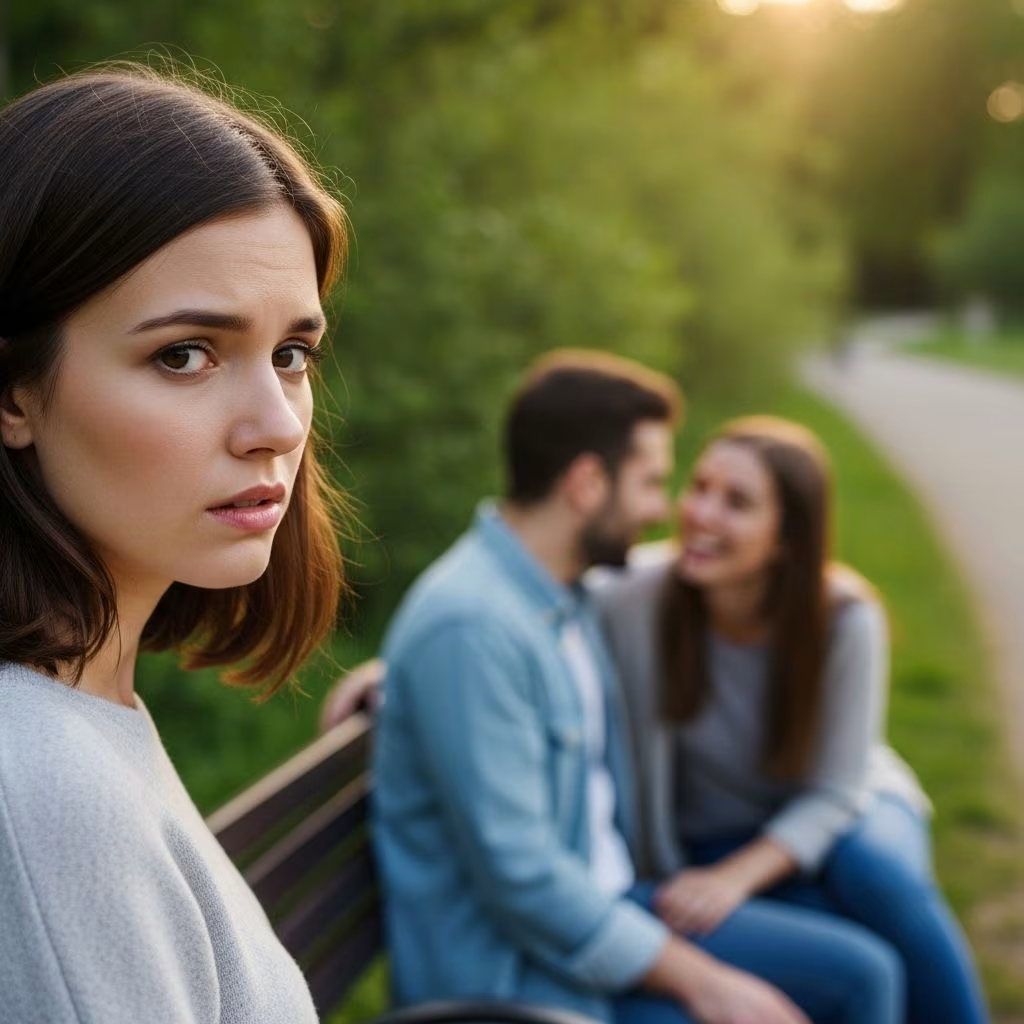
There’s perhaps no more uncomfortable feeling than suspecting that your boyfriend might be developing feelings for your best friend. It’s a painful situation that puts you in an impossible position between two of the most important people in your life. Unfortunately, this predicament is far more common than you might think, and recognizing the warning signs early can help you address the situation before it spirals out of control.
When you’re in a loving relationship and have a close best friend, it’s natural that these two important people in your life will spend time together. After all, you want the people you care about to get along. However, there’s a fine line between friendly rapport and romantic interest, and sometimes that line can become blurred in ways that make you deeply uncomfortable.
The reality is that attraction can happen even in the most unexpected situations. Your boyfriend might be wonderful, your best friend might be loyal, but human emotions don’t always follow the rules we’d like them to. Understanding the signs that something might be developing between them is the first step in protecting yourself and your relationships.
Understanding the Reality of Attraction in Relationships
Before diving into the specific signs, it’s important to understand something fundamental about human nature: being in a committed relationship doesn’t make someone blind to other attractive people. This is a difficult truth to accept, but acknowledging it is essential for maintaining realistic expectations in any relationship.
Attraction exists on a spectrum. There’s a significant difference between acknowledging that someone is attractive and actively developing romantic feelings for them. Your boyfriend might think your best friend is pretty or fun to be around without it meaning anything problematic. The concern arises when casual appreciation crosses into emotional investment or romantic interest.
What makes this situation particularly challenging is the accessibility factor. Your best friend isn’t just a random attractive person your boyfriend passes on the street. She’s someone who is regularly present in your lives, someone he has opportunities to connect with emotionally, and someone who already has a relationship with him through you. This proximity and familiarity can create conditions where inappropriate feelings might develop more easily.
Why This Situation Happens More Often Than You Think
There are several reasons why boyfriends sometimes develop feelings for their partner’s best friends. Understanding these dynamics can help you recognize the situation more clearly and respond appropriately.
Shared Social Circles: When your boyfriend and best friend spend significant time together through you, they naturally build their own rapport. They attend the same gatherings, share inside jokes, and develop familiarity that can sometimes evolve beyond friendship.
Similar Interests and Compatibility: Your best friend likely shares many qualities and interests with you, which is why you’re close. These same qualities might be what attracted your boyfriend to you in the first place, making your friend seem appealing to him as well.
The Forbidden Fruit Effect: Sometimes the very fact that your best friend is “off-limits” can make her more intriguing. The human psyche sometimes fixates on what it cannot have, creating an artificial sense of attraction.
Emotional Intimacy: If your best friend confides in your boyfriend or vice versa, emotional bonds can form that sometimes get confused with romantic feelings. Emotional intimacy often precedes or accompanies romantic attraction.
Physical and Behavioral Signs Your Boyfriend Likes Your Best Friend
Extended Eye Contact: One of the most telling signs is how your boyfriend looks at your best friend. Does he maintain eye contact with her longer than necessary? Does his gaze linger on her when she’s not looking? Eye contact is a powerful indicator of interest, and excessive visual attention can signal attraction.
Body Language Shifts: Pay attention to how his body naturally positions itself when your best friend is around. Does he unconsciously lean toward her during conversations? Does he mirror her movements or gestures? Does his posture become more open and engaged when she enters a room? These subtle physical cues often reveal attraction before words ever do.
Physical Touch Patterns: Notice if he finds excuses to touch your best friend in small ways—brief touches on the arm, playful nudges, helping her with her coat, or any other forms of casual physical contact that seem more frequent than necessary. While some touching is normal in friendships, excessive or lingering physical contact crosses boundaries.
Grooming Behavior: Does your boyfriend put extra effort into his appearance when he knows your best friend will be around? Does he suddenly care more about his outfit, cologne, or hairstyle before seeing her? These grooming behaviors often indicate he wants to look attractive for someone specific.
Emotional and Communication Red Flags
Frequent Mentions: If your boyfriend brings up your best friend constantly in conversations when she’s not around, it might indicate that she’s occupying more mental space than she should. Does he reference things she said, share stories about her, or frequently ask about her when it’s just the two of you? This excessive mention suggests she’s on his mind more than a friend should be.
Overly Attentive Behavior: Being a good friend means paying attention, but there’s a difference between normal courtesy and excessive attentiveness. Is he always the first to like her social media posts? Does he remember small details from conversations with her weeks later? Does he go out of his way to make her comfortable in ways that seem beyond normal friendship? This heightened attention can indicate deeper interest.
Defensive Reactions: If you casually mention anything about their friendship or relationship, does he become unusually defensive? Does he overexplain their interactions or get irritated when you ask simple questions about their time together? Defensiveness often indicates guilt or awareness that something inappropriate might be happening.
Comparison Behaviors: Does your boyfriend compare you to your best friend, either explicitly or implicitly? Does he suggest you should be more like her in certain ways, or does he praise her qualities in contexts that make you uncomfortable? These comparisons can indicate he’s idealizing her in unhealthy ways.
Social Dynamics and Priority Shifts
Changed Social Patterns: Has your boyfriend started suggesting more group activities that include your best friend? Does he seem disappointed when she can’t make it to events? Does he specifically ask if she’ll be at gatherings before committing to attend? These patterns suggest her presence has become particularly important to him.
Priority Adjustments: Notice if your boyfriend rearranges his schedule or drops plans to accommodate your best friend’s availability. If he’s suddenly more flexible when she’s involved or makes unusual efforts to be present when she is, this shift in priorities can signal inappropriate interest.
Inside Jokes and Private Communication: Have your boyfriend and best friend developed inside jokes or references that exclude you? Do they text privately about things that don’t involve you? While some independent friendship is normal, excessive private communication or shared experiences that deliberately exclude you can indicate a relationship that’s becoming too intimate.
Protective or Jealous Behavior: Does your boyfriend show unusual concern about your best friend’s romantic life or dating situation? Does he offer strong opinions about guys she dates or become critical of her other relationships? This protective or jealous stance can reveal deeper feelings.
Social Media and Digital Behavior Patterns
Online Engagement: In today’s digital age, social media behavior can be incredibly revealing. Is your boyfriend consistently among the first to react to your best friend’s posts? Does he comment more frequently on her content than seems normal? Does he share things specifically because he knows she’ll appreciate them?
Photo Interest: Pay attention to how he responds to photos of or with your best friend. Does he seem particularly interested in pictures she posts? Does he save or share images that include her? Does he comment on her appearance in photos in ways that make you uncomfortable?
Digital Communication Patterns: While you shouldn’t invade anyone’s privacy, you might notice patterns in how frequently he texts or messages your best friend. Does his phone light up with messages from her at unusual times? Does he seem eager to respond to her messages immediately while letting others wait?
Emotional Distance and Relationship Changes
Decreased Intimacy With You: If your boyfriend is developing feelings for your best friend, you might notice your own relationship suffering. Has physical or emotional intimacy decreased? Does he seem distracted during your time together? Has the passion or connection you once shared diminished?
Guilt-Driven Overcompensation: Conversely, some men who are developing inappropriate feelings will overcompensate with their partners. Has your boyfriend suddenly become unusually attentive or generous with you? Does he seem to be trying too hard to prove his devotion? This overcompensation can sometimes stem from guilt about his feelings for someone else.
Emotional Withdrawal: Does your boyfriend seem emotionally distant or preoccupied even when you’re together? Is he less interested in your thoughts, feelings, or daily experiences? Emotional withdrawal often occurs when someone is directing their emotional energy elsewhere.
Decreased Communication: Has the quality or quantity of your conversations changed? Does he share less about his day, thoughts, or feelings than he used to? This communication breakdown can indicate he’s creating distance or perhaps sharing those conversations with someone else.
What Your Intuition Is Telling You
Perhaps the most important sign of all is your own gut feeling. Intuition is powerful, especially in relationships where you know someone well. If something feels off about the dynamic between your boyfriend and best friend, trust that instinct. Women particularly are often adept at reading subtle social and emotional cues, and that internal alarm system exists for a reason.
However, it’s important to distinguish between legitimate concerns and insecurity or paranoia. Ask yourself: Are you seeing actual behavioral changes and signs, or are you projecting fears onto an innocent friendship? Are multiple signs present, or are you fixating on one ambiguous interaction? Honest self-reflection helps determine whether your concerns are valid or if personal insecurities might be influencing your perception.
What You Can Do About the Situation
If you’ve identified multiple signs that your boyfriend might have feelings for your best friend, the situation requires careful handling. Here are practical steps to address this delicate issue:
Trust Your Observations: First, validate your own perceptions. You’re not crazy for noticing patterns or feeling uncomfortable about a dynamic between two people you care about. Your observations and feelings are valid, and acknowledging them is the first step toward addressing the situation.
Have an Honest Conversation With Your Boyfriend: Direct communication is essential, though difficult. Choose a calm moment when you’re both relaxed and have privacy. Approach the conversation from a place of curiosity rather than accusation. Use “I” statements to express how certain behaviors make you feel rather than making accusations about his intentions. For example: “I feel uncomfortable when I notice how much attention you pay to Sarah” rather than “You’re obviously attracted to Sarah.”
Listen to His Response: Pay attention not just to what he says but how he says it. Is he dismissive of your concerns or willing to discuss them openly? Does he become defensive or angry, or does he show empathy for your feelings? Does he deny everything without considering your perspective, or does he acknowledge behaviors while explaining his intentions? His response will tell you a lot about both his feelings and his respect for you.
Establish Clear Boundaries: Regardless of whether anything inappropriate has happened, you have every right to establish boundaries that make you comfortable. These might include limiting one-on-one time between your boyfriend and best friend, requesting transparency about their communications, or asking that certain topics or behaviors be avoided. Healthy relationships require boundaries, and it’s not unreasonable to set them around opposite-sex friendships.
Talk to Your Best Friend: This conversation might be even more difficult than the one with your boyfriend, but it’s equally important. Your best friend deserves to know how you’re feeling and what you’ve observed. A true friend will be horrified at the thought of making you uncomfortable and will immediately work to fix the situation. If she becomes defensive, dismissive, or angry at you for bringing it up, that response itself is telling.
Assess Their Reactions and Actions: After you’ve had these conversations, observe what happens next. Do both your boyfriend and best friend take your concerns seriously and modify their behavior accordingly? Or do they minimize your feelings, continue the same patterns, or become secretive? The actions they take after these conversations reveal their priorities and respect for you.
When to Consider Ending the Relationship
Sometimes, despite your best efforts to address the situation, it becomes clear that the relationship needs to end. Here are circumstances that might indicate it’s time to move on:
If He Admits Feelings: If your boyfriend acknowledges having romantic feelings for your best friend, the relationship is likely beyond repair. Even if he claims he won’t act on these feelings, the emotional betrayal has already occurred, and the foundation of trust is damaged.
If Behavior Doesn’t Change: After you’ve expressed your concerns and established boundaries, both your boyfriend and best friend should modify their behavior. If the same patterns continue or intensify, it demonstrates a lack of respect for your feelings and the relationship.
If You Discover Deception: If you find evidence of secret communications, meetings, or emotional intimacy between your boyfriend and best friend that they’ve hidden from you, trust is broken. Relationships cannot survive without trust, and rebuilding it after betrayal is extraordinarily difficult.
If Your Mental Health Suffers: No relationship is worth sacrificing your mental health and well-being. If the situation is causing you constant anxiety, depression, insecurity, or emotional distress, and nothing is improving, it may be healthier to walk away.
Protecting Your Friendship
One of the most painful aspects of this situation is the potential loss of your best friend. If it becomes clear that your boyfriend and best friend have developed inappropriate feelings for each other, you may need to reevaluate both relationships.
A true friend would never pursue or encourage romantic attention from your partner. If your best friend has been reciprocating your boyfriend’s interest, entertaining his attention, or failing to establish appropriate boundaries, her loyalty to your friendship is questionable. This betrayal from someone you trusted implicitly can actually hurt more than your boyfriend’s behavior.
However, if your best friend has been oblivious to your boyfriend’s attention or immediately corrects her behavior when you bring it to her attention, the friendship might be salvageable. Open communication, clear boundaries, and demonstrated commitment to your friendship can help repair any damage.
Moving Forward With Confidence
Dealing with the possibility that your boyfriend likes your best friend is emotionally exhausting and painful. However, facing the situation directly rather than ignoring it is always the healthier choice. Avoiding difficult conversations or pretending everything is fine when it isn’t only prolongs your suffering and allows inappropriate situations to escalate.
Remember that you deserve a partner who is fully committed to you and a best friend who prioritizes your friendship above any attraction to your boyfriend. If you don’t have both of those things, you’re better off discovering that truth sooner rather than later.
Ultimately, this difficult situation can actually serve as a valuable filter, revealing the true character of the people in your life. Those who respect you, value you, and prioritize your well-being will demonstrate that through their actions when you express your concerns. Those who don’t deserve that level of importance in your life will reveal themselves as well.
Trust yourself, trust your observations, and trust that you deserve relationships—both romantic and platonic—where you feel secure, valued, and respected. Don’t settle for less than that, no matter how much you care about the people involved.
Frequently Asked Questions
Q: Is it normal to feel jealous of my boyfriend’s friendship with my best friend?
A: Some mild discomfort can be normal when two important people in your life become close, but intense jealousy or anxiety usually indicates either personal insecurity issues or legitimate concerns about inappropriate dynamics. Examine whether your feelings stem from insecurity or actual problematic behaviors you’re observing.
Q: How do I bring up my concerns without seeming paranoid or controlling?
A: Focus on specific behaviors and how they make you feel rather than making accusations about intentions. Use phrases like “I notice that…” and “I feel uncomfortable when…” rather than “You obviously want…” This approach invites conversation rather than creating defensiveness.
Q: Should I ask my boyfriend to stop being friends with my best friend?
A: Asking someone to end a friendship is a serious request that should only be made in extreme circumstances. Instead, focus on establishing healthy boundaries around their friendship that make you comfortable while allowing appropriate friendly interaction. If he cannot respect reasonable boundaries, that’s a relationship problem regardless of who the friend is.
Q: What if I’m wrong and nothing is actually happening?
A: If you approach the situation calmly and focus on your feelings rather than accusations, expressing concerns shouldn’t damage healthy relationships. Partners and friends who care about you will want to address your discomfort even if they believe it’s unfounded. Their willingness to reassure you and modify behaviors that bother you demonstrates respect and care.
Q: Can a relationship survive if my boyfriend did develop feelings for my best friend?
A: This depends on many factors including whether he acted on those feelings, how he handles the situation when confronted, and whether he’s willing to do the work to recommit to your relationship. Some relationships can recover from emotional affairs or attractions to others, but it requires complete honesty, cutting contact with the other person, and often professional counseling. The trust damage is significant and not easily repaired.
References
- https://www.lovepanky.com/my-life/relationships/my-boyfriend-likes-my-best-friend
- https://www.lovepanky.com/my-life/relationships/platonic-friendship
- https://www.enotalone.com/topic/347355-my-boyfriend-may-be-in-love-with-his-best-friend/
- https://www.neverlikeditanyway.com/fixit/signs-your-boyfriend-likes-his-female-friend/
- https://www.stylecraze.com/articles/signs-he-likes-you-more-than-a-friend/
- https://tinybuddha.com/blog/staying-friends-when-a-relationship-doesnt-work/


