


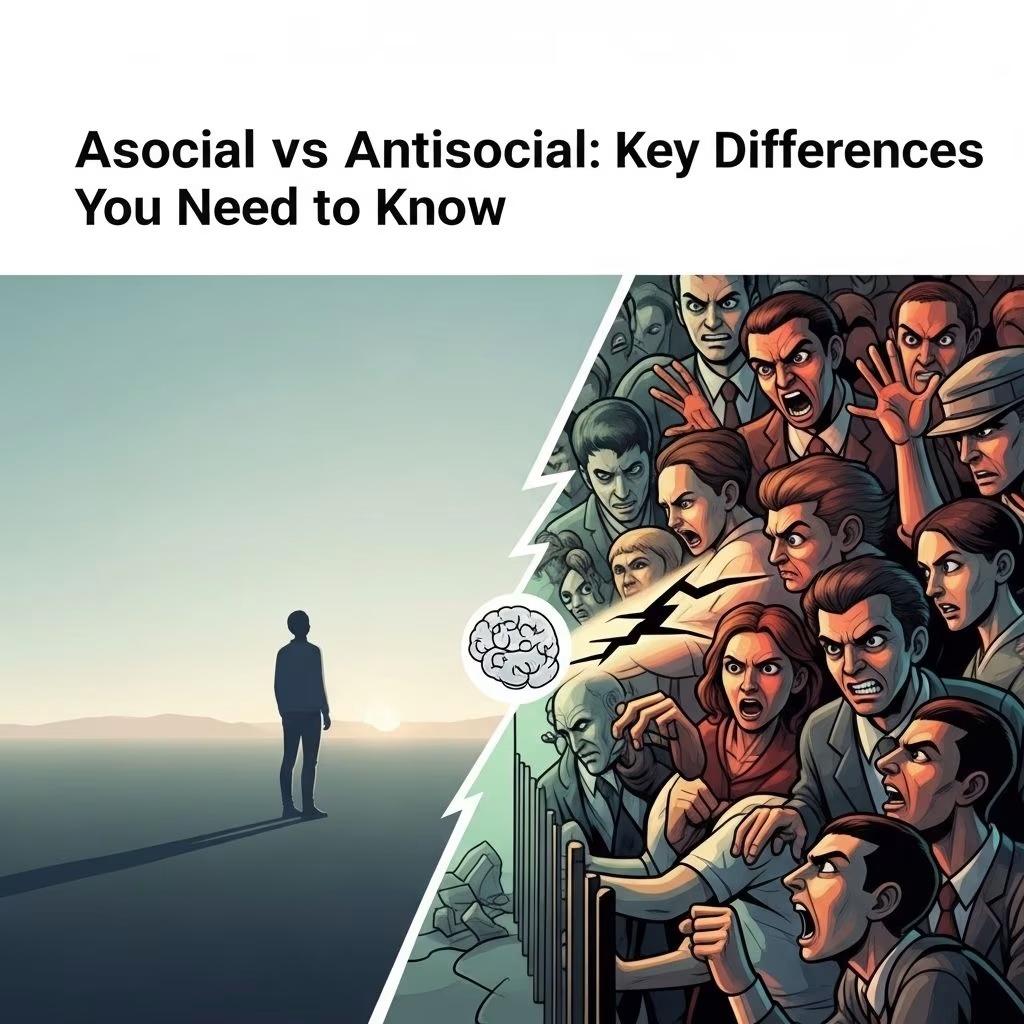
The terms “asocial” and “antisocial” are frequently used interchangeably in everyday conversation, yet they describe fundamentally different behavioral patterns and personality characteristics. Understanding these distinctions is crucial not only for accurately describing human behavior but also for recognizing when someone might need professional support or simply prefers a different lifestyle.
While both terms relate to how individuals interact with society, they represent opposite ends of the social behavior spectrum. One describes a preference for solitude without malicious intent, while the other indicates a pattern of harmful behavior that disregards social norms and the wellbeing of others. This comprehensive guide explores these differences in depth, examining the characteristics, motivations, and implications of each behavioral pattern.
Understanding Asocial Personality
Asocial behavior fundamentally represents a personal preference rather than a disorder. Individuals with asocial tendencies simply feel more comfortable spending time alone and may lack a strong desire to engage in social activities. This preference stems from internal comfort levels rather than hostility toward others.
People who are asocial often experience anxiety or discomfort in new social situations. They may find it challenging to initiate conversations with strangers or maintain relationships, not because they wish to harm others, but because social interaction feels draining or anxiety-inducing. These individuals typically have a small circle of close friends rather than a large social network.
Asocial personality traits can manifest as symptoms of other mental health conditions, including social anxiety disorder, avoidant personality disorder, autism spectrum disorder, and depression. The social withdrawal associated with asocial behavior can sometimes lead to depressive episodes, creating a cyclical pattern where isolation feeds into further withdrawal.
Characteristics of Asocial Individuals
Asocial people display several distinctive characteristics that set them apart from both extroverts and those with antisocial tendencies. They typically feel more energized when alone and may find extended social interaction exhausting. Unlike introverts who can enjoy social situations in moderation, asocial individuals often prefer to avoid these situations altogether.
These individuals frequently miss social cues and may be perceived as socially awkward. They often judge themselves harshly, struggling with low self-esteem and self-image issues. The fear of social judgment can be overwhelming, leading them to withdraw further from society. Despite these challenges, asocial people generally treat others well when they do interact—they simply prefer limited exposure to social settings.
Asocial individuals may have difficulty enjoying relationships and holding conversations, particularly with people they don’t know well. They often choose to complete tasks independently rather than collaboratively. However, it’s important to note that asociality exists on a spectrum—some people may be mildly asocial while others strongly prefer solitude in nearly all circumstances.
What Defines Antisocial Personality
Antisocial personality disorder (ASPD) represents a serious mental health condition characterized by a pervasive pattern of disregard for the rights of others and societal norms. Unlike asocial behavior, which is a personality trait or preference, antisocial behavior is recognized as a clinical disorder requiring professional intervention.
Individuals with antisocial personality disorder demonstrate a complete lack of regard for social rules, legal boundaries, and the wellbeing of themselves or others. This disorder typically manifests in adolescence or early adulthood and involves a consistent pattern of behavior rather than isolated incidents. The condition affects an estimated 3% of the U.S. population, making it relatively rare compared to other personality variations.
The hallmark of antisocial personality disorder is the absence of empathy and remorse. These individuals don’t simply avoid social situations—they actively violate social norms and engage in behaviors that harm others without feeling guilt or regret. Their actions are deliberate and often calculated to benefit themselves at the expense of others.
Behavioral Patterns in Antisocial Personality Disorder
Antisocial behavior encompasses a wide range of harmful actions and attitudes. Individuals with ASPD consistently disregard the law and the consequences of breaking it. They may engage in criminal activities, viewing legal and ethical boundaries as inconvenient obstacles rather than necessary social structures.
Reckless behavior is another defining characteristic, often putting both themselves and others at significant risk. This can include substance abuse and addiction, unprotected sexual encounters with multiple partners, and participation in high-risk activities without consideration for safety. The impulsivity associated with ASPD means these individuals exercise little to no self-control, acting on immediate desires without contemplating long-term consequences.
Emotional manipulation represents a key tactic used by those with antisocial personality disorder. They view relationships transactionally, seeing others as means to an end rather than as individuals deserving of respect and consideration. They deliberately antagonize others and may display aggression, deceitfulness, and cruelty toward both people and animals. Despite these harmful behaviors, individuals with ASPD often maintain an inflated self-image, viewing themselves as superior to others.
Comparing Asocial and Antisocial Personalities
While asocial and antisocial personalities share some surface-level similarities, their fundamental differences are significant and meaningful. Both groups struggle with traditional social constructs and may have small friendship circles, but the reasons behind these patterns differ dramatically.
Socializing Challenges: Both asocial and antisocial individuals tend to have limited social circles and struggle with initiating intimate relationships. However, the underlying causes differ substantially. Asocial people avoid social situations due to anxiety and discomfort, while antisocial individuals may struggle with relationships because their harmful behavior drives others away.
Regard for Social Norms: Both personality types can appear to disregard social norms, but antisocial personalities take this to extreme levels, often committing crimes and deliberately hurting others. Asocial individuals may inadvertently violate minor social conventions simply because they haven’t spent enough time in social settings to learn them, but they have no intention of causing harm.
Critical Distinctions Between the Two
The differences between asocial and antisocial personalities are far more significant than their similarities, particularly when examining motivation, capacity for relationships, and self-perception.
Empathy and Motivation: This represents the most crucial distinction between the two personality types. Asocial individuals may struggle socially, but they don’t intend to upset or harm others. They might not realize when they’ve violated social norms and typically feel remorseful when this is pointed out. In stark contrast, antisocial individuals deliberately violate social norms and have no concern for the consequences or impact on other people. They lack the capacity for genuine empathy.
Relationship Maintenance: Asocial people can maintain long-term friendships and romantic relationships relatively easily once these connections are established—they simply struggle with the initial stages of forming new relationships. Antisocial individuals, however, rarely maintain long-term relationships due to their lack of regard for others, manipulative behavior, and recklessness. Their relationships are typically shallow and self-serving.
Self-Image and Esteem: The internal worlds of asocial and antisocial individuals differ dramatically. Antisocial people often think very highly of themselves, displaying arrogance and maintaining an inflated self-image. They may be extremely opinionated and view themselves as superior to others. Conversely, asocial individuals frequently struggle with negative self-perception and low self-esteem, often judging themselves harshly for their social difficulties.
The Personality Trait vs. Personality Disorder Distinction
One of the most important differences between asocial and antisocial characteristics lies in their clinical classification. Asociality represents a personality trait—a characteristic that helps shape someone’s identity and may vary depending on social context. It’s not inherently pathological and doesn’t necessarily indicate a mental health disorder, though it can be a symptom of conditions like social anxiety or depression.
Antisocial behavior, however, is directly linked to antisocial personality disorder, a recognized mental health condition. A personality disorder is diagnosed when patterns of deviant behaviors significantly impact a person’s ability to complete normal daily activities and maintain healthy relationships. The distinction between having antisocial traits and having ASPD is important—displaying some antisocial characteristics doesn’t automatically mean someone has the disorder.
Personality traits like asociality are building blocks of identity that all humans possess to varying degrees. We have the capacity to manage multiple emotions, thoughts, and behaviors, all contributing to our unique personalities. However, when these traits become rigid, pervasive, and significantly impair functioning, they may constitute a personality disorder requiring professional intervention.
Treatment Approaches and Outcomes
The treatment needs and prognoses for asocial and antisocial individuals differ substantially. Asocial individuals who find their preference for solitude problematic—perhaps because it’s causing depression or preventing them from achieving personal goals—can benefit from various therapeutic approaches. Cognitive-behavioral therapy can help address social anxiety, while gradual exposure to social situations can build confidence and skills.
For those with asocial traits linked to other conditions like autism or social anxiety disorder, treatment focuses on managing the underlying condition. Many asocial individuals, however, don’t require treatment at all—they simply prefer a quieter, more solitary lifestyle, which is a valid personal choice in a society that often overvalues extroversion.
Treating antisocial personality disorder presents significantly greater challenges. Individuals with ASPD rarely seek treatment voluntarily, as they typically don’t believe anything is wrong with their behavior. When treatment does occur, it’s often mandated by the legal system following criminal behavior. Traditional therapy approaches have limited effectiveness because they rely on empathy and desire for change—qualities notably absent in ASPD.
The most promising treatment approaches for ASPD involve intensive programs that focus on behavioral modification rather than emotional insight. These programs work to help individuals recognize that prosocial behavior serves their own interests better than antisocial actions. However, outcomes remain guarded, and antisocial personality disorder is considered one of the most difficult personality disorders to treat effectively.
Cultural Perspectives on Solitude
It’s worth noting that asocial behavior isn’t universally viewed negatively. Many cultures throughout history have elevated individuals who choose solitude and withdrawal from mainstream society. Religious traditions including Christianity, Hinduism, Buddhism, Jainism, Judaism, and Islam all practice forms of asceticism, which involves deliberately withdrawing from society to focus on spiritual development.
Philosophers, artists, and writers throughout history have championed solitude as essential for creativity and deep thinking. In contrast to the often negative connotations asocial behavior carries in highly social cultures, many societies recognize the value of introspection and solitary pursuits. This cultural context is important when considering whether asocial behavior represents a problem requiring intervention or simply a different but valid way of being.
Antisocial behavior, conversely, is universally frowned upon across cultures. The deliberate violation of social norms and harm to others is not celebrated in any major cultural tradition. This universal disapproval reflects the fundamental difference between choosing solitude (asocial) and actively harming others (antisocial).
The Introversion Connection
Adding another layer to this discussion, it’s important to distinguish both asocial and antisocial behavior from introversion. Introversion is a relatively fixed personality trait affecting 30-75% of the population to some degree. Introverts need time alone to recharge after social interaction and may feel drained by excessive time with others, but they still maintain deep, meaningful relationships.
Unlike asocial individuals who may struggle with or avoid social situations due to anxiety, introverts can enjoy socializing—they simply need breaks to recover their energy. Introverts often work more effectively alone and may be highly creative in solitude, but they don’t necessarily fear social judgment or experience the anxiety that characterizes asocial behavior. The key difference is that introversion relates to energy management, while asociality relates to social comfort and desire.
Recognition and Support
Understanding these distinctions has practical implications for how we interact with and support people in our lives. If someone in your life is asocial, recognizing that their behavior stems from anxiety or preference rather than hostility can foster compassion and appropriate support. Pushing asocial individuals into social situations they find overwhelming isn’t helpful—instead, respecting their boundaries while offering support for underlying conditions like social anxiety can be more beneficial.
For antisocial behavior, recognition is crucial for safety. If someone consistently demonstrates lack of empathy, manipulative behavior, and disregard for others’ wellbeing, establishing firm boundaries becomes essential. Unlike asocial individuals who simply prefer solitude, those with antisocial personality disorder may actively cause harm. Professional intervention is necessary, though it’s important to recognize that change is difficult and outcomes are uncertain.
Both asocial individuals and those with antisocial personality disorder are more likely to experience co-occurring mental health issues like depression and anxiety. While the antisocial or asocial behaviors themselves may never completely change, working with mental health professionals can help address these related conditions, potentially improving quality of life.
Frequently Asked Questions
Q: Can someone be both asocial and antisocial?
A: While both terms relate to social behavior, they represent fundamentally different patterns that typically don’t coexist. Asocial behavior involves withdrawing from society due to preference or anxiety, while antisocial behavior involves actively violating social norms and harming others. However, someone might display asocial traits early in life and later develop antisocial behaviors, though this progression is not typical.
Q: Is being asocial a mental health disorder?
A: No, asocial behavior itself is not a mental health disorder—it’s a personality trait or preference. However, asocial tendencies can be symptoms of other conditions like social anxiety disorder, avoidant personality disorder, autism spectrum disorder, or depression. If asocial behavior is causing significant distress or impairment, it may warrant professional evaluation.
Q: Do people with antisocial personality disorder know their behavior is wrong?
A: Individuals with ASPD typically understand societal rules and laws but lack the emotional capacity to care about violating them. They may intellectually know that harming others is considered wrong, but they don’t experience the guilt, remorse, or empathy that would typically prevent such behavior. This lack of emotional connection to moral concepts is a defining feature of the disorder.
Q: Can asocial people have successful relationships?
A: Yes, asocial individuals can maintain successful, long-term relationships once they’re established. They may struggle with initiating new relationships due to social anxiety or discomfort, but they can form deep, meaningful connections with understanding partners and friends who respect their need for solitude and quiet time.
Q: Is antisocial personality disorder treatable?
A: ASPD is one of the most challenging personality disorders to treat. Traditional therapy approaches have limited effectiveness because individuals with ASPD typically lack motivation to change and don’t experience remorse for their actions. Some intensive behavioral programs show modest success, but treatment outcomes remain guarded. Most individuals with ASPD only enter treatment when mandated by the legal system.
Q: How can I tell if someone is asocial or just introverted?
A: Introverts need alone time to recharge but can enjoy and maintain social relationships without significant anxiety. Asocial individuals experience anxiety or discomfort in social situations and may avoid them altogether, not just because they find them draining but because they genuinely prefer solitude and may fear social judgment. Introverts often have deep friendships, while asocial people may struggle to form or maintain even close relationships.
References
- https://www.mentalhealth.com/library/asocial-vs-antisocial-difference
- https://www.healthline.com/health/mental-health/asocial-vs-antisocial-vs-introverted
- https://www.choosingtherapy.com/asocial-vs-antisocial/
- https://www.nobu.ai/blog/antisocial-vs-asocial/
- https://www.talktoangel.com/blog/difference-between-asocial-personality-and-antisocial-personality-disorder
- https://www.theswaddle.com/the-difference-between-asocial-and-antisocial


