


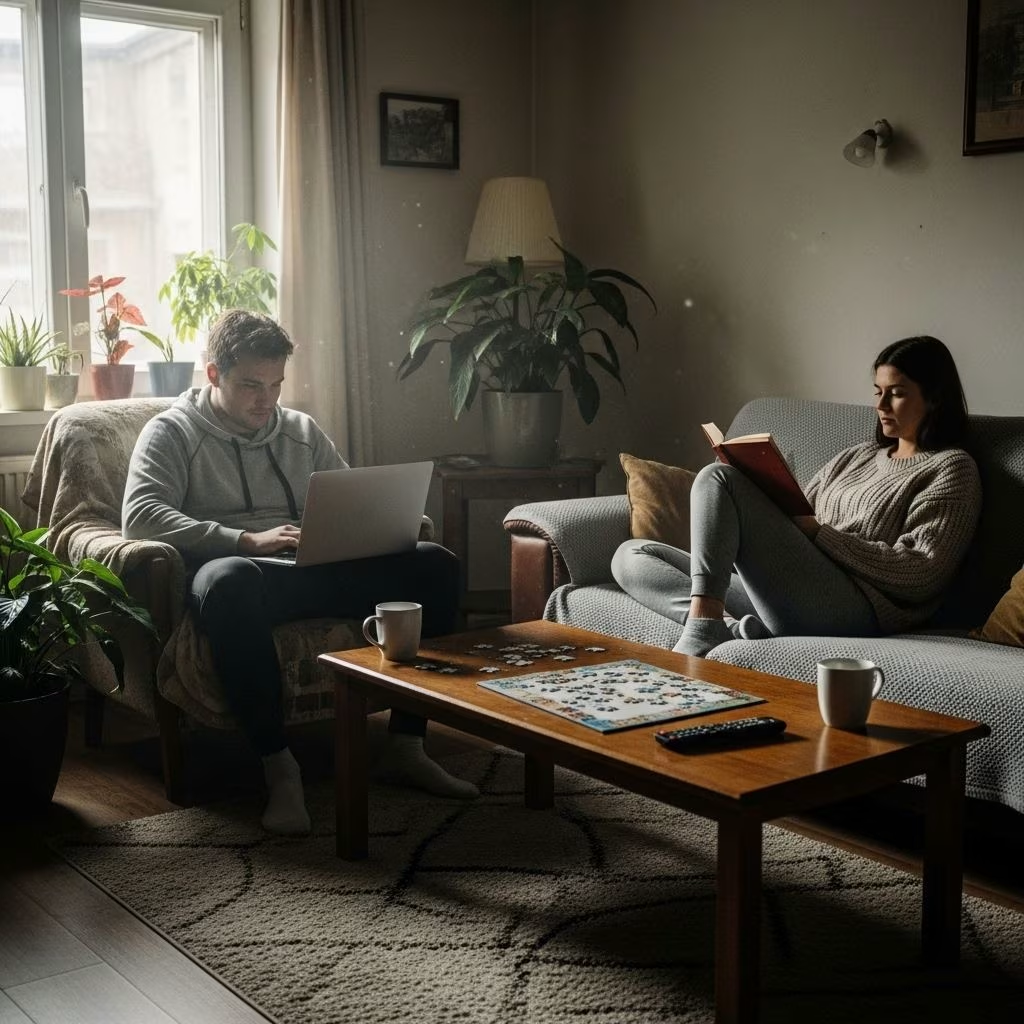
Essential Rules for Couples Living Together During Quarantine
Quarantine changed the nature of relationships by confining couples to the same space for extended periods. While this unprecedented situation brought unique opportunities for bonding, it also introduced new sources of tension and frustration. Success hinges on establishing ground rules, open communication, and practicing empathy every single day. Here’s a comprehensive guide for couples who want to cohabitate harmoniously and keep their relationship thriving during self-isolation.
Why Quarantine Is a Relationship Stress-Test
Being under lockdown together intensifies both the good and the bad in any relationship. Normal distractions—work commutes, social gatherings, hobbies—disappeared overnight. For couples accustomed to having time apart, the new normal can feel overwhelming and even suffocating if handled poorly. This guide is your toolkit for maintaining togetherness without losing your individuality.
The Golden Rules of Quarantine Cohabitation
- Prioritize Honest, Frequent Communication
- Respect Each Other’s Personal Space
- Divide Household Responsibilities
- Maintain Individual and Shared Routines
- Practice Patience and Emotional Support
- Preserve Romance and Intimacy
- Handle Conflict Constructively
- Invest in Self-care and Well-being
1. Prioritize Honest, Frequent Communication
With stress at an all-time high, communication becomes your safety net. Share your thoughts, daily experiences, anxieties, and even small annoyances openly, before they become overwhelming. Establish regular check-ins to exchange how each of you is feeling about the current situation. Be proactive—let your partner know what you need emotionally and practically, rather than expecting them to guess.
- Schedule daily or weekly talks specifically focused on emotional well-being and logistical challenges
- Be clear about expectations regarding alone time, chores, and work hours
2. Respect Each Other’s Personal Space
Constant proximity can breed irritation, even in the strongest relationships. Personal space is essential for mental health and relationship longevity. Designate specific zones or rooms for solo time, work, or calls. Agree on unobtrusive signals to indicate when someone needs space—noise-cancelling headphones or a closed door can do wonders.
- Create a schedule for shared and private time
- Mutually respect boundaries: if one asks for alone time, honor it without guilt-tripping
3. Divide Household Responsibilities
With everyone spending more time at home, domestic tasks multiply. A fair, transparent division of labor reduces resentment and ensures both partners contribute. Create a simple task schedule, alternating responsibilities weekly or according to each person’s strengths and preferences. Flexibility is key—circumstances may change, so revisit and adjust your system regularly.
- Draw up a visible chore chart or shared digital document
- Discuss and agree on standards of cleanliness and comfort
- Rotate less desirable tasks to keep things equitable
4. Maintain Individual and Shared Routines
Routines provide stability in uncertain times. Encourage each other to maintain personal routines, such as exercise, work, and hobbies, to preserve your sense of self. At the same time, create shared rituals—a morning coffee together, evening walks, or movie nights—that reinforce your connection.
- Set regular start and end times for work and leisure
- Prioritize healthy habits—eat nourishing meals, move your body, and sleep well
- Plan joint activities that bring joy and laughter
5. Practice Patience and Emotional Support
Emotions run high during crises. Practice extra patience, especially when your partner’s quirks become more noticeable or stress surfaces in unexpected ways. Offer empathy before criticism. Sometimes, just being present and listening is the best support you can provide.
- Take deep breaths or brief walks when irritation rises
- Validate your partner’s feelings; use phrases like, “I understand why you feel this way”
- Celebrate small victories or acts of kindness
6. Preserve Romance and Intimacy
Romantic feelings don’t have to disappear just because you rarely leave the house. Maintaining intimacy takes intention. Dress up for an at-home dinner date, schedule surprise gestures, or explore new ways to connect sexually and emotionally.
- Set aside ‘date night’ even at home—cook together, play games, or watch a favorite film
- Send flirty texts or leave notes for each other during the day
- Check in about physical and emotional needs regularly
7. Handle Conflict Constructively
Arguments are inevitable, but in close quarters, small issues can escalate. Address problems calmly and as soon as they arise. Practice active listening: allow your partner to fully express themselves without interruption, then summarize before responding. Apologize sincerely if you’re in the wrong and seek compromise where possible.
- Use ‘I’ statements (“I feel…”) rather than accusatory language (“You always…”)
- If a discussion gets too heated, agree to pause and revisit it when both are calm
- Revisit and learn from resolved conflicts; adapt your strategies together
8. Invest in Self-care and Well-being
You can’t pour from an empty cup. Take time for self-care to recharge emotionally, physically, and mentally. Encourage your partner to do the same. This might involve meditation, solo walks, creative projects, or virtual socializing—whatever restores your sense of peace.
- Dedicate daily time to a favorite hobby or mindfulness exercise
- Stay in touch with friends and family for outside perspective and support
- Seek professional help if stress or conflict becomes unmanageable
Common Mistakes Couples Make in Quarantine
- Neglecting individual needs in favor of constant togetherness
- Letting resentment build over unspoken grievances
- Failing to adapt routines and expectations as circumstances change
- Assuming your partner “should know” what you need without communicating
- Trying to resolve every disagreement immediately, even when emotions are high
Turn Quarantine into Relationship Growth
While quarantine has its challenges, it also presents a rare chance to deepen your relationship in unprecedented ways. Consider this a crash course in empathy, adaptability, and teamwork. Use this time to:
- Develop a deeper appreciation for your partner’s resilience and quirks
- Find new activities or rituals that become cherished traditions
- Confront and dismantle old patterns that no longer serve you
Being forced to spend so much time together, paradoxically, can teach you how to be better apart as well.
Table: Quarantine Dos and Don’ts for Couples
| Do | Don’t |
|---|---|
| Communicate openly about feelings and frustrations | Bottle up emotions or expect your partner to read your mind |
| Respect boundaries for alone time and space | Be offended if your partner asks for time alone |
| Share household duties equitably | Let all chores fall to one person |
| Set aside intentional time for romance | Assume intimacy will happen naturally under stress |
| Invest in personal growth and wellbeing | Neglect self-care or mental health needs |
Frequently Asked Questions (FAQs)
How do we handle feeling smothered by togetherness?
Create intentional periods for personal space. Clearly communicate the need for alone time and establish non-negotiable periods where both can decompress separately. Remember, needing space doesn’t mean you’re failing as a couple—it’s a healthy necessity for recharging.
What if we argue more frequently?
Stress amplifies conflict. Accept that some friction is normal. Practice active listening, avoid accusatory language, and take breaks as needed. Try to resolve issues before they snowball, and consider establishing a safe word or signal to pause arguments when emotions run too high. If issues persist, couples therapy is still available online.
How can we keep intimacy alive during lockdown?
Plan intentional date nights at home, experiment with new forms of affection, and talk openly about physical and emotional needs. Don’t overlook small gestures like compliments, flirtatious messages, or spontaneous hugs—consistency in these actions makes a big difference.
What if one of us is an extrovert and the other is an introvert?
Acknowledge and accept differences in social needs. Extroverts should create opportunities for safe interaction—even if virtual—while introverts need guaranteed quiet time. Compromise by setting up a balanced schedule that honors both preferences.
Is it normal to want more alone time than usual?
Absolutely. Increased time together can heighten the desire for solitude, even in loving relationships. Regularly revisit boundaries and recalibrate based on evolving needs to keep the relationship healthy and fulfilling for both.
Final Thoughts
Navigating a romantic relationship during quarantine is challenging but deeply rewarding. By prioritizing honest communication, respect for individuality, and a commitment to shared growth, you can emerge from self-isolation more closely bonded and resilient than ever before. Use these rules not just to survive, but to truly thrive—together and as individuals.
References
- https://www.bryanfagan.com/blog/2020/06/marriage-during-the-covid-19-quarantine-6-surviv/
- https://www.latimes.com/lifestyle/story/2020-04-15/how-to-help-your-marriage-survive-coronavirus
- https://www.lovepanky.com/flirting-flings/dating-game/dating-during-covid
- https://www.lovepanky.com/love-couch/better-love/how-to-ensure-your-relationship-survives-the-coronavirus-isolation
- https://www.marriage.com/advice/relationship/tips-to-maintain-a-relationship-under-quarantine/
- https://pmc.ncbi.nlm.nih.gov/articles/PMC8275454/


