


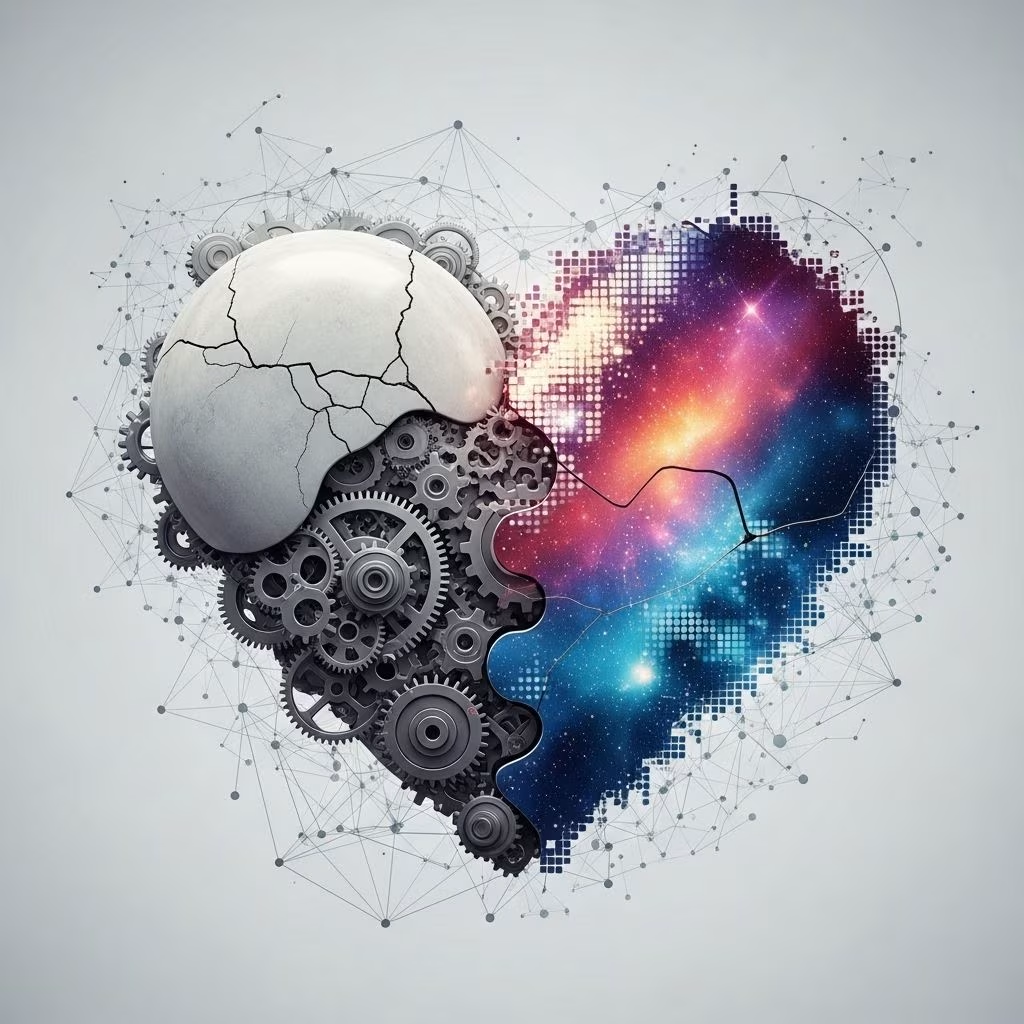
Love Riddles: The Depths and Puzzles of Modern Relationships
Love is among the most celebrated, discussed, and yet bewilderingly complex forces in human life. It can be exhilarating and painful, steadfast and fickle, simple in moments but tangled in broader view. The question remains: Why is love so complicated, and what can we learn by unraveling its many riddles?
What Makes Love a Riddle?
At the core, love is not just an emotion—it is a process, a choice, and an evolutionary necessity. Yet, it often presents itself as a series of paradoxes:
- We crave stability, yet yearn for excitement in love.
- We want honesty, but sometimes fear vulnerability.
- We imagine love as effortless, but it requires ongoing effort and compromise.
Each of these paradoxes is a piece of the puzzle that makes love both captivating and confounding.
The Complexity of Love: More Than Just a Feeling
To truly grasp love’s complexity, we must look at its many dimensions:
- Biological: Neurotransmitters like dopamine and oxytocin drive the sensations of attachment and pleasure.
- Psychological: Past experiences, attachment styles, and personality traits shape how we approach and respond to love.
- Social: Cultural patterns and expectations define what’s considered ‘normal’ in relationships, sometimes obscuring genuine connection.
These layers create an intricate web in which love can flourish—or flounder. The emotional high of infatuation, the gentle warmth of companionship, and the sometimes-agonizing growth that comes from shared hardship are all interwoven aspects of this multi-dimensional phenomenon.
Why Does Love Feel Like a Puzzle?
One of love’s greatest riddles lies in its unpredictability. We can’t always control who we fall in love with, or how a relationship evolves. Chemistry, timing, and circumstance all play roles beyond our conscious control. Sometimes, the more we try to force love into neat boxes, the more it slips through our fingers.
The Paradoxes at the Heart of Love
Love is rich with contradiction. Consider the following enduring riddles:
- Love is selfless—but also selfish.
We give endlessly, but we also want to feel wanted and valued in return. - Love is blind—and yet, it can be brutally honest.
We overlook flaws, but, when in love, we can also see our partners (and ourselves) with a rare clarity. - Love is freedom—but also a kind of binding.
It liberates us emotionally, yet it ties us to responsibilities and commitments.
These paradoxes illuminate why love can feel contradictory—because, in truth, it is.
Types and Shades of Love
Not every love story follows the same script, and not every kind of love is romantic. Understanding the diversity of love helps us appreciate its full spectrum:
- Romantic Love: Characterized by intense passion, longing, and attraction. It’s often the foundation of new relationships and marked by both euphoria and anxiety.
- Companionate Love: A steady kind of affection rooted in trust, deep friendship, and mutual respect. Over time, this often replaces the initial flames of passion in long-term relationships.
- Unconditional Love: Selfless, enduring, and without expectation of reward—typical of parental love or some rare long-term partnerships.
- Infatuation: All-consuming and heady, yet often fleeting.
It brings excitement but can lack the depth of true connection. - Friendship Love: Platonic bonds that enrich our lives and give us a sense of community, safety, and joy.
- Sacrificial Love: Putting someone else’s needs above your own; often considered the purest but also the most challenging form.
| Type of Love | Main Qualities | Common Context |
|---|---|---|
| Romantic | Passion, longing, sexual attraction | Dating, marriages, romantic partnerships |
| Companionate | Trust, stability, deep friendship | Long-term partners, close friendships |
| Unconditional | Selfless, enduring, non-judgmental | Parental love, rare long-term couples |
| Infatuation | Intensity, obsession, excitement | Early-stage romance, crushes |
| Friendship | Support, understanding, loyalty | Platonic relationships, close friends |
| Sacrificial | Selflessness, prioritizing other’s well-being | Parenting, caregiving, deep devotion |
Why Is Love So Hard to Define?
As the poets and scientists alike have found, love refuses easy definition. The word carries distinct meanings in different cultures, phases of life, and contexts. What feels like love to one person may not even register as such for someone else. Some people find love is calm, stable, and supportive; others only recognize it in the wild heat of passion or the pain of longing. There is no single blueprint that can capture its totality.
The Influence of Individual Experiences
Personal history, personality, family background, and previous heartbreak all color our understanding and reactions to love. This is why two people can look at the same scenario and perceive their relationship in vastly different ways—often leading to misunderstanding and conflict.
The Evolution of Love: Change Over Time
Love in its early stages often feels effortless—intense, intoxicating, sure. But over time, what started as infatuation tends to mature into something different:
- Initial passion may fade, but commitment and companionship can deepen.
- Long-term love requires work, forgiveness, and adaptability.
- The excitement of novelty is replaced by the comfort of knowing and being known.
This evolution can be disorienting, especially in a culture obsessed with fresh romance and dramatic passion. Yet, true intimacy is often forged in quiet, everyday acts of caring, not just grand gestures.
The Psychology of Love: What Research Reveals
Modern psychology sheds light on the mechanisms of love, distinguishing between several driving forces:
- Attachment Styles: How we connect with partners often mirrors how we bonded with caregivers in childhood.
- The Love Triangle: According to researcher Robert Sternberg, love can be broken into three components: intimacy, passion, and commitment. Most relationships contain these elements in varying quantities and forms.
- Love Languages: The ways people give and receive love differ—touch, words, acts of service, gifts, or quality time. Misunderstandings often stem from different preferences in expressing and receiving affection.
Common Myths and Misconceptions About Love
- Love Should Be Easy: In truth, all relationships demand effort, communication, and compromise.
- Love Solves All Personal Problems: While love brings support, it does not erase personal issues or emotional baggage.
- Passion Lasts Forever: Research shows the initial high of passionate love ebbs, but deeper bonds can replace it.
- There is Only One True Soulmate: Many people can fulfill our needs for love and companionship; compatibility grows over time.
Why Do We Love Despite the Challenges?
Despite its difficulties and the risk of heartbreak, humans are driven to seek love. Why?
- Biological Imperative: Love strengthens bonds, encourages partnership and cooperation, and is linked to evolutionary survival.
- Emotional Fulfillment: To love and be loved is central to our sense of purpose and happiness.
- Personal Growth: Love tests our ability to trust, forgive, and grow beyond our limitations, offering lessons and resilience.
Love’s Contradictions: Any Answers to the Riddle?
The riddles of love persist because love, by its nature, is not entirely logical. Perhaps the key is not to completely solve these riddles, but to appreciate them as they are—embracing the ambiguity, the mystery, and the ongoing work. Healthy relationships form not out of perfect understanding, but out of compassion, communication, and the willingness to learn together through mistakes and successes alike.
How to Navigate Love’s Complexities
- Recognize Your Expectations: Know what you want from love and clarify it with your partner. Unrealistic expectations are the source of much disappointment.
- Communicate Openly: Express feelings, doubts, and dreams honestly. Good communication is the bedrock of healthy, resilient relationships.
- Embrace Growth: Allow yourself—and your partner—to evolve. Love changes, and that’s normal.
- Accept Vulnerability: Love always involves risk. Being open to vulnerability is essential for real intimacy.
- Celebrate the Joys, Learn from the Struggles: Cherish the good moments and let challenges teach you new things about yourself and your connection.
Frequently Asked Questions (FAQs)
Q: Why does love seem easy for some, but difficult for others?
A: People have unique emotional backgrounds, attachment styles, and relationship experiences. These influence how they approach love, making it feel simple for some and more challenging for others.
Q: Can a relationship survive without passion?
A: While the initial passion tends to fade, relationships often thrive on companionate love built on trust, respect, and deep friendship. Passion can be rekindled but isn’t always sustained at the same intensity.
Q: Is it possible to truly understand another person in love?
A: Understanding in love comes through ongoing communication, shared experience, and empathy. Yet, some mystery always remains, which can make love interesting and dynamic.
Q: How do you differentiate between true love and infatuation?
A: Infatuation is usually marked by intensity and obsession but often lacks depth and endurance. True love develops over time and is characterized by trust, respect, and mutual support even during challenges.
Q: Why do even the best relationships face conflicts?
A: Conflict is natural because no two people are perfectly aligned in all ways. Healthy relationships use conflict as a way to grow, understand each other better, and refine the connection.
Final Thoughts: Embracing the Mystery of Love
Perhaps the greatest riddle of love is that we cannot solve it fully—we can only live it. To love is to invite both joy and uncertainty, stability and change. In doing so, we participate in one of humanity’s oldest, most universal adventures. If you are struggling with the riddles of love in your own life, remember: every heart’s journey is unique, and the questions themselves may hold more wisdom than any single answer.
References
- https://commonwealthtimes.org/2023/03/29/understanding-the-complexity-of-love/
- https://this.deakin.edu.au/society/what-is-love
- https://www.lovepanky.com/love-couch/better-love/types-of-love
- https://www.psypost.org/the-psychology-of-love-10-groundbreaking-insights-into-the-science-of-relationships/
- https://www.lovepanky.com/article-submission-and-writers-guidelines
- https://lovepanky25.rssing.com/chan-14866220/all_p1.html
- https://lovepanky15.rssing.com/chan-14866688/latest.php
- https://www.marriage.com/advice/love/best-love-compatibility-tests-for-couple/
- https://helenfisher.com/romantic-love-can-it-last/


