


What Is an On-Off Relationship?
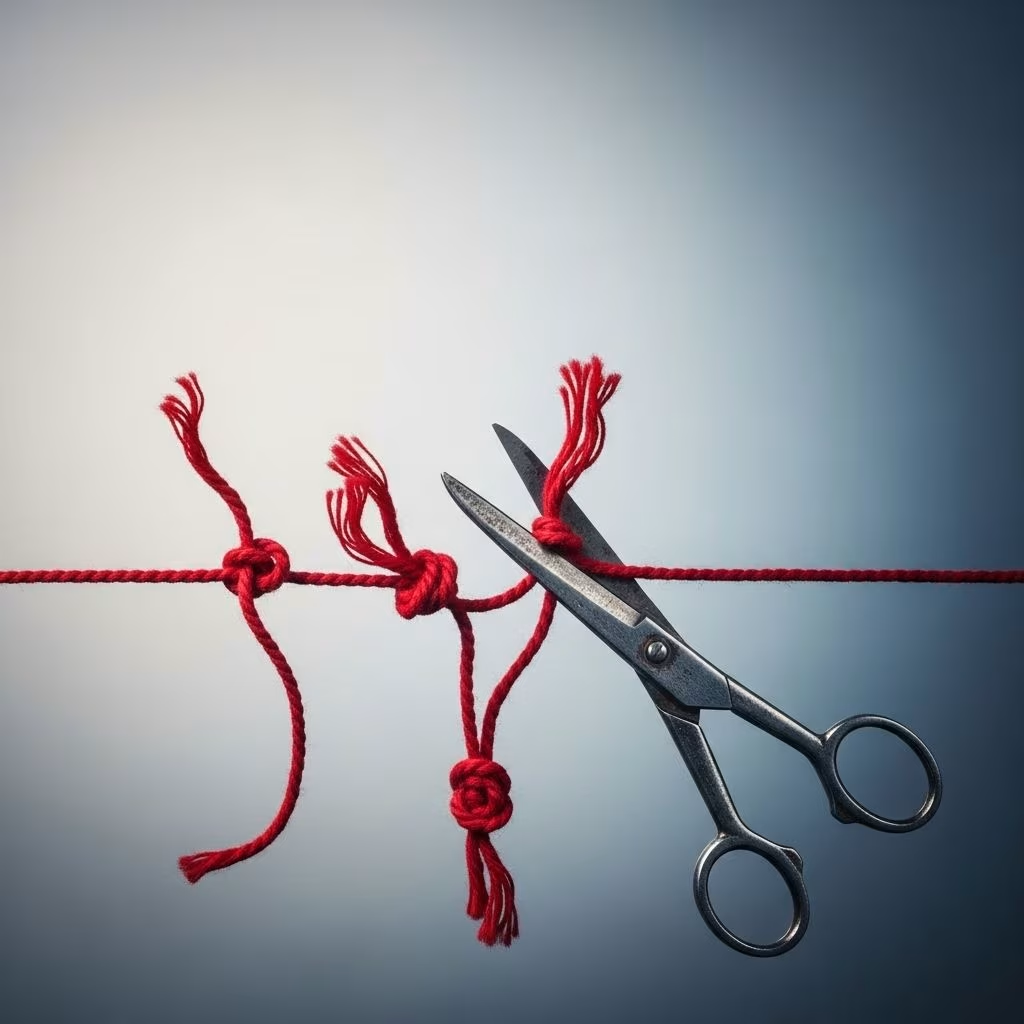
An on-off relationship—sometimes called a yo-yo relationship—is a romantic partnership where the couple repeatedly breaks up and gets back together. This cycle can continue for weeks, months, or even years, with periods of intense connection followed by separation, only to restart the pattern again. These relationships are marked by instability, uncertainty, and a roller coaster of emotions, making it difficult for either partner to fully move forward.
How Do On-Off Relationships Develop?
On-off relationships often begin when two people have a strong initial connection but struggle to resolve conflicts or meet each other’s needs consistently. Instead of working through problems, they break up, only to reunite when loneliness, nostalgia, or unresolved feelings draw them back together. This cycle is fueled by a mix of hope, fear of loss, and the intermittent reinforcement of positive experiences during the “on” phases.
37 Signs You’re in a Yo-Yo Relationship
If you’re unsure whether your relationship falls into this category, consider these common signs:
Behavioral & Emotional Patterns
- Repeated breakups and reconciliations: You’ve broken up and gotten back together multiple times, often for similar reasons.
- Unclear commitment: The level of commitment fluctuates wildly—one day you’re discussing the future, the next you’re avoiding serious conversations.
- Communication landmines: Conversations often lead to arguments or withdrawal, rather than resolution.
- Inconsistent intimacy: Emotional and physical closeness varies drastically, making it hard to build lasting trust.
- Breaking up to resolve conflict: Instead of solving issues, you break up, resetting the relationship rather than growing from challenges.
- Never fully severing ties: Even during “off” periods, you stay in touch, making it impossible to truly move on.
- Emotional roller coaster: Your feelings swing from euphoria to despair, mirroring the highs and lows of the relationship.
Interpersonal Dynamics
- You’re both afraid to let go, even when you know the relationship isn’t healthy.
- External factors (e.g., family, friends) often push you back together.
- You rationalize the cycle as “fighting for love” rather than recognizing it as a pattern of dysfunction.
- You feel more anxious and insecure when apart, but overwhelmed or frustrated when together.
Self-Perception & Growth
- You feel stuck, as if you’re repeating the same story with no real progress.
- Your self-esteem is tied to the relationship’s status.
- You ignore red flags, hoping things will change with each reunion.
- You invest a lot of emotional energy for little lasting reward.
Why Yo-Yo Relationships Are So Bad for You
The Psychological Toll
On-off relationships are emotionally exhausting. The constant cycle of hope and disappointment creates stress and anxiety, making it difficult to focus on personal growth or other relationships. The intermittent nature of positive reinforcement—periods of happiness followed by pain—makes these relationships addictive and hard to leave, even when they’re clearly unhealthy.
The Impact on Emotional Health
- Your emotional state resembles a roller coaster, leading to chronic stress and emotional fatigue.
- You may develop anxious or avoidant attachment styles, fearing abandonment but also intimacy.
- It becomes harder to build new, healthy relationships because your expectations and boundaries are blurred.
Stunted Growth
Each reunion feels like progress, but in reality, the relationship remains stagnant. The time and energy spent cycling through breakups and makeups could be used for personal development, healing, and finding a healthier partnership. Over time, the cycle can erode your confidence and sense of self-worth.
The Psychology Behind On-Off Relationships
The allure of on-off relationships is rooted in several psychological principles:
Intermittent Reinforcement
This psychological phenomenon explains why it’s so hard to leave a yo-yo relationship. When rewards (affection, attention, reconciliation) are given unpredictably, the behavior (staying in the relationship) is reinforced more strongly than if the rewards were consistent. This makes the cycle addictive, as you hold onto hope that the next “on” phase will last.
Pleasure-Pain Principle
The dramatic swings from intense connection to painful separation heighten emotions, making the relationship feel more passionate and meaningful than it actually is. This intensity can be mistaken for true love, masking underlying issues.
Fear of Loss
The fear of losing the relationship—and the potential for happiness—can override rational judgment, keeping people trapped in cycles of hope and disappointment.
How to Recognize and Break the Yo-Yo Cycle
Step 1: Acknowledge the Pattern
You must be honest with yourself about the reality of the relationship. Recognize the pattern and the emotional toll it’s taking on you.
Step 2: Identify the Root Causes
Are unresolved conflicts, communication breakdowns, or incompatible goals driving the cycle? Understanding the underlying causes can help you address—or accept—them.
Step 3: Set Boundaries
Clear boundaries are essential for breaking free. This may mean limiting contact, avoiding triggers, or committing to no more “one last chances.”
Step 4: Focus on Healing
Invest energy in self-care, therapy, or support networks. Healing from a yo-yo relationship requires time and intentional effort to rebuild emotional resilience.
Step 5: Move Forward
Letting go is hard, but staying stuck is harder. Remind yourself that a healthy relationship should add value to your life, not drain it. When you’re ready, open yourself to new possibilities.
Pros and Cons of On-Off Relationships
| Aspect | Pros | Cons |
|---|---|---|
| Emotional Intensity | Moments of intense connection, passion | Chronic stress, anxiety, and emotional exhaustion |
| Personal Growth | Potential for self-reflection after each breakup | Stunted growth, repeated patterns, wasted time |
| Commitment | Flexibility, no long-term pressure | Lack of stability, insecurity, unclear future |
| Communication | Opportunity to address issues (sometimes) | Conflict avoidance, lack of resolution |
| Trust & Intimacy | Periods of closeness | Difficulty building lasting trust and intimacy |
FAQ: On-Off (Yo-Yo) Relationships
Q: Can an on-off relationship ever work out?
A: Rarely. While it’s possible, most yo-yo relationships repeat the same patterns because the underlying issues aren’t resolved. True reconciliation requires both partners to address the root causes and commit to lasting change.
Q: Why is it so hard to leave an on-off relationship?
A: The intermittent reinforcement and fear of loss make these relationships emotionally addictive. Each reunion feels like a “win,” even if it’s temporary, reinforcing the cycle.
Q: How do I know if it’s time to walk away?
A: If the relationship is more draining than rewarding, if you’re not growing, or if you feel stuck in a loop, it’s time to consider moving on for good.
Q: Can counseling help break the cycle?
A: Yes, couples or individual therapy can help you understand the dynamics, set healthier boundaries, and gain the clarity needed to break free.
Q: What are the signs I’m ready to move on?
A: You’re ready when you prioritize your well-being, stop romanticizing the past, and feel hopeful about your future without the relationship.
Conclusion: Breaking Free for Good
On-off relationships may feel like love, but they’re often more about attachment, fear, and habit than genuine happiness. The emotional roller coaster can mask deeper issues and prevent personal growth. Recognizing the pattern, understanding the psychology behind it, and committing to healing are essential steps toward building healthier, more fulfilling relationships—and a happier you.
Additional Resources
- Relationship arguments: How to fight fair and grow closer in love
- Ghosting: What it is and how it affects people
- How to break up with someone who loves you without causing more pain
References
- https://www.lovepanky.com/love-couch/broken-heart/reasons-you-shouldnt-be-in-an-on-off-relationship
- https://lovepanky15.rssing.com/chan-14866688/latest.php
- https://www.lovepanky.com
- https://thepennymatters.com/best-relationship-blogs/
- https://www.scribd.com/document/701940591/31-Secrets-to-Get-Your-Friend-to-Like-You-Fall-in-Love-Before-Asking-Them-Out
- https://lovepanky33.rssing.com/chan-14866264/all_p15.html


