


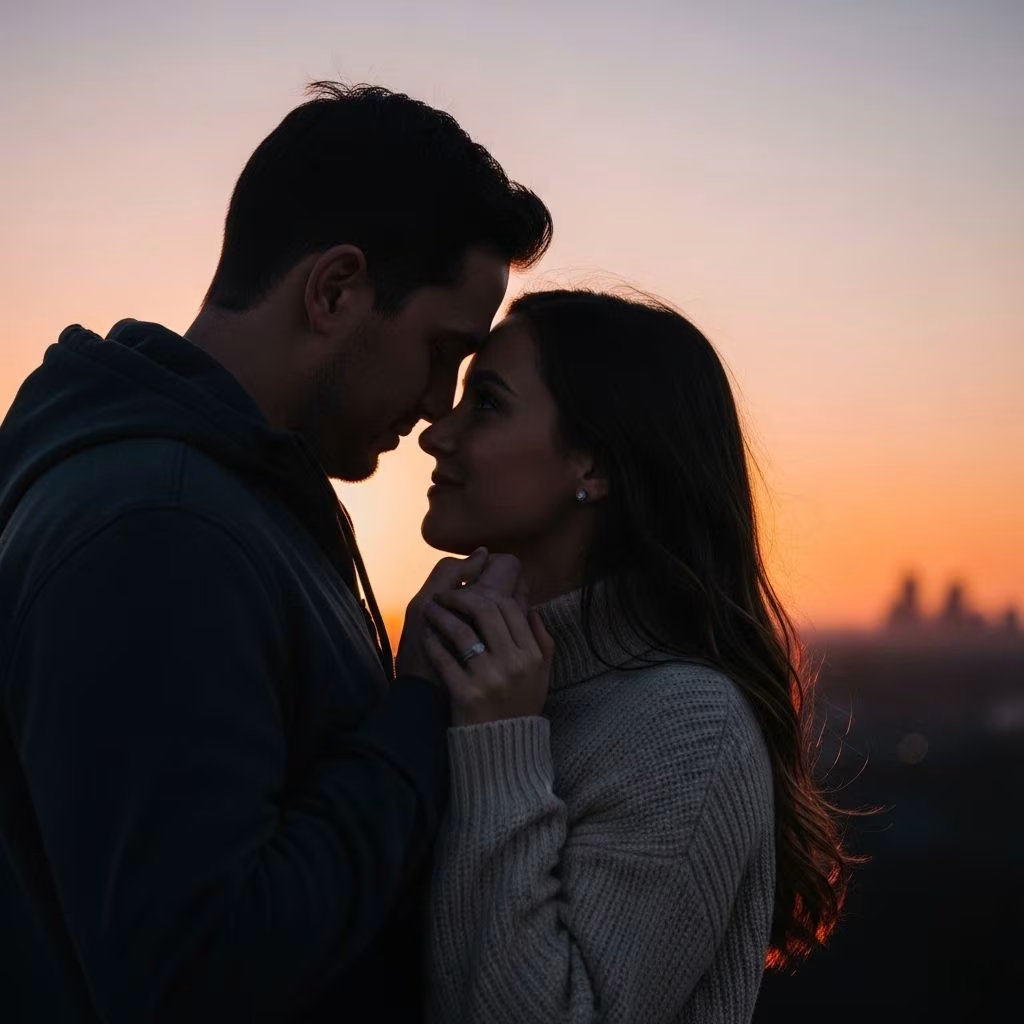
Falling in love is one of the most profound and mysterious experiences in human life. It can feel like a lightning bolt that strikes without warning or a slow burn that gradually intensifies over time. But how long does it actually take to fall in love? Is there a universal timeline, or does it vary from person to person? The answer is more complex than you might think, involving a fascinating interplay of biology, psychology, and individual circumstances.
Understanding the timeline of falling in love can help you navigate your own romantic journey with greater awareness and confidence. Whether you’re wondering if what you’re feeling is genuine love or simply infatuation, or you’re curious about why some people seem to fall faster than others, this comprehensive exploration will shed light on the science and stages behind one of humanity’s most cherished emotions.
The Science Behind Falling in Love
When we talk about falling in love, we’re not just discussing an abstract emotional state. Love has a concrete biological foundation rooted in brain chemistry and neurological processes. Scientists have discovered that falling in love triggers a cascade of chemical reactions in the brain that profoundly affect our thoughts, emotions, and behaviors.
The brain releases powerful chemicals including dopamine, often called the pleasure neurotransmitter, which creates feelings of euphoria and reward. This chemical surge explains why being around someone you’re attracted to can feel so exhilarating. Your brain is literally rewarding you for this connection, encouraging you to pursue it further.
Oxytocin, frequently referred to as the bonding hormone, plays a crucial role in developing deeper emotional connections. As relationships progress beyond initial attraction, oxytocin levels increase, fostering feelings of trust, security, and attachment. This hormone is particularly important in the transition from passionate infatuation to lasting love.
Additionally, serotonin levels can fluctuate during the early stages of romantic attraction, which explains some of the obsessive thinking patterns people experience when newly smitten. The neurobiological changes that occur when falling in love are so significant that brain scans of people in love show activation patterns similar to those seen with certain mood-altering substances.
How Long Does It Actually Take?
The question of how long it takes to fall in love doesn’t have a simple answer because love means different things to different people. However, research has provided some interesting insights into average timelines.
According to relationship experts, the initial process of falling in love can take anywhere from 2 weeks to 4 months. This wide range reflects the highly individual nature of romantic experiences. Some people report feeling love almost instantly, while others require months of getting to know someone before those feelings develop.
When it comes to actually saying “I love you,” research from 2022 involving over a hundred participants revealed fascinating gender differences. Men took an average of 108 days (approximately 4 months) to confess their love, while women took about 123 days (just over 4 months). Interestingly, both men and women reported beginning to think about confessing their love approximately 2 to 2.5 months before actually doing so.
A separate study from 2011 found similar patterns, with males taking about 97 days to express their feelings and females taking around 139 days. These studies suggest that while the timeline varies, a period of 3 to 4 months appears to be a rough average for many people to develop and acknowledge feelings of love.
However, it’s crucial to understand that these are statistical averages. Your personal experience may be completely different, and that’s perfectly normal. Some relationships ignite quickly with intense passion, while others build slowly through friendship and gradual emotional intimacy.
Gender Differences in Falling in Love
Research consistently shows intriguing differences between how men and women experience falling in love, though these are general patterns with many individual exceptions.
Men often fall in love faster than women. Studies suggest that men may develop feelings of love and be ready to express them within just a few weeks of starting a relationship. This tendency may be connected to how the male brain responds to visual attraction and early romantic excitement, with dopamine playing a particularly strong role in men’s initial romantic experiences.
Women typically take a more measured approach, often prioritizing emotional connection, trust, and compatibility before fully committing to love. Women may be more cautious in the early stages of relationships, taking time to assess whether a potential partner meets their needs for security and emotional support. The hormone oxytocin, which builds gradually through shared experiences and emotional intimacy, plays a more prominent role in how women develop romantic feelings.
These differences may have evolutionary roots, though modern relationships are influenced by countless cultural and personal factors. It’s important to remember that these are tendencies, not rules. Many women fall in love quickly, and many men take their time. What matters most is honoring your own pace and feelings rather than trying to conform to any expected timeline.
The Stages of Falling in Love
Falling in love isn’t typically an instantaneous event but rather a journey through distinct stages, each characterized by different emotions and biological processes.
Stage 1: Attraction
Attraction is the spark that starts everything. This first stage can happen remarkably quickly—research shows it takes just one-fifth of a second for someone to register attraction to another person. During this stage, you notice someone and feel drawn to them based on physical appearance, voice, mannerisms, or presence.
This immediate response is largely instinctive and driven by visual and sensory cues. Your brain makes rapid assessments about potential compatibility, often drawing on unconscious patterns related to familiarity. If someone reminds you of positive figures from your past or embodies traits you find appealing, that initial attraction intensifies.
Stage 2: Infatuation
If attraction continues, you enter the infatuation stage, characterized by intense preoccupation with the other person. You might find yourself thinking about them constantly, feeling nervous excitement before seeing them, and experiencing what people commonly describe as “butterflies.”
This stage is dominated by dopamine and norepinephrine, creating feelings of euphoria and obsessive focus. Brain scans of people in this stage show activity patterns similar to those seen in addiction, which explains why new love can feel so all-consuming. Infatuation typically lasts from a few weeks to several months, and while incredibly exciting, it represents a temporary chemical high rather than sustainable love.
Stage 3: Emotional Connection
As the intensity of infatuation begins to settle, a deeper emotional bond starts forming. During this stage, you begin seeing your partner more clearly, recognizing both their strengths and imperfections. Rather than idealizing them, you develop genuine understanding and acceptance.
This stage involves increased vulnerability as you share personal experiences, fears, hopes, and values. Trust becomes central, and you start assessing compatibility on a deeper level. The brain chemical balance shifts as oxytocin plays a more prominent role, fostering feelings of emotional safety and attachment. This stage is where infatuation can transform into genuine love—or where relationships may end if fundamental incompatibilities emerge.
Stage 4: Commitment and Lasting Love
The final stage represents mature, lasting love characterized by security, mutual support, and a commitment to building a future together. The frantic intensity of early attraction has evolved into something calmer but deeper—a sense of partnership and belonging.
In this stage, oxytocin and vasopressin (another bonding hormone) maintain the emotional connection, while the relationship develops its own rhythms and patterns. This is where love becomes a conscious choice as much as a feeling, involving dedication to your partner’s wellbeing and the relationship’s growth even during challenging times.
Factors That Influence Your Love Timeline
Numerous factors can speed up or slow down the process of falling in love, making each person’s experience unique.
Personal History and Attachment Style
Your past experiences profoundly shape how you approach new relationships. If you’ve been hurt before, you might be more cautious and take longer to open up emotionally. Conversely, if you’ve had positive relationship experiences, you might feel more comfortable embracing love quickly.
Your attachment style—developed through early relationships with caregivers—significantly influences your love timeline. People with secure attachment styles tend to be comfortable with intimacy and may develop feelings more readily. Those with anxious attachment might fall quickly but struggle with trust, while avoidant attachment styles typically require more time to develop deep emotional connections.
Personality Traits
Some people are naturally more open, trusting, and emotionally expressive, which can facilitate faster development of romantic feelings. Others may be more analytical, cautious, or reserved, preferring to build connections slowly and deliberately. Neither approach is better—they’re simply different ways of experiencing and expressing emotion.
Circumstances and Proximity
The context in which you meet and develop a relationship matters enormously. Spending significant time together, sharing meaningful experiences, and having opportunities for deep conversation can accelerate emotional bonding. Long-distance relationships or situations with limited contact may extend the timeline.
Quality of communication is particularly important. Relationships characterized by open, honest, vulnerable conversations tend to deepen more quickly than those where communication remains superficial.
Life Stage and Priorities
Where you are in life affects your readiness for love. Someone actively seeking a long-term partner may be more open to falling in love than someone focused on career development or personal growth. Age, previous relationship experience, and life goals all influence how quickly romantic feelings develop.
Love at First Sight: Myth or Reality?
Many people claim to have experienced love at first sight, but what are they actually feeling? Science suggests that what we call love at first sight is more accurately described as intense attraction or infatuation rather than genuine love.
That immediate, powerful connection you might feel upon meeting someone is real and significant, but it’s driven primarily by physical attraction and instant chemistry. True love, according to researchers, requires time to develop because it involves knowing someone deeply—understanding their values, character, how they handle stress, and how compatible you are on multiple levels.
That said, love at first sight experiences can certainly develop into lasting love. That initial spark provides the motivation to pursue the relationship, and through subsequent stages of getting to know each other, genuine love can bloom. The key is recognizing that the intense feeling at first meeting is the beginning of a potential love story, not the complete thing itself.
When You Should Say ‘I Love You’
Deciding when to confess your love is one of the most anxiety-inducing moments in any relationship. While there’s no perfect formula, several considerations can guide your timing.
Wait until you genuinely feel it. Don’t say “I love you” because you think it’s expected at a certain point or because your partner has said it first. These words carry weight and should reflect authentic feelings.
Consider the relationship foundation. Have you moved beyond infatuation into a stage where you know each other more deeply? Can you identify specific qualities about your partner that you love beyond physical attraction? Do you feel emotionally safe and secure with them?
Pay attention to readiness cues. If your partner is opening up emotionally, planning future activities together, and demonstrating commitment through actions, they may be receptive to hearing about your feelings. However, if the relationship still feels casual or uncertain, it might be wise to wait.
Most importantly, don’t rush it. Research showing average timelines of 3-4 months before confession suggests that taking time to be sure of your feelings leads to more authentic declarations. Saying “I love you” prematurely can create pressure or complicate the relationship’s natural development.
Recognizing Real Love vs. Infatuation
Distinguishing between genuine love and intense infatuation is crucial for understanding your feelings and making wise relationship decisions.
Infatuation is characterized by obsessive thinking, idealization of the other person, intense physical attraction, anxiety about their feelings, and a sense that you can’t live without them. It feels urgent, all-consuming, and often overwhelming. Infatuation focuses heavily on your own feelings and needs.
Real love develops more gradually and feels more stable. You see your partner clearly, including their flaws, and accept them as a whole person. Love involves genuine care for their wellbeing independent of your own needs, a sense of partnership and teamwork, comfort and security rather than constant anxiety, and the ability to maintain your own identity and interests alongside the relationship.
Infatuation asks “What can this person do for me?” while love asks “What can we build together?” Infatuation is about intensity; love is about depth. Understanding this distinction helps you evaluate whether your feelings are likely to last and grow or whether you’re experiencing a temporary chemical high.
Cultural and Individual Variations
It’s important to recognize that much of the research on falling in love comes from Western, particularly American, contexts. Love experiences and expressions vary significantly across cultures.
Some cultures emphasize passionate romantic love as the foundation for relationships, while others prioritize compatibility, family approval, or practical considerations. The timeline for developing love may be quite different in cultures where arranged marriages are common or where extended courtship periods are traditional.
Additionally, individual definitions of love vary widely. For some, love is primarily an emotional feeling; for others, it’s demonstrated through actions and commitment. Some people experience love as a sudden, overwhelming emotion, while others describe it as a gradual realization.
Your personal love timeline is influenced by your cultural background, family models of relationships, personal values, and unique psychological makeup. Comparing your experience to averages or others’ stories can be interesting, but what matters most is that your feelings are genuine and your relationship is healthy.
Building Healthy Love
Regardless of how quickly or slowly you fall in love, building a healthy, lasting relationship requires intentional effort beyond initial feelings.
Maintain open communication about your feelings, needs, and concerns. Don’t assume your partner knows what you’re thinking or feeling—express it clearly and listen actively when they do the same.
Preserve your individual identity. Healthy love doesn’t require losing yourself in another person. Maintain your own interests, friendships, and personal growth alongside your relationship.
Build trust gradually through consistency, reliability, and honesty. Trust is the foundation of lasting love and can’t be rushed.
Navigate conflict constructively. How you handle disagreements reveals a lot about relationship health. Approach conflicts as problems to solve together rather than battles to win.
Keep nurturing the relationship. Love requires ongoing attention and care. Continue dating each other, expressing appreciation, and creating new shared experiences even after the initial excitement fades.
Frequently Asked Questions
Q: Can you fall in love with someone in just a few days?
A: What you experience in a few days is more accurately described as intense attraction or infatuation rather than genuine love. While these feelings are real and can be powerful, true love requires time to develop because it involves deeply knowing someone—understanding their character, values, and compatibility with you. That said, intense early attraction can certainly develop into lasting love over time.
Q: Is there a difference between being in love and loving someone?
A: Yes, being “in love” typically refers to the passionate, romantic feelings characterized by intense attraction and emotional euphoria, while “loving someone” often describes a deeper, more stable form of care and commitment. Being in love is more associated with the early stages dominated by dopamine and excitement, while loving someone reflects mature attachment characterized by oxytocin and long-term bonding.
Q: Why do men seem to fall in love faster than women?
A: Research suggests men often develop romantic feelings more quickly, possibly because their brains respond strongly to visual attraction and early romantic excitement. Women tend to take more time, often prioritizing emotional connection and trust before fully committing to love. These are general patterns with many exceptions, and both approaches are normal and valid ways of developing romantic feelings.
Q: How do I know if what I’m feeling is real love?
A: Real love involves seeing your partner clearly including their flaws and accepting them as a complete person, genuine concern for their wellbeing independent of your own needs, feeling secure and comfortable rather than constantly anxious, and being able to maintain your own identity within the relationship. If your feelings are primarily characterized by obsessive thinking, idealization, and intense anxiety, you may still be in the infatuation stage.
Q: Is it normal to take months to fall in love?
A: Absolutely. Research shows that 3-4 months is a common timeline for developing and recognizing feelings of love, and many people take even longer. Taking time to truly know someone before falling in love often leads to more stable, lasting relationships. There’s no “correct” timeline—what matters is that your feelings develop authentically.
Q: What if my partner is falling in love faster than I am?
A: Different timelines are completely normal and don’t necessarily indicate incompatibility. Communicate honestly with your partner about where you are emotionally without feeling pressured to match their pace. A healthy relationship allows both people to develop feelings at their own speed while building trust and connection together.
Q: Can you fall back in love with someone after the feeling fades?
A: Yes, love naturally evolves over time. The intense passion of early romance often settles into a calmer but deeper connection. If feelings have faded, couples can often reignite their connection through intentional effort—creating new shared experiences, improving communication, addressing underlying issues, and recommitting to the relationship. However, this requires both partners’ willingness to invest in rebuilding the connection.
References
- https://psychcentral.com/relationships/how-long-does-it-take-to-fall-in-love
- https://empathyhealthclinic.com/how-long-does-it-take-to-fall-in-love-timelines-what-to-expect/
- https://www.medicalnewstoday.com/articles/how-long-to-fall-in-love
- https://health.clevelandclinic.org/understanding-love-stages-and-languages
- https://www.sciencefocus.com/the-human-body/how-long-does-it-take-to-fall-in-love
- https://www.marriage.com/advice/love/fall-in-love/


