


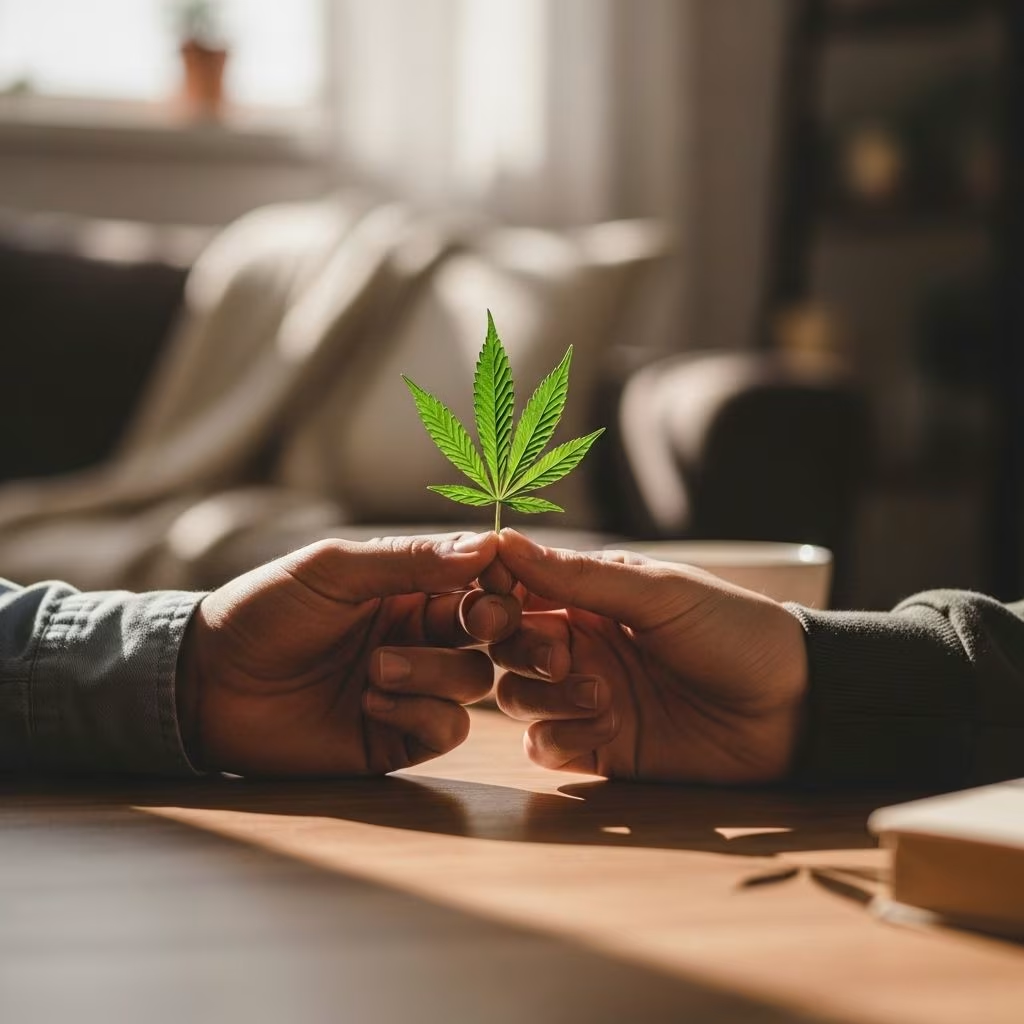
The conversation around cannabis has evolved dramatically over the past decade. As legalization spreads across numerous states and countries, more couples find themselves navigating the complexities of marijuana use within their romantic relationships. While popular culture often portrays cannabis as a harmless social lubricant that brings people together, emerging research paints a more nuanced picture of how marijuana use actually impacts romantic partnerships, communication patterns, and relationship satisfaction.
Understanding the real effects of cannabis on relationships has become increasingly important as more individuals incorporate marijuana into their daily routines. Recent studies have begun examining not just whether cannabis affects relationships, but precisely how these effects manifest in real-world interactions between partners. The findings challenge many common assumptions about marijuana’s role in romantic partnerships and reveal surprising insights about communication, conflict resolution, and relationship dynamics.
The Paradox of Cannabis Users’ Self-Perception
One of the most striking discoveries in recent relationship research involves a significant disconnect between how cannabis users perceive their relationship behaviors and how they actually behave during conflicts. This paradox has profound implications for couples trying to navigate relationship challenges while one or both partners use marijuana regularly.
Research conducted at Rutgers University and Mount Holyoke College examined 145 couples where at least one partner used cannabis. The study employed a comprehensive methodology that included self-reports, videotaped conflict discussions, physiological measurements, and independent observer ratings. What researchers discovered was both surprising and concerning: cannabis users consistently rated their conflict resolution skills more positively than objective observers did.
During laboratory-based conflict discussions, participants who used cannabis more frequently demonstrated several problematic behaviors. They issued more criticism and demands toward their partners, avoided addressing core issues during disagreements, and struggled to transition from conflict discussions to conversations about positive aspects of their relationship. Yet when asked to evaluate their own performance, these same individuals reported greater satisfaction with how conflicts were resolved and failed to recognize that they had used avoidance or demanding strategies.
This self-perception gap represents more than just a minor oversight. When individuals cannot accurately assess their own relationship behaviors, they lose the opportunity to recognize problems and make necessary adjustments. Partners who genuinely believe they are communicating effectively when objective evidence suggests otherwise may resist feedback from their significant other, potentially creating a cycle of unresolved conflict and growing frustration.
Physiological Stress Responses and Emotional Regulation
Beyond behavioral observations, researchers measured physiological indicators that revealed how cannabis use affects the body’s stress response system during relationship conflicts. These biological measurements provide objective evidence of how marijuana impacts emotional regulation during challenging interpersonal moments.
The study found that frequent cannabis users showed less parasympathetic withdrawal during interactions with their partners. This physiological pattern indicates a reduced capacity to flexibly respond to stress. The parasympathetic nervous system plays a crucial role in helping individuals calm down after stressful events and regulate emotional responses. When this system functions less effectively, people may struggle to modulate their reactions during heated discussions or find it harder to de-escalate tensions with their partner.
This diminished physiological flexibility helps explain some of the behavioral patterns observed in cannabis users during conflict. Without the full range of stress-response capabilities, individuals may find themselves stuck in maladaptive communication patterns, unable to shift gears when conversations become difficult. The body’s reduced ability to regulate stress responses may manifest as persistent criticism, inability to compromise, or difficulty moving past disagreements even when both partners want to find resolution.
Concordant Versus Discordant Cannabis Use Patterns
Not all cannabis-using couples experience the same relationship outcomes. Research examining dyadic patterns—meaning how both partners’ marijuana use interacts—reveals that whether couples use cannabis together or separately makes a significant difference in relationship quality and conflict dynamics.
A comprehensive study of 149 couples found a robust pattern: couples where both partners either used marijuana or both abstained displayed more adaptive relationship functioning across multiple indicators compared to couples where only one partner used cannabis. This concordance effect appeared in self-reported relationship satisfaction, anger levels during conflict, demand and withdrawal patterns, constructive behaviors, and overall relationship quality.
The discordant couples—where partners differed in their marijuana use—faced particular challenges. These partnerships showed higher levels of anger expression during conflicts, more problematic demand and withdrawal dynamics, and lower overall relationship quality as rated by independent observers. The pattern was especially pronounced in relationships where the female partner used marijuana while the male partner did not, suggesting that gender dynamics may interact with cannabis use patterns in complex ways.
Why does concordance matter so much? When both partners share similar substance use patterns, they likely experience similar effects on mood, energy levels, and social preferences. They may also share values around cannabis use and face fewer conflicts about whether, when, and how much to use. Discordant couples, conversely, may experience fundamental mismatches in their daily rhythms, recreational preferences, and perspectives on substance use that create ongoing sources of tension.
Communication Breakdown and Cognitive Effects
Cannabis affects cognitive processes in ways that directly impact relationship communication. These cognitive changes can subtly undermine the quality of interactions between partners, making effective communication more challenging even when both people have good intentions.
Marijuana use can impair working memory, making it harder to track complex conversations or remember important details from previous discussions. During relationship conflicts—which often involve referencing past events, tracking multiple perspectives, and holding several ideas in mind simultaneously—these memory difficulties can significantly hamper productive dialogue. Partners may find themselves rehashing the same issues repeatedly because neither can accurately recall what was previously discussed or agreed upon.
The drug’s impact on executive functioning also affects conflict resolution abilities. Planning, organizing thoughts, and maintaining focus all become more difficult under marijuana’s influence. These cognitive effects can make it challenging to engage in the kind of structured problem-solving that helps couples work through disagreements effectively. When one or both partners struggle to organize their thoughts or maintain conversational focus, discussions may meander without reaching resolution or devolve into frustration.
Cannabis can also create a sense of disconnection that interferes with emotional attunement between partners. While users may feel more relaxed or introspective, they may simultaneously become less responsive to their partner’s emotional cues and needs. This disconnect can leave the non-using partner feeling ignored or unimportant, breeding resentment over time.
The Empathy Paradox
Many people associate marijuana use with increased feelings of openness, acceptance, and empathy. However, research challenges this assumption, particularly regarding heavy or chronic use. Contrary to popular belief, heavy marijuana use can actually make individuals colder and less tolerant rather than more understanding.
This empathy deficit has serious implications for romantic relationships, where the ability to take your partner’s perspective seriously forms the foundation of healthy communication and conflict resolution. When cannabis use reduces empathetic responses, partners may find it harder to validate each other’s feelings, understand differing viewpoints, or demonstrate the compassion necessary to work through relationship challenges together.
The mechanism behind this reduced empathy may relate to marijuana’s effects on emotional processing and social cognition. While acute use might produce temporary feelings of connection, chronic use may dull emotional responsiveness over time. Partners who rely on marijuana regularly may gradually lose touch with the emotional nuances that help people navigate complex interpersonal situations with sensitivity and care.
Energy, Productivity, and Relationship Investment
Beyond communication and conflict patterns, cannabis use affects the overall energy and effort partners bring to their relationships. Marijuana’s impact on motivation and productivity can create imbalances that strain romantic partnerships in subtle but significant ways.
Reduced energy levels and decreased productivity represent common effects of regular marijuana use. When one or both partners experience these effects, the consequences ripple through various aspects of the relationship. Household responsibilities may fall disproportionately on the non-using partner. Plans for activities, travel, or shared projects may stall as the using partner lacks the drive to follow through. Over time, these imbalances can breed resentment and disappointment.
The impact extends beyond practical matters to emotional investment. Relationships thrive when both partners actively engage, plan for the future, and invest energy in maintaining connection. When marijuana use diminishes one partner’s capacity or willingness to invest this energy, the relationship may begin to feel one-sided. The non-using partner may feel like they are carrying the relationship alone, while the using partner may not recognize how their reduced engagement affects their significant other.
Paranoia, Trust, and Relationship Security
For some regular cannabis users, particularly those who consume high-potency products or use heavily, paranoia becomes a recurring issue. While not everyone experiences this effect, those who do face serious challenges in maintaining relationship trust and security.
Paranoid thoughts triggered by marijuana use can manifest as unfounded suspicions about a partner’s faithfulness, intentions, or honesty. Even when these thoughts are recognized as irrational during sober moments, their repeated occurrence can erode trust in profound ways. Partners may find themselves constantly reassuring an anxious significant other, defending themselves against baseless accusations, or walking on eggshells to avoid triggering paranoid episodes.
The cumulative effect of cannabis-induced paranoia damages the sense of safety and security that healthy relationships require. Trust, once undermined, proves difficult to rebuild. Even after paranoid episodes pass, their residue may linger, creating lasting damage to relationship foundations that take significant time and effort to repair.
Treatment and Recovery Pathways
For couples struggling with the effects of marijuana use on their relationship, several therapeutic approaches offer pathways toward healing and improved functioning. Recognition of the problem represents the crucial first step, though the self-perception gaps discussed earlier can make this acknowledgment difficult for cannabis users.
Cognitive-behavioral therapy (CBT) has shown effectiveness in treating problematic marijuana use and its relationship consequences. CBT helps individuals recognize damaging thought patterns, emotional reactions, and behaviors that contribute to relationship problems. By identifying these patterns, users can develop alternative responses that better serve their relationships.
The therapy process typically involves examining the specific ways cannabis use affects relationship interactions. Users learn to recognize the gap between their self-perception and actual behavior, developing greater self-awareness around how marijuana influences their communication style, emotional responses, and conflict management. This awareness creates opportunities for meaningful change.
Relationship or family counseling provides another valuable intervention, particularly for couples where marijuana use has created significant conflict or distance. These therapeutic approaches bring both partners into the conversation, helping them communicate more effectively about substance use concerns while developing strategies to strengthen their connection.
Couples therapy can help partners navigate the challenges of concordant or discordant use patterns, find common ground on substance use boundaries, and rebuild trust and communication skills that marijuana use may have damaged. For discordant couples especially, having a neutral third party facilitate discussions about cannabis use and its impacts can prove invaluable.
Research Methodology and Study Design
Understanding how these research findings were generated helps contextualize their significance and limitations. The studies examining cannabis and relationships employed sophisticated methodologies designed to capture multiple dimensions of relationship functioning.
The Rutgers study used a multi-method approach combining self-reports with objective behavioral observations. Couples identified topics of disagreement and engaged in videotaped conflict discussions while researchers monitored physiological stress markers including heart rate and respiration patterns. Multiple trained raters independently assessed behaviors like avoidance, negative engagement, and ability to transition to positive discussions.
This layered methodology proved essential for detecting the self-perception gaps that represented the study’s most significant finding. Without objective behavioral ratings to compare against participants’ self-assessments, researchers would have missed the disconnect between users’ perceptions and their actual conflict behaviors.
The dyadic studies examining concordant versus discordant use patterns similarly employed both self-report measures and behavioral observation. Independent coders who were unaware of participants’ marijuana use patterns rated interaction quality, ensuring that observer bias did not influence results. This careful design strengthens confidence in the finding that concordant use patterns predict better relationship outcomes than discordant patterns.
Implications for Couples and Clinical Practice
These research findings carry important implications for couples navigating cannabis use in their relationships and for therapists working with these couples. Several practical applications emerge from the evidence.
First, couples should recognize that individual perceptions about how well conflicts are resolved may not reflect reality, particularly when one or both partners use marijuana regularly. Creating space for honest feedback from partners and potentially seeking outside perspectives through couples counseling can help bridge these perception gaps.
Second, couples considering or currently using cannabis should pay attention to concordance patterns. While abstaining together or using together both predict better outcomes than discordant use, the research clearly indicates that concordant abstinence produces the highest levels of relationship satisfaction and communication quality. Couples might use this information when making decisions about substance use within their relationship.
Third, therapists working with couples should assess cannabis use patterns and consider how marijuana might influence the relationship dynamics they observe. The research suggests that addressing substance use may prove necessary for resolving certain relationship issues, even when couples do not initially identify marijuana as a concern.
Fourth, both partners and clinicians should recognize that cannabis users’ self-assessments of their relationship behaviors may be unreliable. Incorporating multiple perspectives and behavioral observations becomes particularly important when evaluating relationship functioning in couples where marijuana use occurs.
Future Research Directions
While current research provides valuable insights, many questions remain about how cannabis affects romantic relationships. Future investigations might examine how different strains, potencies, and consumption methods produce varying relationship effects. The existing research largely treats marijuana as a uniform substance, but the diversity of available products suggests effects may differ substantially.
Longitudinal studies tracking couples over years could reveal how relationship trajectories differ based on cannabis use patterns and whether effects accumulate or diminish over time. Most existing research provides snapshots of relationship functioning at single points, leaving questions about long-term impacts largely unanswered.
Research examining how couples successfully navigate cannabis use without experiencing negative relationship consequences could identify protective factors and resilience mechanisms. Understanding what distinguishes couples who use marijuana without relationship problems from those who struggle could inform prevention and intervention efforts.
Finally, investigation into how legalization and changing cultural attitudes toward marijuana affect relationship dynamics would provide valuable context. As cannabis becomes increasingly normalized, do the relationship effects change? Do couples develop better strategies for managing marijuana use within their partnerships as social acceptance grows?
Frequently Asked Questions
Q: Does using marijuana with your partner strengthen the relationship?
A: Research indicates that couples who both use marijuana report better relationship functioning than couples where only one partner uses. However, couples where both partners abstain report even higher satisfaction levels than concordant users, suggesting that shared abstinence predicts optimal relationship outcomes.
Q: Can cannabis users accurately assess their communication during conflicts?
A: Studies reveal that cannabis users often overestimate their conflict resolution skills and fail to recognize problematic behaviors like criticism, avoidance, and demanding communication styles. This self-perception gap can make it difficult for users to identify and address relationship problems.
Q: What happens when only one partner uses cannabis regularly?
A: Discordant couples—where one partner uses marijuana and the other does not—consistently show more relationship difficulties including higher anger levels, worse communication patterns, and lower overall relationship quality compared to couples where both partners have matching use patterns.
Q: Does marijuana really reduce empathy in relationships?
A: Contrary to popular belief, heavy marijuana use can decrease empathy and make individuals colder and less tolerant rather than more understanding. This empathy deficit makes it harder for users to take their partner’s perspective seriously, undermining effective communication and conflict resolution.
Q: What treatments help couples dealing with cannabis-related relationship problems?
A: Cognitive-behavioral therapy helps individuals recognize how marijuana affects their thoughts, emotions, and behaviors in relationships. Couples counseling or family therapy can address relationship dynamics directly, helping partners develop better communication skills and navigate substance use concerns together.
Q: How does cannabis affect stress responses during relationship conflicts?
A: Frequent cannabis users show reduced parasympathetic nervous system withdrawal during partner interactions, indicating diminished capacity to flexibly respond to stress. This physiological pattern can make it harder to regulate emotions, de-escalate tensions, or recover from difficult conversations with partners.
References
- https://www.rutgers.edu/news/cannabis-users-can-misperceive-how-well-their-romantic-relationships-are-functioning
- https://pmc.ncbi.nlm.nih.gov/articles/PMC5025370/
- https://www.northpointcolorado.com/rehab-blog/how-marijuana-affects-relationships/
- https://integrative-psych.org/resources/the-impact-of-cannabis-on-cognitive-processes-and-relationships
- https://digscholarship.unco.edu/dissertations/1127/


