


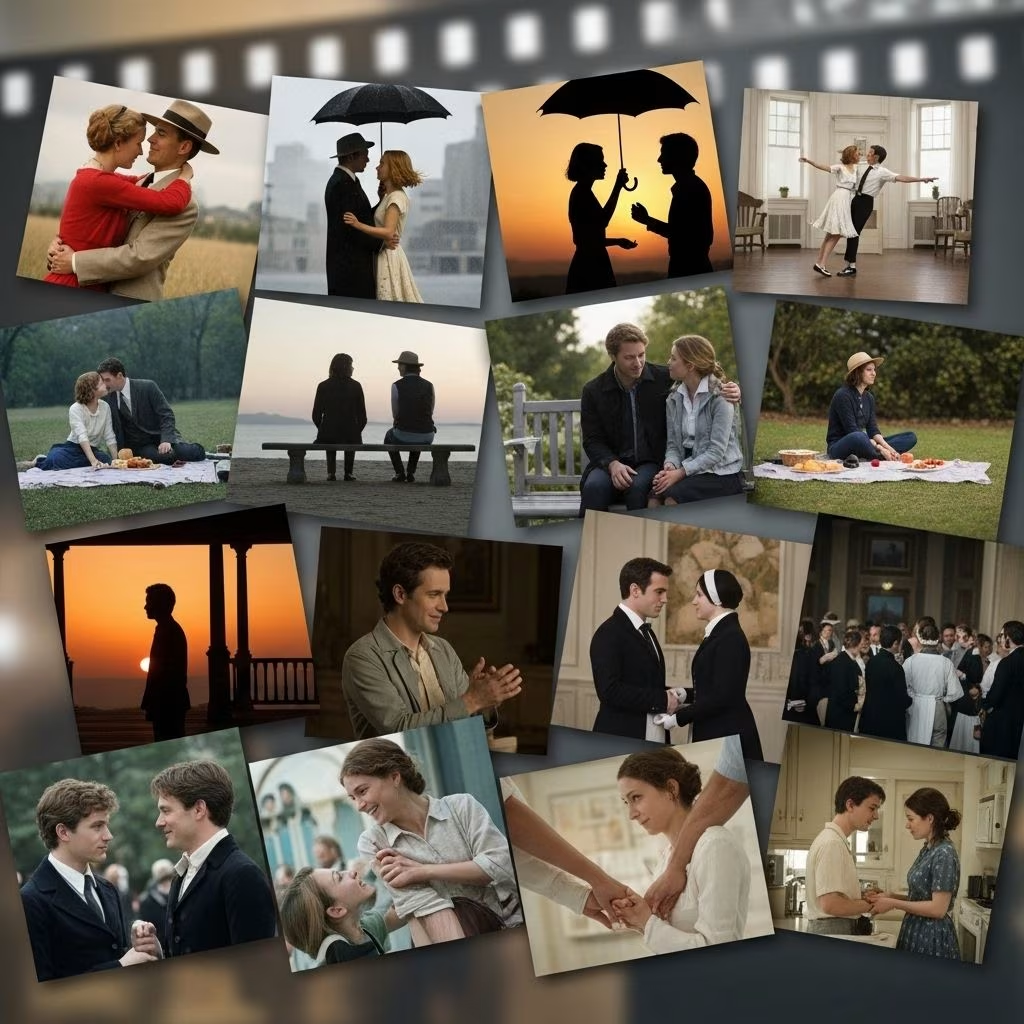
Movies about relationships have an extraordinary ability to capture the complexity of human connection, offering audiences both entertainment and insight into the dynamics of love, heartbreak, and everything in between. Whether you’re looking for a lighthearted romantic comedy to lift your spirits or a thought-provoking drama that explores the deeper aspects of intimacy, relationship films provide a window into the universal experiences that bind us together. These movies reflect our own romantic journeys, validate our feelings, and sometimes offer perspective on the challenges we face in our personal lives.
The beauty of relationship cinema lies in its diversity. From the butterflies-in-your-stomach excitement of new love to the comfortable familiarity of long-term partnerships, and from the crushing pain of breakups to the complex negotiations of modern dating, these films cover the entire spectrum of romantic experience. In today’s streaming era, accessing these cinematic treasures has never been easier, with major platforms offering extensive libraries of relationship-focused content. This comprehensive guide explores twelve essential movies about relationships, each offering unique perspectives on love and connection, complete with information on where you can stream them right now.
Classic Romantic Comedies That Define the Genre
Romantic comedies represent the most accessible and beloved category of relationship films, combining humor with heartfelt emotion to create experiences that resonate across generations. These films typically follow familiar narrative patterns—meet-cutes, misunderstandings, grand romantic gestures—but the best examples transcend formula to deliver genuinely meaningful stories about human connection. The enduring appeal of rom-coms lies in their ability to make us believe in love’s possibilities while keeping us entertained with wit, charm, and relatable characters navigating the often-absurd world of modern romance.
500 Days of Summer revolutionized the romantic comedy genre when it arrived in 2009, offering a non-linear exploration of a relationship that doesn’t follow the typical Hollywood trajectory. Starring Joseph Gordon-Levitt as Tom, a hopeless romantic, and Zooey Deschanel as Summer, the object of his affection who doesn’t believe in true love, the film chronicles their 500-day relationship with brutal honesty and creative flair. Director Marc Webb’s innovative approach jumps back and forth through time, contrasting Tom’s expectations with reality in clever split-screen sequences that highlight the gap between romantic fantasy and lived experience. The film’s willingness to subvert rom-com conventions made it a defining movie of its era, speaking to millennials who were beginning to question traditional relationship narratives. The soundtrack, featuring indie favorites like Regina Spektor and The Smiths, perfectly captures the bittersweet tone. Available on Hulu, this modern classic remains essential viewing for anyone interested in honest portrayals of contemporary romance.
Crazy, Stupid, Love takes a multi-generational approach to relationships, weaving together several storylines that examine love at different life stages. Steve Carell delivers a vulnerable performance as Cal Weaver, a middle-aged man whose comfortable marriage suddenly falls apart, forcing him to reenter the dating world with the help of smooth-talking player Jacob Palmer, played with charisma by Ryan Gosling. The film also features Emma Stone as Hannah, the woman who finally makes Jacob want to commit, creating one of cinema’s most charming on-screen couples. What elevates this 2011 film beyond typical rom-com territory is its willingness to explore the messiness of relationships—the awkwardness of dating after divorce, the complications of teenage crushes, and the hard work required to maintain long-term partnerships. The ensemble cast, which also includes Julianne Moore, Marisa Tomei, and a young Analeigh Tipton, brings depth to characters that could have been one-dimensional. The film’s interconnected narrative structure pays off with clever reveals that demonstrate how our romantic choices ripple through our communities. Currently streaming on Hulu, this movie offers both laughs and genuine insight into the unpredictable nature of love.
Mind-Bending Romance and Unconventional Love Stories
Not all relationship movies follow straightforward narratives or comfortable emotional trajectories. Some of the most memorable films about love challenge viewers with complex structures, philosophical questions, or genre-blending approaches that force us to think differently about connection and intimacy. These unconventional relationship films often leave lasting impressions precisely because they refuse to provide easy answers or neat resolutions to the messy questions of the heart.
Eternal Sunshine of the Spotless Mind stands as one of the most original and philosophically rich romance films ever made. Charlie Kaufman’s screenplay imagines a world where a medical procedure can erase specific memories, and Jim Carrey and Kate Winslet play former lovers who choose to have each other erased after a painful breakup. As the procedure unfolds, Carrey’s character Joel realizes he doesn’t want to lose his memories of Clementine, even the painful ones, leading to a desperate chase through his own mind to preserve their relationship. Director Michel Gondry brings visual inventiveness to this exploration of memory, identity, and the question of whether it’s better to have loved and lost or never loved at all. The film’s 2004 release marked a turning point in romantic cinema, proving that love stories could be intellectually challenging while remaining emotionally resonant. The supporting cast, including Tom Wilkinson, Mark Ruffalo, Kirsten Dunst, and Elijah Wood, adds layers to a story that asks profound questions about what makes relationships worth the inevitable pain they cause. This masterpiece challenges the notion that forgetting might be easier than remembering, ultimately arguing that our romantic experiences, however painful, fundamentally shape who we are.
Mr. Nobody takes the concept of choice and consequence to its logical extreme, following Nemo Nobody, played by Jared Leto, as he narrates his life story from the perspective of being the last mortal human in the year 2092. Director Jaco Van Dormael presents multiple versions of Nemo’s life, each branching from different decisions made at critical moments, particularly a childhood choice between staying with his father or leaving with his mother. The film explores how this single decision creates completely different romantic destinies, with Nemo experiencing love with three different women across various timelines. This Belgian-French-Canadian production combines science fiction elements with profound philosophical questions about determinism, choice, and the nature of love itself. The non-linear narrative can be challenging, but patient viewers are rewarded with a visually stunning meditation on how our choices shape our romantic lives and how every path not taken represents an entire life unlived. The film suggests that perhaps the meaning lies not in choosing the “right” path but in fully embracing whichever path we do choose.
International Cinema and Cultural Perspectives on Love
Relationship films from international cinema offer perspectives that often differ significantly from Hollywood conventions, bringing cultural specificity and artistic approaches that expand our understanding of how love manifests across different societies and traditions. These films remind us that while romantic feelings may be universal, the ways we express, pursue, and sustain relationships are deeply influenced by cultural context.
In the Mood for Love represents the pinnacle of Hong Kong auteur Wong Kar-Wai’s career and stands as one of cinema’s most visually stunning explorations of unfulfilled desire. Set in 1960s Hong Kong, the film follows two neighbors, played by Maggie Cheung and Tony Leung Chiu-wai, who discover that their respective spouses are having an affair with each other. As they spend time together processing their partners’ betrayal, they develop deep feelings for one another but struggle with the question of whether acting on those feelings would make them no better than their cheating spouses. Wong Kar-Wai’s signature visual style—featuring lush colors, slow motion, and repetitive musical motifs—creates an atmosphere of melancholic beauty that perfectly captures the bittersweet nature of love that cannot be fully realized. The film’s restraint in depicting the central relationship makes it all the more powerful; meaningful glances and accidental touches carry enormous weight in a story about desire constrained by moral principles and social expectations. The 2000 release won widespread critical acclaim for its artistic achievements and emotional sophistication, offering a meditation on loneliness, fidelity, and the roads not taken in our romantic lives.
2046 serves as a spiritual sequel to In the Mood for Love, with Tony Leung Chiu-wai reprising a version of his character as he navigates relationships with several women in 1960s Hong Kong. Wong Kar-Wai blends this romantic drama with science fiction elements, as the protagonist writes a novel set in a futuristic location called 2046 where people go to recapture lost memories. The film’s structure mirrors the protagonist’s emotional state—fragmented, nostalgic, and searching for something that may no longer exist. Through relationships with characters played by Ziyi Zhang, Faye Wong, and Gong Li, the film explores how we carry our past loves with us, how they shape our future choices, and how the search for what we’ve lost can prevent us from fully embracing new possibilities. The visual artistry matches its predecessor, with sumptuous cinematography and production design that make every frame a work of art. Released in 2004, the film demonstrates Wong Kar-Wai’s continued exploration of themes around memory, desire, and the impossibility of fully possessing another person.
Ensemble Films and Multiple Relationship Narratives
Some relationship films take a broader approach, examining multiple couples or various aspects of love through interconnected storylines. These ensemble pieces allow filmmakers to explore different facets of romance simultaneously, showing how love manifests differently across age groups, personality types, and life circumstances. The best examples create a tapestry of experiences that collectively offer a more comprehensive view of relationships than any single narrative could provide.
Valentine’s Day exemplifies the star-studded ensemble romantic comedy, bringing together an impressive cast including Taylor Swift in her film debut, Taylor Lautner, Jessica Alba, Jessica Biel, Julia Roberts, Anne Hathaway, Bradley Cooper, Jennifer Garner, and Ashton Kutcher. Set in Los Angeles over the course of Valentine’s Day, the film follows numerous characters as they navigate romantic triumphs and disasters on this most love-focused of holidays. While the film received mixed critical reception, its appeal lies in watching beloved actors portray various relationship scenarios—new love, long-term commitment, secret affairs, and everything in between. The interconnected narrative structure, reminiscent of films like Love Actually, allows viewers to see how romantic choices and consequences ripple through a community. Released in 2010, before Taylor Swift became the global phenomenon she is today, the film offers a time capsule of that era’s romantic comedy sensibility. Available on Hulu, it provides light, entertaining viewing that doesn’t demand too much emotional investment while still celebrating love in its many forms.
27 Dresses focuses on the universal experience of being present for everyone else’s happy endings while waiting for your own. Katherine Heigl stars as Jane, a perpetual bridesmaid who has supported 27 friends and family members through their weddings while neglecting her own romantic life. When her younger sister becomes engaged to the man Jane secretly loves, she must confront her pattern of putting others first and finally advocate for her own happiness. The 2008 film taps into the cultural phenomenon of elaborate modern weddings and the often-overlooked emotional labor of supporting cast members in others’ romantic stories. James Marsden provides charming support as a cynical wedding reporter who helps Jane see her situation more clearly. The film’s collection of bridesmaid dresses, each representing a different bride’s aesthetic choices and Jane’s willingness to subsume her identity to please others, serves as a visual metaphor for the ways we sometimes lose ourselves in supporting others’ dreams. Streaming on Hulu, this feel-good rom-com delivers both laughs and a message about the importance of prioritizing your own needs in relationships.
Cultural Phenomenon Films and Wedding Stories
Certain relationship films transcend their genre to become cultural touchstones, films that everyone seems to have seen and that generate their own vocabulary and references in discussions about love and marriage. Wedding-focused films occupy a special place in this category, as they examine not just the union of two people but the complex family dynamics, cultural traditions, and social expectations that surround the institution of marriage.
My Big Fat Greek Wedding became one of the most successful independent films of all time when it was released in 2002, resonating with audiences through its warm, funny portrayal of cultural identity and family dynamics in relationships. Nia Vardalos wrote and starred in this semi-autobiographical story about Toula, a Greek-American woman who falls in love with a non-Greek man, much to her traditional family’s initial dismay. The film’s success lies in its specificity—the details of Greek-American culture, from the over-the-top family gatherings to the father’s insistence that Windex cures everything, feel authentic and lived-in. Yet these specific cultural details illuminate universal themes about balancing heritage with personal choice, managing family expectations in romantic relationships, and finding partners who love us enough to embrace our sometimes-overwhelming families. John Corbett brings laid-back charm as Ian, the WASP teacher who must navigate the cultural differences between his quiet family and Toula’s exuberant Greek relatives. The film spawned sequels and a short-lived television series, but the original remains the most beloved, offering a heartwarming celebration of love that bridges cultural divides. Available on Hulu, it continues to connect with audiences more than two decades after its release.
Innovative Streaming Originals and Modern Takes
The streaming revolution has enabled a new generation of relationship films that might not have found theatrical distribution in earlier eras. These streaming originals often take creative risks, blend genres in unexpected ways, or explore relationship dynamics that traditional studios might have considered too niche for wide release. The result has been an expansion of what relationship cinema can be, with stories that push boundaries while remaining emotionally accessible.
Palm Springs reinvigorated the time-loop concept popularized by Groundhog Day, applying it to a wedding setting with a decidedly modern sensibility. This Hulu Original stars Andy Samberg as Nyles and Cristin Milioti as Sarah, two wedding guests who find themselves trapped in a temporal anomaly, forced to relive the same Palm Springs wedding day repeatedly. What begins as a high-concept comedy gradually reveals itself as a surprisingly profound exploration of intimacy, personal growth, and what it means to truly know another person. The film uses its science fiction premise to ask philosophical questions about relationships: If you had infinite time with someone, would you eventually exhaust the possibilities of connection, or would you find deeper layers continually? The chemistry between Samberg and Milioti sells both the comedic and emotional beats, while the script balances laugh-out-loud moments with genuine pathos. Released in 2020 during the early months of the pandemic, the film’s themes of isolation and the desire for human connection resonated particularly strongly with audiences experiencing their own versions of repetitive, confined existence. The film demonstrates how streaming platforms can nurture innovative storytelling that respects audience intelligence while delivering satisfying entertainment.
Vacation Friends explores the phenomenon of vacation relationships—those intense connections formed in resort settings that seem perfect until real life intrudes. Starring Lil Rel Howery and Yvonne Orji as Marcus and Emily, a straitlaced couple who befriend the wild and uninhibited Ron and Kyla during a Mexican vacation, the film examines what happens when vacation friends unexpectedly show up at your wedding. The 2021 Hulu Original uses comedy to explore questions about authenticity in relationships: Are we more ourselves or less ourselves on vacation? Can friendships forged in extraordinary circumstances survive ordinary reality? While primarily a comedy, the film touches on themes of class, race, and the different ways people approach relationships and life choices. The success of the original led to Vacation Friends 2 in 2023, demonstrating audience appetite for relationship comedies that bring fresh perspectives to familiar situations. The film available on Hulu offers an entertaining examination of how we present ourselves in different contexts and whether the loosened, fun versions of ourselves we show on vacation represent our true selves or escapist fantasies.
Coming-of-Age Romance and Self-Discovery
Relationship films that focus on younger characters often interweave romantic development with personal growth, showing how our early romantic experiences shape our understanding of ourselves and our place in the world. These coming-of-age stories recognize that first loves, however they end, leave permanent imprints on our emotional landscapes and influence our approach to future relationships.
The Ultimate Playlist of Noise presents a unique premise: Marcus, played by Keean Johnson, is about to undergo surgery to remove a brain tumor, a procedure that will leave him completely deaf. Before losing his hearing forever, he embarks on a cross-country journey to record his ultimate playlist of sounds—not music, but the everyday noises that give texture to lived experience. When Wendy, portrayed by Madeline Brewer, unexpectedly joins his journey, the trip becomes about more than just collecting sounds; it becomes an exploration of connection, mortality, and what we choose to hold onto when we know loss is inevitable. This 2021 Hulu Original uses its high-concept premise to explore how we experience the world through our senses and how sharing those experiences with another person transforms them into something more meaningful. The film’s focus on sound creates unique opportunities for creative cinematography and sound design, making viewers more aware of the auditory landscape we often take for granted. The relationship that develops between Marcus and Wendy gains poignancy from the ticking clock of his approaching surgery, raising questions about whether knowing a relationship has an expiration date makes the time more precious or more painful. The film offers a meditation on presence, acceptance, and finding meaning in transient moments.
Finding the Right Platform for Your Movie Night
The landscape of streaming services continues to evolve, with different platforms offering varying selections of relationship films. Understanding where to find specific types of content can help you plan the perfect movie night tailored to your mood and preferences. Hulu has emerged as a particularly strong destination for romantic comedies and relationship-focused content, with an extensive library that includes both classic rom-coms and contemporary hits. The platform’s collection spans decades, from 1990s classics like Pretty Woman to modern favorites like 500 Days of Summer and original productions like Palm Springs. Peacock offers its own selection of romantic content, including reality dating shows, telenovelas, and rom-coms, creating a hub for viewers seeking variety in their relationship entertainment. Other major streaming services including Netflix, Amazon Prime Video, Disney Plus, and Max each maintain their own collections of relationship films, with catalogs that change regularly as licensing agreements shift.
When selecting a relationship movie, consider what emotional experience you’re seeking. Are you in the mood for lighthearted escapism that will leave you smiling, or do you want something that challenges your thinking about love and connection? Do you prefer straightforward narratives or experimental structures? Are you interested in seeing how different cultures approach relationship stories? The twelve films discussed in this guide represent just a fraction of what’s available, but they offer entry points into different subgenres and approaches within relationship cinema. Many viewers find that their appreciation for certain films changes with their own relationship experiences—a movie that seemed superficial in your twenties might reveal unexpected depths when rewatched in your forties, and films you once found relatable might feel completely foreign as your circumstances change.
Frequently Asked Questions About Relationship Movies
Q: What makes a good relationship movie?
A: A good relationship movie balances entertainment with emotional authenticity, creating characters whose romantic experiences feel genuine even in heightened or comedic situations. The best relationship films offer insights into human connection that resonate beyond the specific story being told, helping viewers understand their own romantic experiences through the lens of the characters on screen. Quality relationship movies also avoid reducing love to simple formulas, acknowledging the complexity and occasional messiness of real romantic entanglements.
Q: Are romantic comedies only for women?
A: Absolutely not. While romantic comedies have historically been marketed primarily toward female audiences, quality relationship films appeal to anyone interested in human connection, compelling characters, and well-told stories. Many rom-coms feature male protagonists struggling with relationship questions, and films like Crazy, Stupid, Love and 500 Days of Summer have found substantial male audiences. The stereotype that relationship movies are exclusively feminine reflects outdated gender norms rather than the actual content or appeal of these films.
Q: Can watching relationship movies improve your own relationships?
A: While movies shouldn’t be viewed as instruction manuals for relationships, they can spark conversations, provide perspective, and help couples articulate feelings they might struggle to express otherwise. Watching relationship films together can become a shared experience that prompts discussions about your own relationship dynamics, values, and expectations. However, it’s important to maintain realistic expectations—real relationships require work, communication, and compromise in ways that don’t always translate to satisfying two-hour narratives.
Q: Why do so many relationship movies end happily?
A: Happy endings in relationship films serve both commercial and emotional purposes. Audiences often seek entertainment that provides hope and satisfaction, especially in romantic content. However, not all relationship movies end happily—films like 500 Days of Summer and Eternal Sunshine of the Spotless Mind offer more ambiguous or bittersweet conclusions that reflect the complexity of real romantic experiences. The prevalence of happy endings reflects audience expectations for the genre rather than suggesting that all real relationships follow similar trajectories.
Q: How often do streaming platforms update their relationship movie collections?
A: Streaming platforms regularly add and remove content based on licensing agreements, viewer interest, and strategic priorities. Major platforms typically announce their monthly additions, and entertainment websites track these changes. If you find a relationship movie you want to watch on a particular platform, it’s wise to watch it relatively soon rather than assuming it will remain available indefinitely. Streaming availability can vary significantly by geographic region due to different licensing arrangements in different countries.
Q: What’s the difference between a romantic comedy and a romantic drama?
A: Romantic comedies prioritize humor and typically follow lighter storylines with feel-good endings, while romantic dramas focus on more serious emotional themes and may include darker or more ambiguous conclusions. However, the best relationship films often blend elements of both genres—500 Days of Summer incorporates significant comedy despite its ultimately bittersweet story, while films categorized as rom-coms like Crazy, Stupid, Love include genuinely dramatic moments. The distinction has become increasingly fluid in contemporary cinema, with many films resisting easy categorization.


